Click the blue text to follow us
Application of virtualization technology based on FusionCompute
in computer laboratories
Application of virtualization
technology based on
FusionCompute in
computer laboratories
Author Affiliation
Chen Bingfeng, Xie Guangqiang, Zhu Jian
School of Computer Science, Guangdong University of Technology,
Guangzhou 510006, China
CHEN Bingfeng, XIE Guangqiang, ZHU Jian
School of Computer Science,
Guangdong University of Technology,
Guangzhou 510006, China
Author Introduction:
The following is the structure of this article

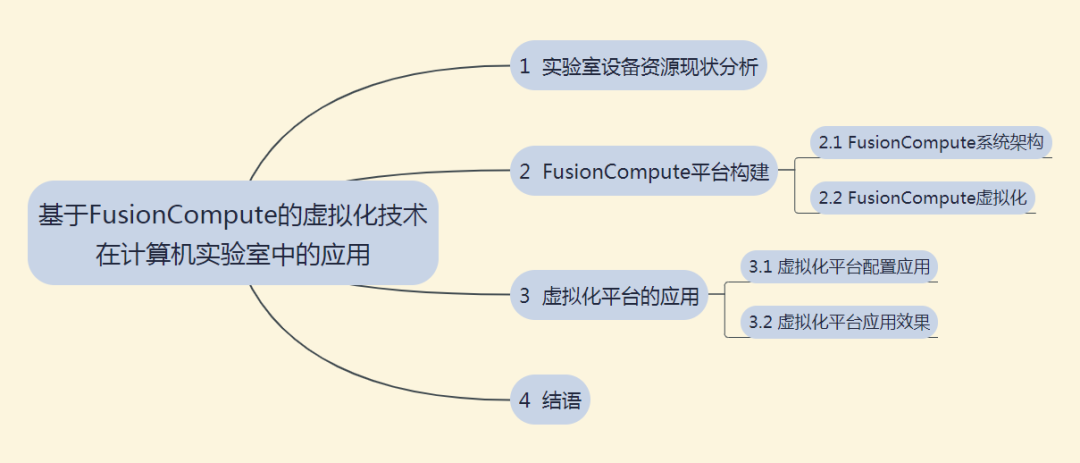
Click the image to view the full size
Abstract
Virtualization technology virtualizes a single device into multiple logical devices, which can effectively alleviate the problem of low utilization of equipment resources. This paper analyzes the current situation of equipment resources in computer laboratories, constructs a FusionCompute virtualization platform based on virtualization technology, and applies it to computer laboratories. The results show that the virtualization technology can improve the utilization rate of equipment resources and reduce the purchase quantity, investment, and energy consumption, which has good practical value in computer laboratories.
Abstract: Virtualization technology virtualizes
a single device into multiple logical devices,
which can effectively alleviate the problem
of low utilization of equipment resources.
This paper analyzes the current situation of
equipment resources in computer laboratory,
constructs FusionCompute virtualization
platform based on virtualization technology,
and applies it to computer laboratories. The
results show that the virtualization
technology
can improve the utilization rate of equipment
resources and reduce the purchase quantity,
investment and energy consumption of
equipment, which has the good practical
value in computer laboratories.
Keywords: virtualization; FusionCompute; resource utilization; experimental technology
Key words: virtualization;
FusionCompute; resource utilization;
experimental technology
Enter the full text for reading below
With the rapid development of science and technology, big data, cloud computing, artificial intelligence and other computer-related technologies are evolving rapidly, continuously emerging new technologies and products, bringing new development opportunities and improvement space for the informatization construction of university laboratories. The utilization rate of university laboratory resources is an important indicator of informatization construction in universities, and the use of virtualization technology can effectively improve the efficiency of the use of desktop computers, servers and other equipment in laboratories.
The equipment utilization rate of the computer experimental center reflects the level of equipment management in the experimental center, however, many experimental centers face problems such as scattered equipment usage, low utilization, difficult maintenance, and insufficient funding for updates. To address these issues, virtualization technology can virtualize the resources of laboratory servers and other equipment, effectively solving the corresponding problems. Virtualization technology virtualizes the physical computers into multiple logical computers, including virtualization of CPU, network, storage, applications, etc. Virtualization technology helps to reduce the storage space of equipment resources, lower the heat generation and power consumption of equipment resources, thereby reducing the energy consumption and operational costs of the machine room, and improving the energy efficiency of the machine room. Taking the computer experimental center of Guangdong University of Technology as an example, this paper explores the construction of a virtualization platform based on FusionCompute, proposing a solution to optimize the utilization rate of experimental equipment from a technical perspective.
1 Analysis of the Current Situation of Laboratory Equipment Resources
The server room of the experimental center consists of various management platform servers, mainly including cloud computing management platform, big data analysis processing platform, network security attack and defense platform, etc. Due to the urgency and continuity of the work of various platforms, and the limited resources of the server room, the original management level is relatively backward, and the development of the experimental center faces the following problems.
(1) Server resources are scattered. With the continuous development of computer research and related business, the demand for the construction of various business systems is increasing, and each business unit is more willing to independently purchase servers, storage devices, etc., to meet their own business informatization construction needs, resulting in problems such as scattered equipment resources and repeated funding input.
(2) Unable to meet the temporary surge in resource demand. In the era of big data and artificial intelligence, whether from the perspective of scientific research or teaching, storing or parallel computing massive data requires a large amount of storage space and computing capacity, which cannot be borne by general servers. For example, in teaching, multiple classes of students accessing the experimental system on the server simultaneously; in scientific research, image rendering, massive image data computation, high-dimensional data computation experiments all belong to situations that require a large amount of computing resources in a short time.
(3) Long equipment procurement cycle. With the increasing attention of various management departments to equipment procurement, the management system for equipment procurement is continuously standardized and improved, and related management methods are becoming more and more numerous and detailed. However, due to the continuous expansion of teaching and research scale, there is a need to continuously purchase servers and other equipment, and the project initiation process for equipment procurement requires multiple layers of filing, approval, and demonstration from teams, colleges, bidding centers, network centers, and equipment departments, resulting in a long procurement cycle, affecting the experimental center’s ability to provide effective support for teaching and research.
(4) High equipment operation and maintenance management costs. Due to the continuous increase in storage space, computing, and power consumption requirements of business systems, it is necessary to continually purchase servers, computer parts, software, etc., which leads to an increase in the area of the machine room, transformation of cooling systems, and increased total power supply, etc. These needs directly result in rising electricity costs, increasing human resource management investment, increasing the number of faulty devices, and rising equipment operation and maintenance management costs.
2 Construction of the FusionCompute Platform
FusionCompute is a platform that virtualizes hardware resources and centrally manages virtual resources, business resources, and user resources. This platform uses technologies such as virtual computing, virtual storage, and virtual networking to virtualize computing resources, storage resources, and network resources in hardware, and centrally manages these virtual resources through a unified interface.
2.1 FusionCompute System Architecture
The FusionCompute platform includes virtual resource management (virtual resource management, VRM), compute node agents (compute node agent, CNA), and a database for storing various management data. The system architecture is shown in Figure 1.
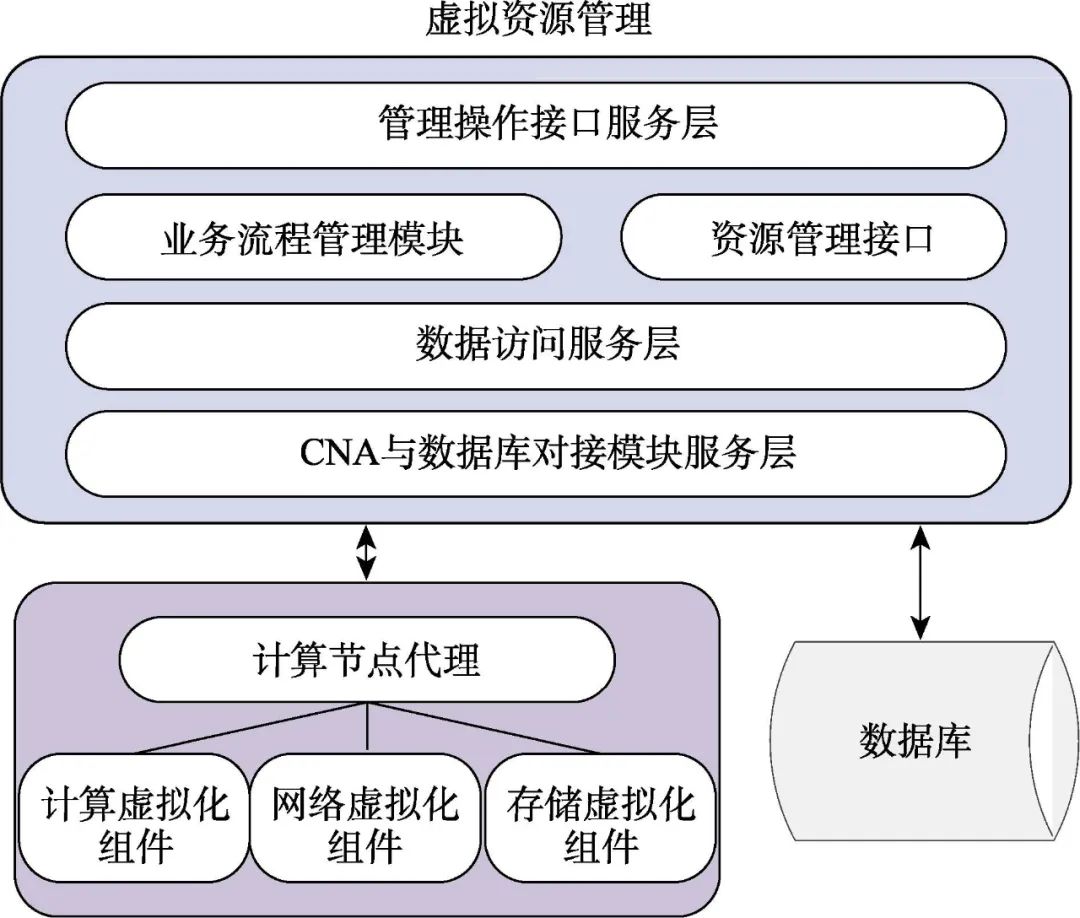
Figure 1 FusionCompute System Architecture Diagram
The virtual resource management module is the management hub of FusionCompute, responsible for resource allocation and scheduling, and providing unified operation maintenance, resource monitoring, and resource management functions. The interface service layer provides external display and management operation interfaces, the business process management module provides complex resource management and policy-based distributed resource management services, and the resource management interface is aimed at open resource management. Basic resource management services include computing, storage, network, nodes, performance, faults, patches, logs, etc. The data access service layer provides data access services for database connections; the connection module service layer provides connection services between upper management services and lower CNA and databases. The compute node agent is the implementer of virtualization capabilities, mainly composed of virtual node agents, implementing virtualization of computing, storage, and networking. The database is used to store various management data, including host/virtual machine node information, status information, etc.
FusionCompute supports a dual-master node configuration. When the primary node is detected to be faulty, the system performs a switchover, promoting the backup node to primary, configuring a floating IP address, and refreshing the MAC address to the gateway, with all processes previously monitored by the original primary node starting on the backup node, providing services externally. The primary and backup nodes use heartbeat detection in the management plane, and the backup node continuously monitors the health status of the primary node. Once a fault is detected in the primary node, the backup node immediately takes over the tasks of the primary node, ensuring continuous operation of the entire system.
2.2 FusionCompute Virtualization
(1) FusionCompute uses memory reuse technology. When a virtual machine needs to perform a write operation on memory, it opens up another memory space and modifies the mapping. The memory content that has not been accessed by the virtual machine for a long time is swapped out to storage and a mapping is established. When the virtual machine accesses that memory content again, it is swapped back, exchanged into the virtual machine’s storage. The virtual machine monitor releases relatively idle virtual machine memory to virtual machines with higher memory usage, thereby improving memory utilization.
(2) The VRM or cluster Master node detects a fault in a compute node or virtual machine, or if the reserved resources are not guaranteed, it actively restarts the faulty virtual machine on a normal node based on the virtual machine information it has recorded.
(3) Dynamic resource scheduling uses policy-based intelligent methods to achieve on-demand resource usage and load balancing while accommodating changes in virtual machine loads, avoiding oscillatory migrations, and allowing specific virtual machines to be set for non-scheduling or manual scheduling. By dynamically scheduling virtual machines, the resource utilization of each host can be more balanced, maximizing the computing capacity of each host, and improving the efficiency of the business systems running on each virtual machine.
(4) Storage live migration moves the virtual machine storage from one storage device to another, achieving load balancing and maintenance of storage resources. The main operation process involves creating an empty image file on the destination storage that is identical to the source, setting the destination storage’s image file as a mirror of the source image file, ensuring that the virtual machine’s I/O operations can also be written to the destination storage, ensuring data synchronization. Through iterative migration technology, data from the source image is migrated to the destination image, ensuring baseline data synchronization. After baseline data synchronization is complete, the virtual machine’s I/O requests are paused, and the virtual machine’s storage file is switched from the source image to the destination image, ultimately completing the storage migration.
3 Application of the Virtualization Platform
3.1 Configuration Application of the Virtualization Platform
After installing CNA and VRM on the virtualization platform, management and maintenance can be performed through the graphical interface, and the configuration process of the platform is shown in Figure 2.
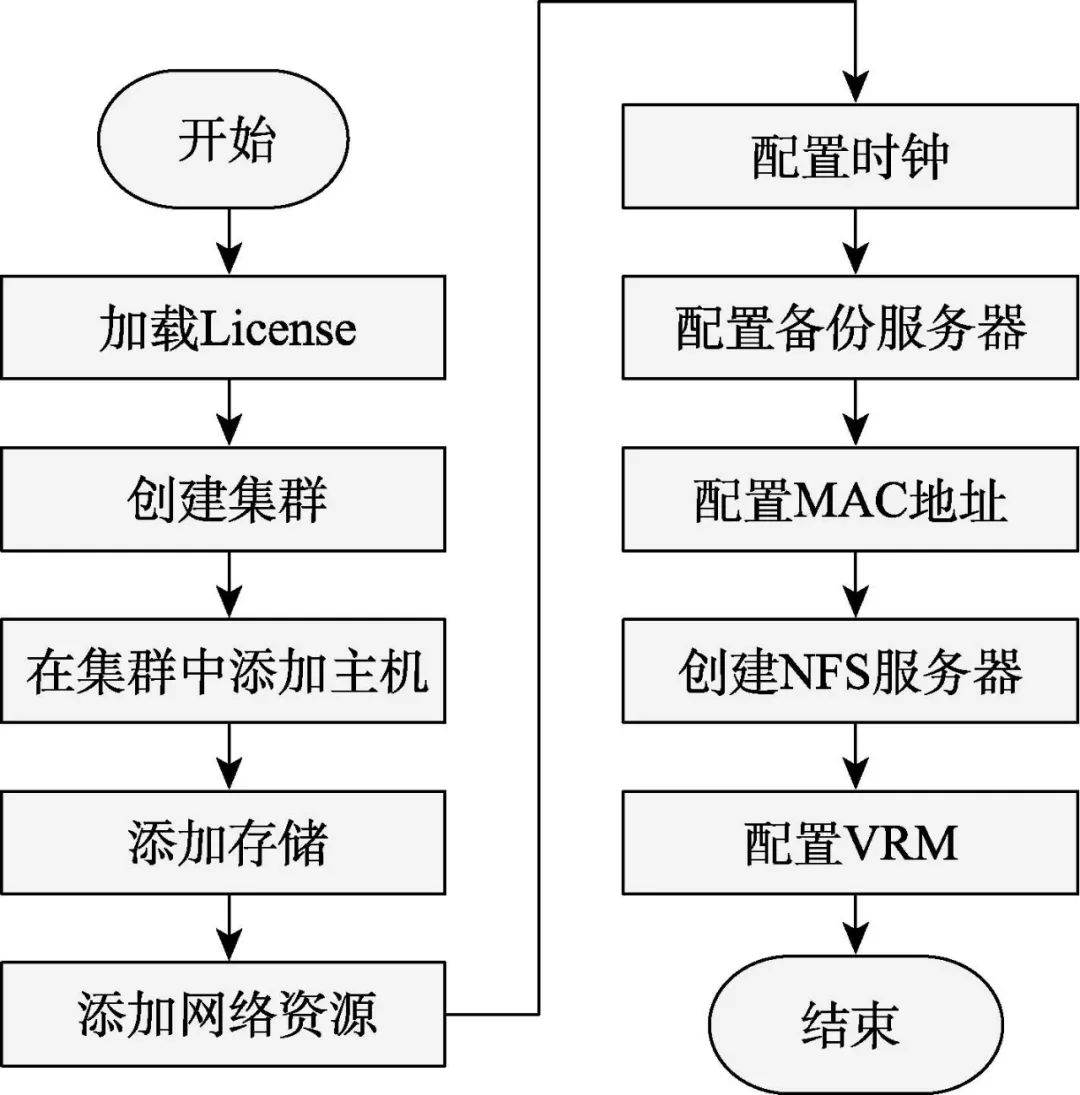
Figure 2 Virtualization Platform Configuration Process
In host and cluster management, first create a cluster, add hosts to the cluster, synchronize the host clock with the cluster, modify the host storage multipath, and add host storage interfaces. Then, determine the type of storage device, add storage resources to the site, associate storage resources with hosts, scan storage devices, add data storage, and create disks. Finally, perform network management, create distributed switches, add uplink links, VLAN pools, and subnets, and create port groups.
The applications of the virtualization platform include creating virtual machines, managing virtual machine operations, and adjusting virtual machine configurations. Creating virtual machines involves selecting creation locations, setting virtual machine properties, setting network cards and disks, and choosing operating system templates. The virtualization platform can also dynamically adjust virtual machine configurations, such as adjusting CPU, memory, increasing disk capacity, binding disks, unbinding disks, adding network cards, and deleting network cards.
3.2 Application Effects of the Virtualization Platform
In terms of experimental technology applications, the use of virtualization technology has improved the utilization of resources such as servers. Before virtualization, servers were generally configured with maximum resources, and since the business of servers generally does not continuously use maximum resources, the resource utilization of servers is usually below 5%. However, after virtualization, the resource utilization of servers can be improved to 60%, as the consolidation ratio of virtual machines is between 1:5 to 1:12. The consolidation ratio is the ratio of the number of virtual machines virtualized on a physical server to that physical server, as shown in Figure 3.
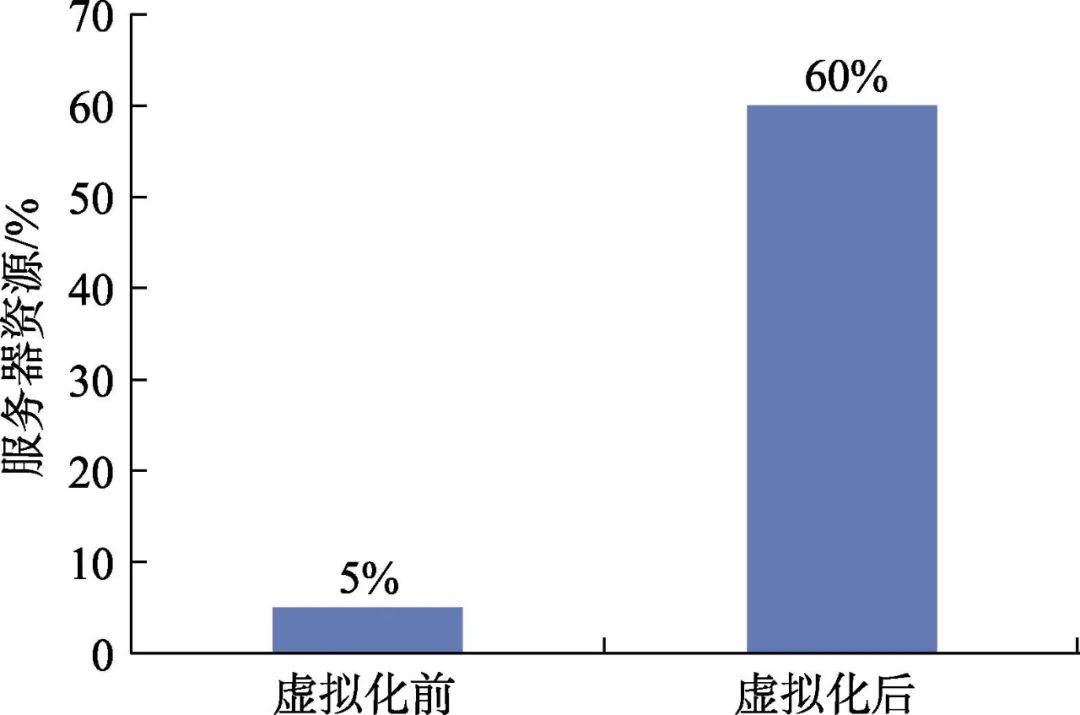 Figure 3 Comparison of Server Resource Utilization
In recent years, due to the continuous development of teaching and research work in our school, the number of servers or workstations purchased has continued to rise between 2015 and 2017. However, since the use of virtualization technology began in 2017, the number of servers or workstations purchased has shown a downward trend, indicating the practical application value of virtualization technology in computer laboratories. The comparison of server purchases from 2015 to 2020 is shown in Figure 4.
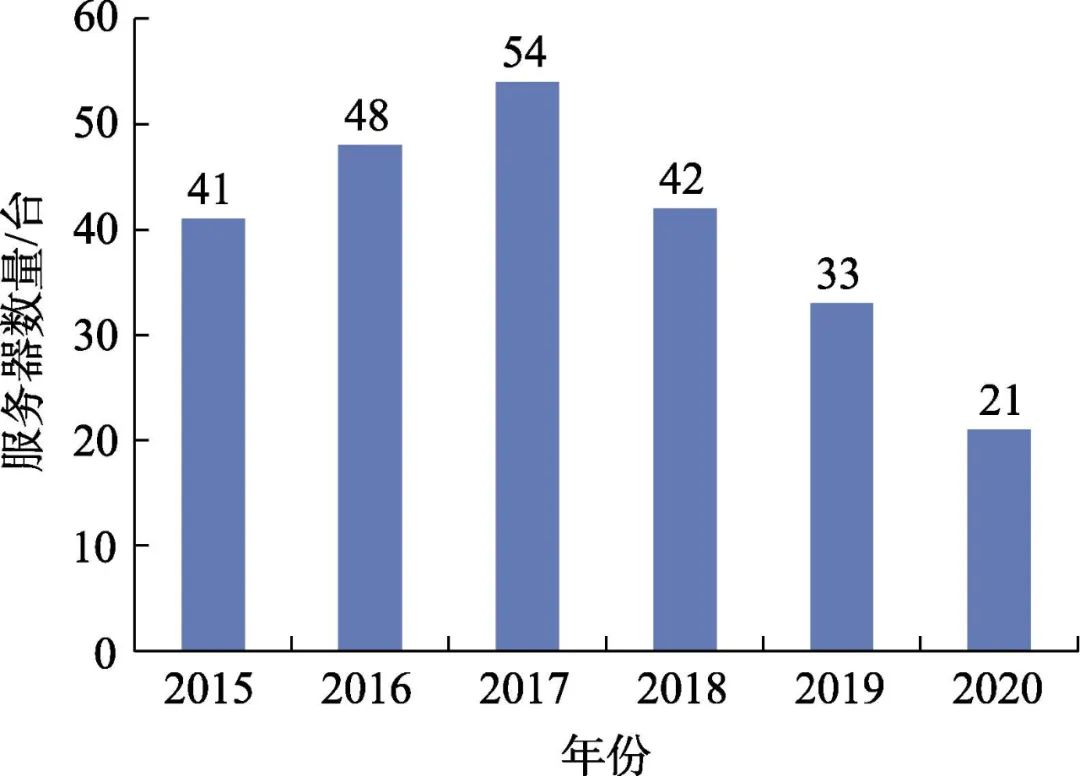
Figure 4 Comparison of Server Purchases from 2015 to 2020
(1) In terms of experimental teaching, FusionCompute can provide virtual experimental equipment for various course groups. Different courses have different usage methods, such as the data structure course can deploy an online programming platform on a virtual server for students to complete online programming assignments after class, unrestricted by location or time. The network attack and defense technology course can virtualize an experimental machine group, setting security vulnerabilities and other experimental environments on the target machine for students to conduct intrusion detection and defense experiments without affecting the normal use of other machines, and easily releasing resources after the experiment is completed. The FusionCompute virtualization platform can efficiently serve experimental teaching with limited server resources, providing 24-hour uninterrupted online services for various experimental courses.
(2) In terms of energy consumption, the total power supply of servers is proportional to the number of servers. Generally, after each research team purchases servers, the servers run continuously 24 hours a day. To keep the heat generated by the servers within a certain range, air conditioning systems are needed to cool them down. The more dispersed the servers are, the greater the power supply required. In response to the background of energy conservation and consumption reduction, the experimental center uses virtualization technology to manage servers in clusters, which not only reduces the number of servers purchased but also lowers the total energy consumption of the laboratory.
(3) In terms of hardware maintenance, the more dispersed and numerous the servers are, the greater the workload of maintenance. In addition to daily maintenance of the servers themselves, maintenance of the environment and network devices is also required. Servers have specific requirements for the humidity, temperature, and cleanliness of the environment. Due to the variety of server brands and components, the maintenance workload is considerable, and the maintenance costs are relatively high. However, after applying virtualization technology, the experimental center centralizes the servers in an environment suitable for server operation, uniformly manages network and other equipment, which not only reduces the workload of maintenance personnel but also lowers maintenance costs.
4 Conclusion
The virtualization technology based on FusionCompute provides new management and construction ideas in both technology and management for experimental teaching, helping to solve the problems of low equipment resource utilization and repeated funding input for equipment. The application of the virtualization platform in our school’s experimental center for more than three years has upgraded and updated the management methods of server clusters, improved the utilization rate of the experimental center’s machine room, reduced the workload of technical personnel and equipment maintenance costs, and ensured the smooth progress of teaching and research work in the school.
References
[1] Miao Guijun, You Feng, Liu Jinhua, et al. Research and Practice on Desktop Virtualization Platform for Public Computer Rooms in Universities Based on IDV Technology. Experimental Technology and Management, 2019, 36(12): 267–270, 277.
[2] Xia Tiandong, Niu Xianming, Cui Jinfeng. Quantitative Evaluation Method for Resource Utilization of Engineering Laboratory in Universities. Laboratory Research and Exploration, 2016, 37(4): 67–68.
[3] Yao Meiyin. Construction of Information Management System for Equipment Utilization in University Laboratories. Educational Teaching Forum, 2020(7): 14–15.
[4] Chu Jiuliang, Li Ling. Application of Virtualization Technology in University Data Centers. Laboratory Research and Exploration, 2012, 32(12): 18–19.
[5] Zu Jiachen, Hu Guyu, Yan Jiajie, et al. Resource Management Research Review of Service Function Chains under Network Function Virtualization. Computer Research and Development, 2021(1): 137–152.
[6] Zeng Saifeng, Zhu Ligu, Li Qiang, et al. Implementation of Virtualization in Enterprise-level Private Clouds. Computer Engineering and Applications, 2010(6): 70–73.
[7] Chen Min, Guo Baitao, Liu Yu. Exploration of Open Platform for Large Instruments in Multidisciplinary Resource Sharing Laboratories. Laboratory Research and Exploration, 2020, 39(2): 281–284.
[8] Tai Xianqing, Wu Mengyue, Ma Yufeng, et al. Design and Implementation of Server Resource Monitoring System for Data Centers. Computer Applications and Software, 2019(7): 14–20.
[9] Lu Heng. Research on Dynamic Virtual Resource Management to Respond to Load Variations. Shanghai: Shanghai Jiao Tong University, 2015.
[10] Yuan Yong, Wang Hui, Guan Yang, et al. Design and Exploration of Project Initiation System for Equipment Procurement in Universities. Laboratory Research and Exploration, 2021, 40(1): 266–269.
[11] Cai Qinghui. Application of Huawei FusionCompute to Server Virtualization Management System. Software Engineering, 2016(2): 21–22.
[12] Su Riyah, Wang Zhenxiang, Xue Feng, et al. Construction and Implementation of IaaS Cloud Platform Based on FusionCompute. Information Technology, 2017(7): 66–69.
[13] Wang Yuejiao, Zhu Jiaju, Liu Lihang. Reuse of ROM/RAM Memory Space. Journal of South-Central University for Nationalities, 2000(1): 1–3.
[14] Zhou Chumin, Xu Xiaodong. Research on Dynamic Resource Scheduling Strategy for Virtual Hadoop Platform. Data Communication, 2014(5): 39–44.
[15] Hao Zhifeng, Huang Zelun, Cai Ruichu, et al. Dynamic Scheduling and Collaborative Allocation System for Distributed Resources Based on YARN. Computer Engineering, 2021(2): 226–232.
[16] Yuan Chao, Yue Min, Ma Tao, et al. Migration and Performance Optimization of HIRFL Database Based on FusionCompute Virtualization Platform. Atomic Energy Science and Technology, 2019(9): 1697–1701.
Citation Format: Chen Bingfeng, Xie Guangqiang, Zhu Jian. Application of virtualization technology based on FusionCompute in computer laboratories. Experimental Technology and Management, 2022, 39(4): 224-227.
Cite this article: CHEN B F, XIE G Q, ZHU J. Application of virtualization technology based on FusionCompute in computer laboratories. Experimental Technology and Management, 2022, 39(4): 224-227. (in Chinese)
The journal “Experimental Technology and Management” 2022, Issue 4, Pages 224-227

“Experimental Technology and Management”
Comprehensive Science and Technology Journal · Journal of the Laboratory Work Research Association of Higher Education
Chinese Core Journal · RCCSE China’s authoritative academic journal (A+)
Outstanding Science and Technology Journal of Chinese Universities · First Excellent Journal Implementing “CAJ-CD Standards”
Journal Website · Online Submission
http://syjl.cbpt.cnki.net
http://syjl.chinajournal.net.cn
Contact & Subscription
Editorial Office Phone: 010-62783005 or 010-62797828
Email: [email protected]
Subscription and Distribution Phone: 010-62792635
Email: [email protected]
Click
To download the full text, please click Read the original