Although M.2 SSDs have entered the PCIe 5.0 era, the main products on the market at this stage are undoubtedly still PCIe 4.0 SSDs, which are affordable and provide a good storage performance experience. Over the past few months, SSD prices have continued to decline, and several PCIe 4.0 products have been very popular in the market due to their good performance, large storage capacity, and high cost-effectiveness, such as the Patriot P7000Z. Recently, Patriot has launched a new PCIe 4.0 SSD, model SMI70, which uses the Phison SM2268XT controller and is equipped with Yangtze Memory flash chips. What kind of sparks will this combination create?
Product Introduction
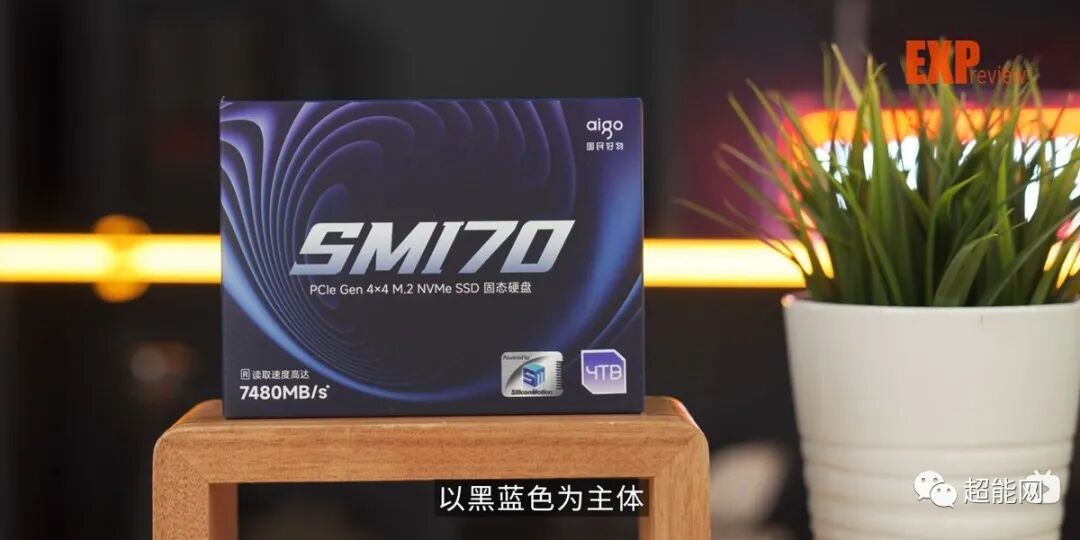 The packaging of the Patriot SMI70 is relatively square, primarily in black and blue, with white text. The front displays the product model and indicates that it is a PCIe 4.0 SSD, with the Patriot logo in the upper right corner and product capacity information below. Overall, the design of the Patriot SMI70 packaging is quite simple and visually appealing.This 4TB version of the SMI70 adopts a single-sided PCB design, which shows no DRAM cache, and the blank space on the back makes the SSD relatively thin, providing better installation compatibility. This time, the Patriot SMI70 is the first to feature the Phison SM2268XT controller combined with Yangtze Memory 3D NAND TLC, the former being the industry’s first controller to support 3200MT/s flash memory, and the latter being a flash memory chip highly sought after by many players this year. Additionally, Patriot has equipped this SSD with a new generation of thermal pads to improve heat dissipation efficiency and ensure stable performance output.
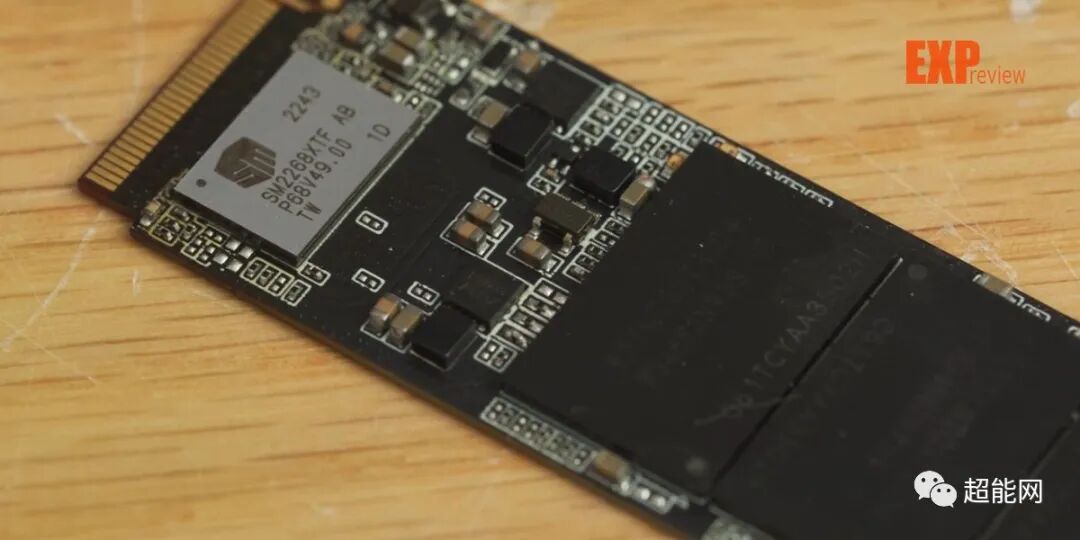 Phison is a well-established company with over 20 years of design and development experience in the industry, providing SSD storage solutions with a wide range of applications, including data centers, PCs, smartphones, and industrial control devices, covering both OEM and consumer markets, with good stability and compatibility. Earlier this year, Phison launched the latest controller SM2268XT for PCIe 4.0 SSDs. The official statement indicates that this controller offers the best balance of performance, energy efficiency, and reliability to meet users’ demands for higher data throughput.
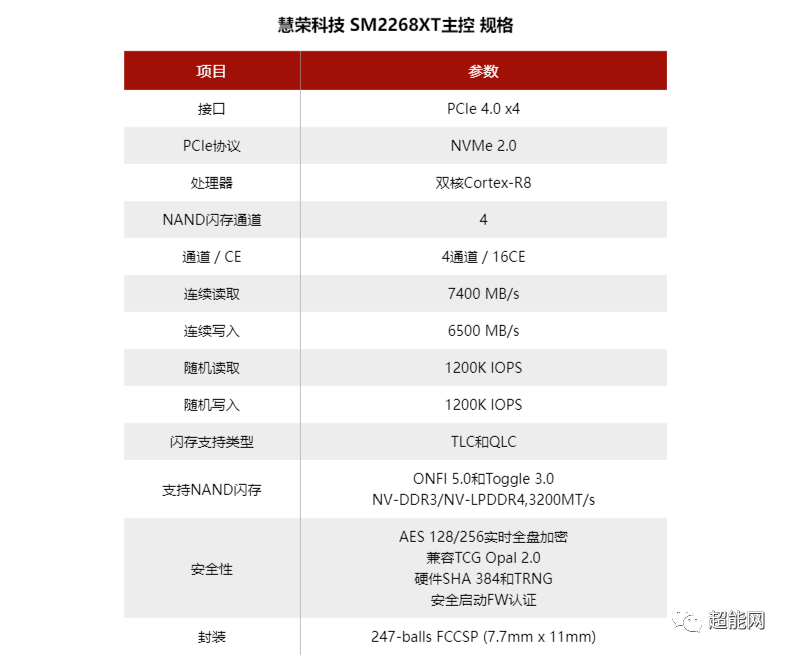 The SM2268XT controller chip measures 7.7×11 mm and is manufactured using TSMC’s 12nm process, optimized for DRAM-less SSD applications. It features a dual-core Cortex-R8 CPU, supports the NVMe 2.0 protocol, and is compatible with TLC and QLC NAND flash chips. It has four PCIe 4.0 16GT/s data lanes, along with four NAND flash channels with data rates of up to 3200MT/s, providing a maximum sequential read speed of 7400MB/s, a maximum sequential write speed of 6500MB/s, and maximum random read and write speeds of 1200K IOPS.This controller adopts a new generation of system architecture and Host Memory Buffer (HMB) functionality, supporting technologies such as NANDXtend ECC and LDPC for fast error decoding and correction, and also supports intelligent power management features.
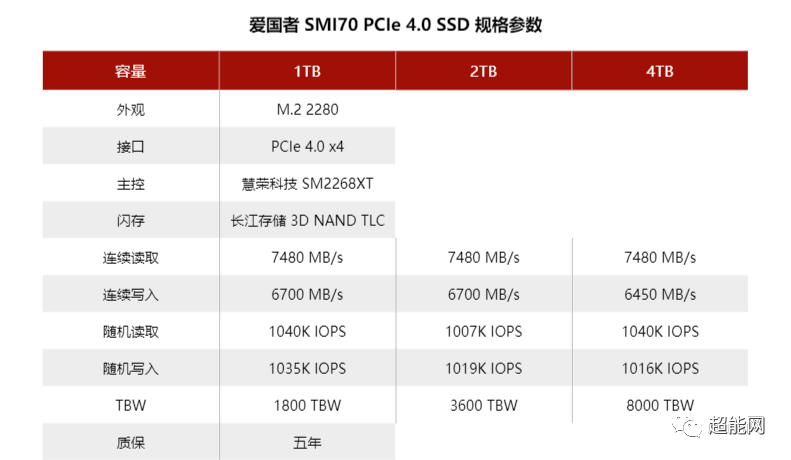 Patriot states that the SMI70 will be available in 1TB, 2TB, and 4TB versions, but currently, only the 2TB and 4TB versions are launched.
Testing Section
Testing Platform Introduction
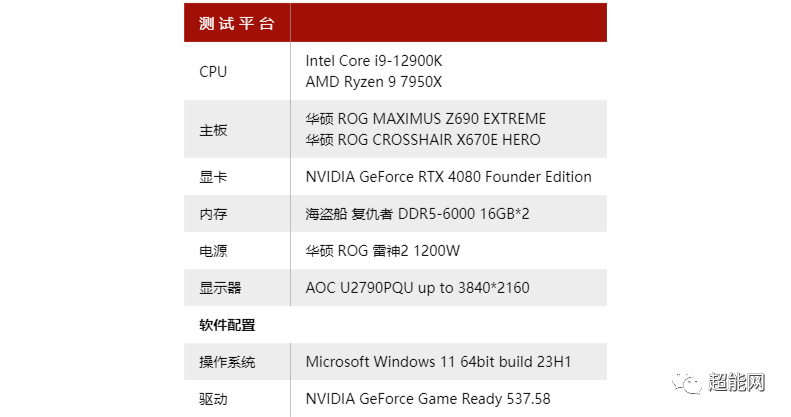 For the testing platform, we used a fixed configuration specifically for SSD testing, which includes an Intel Core i9-12900K processor, ASUS ROG MAXIMUS Z690 EXTREME, and two 16GB DDR5-6000 memory sticks. The SSD under test will be installed on the M.2 interface directly connected to the CPU, while the system disk will be installed on the M.2 interface of the PCH, allowing the tested disk to perform at its best. In addition to the standard testing platform, we also set up an AMD platform to see if there would be any differences in performance across different platforms.The testing items include CrystalDiskMark, PCMark 10 disk tests, 3DMark storage tests, TxBENCH full disk write tests, IOMeter discrete tests, and loading tests for Final Fantasy XIV, providing a comprehensive understanding of the SSD’s performance. The AMD platform will test CrystalDiskMark, PCMark 10 disk tests, and 3DMark storage tests, which generally show some differences.
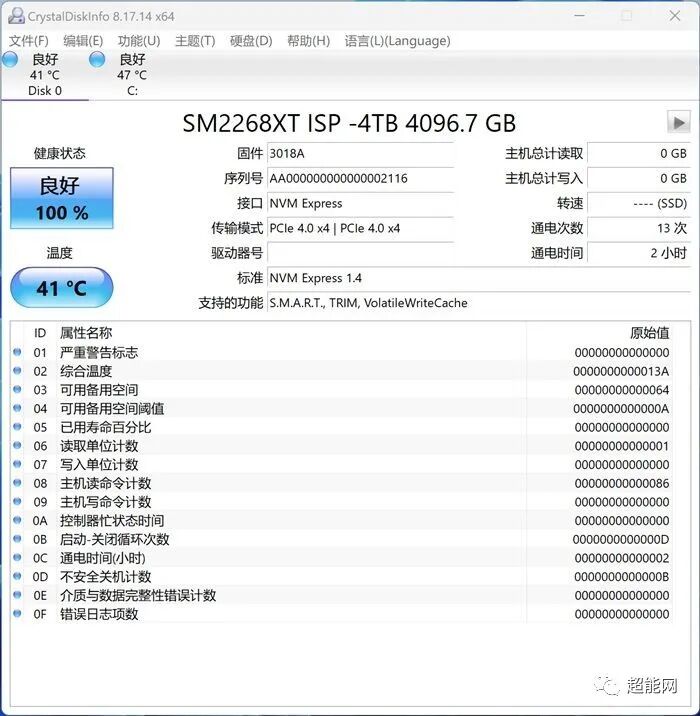 Figure: CDI information for Patriot SMI70 4TB
Test Results Display
CrystalDiskMark
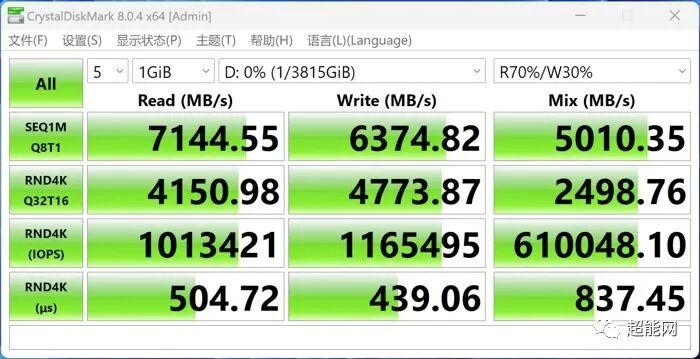 Figure: Peak performance of Patriot SMI70 4TB on Intel platformIn the CrystalDiskMark peak performance test, the Patriot SMI70 4TB achieved a sequential read speed of 7144.55 MB/s and a sequential write speed of 6374.82 MB/s on the Intel platform.
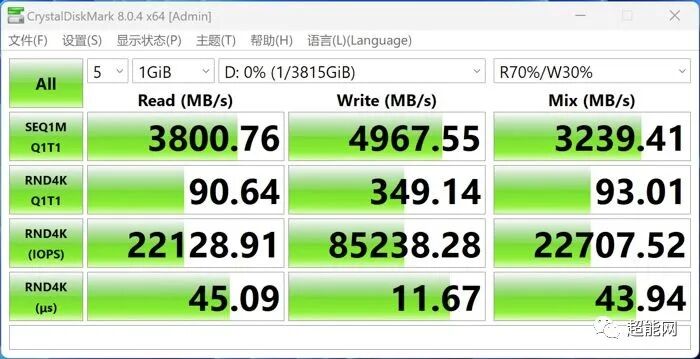 Figure: Authentic performance of Patriot SMI70 4TB on Intel platformIn the CrystalDiskMark authentic performance test, the Patriot SMI70 4TB achieved a sequential read speed of 3800.76 MB/s and a sequential write speed of 4967.55 MB/s on the Intel platform.
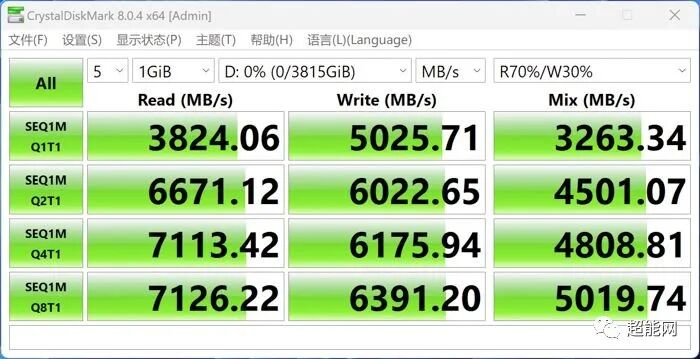 Figure: Continuous performance of Patriot SMI70 4TB on Intel platformIn the CrystalDiskMark continuous performance test, the Patriot SMI70 4TB achieved a sequential read speed of 3824.06 MB/s and a sequential write speed of 5025.71 MB/s on the Intel platform.
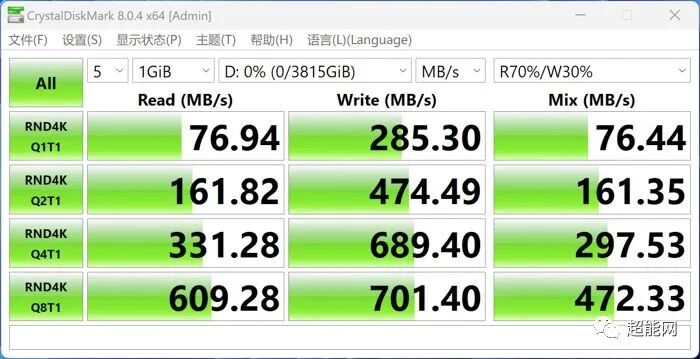 Figure: Random performance of Patriot SMI70 4TB on Intel platformIn the CrystalDiskMark random performance test, the Patriot SMI70 4TB achieved a sequential read speed of 76.94 MB/s and a sequential write speed of 285.30 MB/s on the Intel platform.
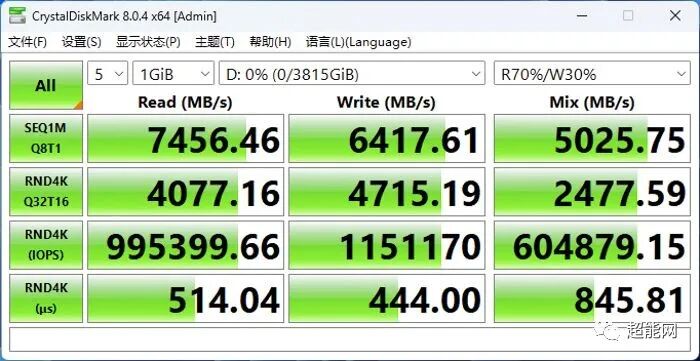 Figure: Peak performance of Patriot SMI70 4TB on AMD platformSwitching to the AMD platform, the Patriot SMI70 4TB showed better performance in the CrystalDiskMark peak performance test, achieving a sequential read speed of 7456.46 MB/s and a sequential write speed of 6417.61 MB/s, basically reaching the product’s rated limits.
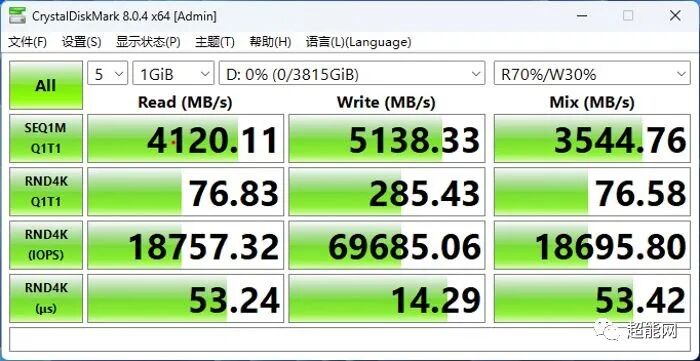 Figure: Authentic performance of Patriot SMI70 4TB on AMD platformIn the CrystalDiskMark authentic performance test, the Patriot SMI70 4TB achieved a sequential read speed of 4120.11 MB/s and a sequential write speed of 5138.33 MB/s on the AMD platform.
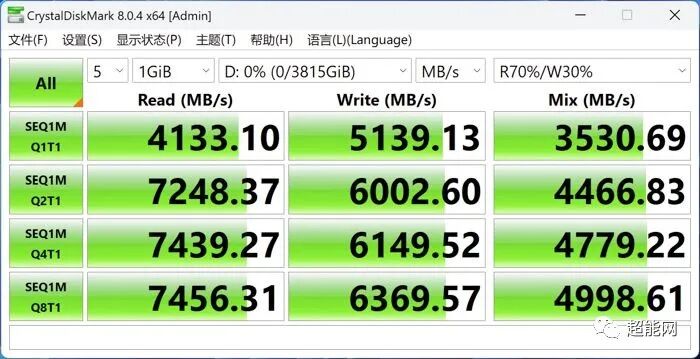 Figure: Continuous performance of Patriot SMI70 4TB on AMD platformIn the CrystalDiskMark authentic performance test, the Patriot SMI70 4TB achieved a sequential read speed of 4133.10 MB/s and a sequential write speed of 5139.13 MB/s on the AMD platform.
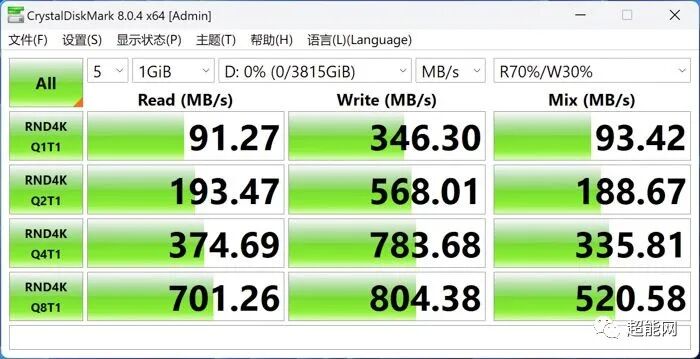 Figure: Random performance of Patriot SMI70 4TB on AMD platformIn the CrystalDiskMark authentic performance test, the Patriot SMI70 4TB achieved a sequential read speed of 91.27 MB/s and a sequential write speed of 346.30 MB/s on the AMD platform.Whether on Intel or AMD platforms, the performance of the Patriot SMI70 4TB meets the needs of most users.
PCMark 10 Disk Test
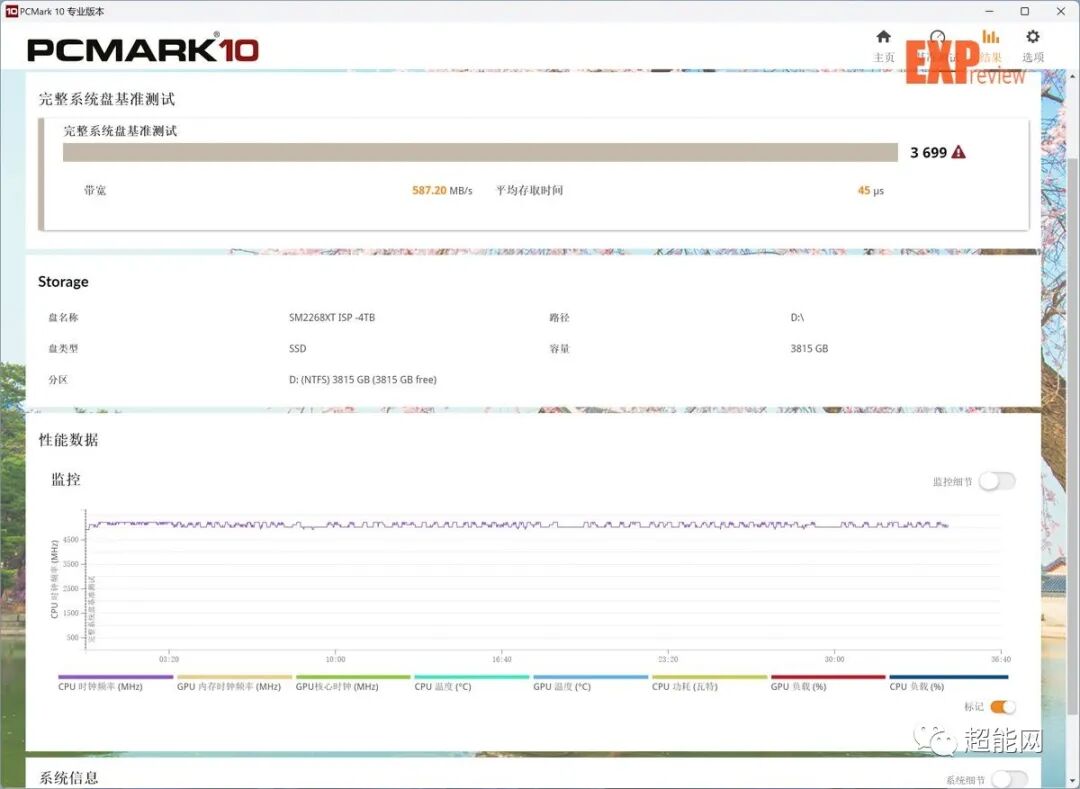 Figure: PCMark 10 disk test results for Patriot SMI70 4TB on Intel platformIn the PCMark 10 disk test, in addition to providing the SSD’s transfer rate, it also gives the average latency. On the Intel platform, the average transfer rate of the Patriot SMI70 4TB is 587.20 MB/s, with an average latency of 45 us, showing excellent performance.
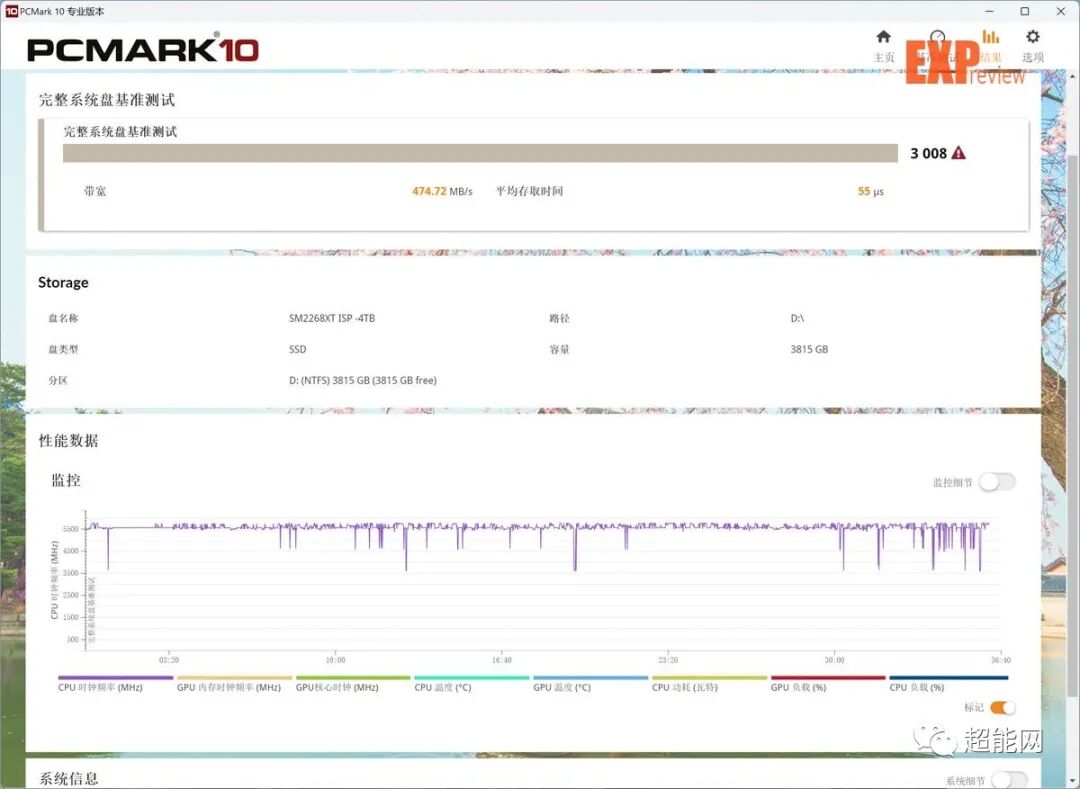 Figure: PCMark 10 disk test results for Patriot SMI70 4TB on AMD platformOn the AMD platform, the average transfer rate of the Patriot SMI70 4TB is 474.72 MB/s, with an average latency of 55 us, showing a slight decline in performance.
3DMark Storage Test
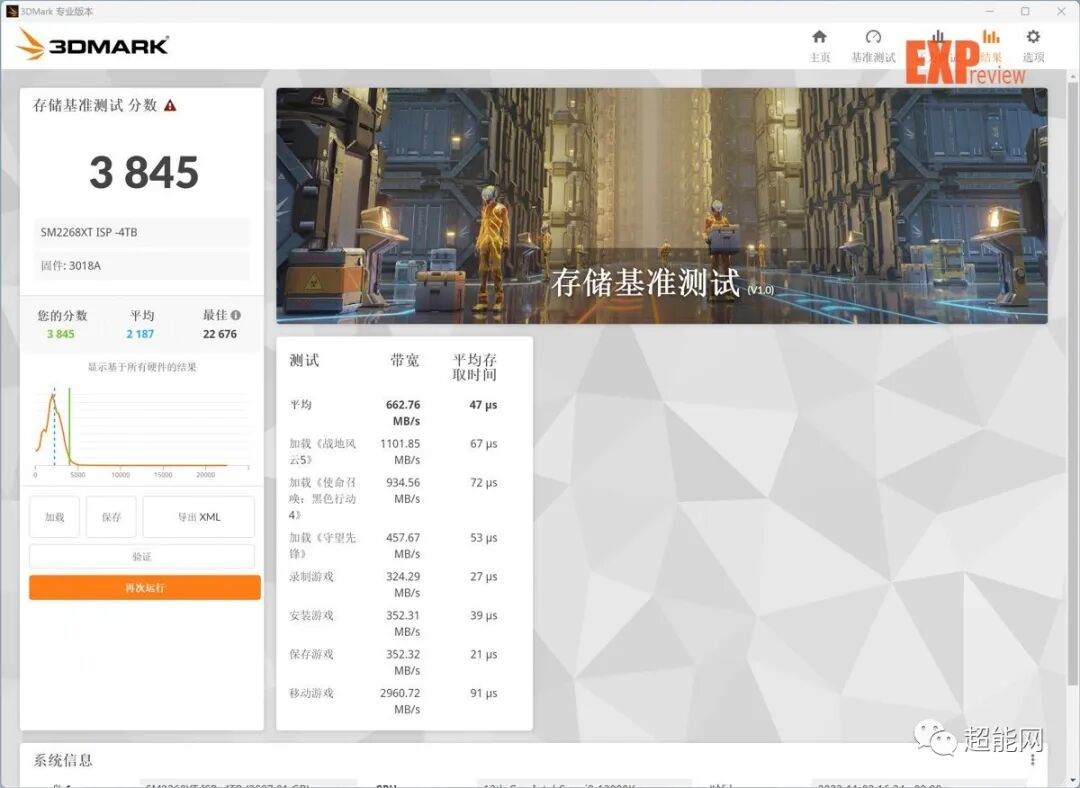 Figure: 3DMark storage test results for Patriot SMI70 4TB on Intel platformThe 3DMark storage benchmark test is a tool specifically designed to test the gaming performance of the latest PC storage devices, similar to the PCMark 10 disk test, based on real application disk trace playback, focusing on practical and realistic gaming performance. On the Intel platform, the Patriot SMI70 4TB scored 3845, with an average transfer speed of 662.76 MB/s and an average latency of 47 us.
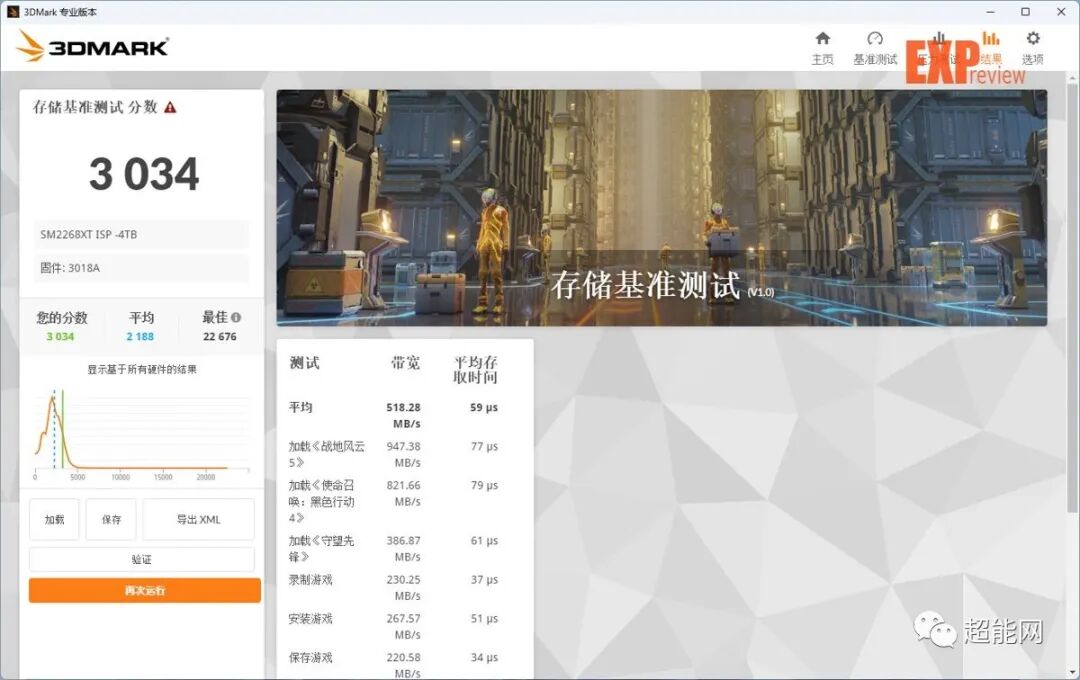 Figure: 3DMark storage test results for Patriot SMI70 4TB on AMD platformOn the AMD platform, the Patriot SMI70 4TB scored 3034, with an average transfer speed of 518.28 MB/s and an average latency of 59 us, showing overall weaker performance.
Final Fantasy XIV
Although the 3DMark storage test can provide loading speeds and average storage times for games, the most intuitive experience for players is the overall loading time of the game, which is not provided. Therefore, we used the Benchmark program of Final Fantasy XIV as a supplement, testing at 4K resolution with the highest quality settings and recording the total loading time.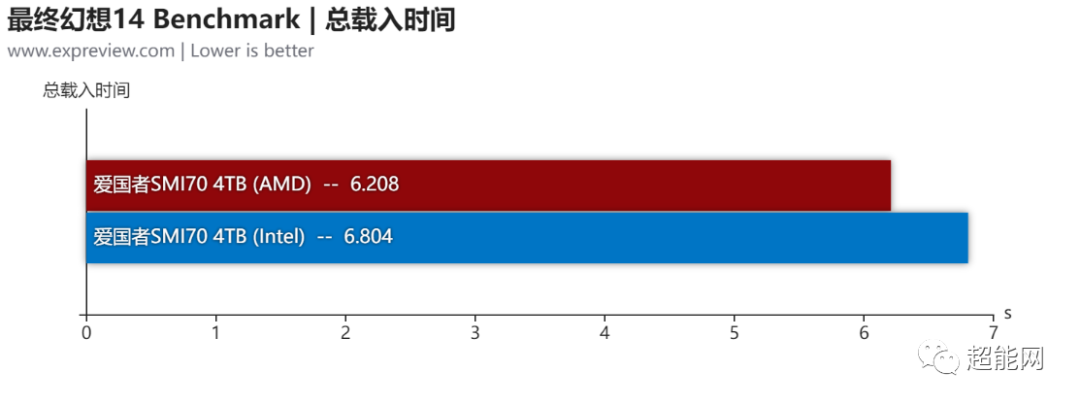 In the Final Fantasy XIV test, the total loading time for the Patriot SMI70 4TB across five scenes was 6.804s on the Intel platform and 6.208s on the AMD platform, showing quite good performance. Although there are slight differences between the two platforms, the actual experience is not significantly different.
TxBENCH Full Disk Write Test
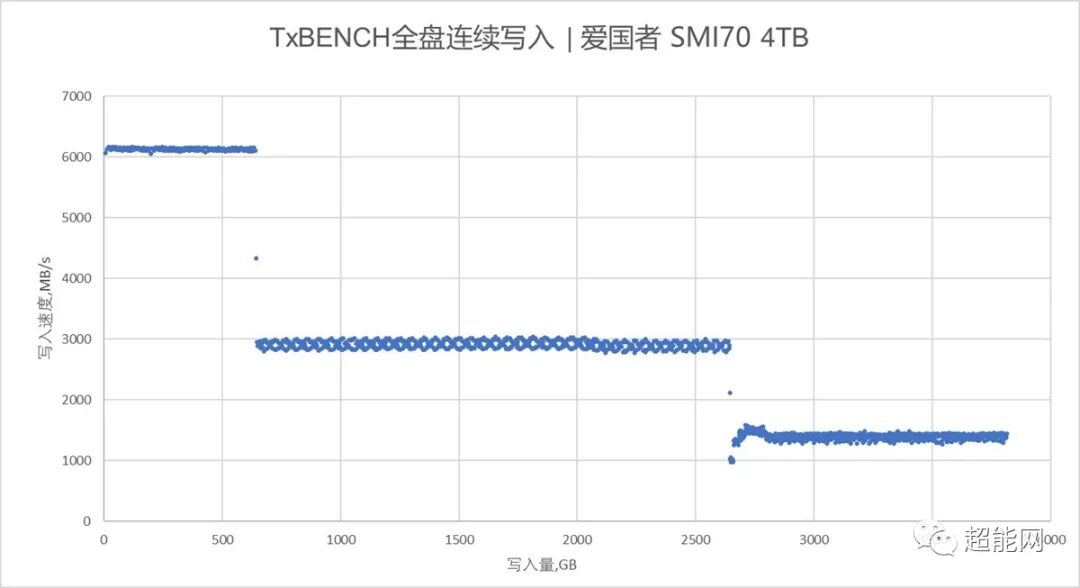 This test is a full disk continuous write test conducted on the tested disk without partitioning, filling the entire available space of the disk. It is evident that the write speed of the Patriot SMI70 4TB is divided into three segments: the first segment is the SLC Cache write, with a maximum SLC Cache size of about 640GB, achieving an average write speed of approximately 6100MB/s, which is very fast; the middle segment is the raw write speed, with an average speed of about 2900MB/s; the last segment occurs when the blank flash memory is exhausted, where the write speed drops to about 1400MB/s while erasing and writing simultaneously. Overall, the write performance of the Patriot SMI70 4TB is not low.
 The above shows the time taken for the Patriot SMI70 4TB at various stages of writing. Writing 102GB took 17 seconds, writing 639GB took 1 minute and 47 seconds, and writing up to 2.64TB took 13 minutes and 31 seconds.
IOMeter Test
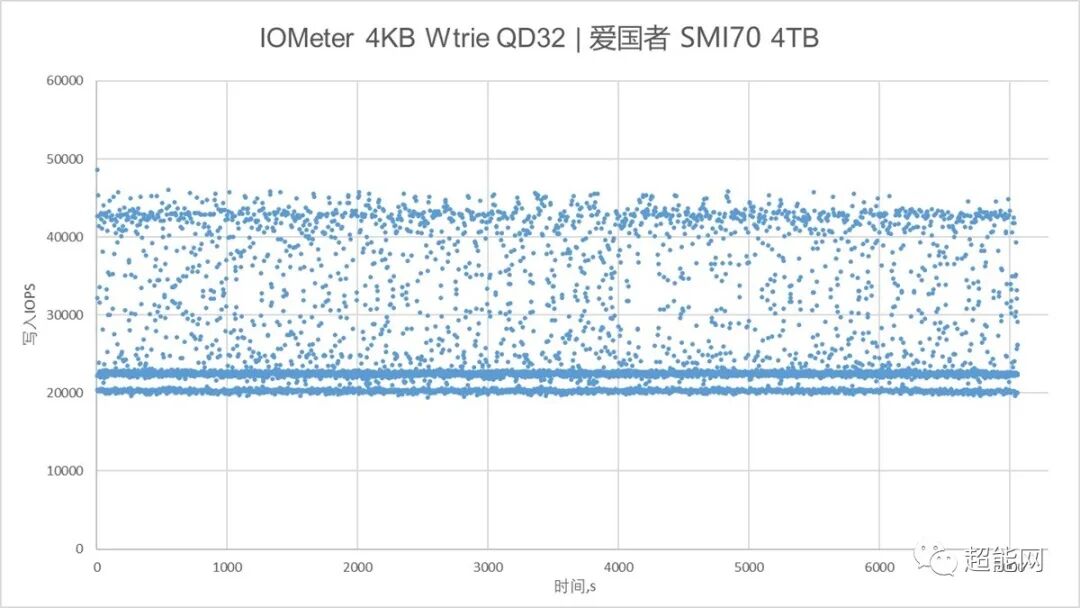 This is the IOMeter recording of the IOPS discrete distribution after two hours of 4K QD32 random writes on the SSD. Unlike many products that tend to decline after a high initial performance, the Patriot SMI70 4TB fluctuated between 20000 and 43000, mainly concentrated in the 20000 to 23000 range, showing a relatively stable performance throughout the process.
Conclusion
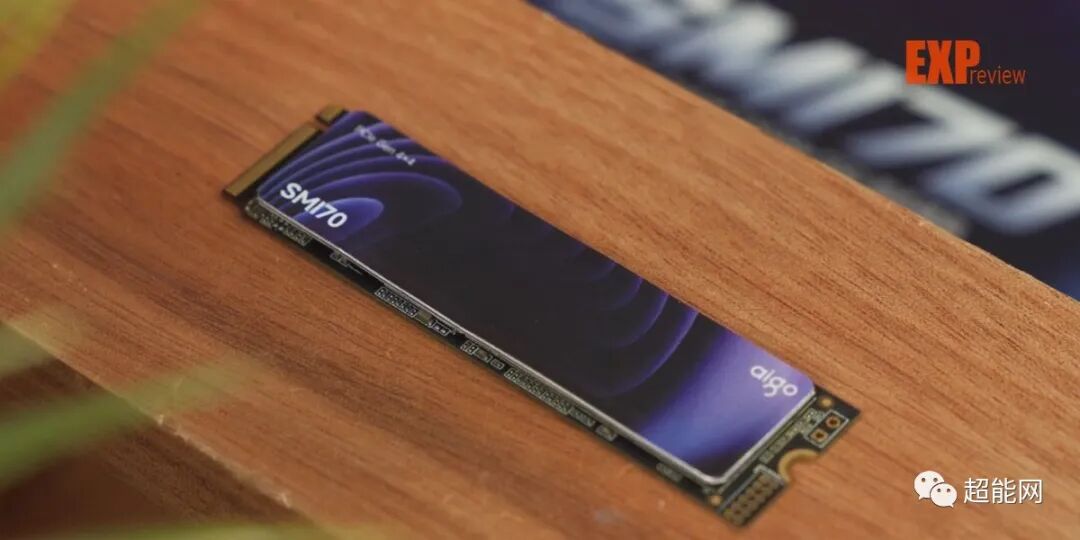 Patriot has utilized the Phison SM2268XT controller, Yangtze Memory 3D NAND TLC particles, and self-developed firmware and related technologies in the SMI70 4TB, ensuring good quality. With the specifications of the SMI70 4TB, its performance in tests is considered normal, at the mainstream level for PCIe 4.0 SSDs. Coupled with the advantage of a large capacity of 4TB, it is an excellent choice for both system and gaming drives, and some users may start considering replacing HDDs with this type of SSD for data storage.
Follow us on WeChat for more hardware reviews
Scan to stay updated with the latest hardware evaluations
Check the latest rankings anytime