As the ancient saying goes, “Every road leads to Chang’an,” the process of generating creativity is similar. Whether individually or as a team, different pathways of idea generation (thinking pathways) often lead to novel and effective problem-solving solutions. Just like a painter can create unique works using a rich combination of colors or by focusing on variations of a single hue, inspiration can spark from various sources during creative collaboration. What are the different pathways through which team creativity can be realized? These questions warrant further exploration.
In response to these questions, Professor Hao Ning and his team from the School of Psychology and Cognitive Science at East China Normal University proposed a three-pathway model for group creativity generation within the framework of inter-brain neural coupling theory (Figure 1) (Lu & Hao, 2024; Psychological Review). The three-pathway model posits that team members primarily generate innovative ideas through three cognitive pathways (flexible pathway, persistence pathway, and idea convergence pathway), which collectively determine the team’s innovative performance (Figure 2).
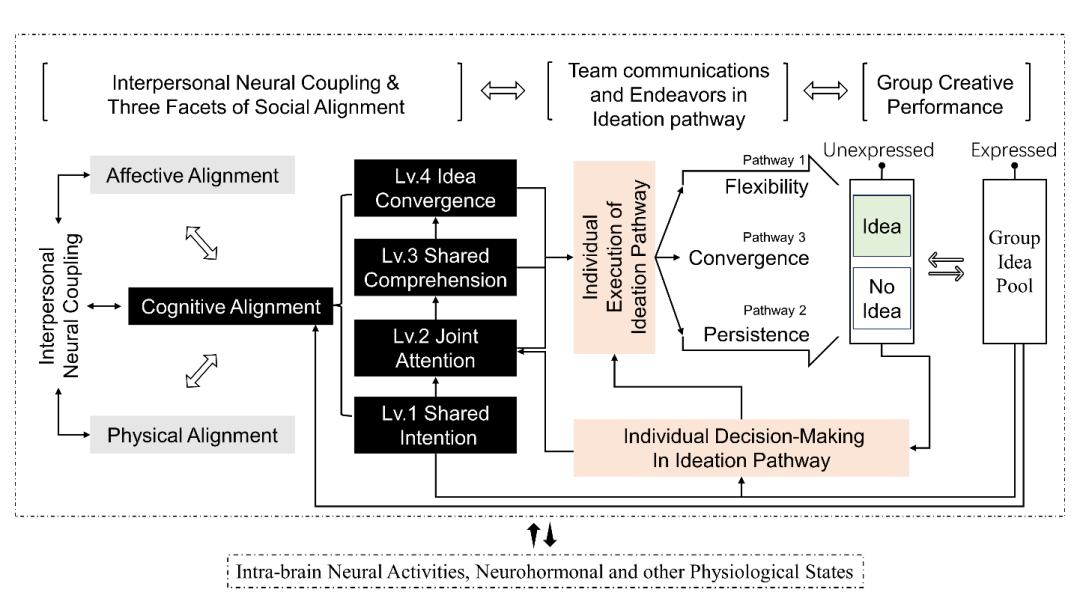
Figure 1. The Inter-brain Neural Coupling Theory Framework for Group Innovation
The inter-brain neural coupling theory of group innovation suggests that three interrelated inter-brain neural coupling systems support group innovation activities: cognitive alignment, emotional alignment, and bodily alignment. Among these, cognitive alignment is core, encompassing multiple levels such as shared intentions, joint attention, shared understanding, and idea convergence, each associated with specific inter-brain neural coupling. This theory further proposes a three-pathway model for the cognitive process of group innovation, emphasizing that team members primarily generate innovative ideas through three cognitive pathways (flexible pathway, persistence pathway, and idea convergence pathway), which collectively determine group innovation performance. The aforementioned cognitive alignment systems interact with team members as they choose and execute idea generation pathways. Factors such as innovative ideas generated by team members and cognitive stimuli from other members may, in turn, influence the cognitive alignment system (thereby affecting emotional alignment and bodily alignment systems) and the decision-making and execution of idea generation pathways, subsequently impacting group innovation performance. Additionally, the neural activities, neurohormones, and other physiological states within individual brains may also affect the relationship between inter-brain neural coupling and group innovation performance.
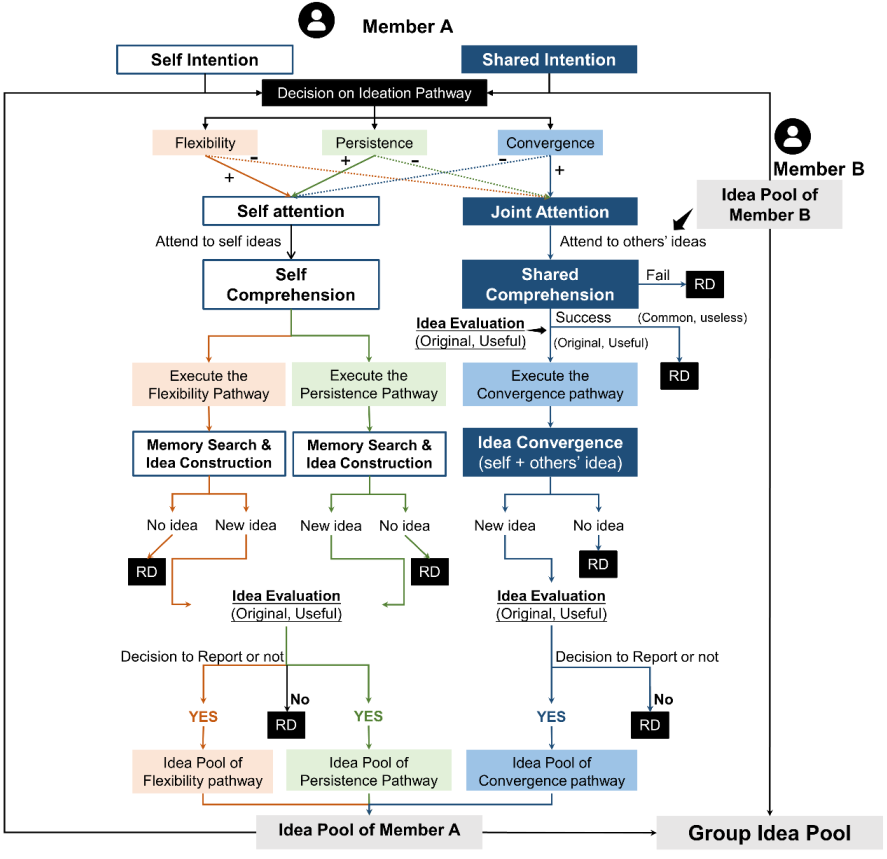
Figure 2. The Three Pathways Model for Group Creativity Generation
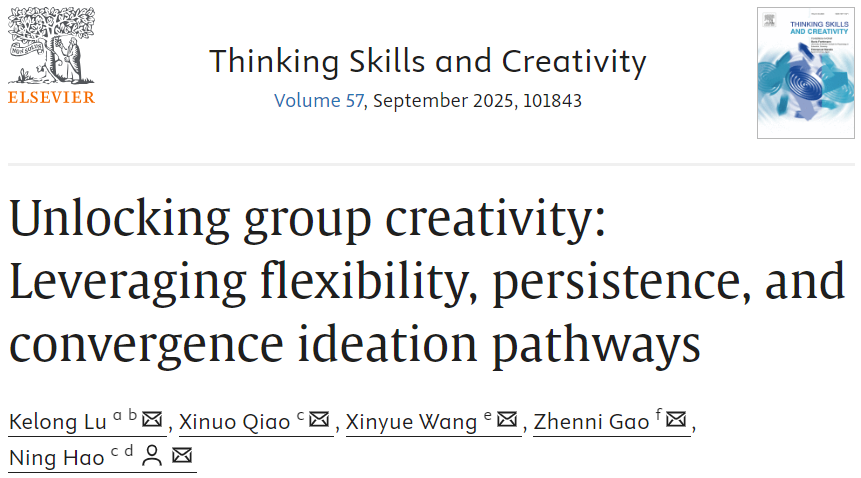
On April 15, 2025, Professor Hao Ning and his team published a research paper titled “Unlocking group creativity: Leveraging flexibility, persistence, and convergence ideation pathways” online in the journal Thinking Skills and Creativity, providing preliminary behavioral evidence for the “three pathways model of group creativity generation.” The study indicates that all three idea generation pathways (flexible pathway, persistence pathway, and convergence pathway) positively predict group innovation performance. Among these, the flexible pathway can predict the highest level of innovation in the group. The convergence pathway not only directly predicts group innovation performance but also indirectly influences it through the flexible and persistence pathways.
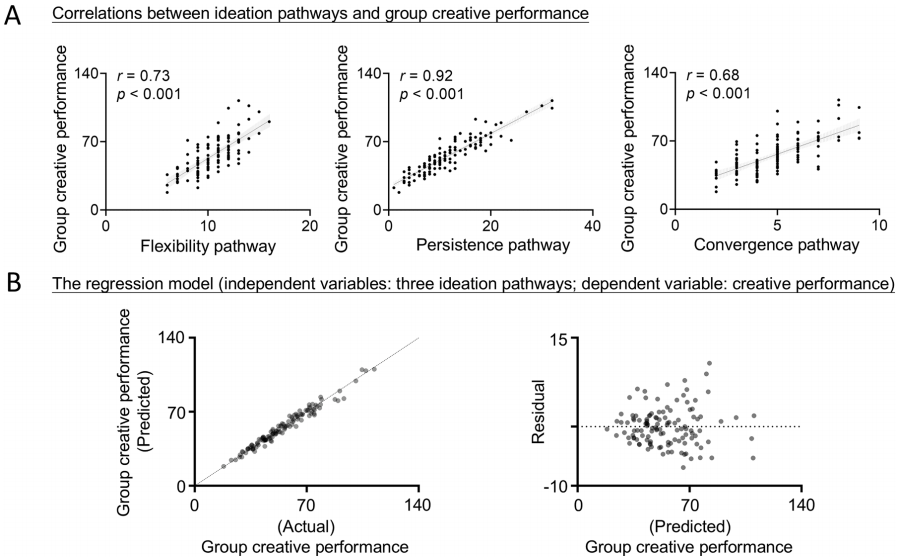
Figure 3. The Relationship Between Idea Generation Pathways and Group Innovation Performance
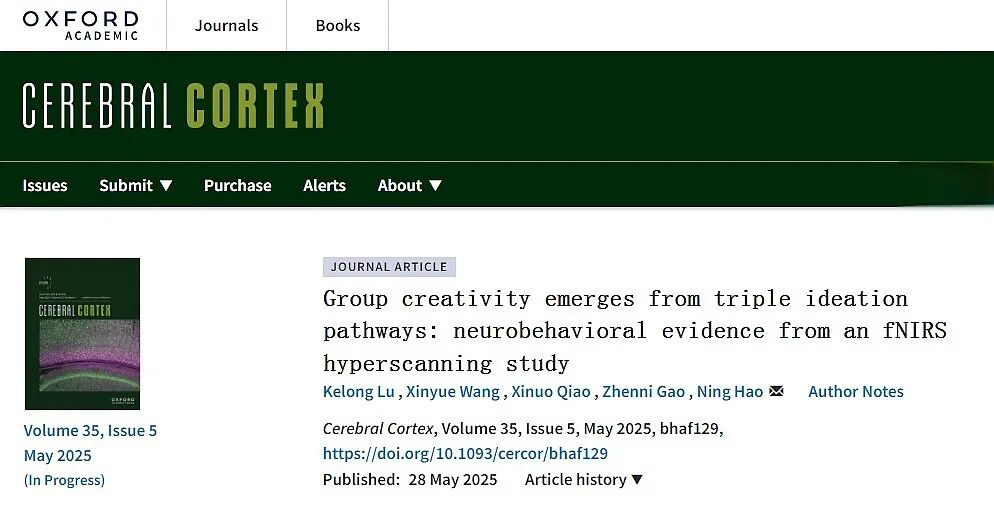
On May 28, 2025, Professor Hao Ning and his team published a research paper titled “Group creativity emerges from triple ideation pathways: Neurobehavioral evidence from an fNIRS hyperscanning study” online in the journal Cerebral Cortex. This study combined a dual-partner collaborative innovation hyperscanning paradigm with dynamic neural coupling analysis techniques (Figure 4), providing preliminary neuroscientific evidence for the “three pathways model of group creativity generation.”
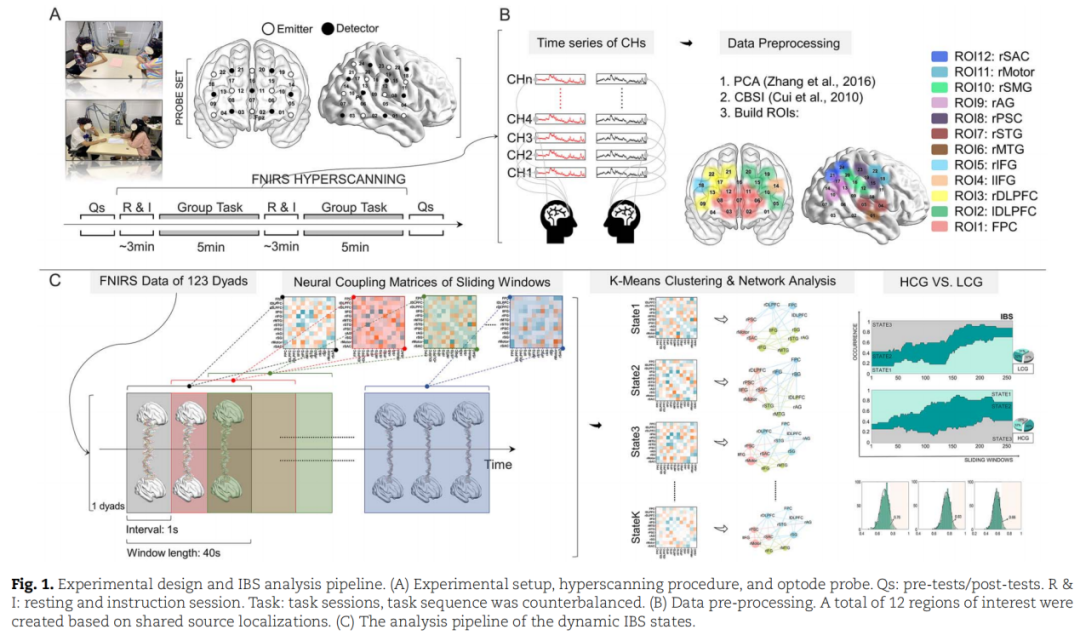
Figure 4. Research Design and Data Analysis Procedure
The study found three dynamic inter-brain neural coupling patterns in the group creativity generation process. Pattern I is characterized by stronger inter-brain neural coupling (brain synchrony) in regions such as the prefrontal-right superior temporal gyrus and left dorsolateral prefrontal-right inferior frontal gyrus; Pattern II is characterized by stronger brain synchrony in regions such as the prefrontal-temporal areas, and its occurrence can positively predict group innovation performance; Pattern III is characterized by weaker brain synchrony in the frontal-parietal regions, and its occurrence can negatively predict group innovation performance (Figure 5). Furthermore, the occurrence of Pattern II is significantly positively correlated with scores from all three idea generation pathways and promotes group innovation performance through three mediating pathways: (1) the flexible pathway itself; (2) the flexible-persistence pathway and flexible-convergence pathway; (3) the flexible-persistence-convergence chain pathway (Figure 6). These findings provide neuroscientific evidence for the three pathways model of group creativity generation, highlighting the critical role of brain synchrony in the prefrontal-temporal regions in group creativity generation.
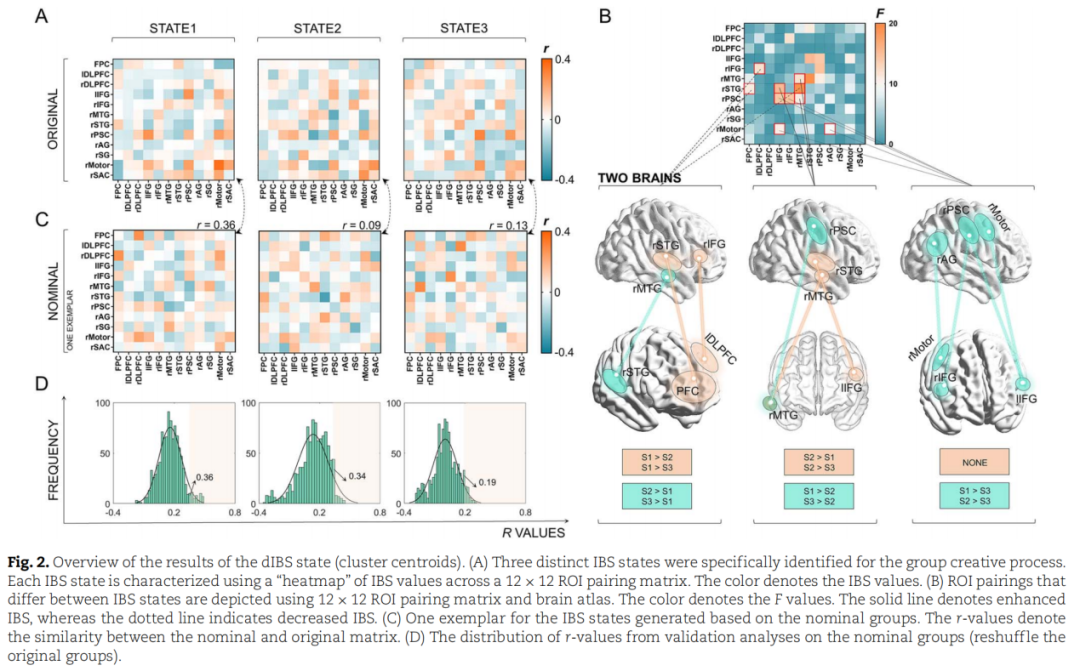
Figure 5. Dynamic Inter-brain Neural Coupling Patterns in Group Creativity Generation
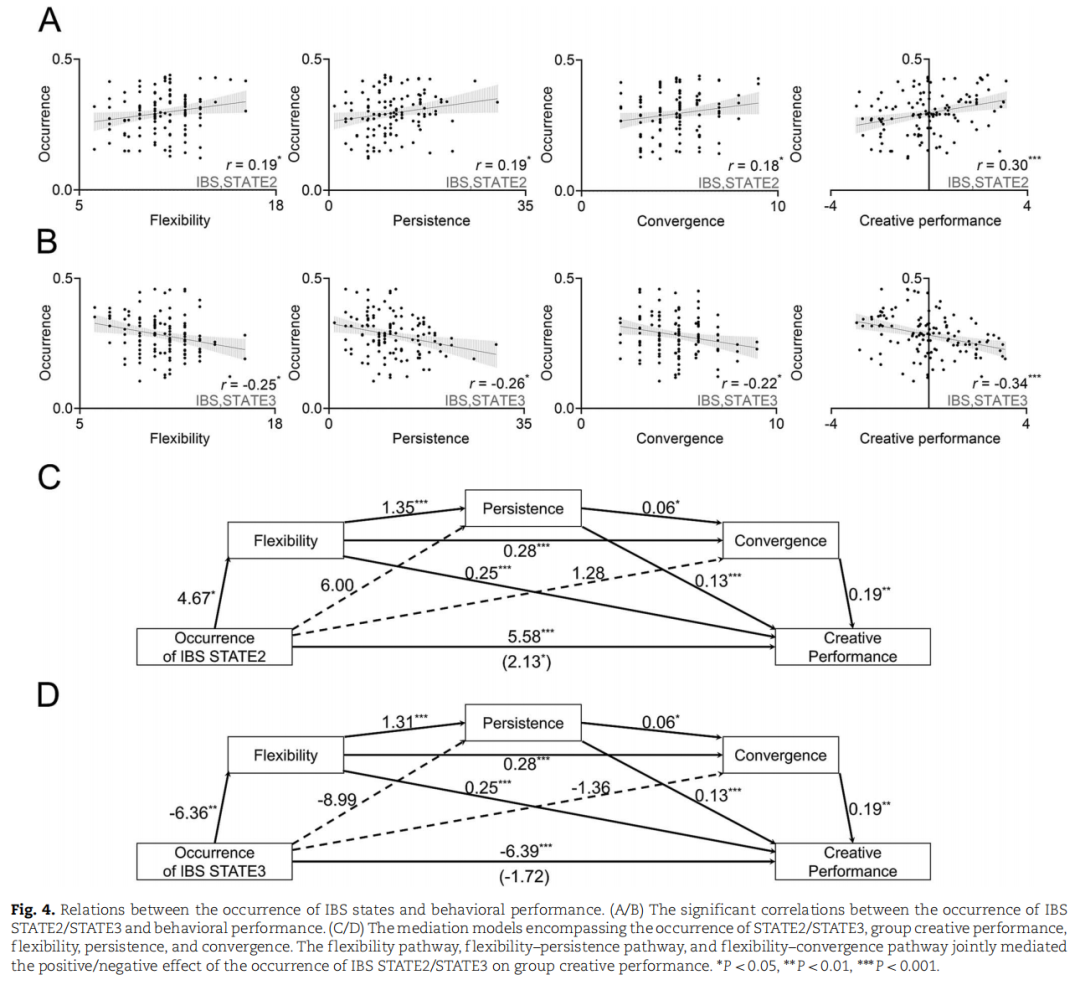
Figure 6. The Relationship Between Dynamic Inter-brain Neural Coupling Patterns and Group Creativity Generation
Dr. Lu Kelong, an associate researcher at Wenzhou Medical University, is the first author of the paper, while Dr. Wang Xinyue, from the School of Psychology at Nanjing Normal University, is the co-first author. Professor Hao Ning from the School of Psychology and Cognitive Science at East China Normal University is the corresponding author. This work was supported by the National Natural Science Foundation (32300900, 32471103), the Major Project of Scientific and Technological Innovation 2030 – “Brain Science and Brain-like Research” (2021ZD0200500), and the Fundamental Research Funds for the Central Universities. Dr. Gao Zhenni from the Institute of Brain and Psychological Science at Sichuan Normal University and PhD student Qiao Xino from East China Normal University made significant contributions to this research.
Paper Information:
-
Lu, K., Wang, X., Qiao, X., Gao, Z., & Hao, N.* (2025). Group creativity emerges from triple ideation pathways: Neurobehavioral evidence from an fNIRS hyperscanning study. Cerebral Cortex, 35, bhaf129.
-
Lu, K., Qiao, X., Wang, X., Gao, Z., & Hao, N.* (2025). Unlocking group creativity: Leveraging flexibility, persistence, and convergence ideation pathways. Thinking Skills and Creativity, 57, 101843.
Related Papers from the Research Group:
1. Lu, K., & Hao, N.* (2024). The interpersonal neural coupling in group creative ideation. Psychological Review, online published, doi: 10.1037/rev0000524
2. Wang, X., Lu, K., He, Y., Gao, Z., Qiao, X., Zhang, Y., & Hao, N.* (2024). Dynamic brain networks in spontaneous gestural communication. npj Science of Learning, 9, 59.
3. Cheng, S., Wang, J., Luo, R., & Hao, N.* (2024). Brain to brain musical interaction: A systematic review of neural synchrony in musical activities. Neuroscience & Biobehavioral Reviews, 164, 105812.
4. He, Y., Wang, X., Lu, K., & Hao, N.* (2023). Letting leaders spontaneously emerge yields better creative outcomes and higher leader-follower inter-brain synchrony during creative group communication. Cerebral Cortex, 33, 6559-6572.
5. Lu, K., Gao, Z., Wang, X., Qiao, X., He, Y., Zhang, Y., & Hao, N.* (2023). The hyper-brain neural couplings distinguishing high-creative group dynamics: An fNIRS hyperscanning study. Cerebral Cortex, 33, 1630-1642.
6. Wang, X., Lu, K., He, Y., Gao, Z., & Hao, N.* (2022). Close spatial distance and direct gaze bring better communication outcomes and intertwined neural networks. NeuroImage, 261, 119515.
7. Wang, X., Zhang, Y., Lu, K., He, Y., & Hao, N.* (2022). Dynamic inter-brain networks correspond with specific communication behaviors: Using fNIRS hyperscanning during creative and non-creative communication. Frontiers in Human Neuroscience, 16, 907332.
8. Lu, K., Qiao, X., Yun, Q., & Hao, N.* (2021). Educational diversity and group creativity: Evidence from fNIRS hyperscanning. NeuroImage, 243, 118564.
9. Lu, K., Yu, T., & Hao, N.* (2020). Creating while taking turns, the choice to unlocking group creative potential. NeuroImage, 219, 117025.
10. Lu, K., Teng, J., & Hao, N.* (2020). Gender of partner affects the interaction pattern during group creative idea generation. Experimental Brain Research, 238, 1157-1168.
11. Lu, K., Xue, H., Nozawa, T., & Hao, N.* (2019). Cooperation makes a group be more creative. Cerebral Cortex, 29, 3457-3470.
12. Lu, K., & Hao, N.* (2019). When do we fall in neural synchrony with others? Social Cognitive and Affective Neuroscience, 14, 253-261.
13. Lu, K., Qiao, X., & Hao, N.* (2019). Praising or keeping silent on partner’s ideas: Leading brainstorming in particular ways. Neuropsychologia,124, 19-30.
14. Xue, H., Lu, K., & Hao, N.* (2018). Cooperation makes two less-creative individuals turn into a highly-creative pair. NeuroImage, 172, 527-537.
Illustration and Text by Lu Kelong
Editor: Zhang Pengqian
Initial Review: Hao Ning
Final Review: Fang Yuan