How can technology alleviate the suffering of patients and expand the boundaries of human intelligence? Tao Hu, founder and chief scientist of Shanghai Brain Tiger Technology Co., Ltd., is a leading figure in the field of brain-computer interfaces, combining academic authority with industrial practice. He has focused on the “most challenging sensor” of the human body—the brain-computer interface—leading his team from animal experiments to advancing clinical research on humans. Now, the first epilepsy patient has achieved thought-controlled gameplay in large games such as “Honor of Kings” and “Black Myth: Wukong” through a brain-computer interface, marking another milestone in the development of this technology.
Tao Hu’s entrepreneurial journey stems from a persistent pursuit of “translating research into practice”—he does not want brain-computer interface technology to remain confined to laboratory papers but hopes to use technology to genuinely alleviate patient suffering and expand the boundaries of human intelligence. This practical commitment has propelled him to make a crucial leap from researcher to technology entrepreneur.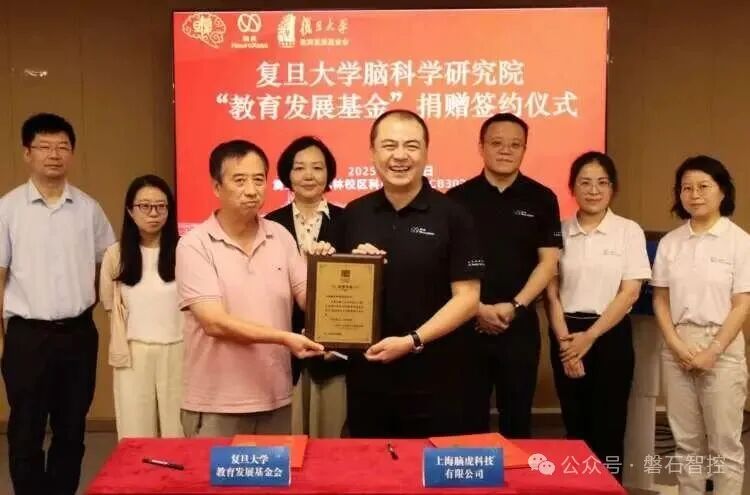
Focusing on the “Most Challenging Track” to Start an Entrepreneurial Journey
In 2019, invited by the industrial development needs of his hometown, Jiangxi Ganjiang New Area, Tao Hu keenly realized during his research on sensor industry directions that brain-computer interfaces, as the “most challenging sensor” of the human body, represent a technological high ground of interdisciplinary convergence and a livelihood field that can change the fate of millions of patients. At that time, he had already led his team to complete animal experiments on brain-computer interfaces, but to advance clinical research on humans, a company was needed as a vehicle for technology transfer. Thus, he resolutely founded Brain Tiger Technology in Ganjiang New Area, becoming one of the earliest companies in China to focus on “implantable flexible brain-computer interfaces.”
In 2021, to integrate higher quality research and industrial resources, Tao Hu established Shanghai Brain Tiger Technology Co., Ltd. in Shanghai, setting up headquarters there and constructing a model of “R&D in Shanghai, production in Ganjiang.” In the same year, the national “Science and Technology Innovation 2030—’Brain Science and Brain-Like Research’ Major Project” (China Brain Plan) was officially launched. Tao Hu accurately grasped industry opportunities, rapidly pushing the company into the clinical transformation track. In just one year, 2022 saw the company secure hundreds of millions in financing through angel and Series A rounds, with investors including Shanda and Sequoia China.
Giving Up a “Stable Job” to Fully Commit to the Industry
By the end of 2024, facing a critical period for the industrial transformation of brain-computer interface technology, Tao Hu made a shocking decision in the industry: he resigned from his stable position as deputy director of the Shanghai Institute of Microsystem and Information Technology, Chinese Academy of Sciences, to devote all his energy to Brain Tiger Technology.
Brain-computer interfaces are known as the “next generation of human-computer interaction revolution,” but their core technologies have long been monopolized by foreign countries. Tao Hu leads his team with “flexible implantation” as the core technology, tackling the entire chain from materials, chips, algorithms to clinical applications, achieving multiple breakthroughs from “0 to 1” in just five years, placing China among the world leaders in this field.
In the face of international giant Neuralink’s “deep implantation” approach, Tao Hu insists on independent judgment: the primary premise of brain-computer interfaces is “safety,” followed by “multi-area coverage.” He chose the “flexible cortical implantation” route, placing electrodes on the surface of the cerebral cortex rather than inserting them into the cortical layer, thus avoiding collision risks during vigorous activities while enabling cross-area signal collection—”If we compare the brain to a city, Neuralink focuses on ‘urban warfare’ (single neuron), while we look at the ‘overall city’ (multi-area collaboration), which better aligns with clinical needs’ priorities.” To achieve this route, he led his team to overcome the core challenge of “flexible electrode materials.”
Rapidly Advancing Technology from Laboratory to Clinical Application
Tao Hu consistently emphasizes that “technology must be implemented to be useful,” leading his team to rapidly advance the transformation of technology from laboratory to clinical application, guided by “clinical needs.”
In 2022, Brain Tiger Technology was the first to obtain domestic clinical ethical approval for implantable brain-computer interfaces.
In 2023, they achieved key breakthroughs in animal experiments, decoding the movement trajectories of Labrador dogs and enabling rhesus monkeys to “play games with their thoughts,” validating the effectiveness of the technology. In February of the same year, they successfully completed a 256-channel flexible deep electrode implantation surgery in humans, recording single-neuron signals for the first time; in May, they achieved “Chinese language decoding and synthesis” based on this technology, giving hope to language-impaired patients to “speak.” In June, they assisted doctors in precisely removing brain lesions while preserving important brain functions of patients.
In 2024, they achieved the world’s first breakthrough in “real-time Chinese language decoding.” Patients with damaged language areas in the brain were able to output sentences using the device at a speed close to half that of normal speech, with subsequent integration of AI boosting the speed to 307 characters per minute (more than double that of normal people), also achieving “thought-based office work” and “remote dialogue between two brains.”
In 2025, they conquered complex scenario applications, allowing epilepsy patients to precisely control large games such as “Honor of Kings” and “Black Myth: Wukong” through brain-computer interfaces, with reaction speeds approaching those of traditional mouse operations, marking a leap from “medical rehabilitation” to “empowerment in daily life.”
Source: News Morning Post