Remember to star the public account ⭐️ to see the push notifications in real time.
 Source:ContentTranslated fromxda-developers.
For decades, Intel’s x86 architecture has dominated the computing field, powering a wide range of devices from basic laptops to the most powerful data center equipment. However, a quiet revolution is taking place behind the scenes: Arm. The Arm architecture began to establish itself during the smartphone era and is now occupying a significant position in mainstream computing, which was previously unimaginable. So much so that the dominance of x86 seems to be a thing of the past.
There are many reasons to believe this, and it is not hard to imagine compared to a few years ago. Apple’s significant shift to Arm with its M-series Apple Silicon SoCs has undoubtedly set off a trend, while Microsoft is once again pushing for an Arm-based Windows operating system, indicating that Microsoft sees its value again. These two industry transformations are just the tip of the iceberg.
The industry support for Arm is compelling
One of the most obvious indicators of Arm’s rise is how the number of chip manufacturers and the community of chip creators has grown over the past decade. In the x86 realm, there are only two major producers: Intel and AMD. In contrast, the Arm ecosystem boasts numerous chip design companies. Some tech giants are building high-performance processors based on Arm: Apple has replaced Intel CPUs in its Macs with its self-developed M-series chips, Qualcomm is developing its own “X” series chips for Windows based on Arm, and even Amazon is creating its own Arm-based “Graviton” chips for cloud computing.
In fact, almost all major chip manufacturers, except Intel and AMD, are producing Arm-based chips. Even Nvidia has long been developing Arm-based Tegra chips. Although Nvidia recently acquired about 5% of Intel and invested $5 billion in the company, promising to launch x86 SoCs with RTX chipsets, Nvidia has also been developing Arm-based Tegra chips. Let’s not forget that Nvidia even attempted to acquire Arm a few years ago and has been using Arm-based CPUs in its server-oriented “Grace” chips.
Even gaming consoles reflect this difference, which somewhat illustrates the point. While Nintendo’s Switch and Switch 2 benefit from Nvidia’s support and are based on Arm architecture, Nintendo has been using Arm chips in its handheld devices since the Game Boy Advance. The DS, DS Lite, and 3DS all use Arm architecture, some manufactured by other companies, while others are directly licensed from Arm. Meanwhile, PlayStation and Xbox still run on custom x86 CPUs, but not long ago, even gaming consoles and older Macs from Apple switched to PowerPC architecture.
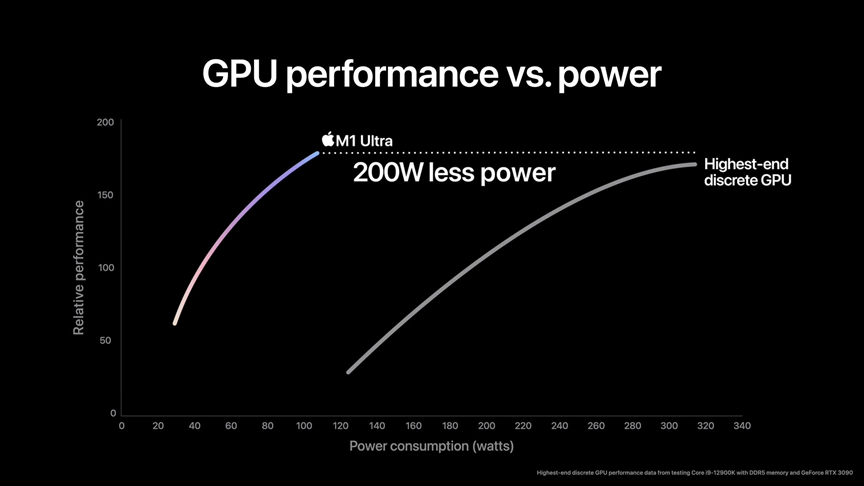
The problem with x86 is that it is essentially a closed club. In contrast, Arm’s licensing model allows a large number of companies to enter and design their own chips based on Arm’s ISA. Apple’s move is particularly shocking, but for x86, it is like a canary in a coal mine. It is worth noting that Apple is a co-founder of Arm and likely has considerable power in negotiating licensing agreements for Arm IP, and it no longer needs to pay Intel for CPU fees, but it goes beyond that.
When Apple first announced its plan to migrate from PowerPC to x86 at WWDC in 2005, the situation for PowerPC was somewhat strange. Apart from Apple, its use was almost limited to gaming consoles from the early to mid-2000s, and interestingly, the Curiosity and Perseverance Mars rovers. However, Apple’s transition was a result of an industry trend, as all other personal computing platforms at the time were based on x86.
This time is different: Apple is not lagging behind but has decided to take the initiative. The shift to Arm brings significant advantages, such as energy efficiency, heat dissipation, and performance. Currently, every major product line from Apple has at least one Arm-based chip available. Subsequently, Qualcomm’s acquisition of the startup Nuvia, founded by former Apple chip designers for $1.4 billion, indicates that some top talent and chip designers are now entering the Arm field instead of x86.
Finally, due to the licensing status of x86, companies wanting to develop their own chips cannot even use it. Instead, all efforts are focused on Arm (or in some cases RISC-V), which means that the forefront of computing and chip development is taking place on Arm.
Software is no longer the issue it once was
When developers compile software, they must define a “target.” This target refers to the platform on which the code is expected to run, as the code you write is merely an abstraction of the assembly language understood by the execution architecture. Arm’s CPU instructions do not apply to x86, and vice versa. When Windows on Arm first gained popularity with Windows 10, many of the most popular applications could not run natively, and the “translation” process (interpreting x86-built instructions and dynamically converting them to Arm instructions) was slow and only supported 32-bit applications.
Microsoft’s early attempt, Windows RT, was even worse. It was released alongside Windows 8, aimed at Arm-based devices, and launched with the Microsoft Surface RT. However, it could only run applications from the Microsoft Store and had no translation capabilities at all. Applications were typically not built for Arm, so what was the point?
Apple’s approach is clearly better, although there is certainly an element of industry timing involved, as Microsoft’s previous attempts were simply too early, but Apple’s approach is also distinctive. Apple’s Rosetta 2 translator was available on day one for M1-based Macs and supported by hardware acceleration, allowing x86 instructions to be translated into Arm instructions, providing a completely seamless experience. Applications quickly became available for Arm, and even those not originally designed for Arm often ran smoothly.
Microsoft’s renewed focus on Windows on Arm has made significant progress, greatly improving translation capabilities and adding 64-bit support. Many key applications, such as the full Microsoft Office suite, Adobe Photoshop and Lightroom, Chrome, and Firefox, now have native Arm versions available. Even some gaming platforms are trying, as the improved emulation capabilities of Windows on Arm can fill many gaps. Of course, there are some extreme cases, such as certain drivers and very old software, but these issues can usually be circumvented or resolved in some way.
One of the biggest obstacles to Arm’s adoption has been the “chicken or the egg” problem. Developers need a reason to build and maintain applications for Arm without users, and the lack of users is largely due to the scarcity of software. Even in gaming, the main barrier may be the lack of anti-cheat support for popular games that users desire. However, the lack of anti-cheat support is not a fixed limitation like it is with Linux; rather, it relates to entirely different hardware, as many anti-cheat solutions work closer to the hardware to scan memory and monitor processes.
All roads in the industry lead to Arm
It seems that every major vendor has at least tried Arm, with some fully committing to it. Apple’s significant shift to Arm is shocking, proving the architecture’s viability as a PC-level architecture. Meanwhile, Microsoft has returned to Windows on Arm and refined it, improving compatibility and even launching the first “Copilot+” computer powered by Qualcomm’s Arm-based Snapdragon X Elite processor.
Speaking of Qualcomm, they have made significant bets on Windows based on Arm. The CEOs of Qualcomm and Arm predicted last year that up to 50% of computer shipments will be based on Arm architecture within five years. This is undoubtedly an ambitious plan, but it also demonstrates their confidence. Additionally, it has been reported that Microsoft and Qualcomm signed an exclusive agreement regarding Windows based on Arm, which will expire in 2024.
Nvidia’s recent collaboration with Intel, while causing some obstacles in this area, also proves that even in the x86 realm, integrating efficient SoCs is inevitable. Nvidia can still design its own Arm chips, although the future of the rumored N1X chip for Windows on Arm may be uncertain, Nvidia has been using its Arm CPUs alongside GPU technology to build AI-focused server-grade machines, and this model is unlikely to disappear overnight.
However, there is one company quietly active in the Arm space that may come as a surprise: AMD. Although currently a mainstream x86 chip manufacturer, AMD occasionally collaborates with Arm. Its Opteron A processor based on the Arm Cortex-A57 core was released in 2016, and AMD announced the K12 project back in 2014, but ultimately canceled it in 2023. Jim Keller, who was the chief developer of AMD’s Zen architecture and is often credited as a key figure in the revival of AMD’s chip business, called the cancellation of the K12 project “foolishly done.” He also stated that the main difference between the modular Zen architecture and the K12 Arm chipsets lies in the decoder, as most other elements of the chips are the same.
However, recent reports suggest that Arm may have returned to AMD’s camp. Although several generations have passed since Keller’s work on the Zen architecture, his assertion that the transition from x86 to Arm would be very simple may still hold true today—even if Zen 5 is a significant architectural overhaul. Additionally, MediaTek has been publicly collaborating with Nvidia on the GB10 Grace Blackwell project, and it has been reported that they are privately working on the previously mentioned N1X. If Arm represents the future (which many companies seem to believe), AMD certainly does not want to be left behind in the competition between Windows and Arm.
For a long time, significant changes have been occurring in the computing field, and over time, the pace of change will only accelerate. This transformation has been brewing for over twenty years. From gaming handhelds to smartphones, and later to laptops and data centers, Arm’s applications have made it a platform that nearly all products not using x86 have turned to Arm. Amazon’s Graviton, Tesla’s infotainment and autonomous driving systems, and even LG’s refrigerators are using Arm.
It is important to clarify that I do not believe x86 will disappear anytime soon, nor will it ever truly vanish. Even today, you can still find IBM’s mainframe architecture from decades ago deep in some companies’ server rooms. Moreover, x86 has been so large and long-standing that it is unlikely to just disappear.
Arm has made progress across various fields, and the trend of consumer-grade desktop processors often does not lag behind other industries. We have already seen Intel and AMD respond to Arm, trying to maximize power efficiency, although to be fair, this approach has proven effective, but still cannot match the impressive battery life and thermal performance of Arm-based Apple Silicon.
Currently, competition is forcing Intel and AMD to increase their investments. In any case, this is always good for consumers, and in the future, we may even see more custom-designed cores. Furthermore, we have not even discussed RISC-V, an open-source instruction set architecture that may still pose a threat, but currently faces issues of fragmentation and lack of adoption. Ten years from now, we may be talking about a three-way architectural battle between RISC-V, Arm, and x86. x86 still holds a place in large-scale digital computing, but Arm has paved the way as a viable, powerful, and efficient alternative in almost every conceivable computing field.
As the history of the tech industry has shown, once momentum shifts, it is nearly impossible to reverse. And the current momentum is undoubtedly in favor of Arm.
Reference link
https://www.xda-developers.com/arm-future-desktop-computing-writing-wall-x86/
*Disclaimer: This article is original by the author. The content of the article represents the author’s personal views, and Semiconductor Industry Observation reprints it only to convey a different perspective, which does not represent Semiconductor Industry Observation’s endorsement or support of this view. If there are any objections, please feel free to contact Semiconductor Industry Observation.
END
This is the 41st issue shared by “Semiconductor Industry Observation”. Welcome to follow.
Recommended Reading
★A Chip That Changed the World
★U.S. Secretary of Commerce: Huawei’s Chips Are Not That Advanced
★“ASML’s New Lithography Machine, Too Expensive!”
★Nvidia’s New Competitor Rising Quietly
★Chip Crash, All Blame Trump
★New Solutions Announced to Replace EUV Lithography!
★Semiconductor Equipment Giants, Salaries Soar by 40%
★Foreign Media: The U.S. Will Propose Banning Software and Hardware for Cars Made in China

Star the public account ⭐️ to see the push notifications in real time, the small account prevents loss.
Seeking likes

Seeking shares

Seeking recommendations