Follow+Star Public Account Number, don’t miss out on exciting contentAuthor | strongerHuangWeChat Public Account | Embedded ColumnRecently, I organized the release dates and typical MCU models for Cortex-M0, M3, M4, M7, and M85 cores. From the ARM official website, as of now (2025-11), there are a total of 11 ARM Cortex-M cores, which are:M0, M0+, M3, M4, M7, M23, M33, M35P, M52, M55, and M85, totaling 11 models.Address:
https://www.arm.com/zh-TW/product-filter?families=cortex-m
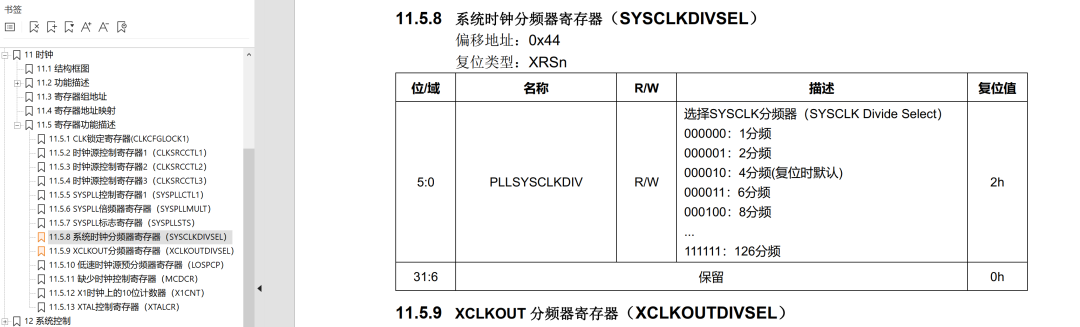
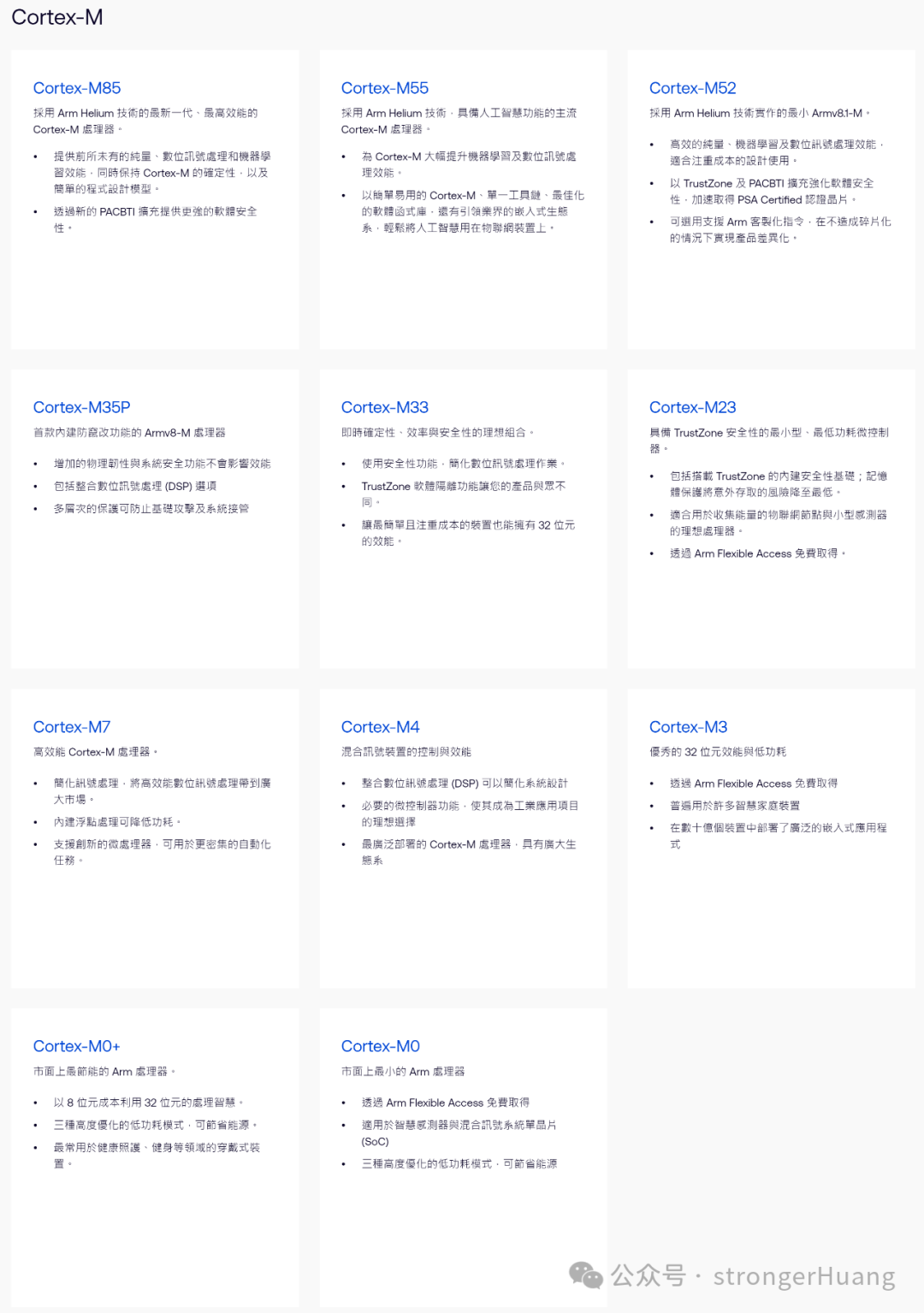 From previous reports, ARM will adjust its strategy (including renaming). Therefore, it is possible that no new M cores will be released.While organizing the 11 M core microcontrollers, we found that currently, the only microcontroller based on the Cortex-M52 core is the G32R501 series real-time microcontroller from GigaDevice. Major MCU manufacturers like ST, NXP, TI, Renesas, and Infineon have not released M52 microcontrollers (I am also puzzled; perhaps I have not discovered them, or they may exist but have not been released).Today, let’s take a look at the registers of the M52 microcontroller (G32R501).1. Clock RegistersThe first step for a microcontroller is to configure the clock, including the system and peripheral clocks, so clock registers are crucial.Here is a typical divider register:
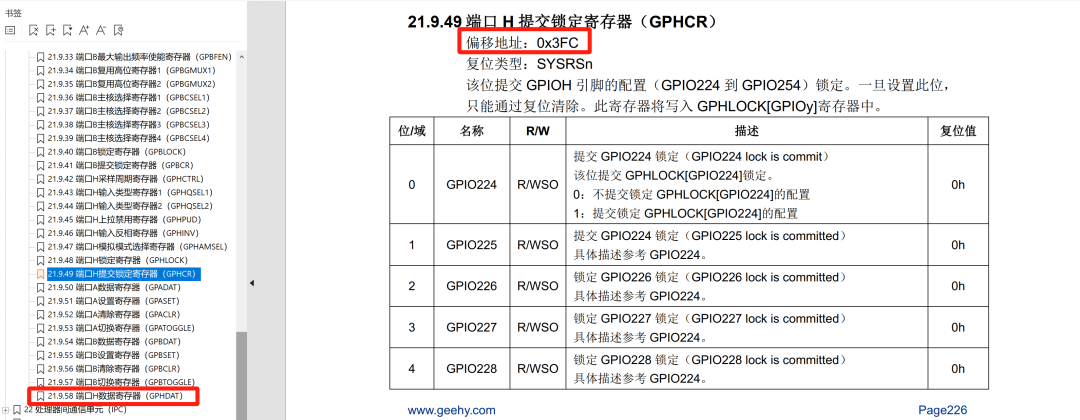
 2. GPIO RegistersGPIO registers are essential for configuration and are among the most common registers in microcontrollers.Compared to ordinary M0 and M3 microcontrollers, the G32R501 has a relatively large number of GPIO registers, with the official user manual listing 58 GPIO registers, offset to 0x3FC:
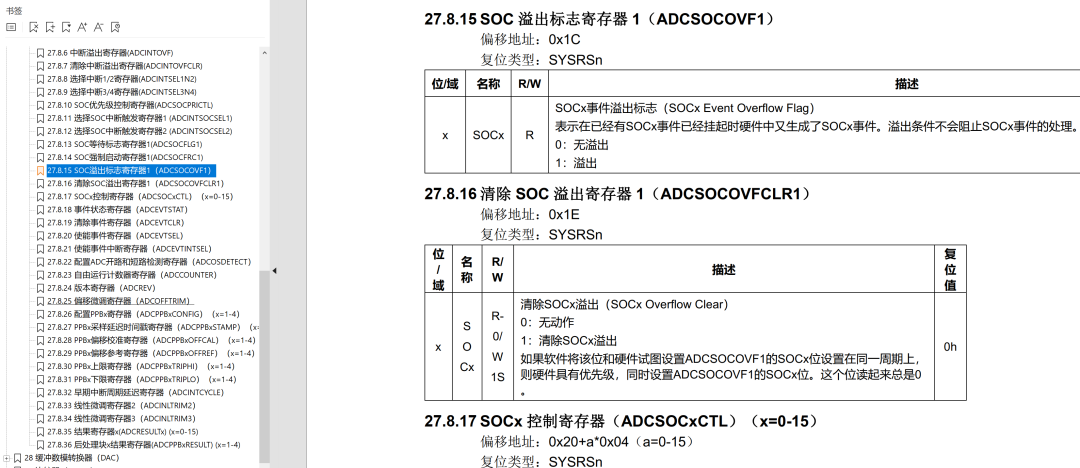
 3. ADC RegistersADC is currently one of the most common peripherals in microcontrollers, with most 32-bit microcontrollers equipped with ADCs, although some have higher resolution and more powerful functions.Currently, the G32R501 has a conventional 12-bit ADC precision, but it indeed has many registers, appearing quite powerful.
 4. UART RegistersUART is an essential peripheral for microcontrollers, used in almost every project, and is also the most commonly used for testing and debugging.G32R501 has a moderate number of UART registers, which appear quite standard.
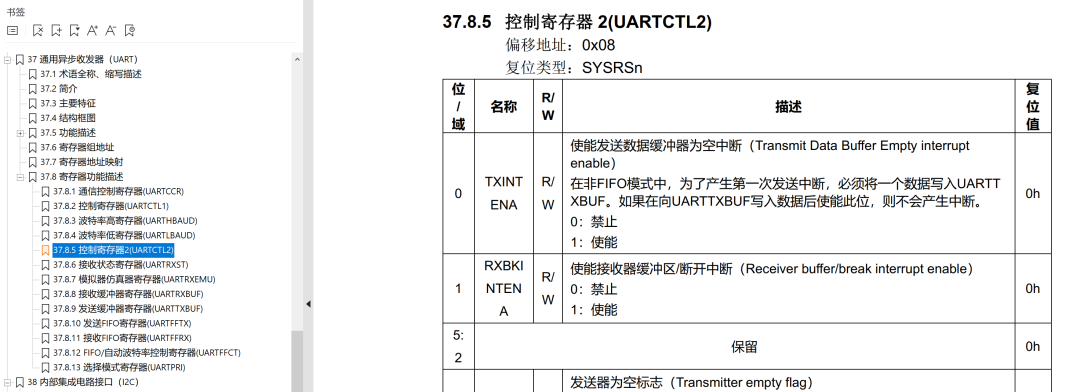 5. I2C RegistersI2C is commonly used for some low-speed peripherals; compared to UART, it is not as frequently used, but there were many early I2C devices, leading to the continuous development of I2C, which now has a “high-speed mode”.The G32R501 also has a moderate number of I2C registers, which are considered standard.
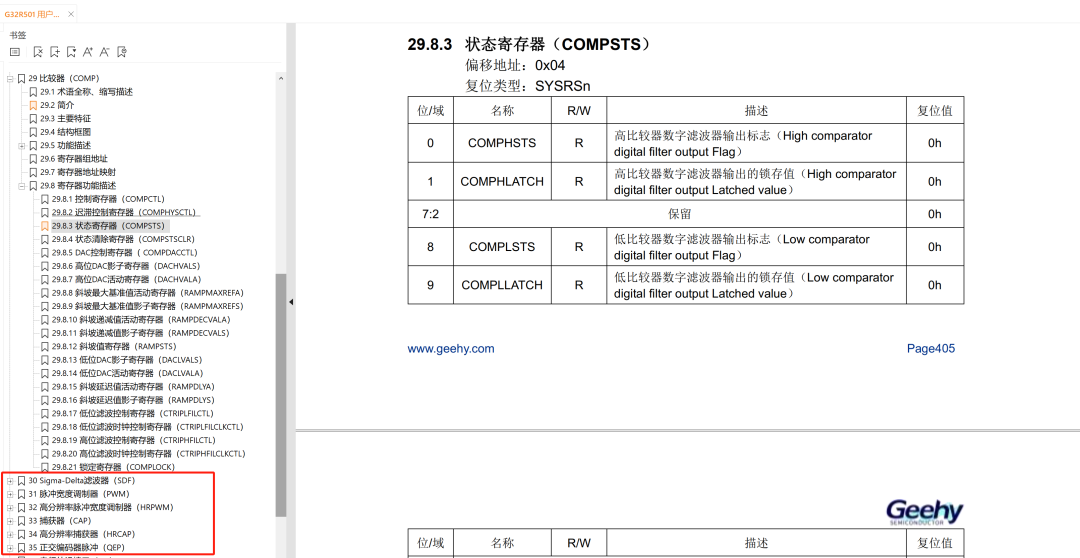
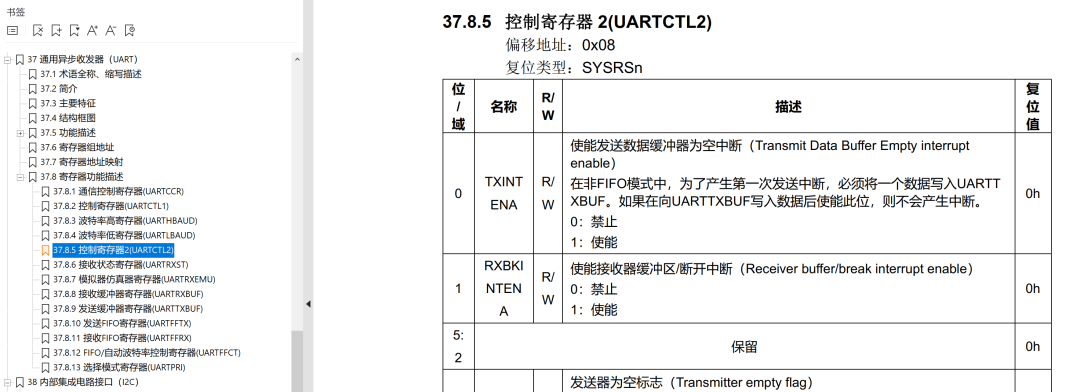 6. Timer RegistersMost microcontrollers have timers, but in the G32R501 microcontroller, it seems that the timers have been “disassembled”.Typically, comparators, PWM, capture, encoders, etc., fall under the category of timers, but the G32R501 treats these as separate peripheral modules:
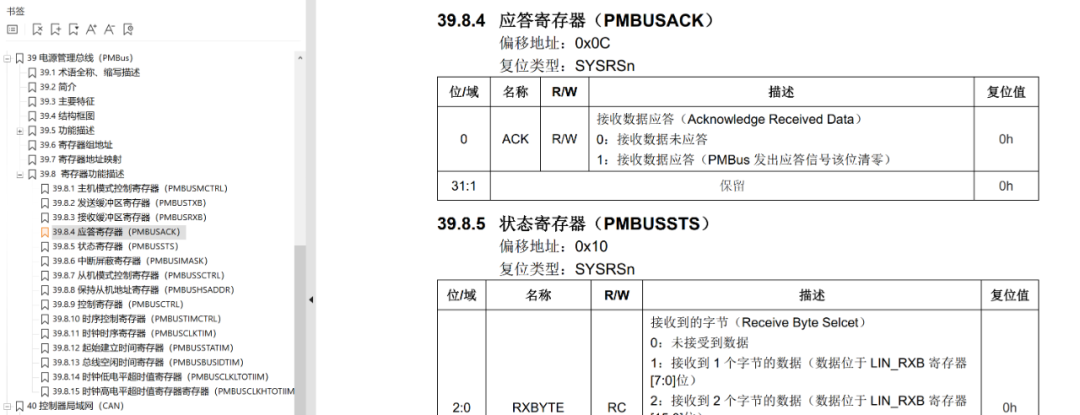
 7. Power Management Bus (PMBus) RegistersMany early M0 and M3 microcontrollers did not have this power management bus peripheral module.Now, as demands change, many devices are implementing power management, so the G32R501 microcontroller includes a power management bus (PMBus) peripheral.
 8. Inter-Processor Communication (IPC) RegistersIn our conventional understanding, microcontrollers are generally single-core, but with changing demands, multi-core microcontrollers are gradually emerging.Thus, the need for inter-core communication arises, leading to the presence of the Inter-Processor Communication (IPC).
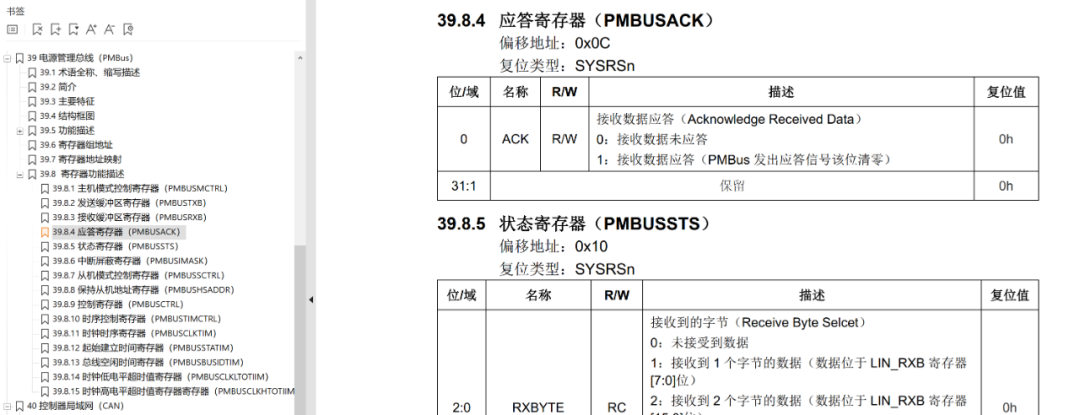 These are just a few registers to showcase.The differences between the M52 microcontroller and M0, M3 microcontrollers are:1. More peripheral modules with more powerful functions.2. More registers for the same peripherals compared to M0 and M3.3. More powerful and richer functions for the same peripherals compared to M0 and M3.
———— END ————

● Column “Embedded Tools”
● Column “Embedded Development”
● Column “Keil Tutorials”
● Selected Tutorials from the Embedded Column
Follow the public accountReply “Add Group” to join the technical exchange group according to the rules, reply “1024” to see more content.Click “Read the Original” to see more shares.