Overview of ARM Cortex-R Series

As we all know, ARM Cortex includes three types of processors: (1) the Cortex-M series, which is designed for embedded systems and microcontrollers, used in IoT devices, sensors, and consumer electronics; (2) the Cortex-A series, which offers high performance and multi-core processing capabilities to support complex operating systems, used in smartphones, tablets, and high-end embedded systems; (3) the Cortex-R series, which features high reliability, low latency, and high real-time performance, applied in automotive, industrial control, and storage systems.
In daily life, due to the popularity of electronic products like smartphones (A series) and wearable devices (M series), the processors in the A series and M series are much more well-known, while the R series remains relatively obscure. This is because the scenarios targeted by the R series are not as mainstream, such as automotive, industrial control, and storage, and fewer people are exposed to these fields compared to smartphones and watches. However, the R series quietly supports a significant part of our lives. This article aims to provide an overview of the R series processors to help more people understand them.
Let’s introduce the R series processors in chronological order of their release:
Cortex-R4 (Released in 2011)

Overview of ARM Cortex-R Series

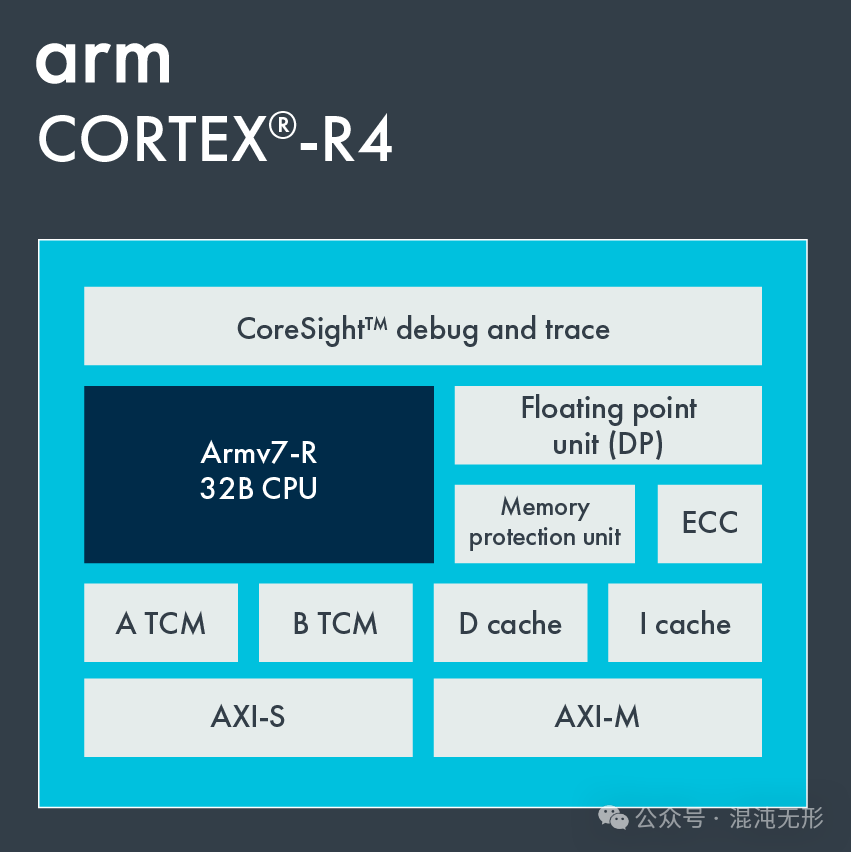
The Arm Cortex-R4 processor is based on the Armv7-R architecture and is the smallest deep embedded real-time processor.

The Cortex-R4 processor offers high performance, real-time responsiveness, reliability, and stability. It provides excellent energy efficiency and cost effectiveness for ASIC, ASSP, and MCU embedded applications.
Application scenarios: Automotive control, storage devices, set-top boxes, etc.Overview of ARM Cortex-R Series

Chips using R4: Texas Instruments RM4, TMS570Renesas RZ/T1
Cortex-R5 (Released in 2011)
Overview of ARM Cortex-R Series

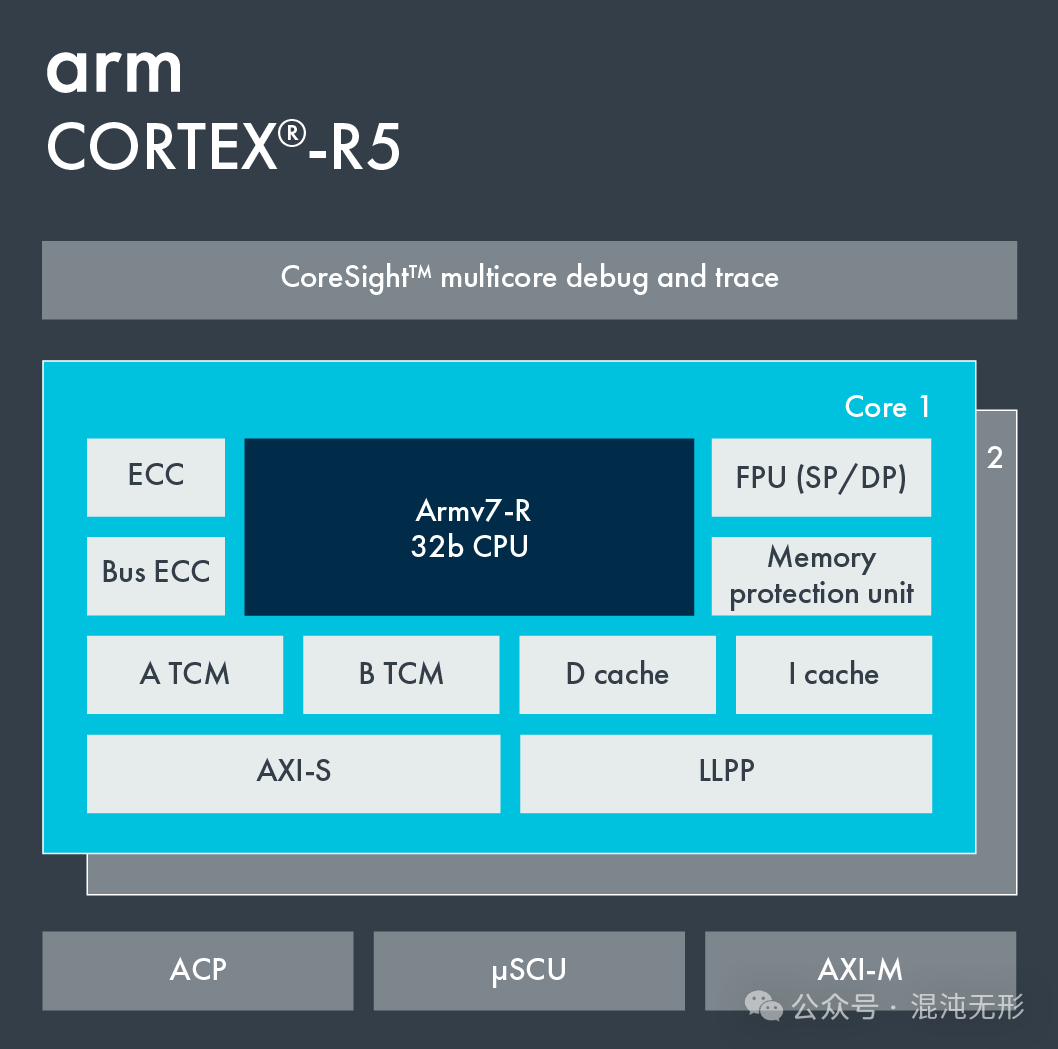
The Arm Cortex-R5 processor provides enhanced fault containment features for real-time applications.

Based on the Cortex-R4, the Cortex-R5 processor enhances error management, expands functional safety, and provides SoC integration capabilities, suitable for deeply embedded real-time and safety-critical systems.
Application scenarios: Commonly found in automotive control, hard disk control, network communication devices, etc.Overview of ARM Cortex-R Series

Chips using R5: NXP S32Z, S32ERenesas RZ/N2L, RZ/T2L, RZ/T2M
Cortex-R7 (Released in 2011)
Overview of ARM Cortex-R SeriesOverview of ARM Cortex-R Series

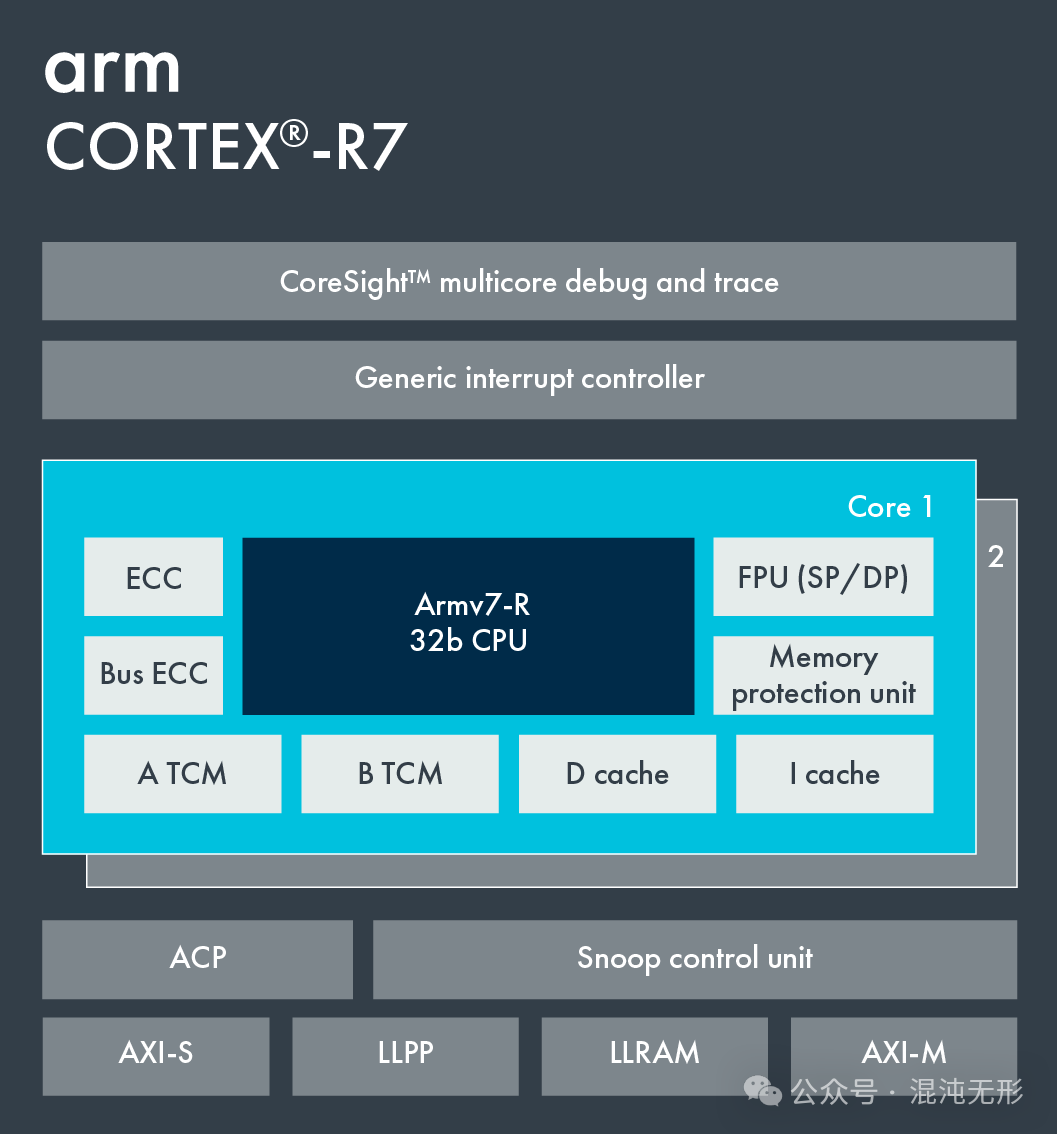
The Cortex-R7 processor features an 11-stage, superscalar, out-of-order pipeline, supports dynamic and static branch prediction, dynamic register renaming, and non-blocking load-store units (Load-Store Unit). It also integrates a Generic Interrupt Controller (GIC), a snoop control unit (SCU), and timers to further reduce latency and support dual-core processing in symmetric multiprocessing (SMP) configurations.

The Cortex-R7 is not recommended for new designs. It is advised to use the Cortex-R8 as a replacement real-time processor.
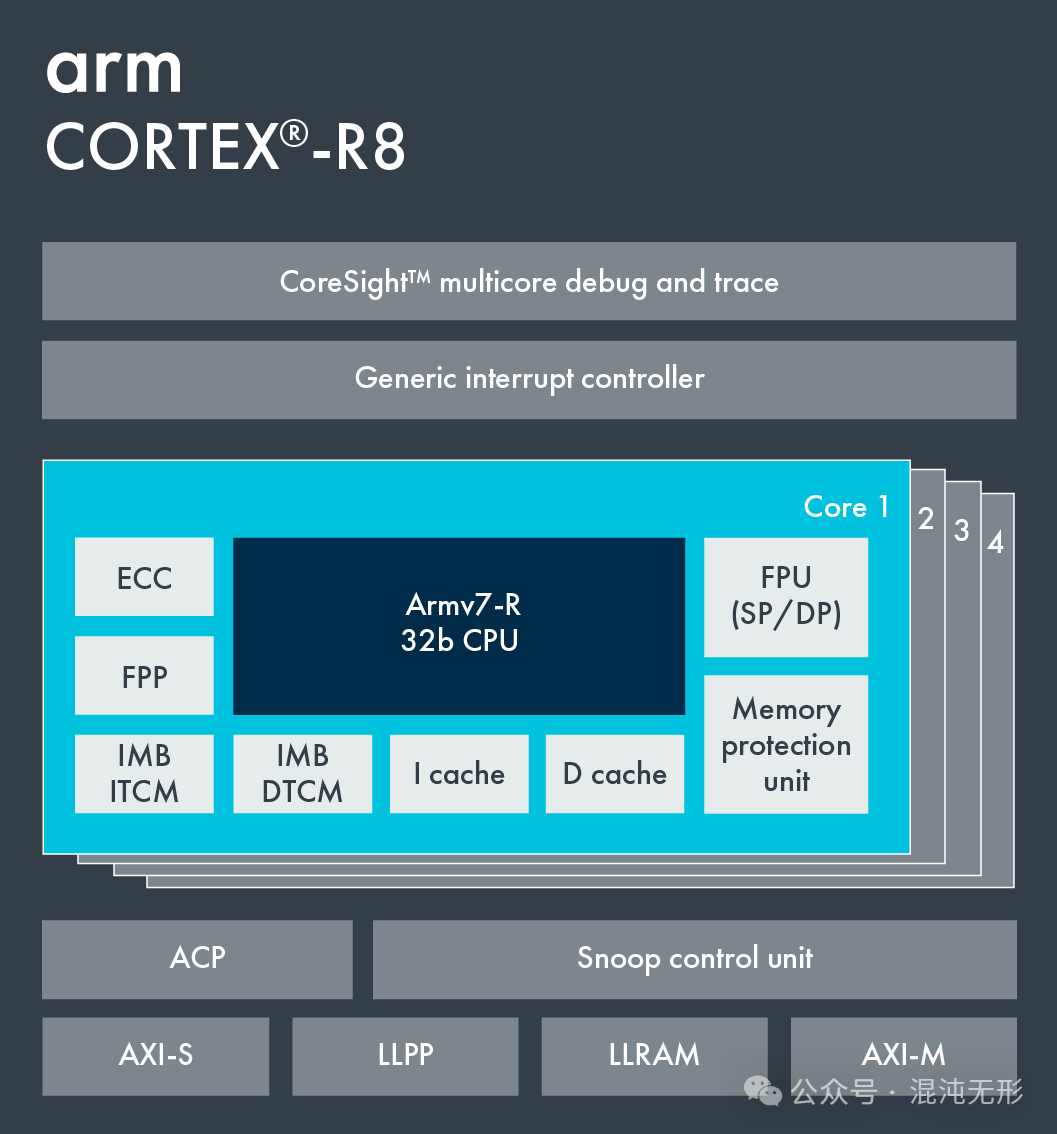
Cortex-R8 (Released in 2016)
Overview of ARM Cortex-R Series

The Cortex-R8 processor offers the highest performance among real-time processors in its class.

It is a 32-bit core based on the Armv7-R architecture, featuring an 11-stage pipeline and superscalar out-of-order execution. The Cortex-R8 can scale from a single-core to a quad-core configuration to leverage workload parallelism. Individual cores can be shut down based on workload demands.

Application scenarios: Typically used in automotive, hard disk control, advanced communication devices, and some industrial automation fields.Overview of ARM Cortex-R Series
Chips using R8: NXP i.MX 8QXP
Cortex-R52 (Released in 2016)

Overview of ARM Cortex-R Series

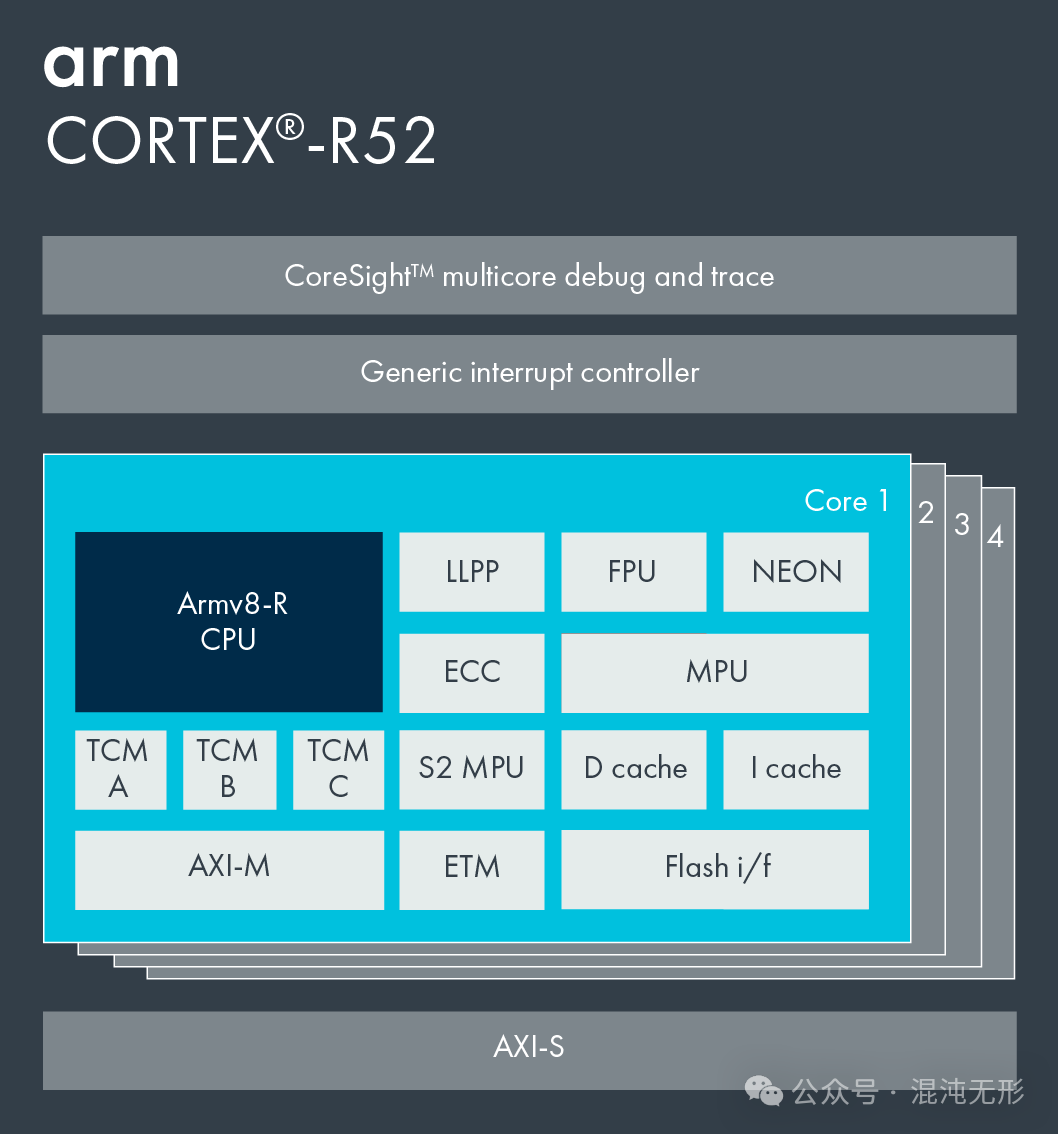
The Arm Cortex-R52 processor provides high-performance 32-bit processing with efficient code density and combines the highest level of integrated functional safety capabilities among any Arm processors.

The Cortex-R52 processor meets the growing performance demands of advanced real-time embedded systems. As the first Armv8-R processor, the Cortex-R52 introduces support for hypervisors, simplifies software integration, and protects safety-critical code through robust isolation mechanisms.
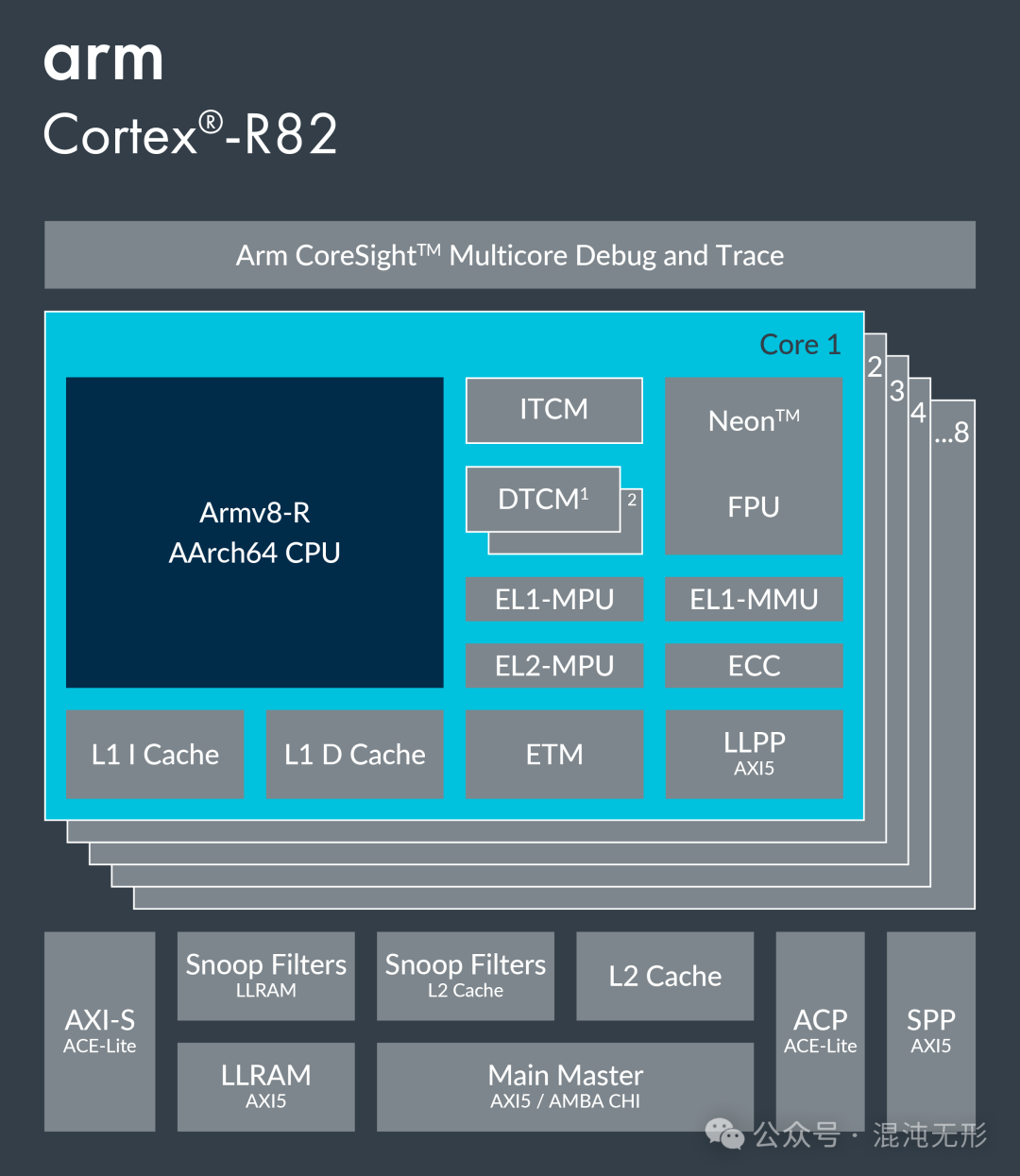
Application scenarios: Automotive electronics, medical devices, rail transportation, aerospace, etc.Overview of ARM Cortex-R Series
Chips using R52: NXP S32Z, S32ERenesas RZ/N2L, RZ/T2L, RZ/T2M
For more details, please refer to my previous articles “Discussion on ARM Cortex-R52” and “Launch of ARM Cortex-R52 Learning Guide”.
Cortex-R82 (Released in 2020)
Overview of ARM Cortex-R Series
The Cortex-R82 is Arm’s highest performance real-time processor and the first to implement the 64-bit Armv8-R AArch64 architecture.
Application scenarios: Automotive electronics, industrial control, communication, etc.Overview of ARM Cortex-R Series
Chips using R82: NXP Layerscape LS1046A, Marvell ThunderX2
Cortex-R52+ (Released in 2021)

Overview of ARM Cortex-R Series

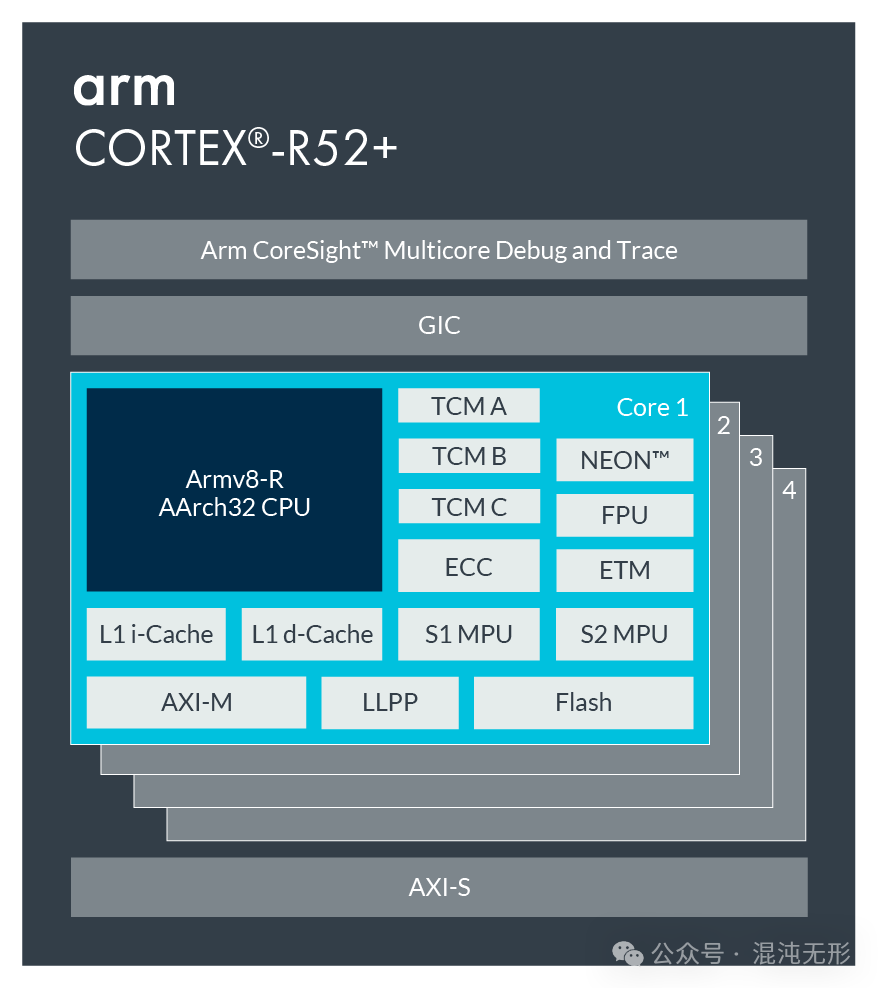
The Arm Cortex-R52+ processor is software compatible with the Cortex-R52 and provides enhanced virtualization features, simplifying the system integration of real-time functional safety applications.

The Cortex-R52+ processor offers greater configurability for real-time applications with functional safety requirements. It implements the Armv8-R architecture and provides enhanced virtualization granularity, allowing systems to extend isolation between virtual machines.
Application scenarios: Automotive electronics, medical devices, rail transportation, aerospace, etc.Overview of ARM Cortex-R Series
Chips using R52+: STMicroelectronics Stellar G, Stellar P
For more details, please refer to my previous articles “Discussion on ARM Cortex-R52” and “Launch of ARM Cortex-R52 Learning Guide”.
Cortex-R82AE (Released in 2023)
Overview of ARM Cortex-R Series

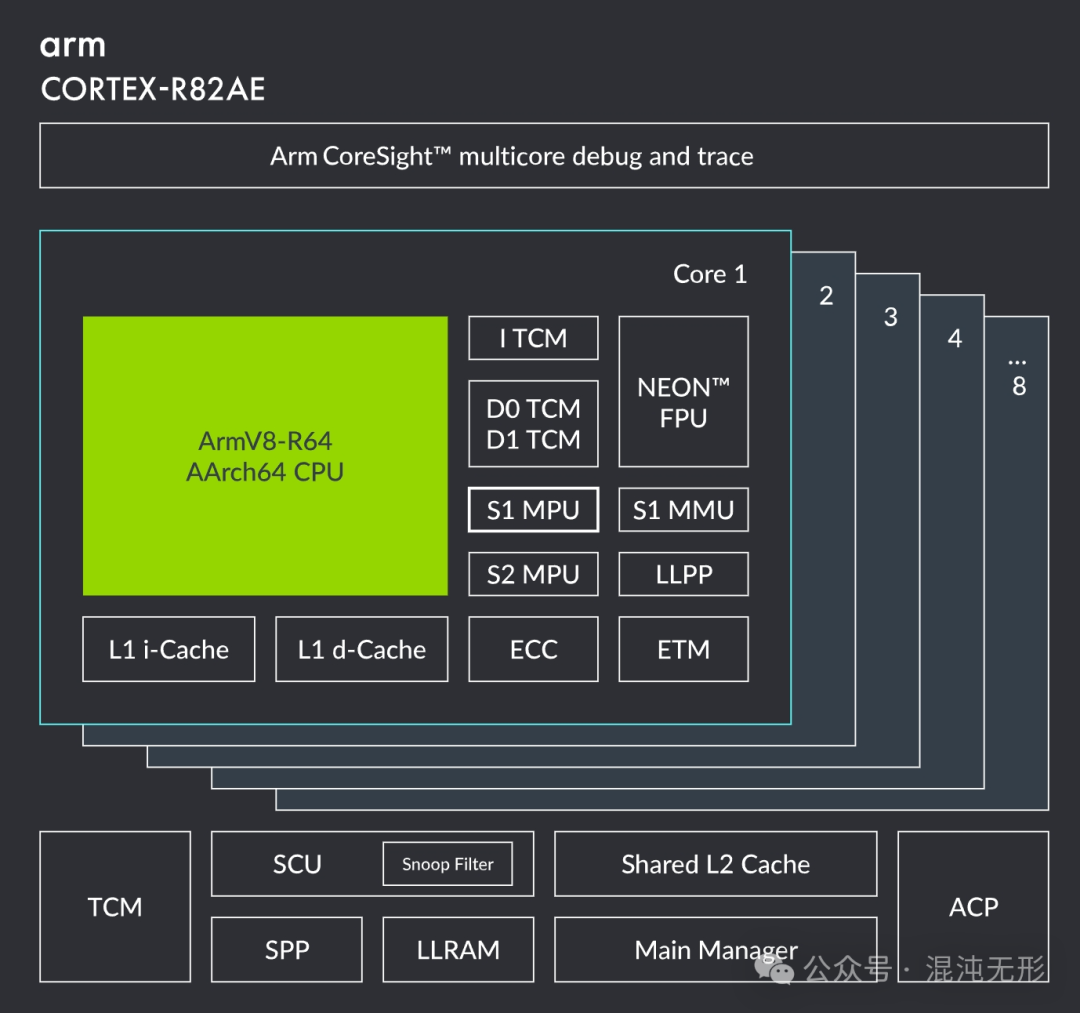
The Arm Cortex-R82AE is Arm’s highest performance real-time processor, designed for safety-related applications, utilizing the 64-bit Armv8-R AArch64 architecture.

This processor supports various types of software stacks, enabling deployment in evolving vehicle architectures, including zone controllers, where control and service-oriented functions may coexist within a single SoC. The Cortex-R82AE delivers high single-thread performance, meets real-time deadlines, and features advanced functional safety characteristics, making it an ideal choice for heterogeneous processors in high-performance safety controllers.

Application scenarios: Automotive electronics, etc.Overview of ARM Cortex-R Series

Chips using R82AE: Not yet identified

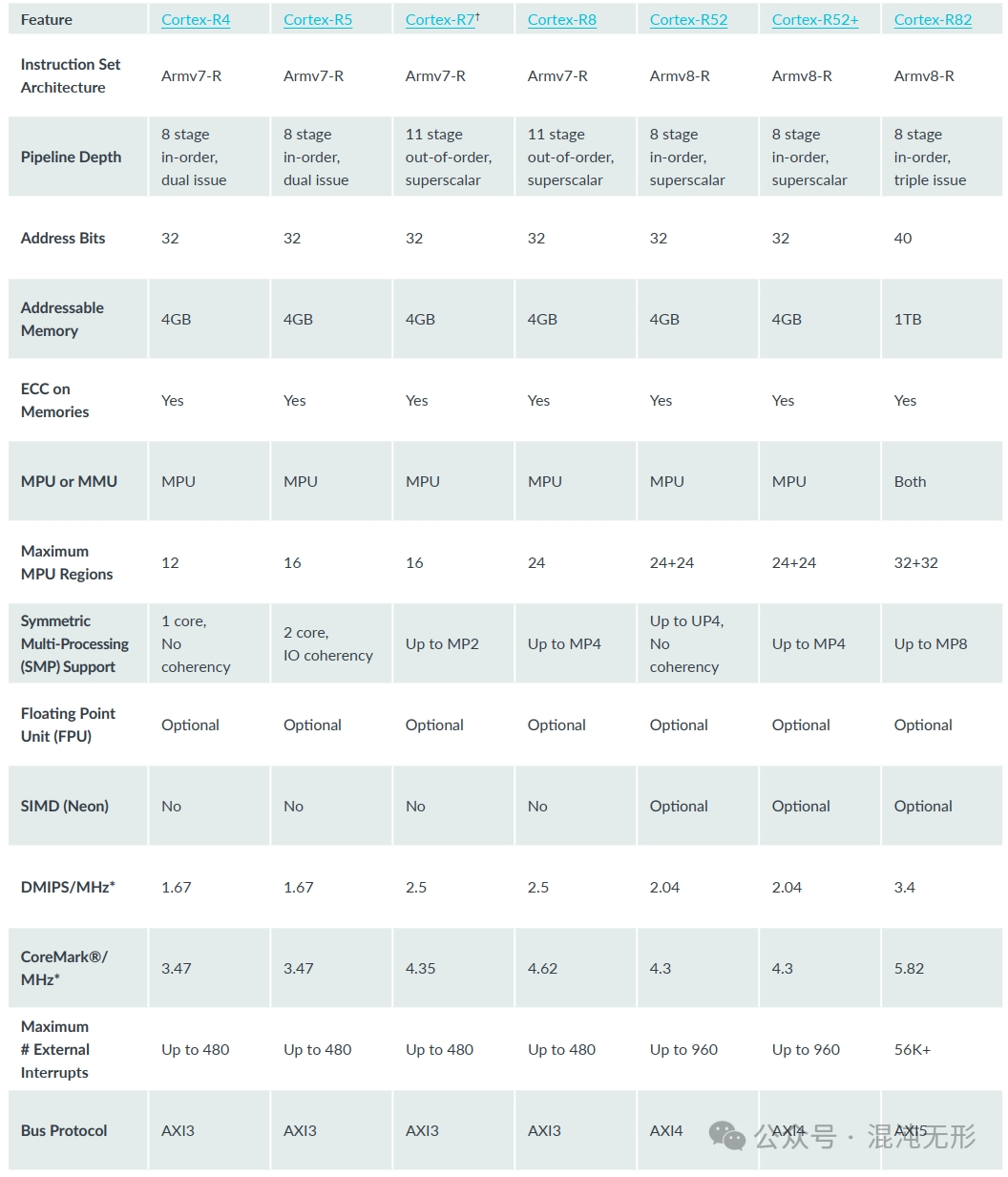
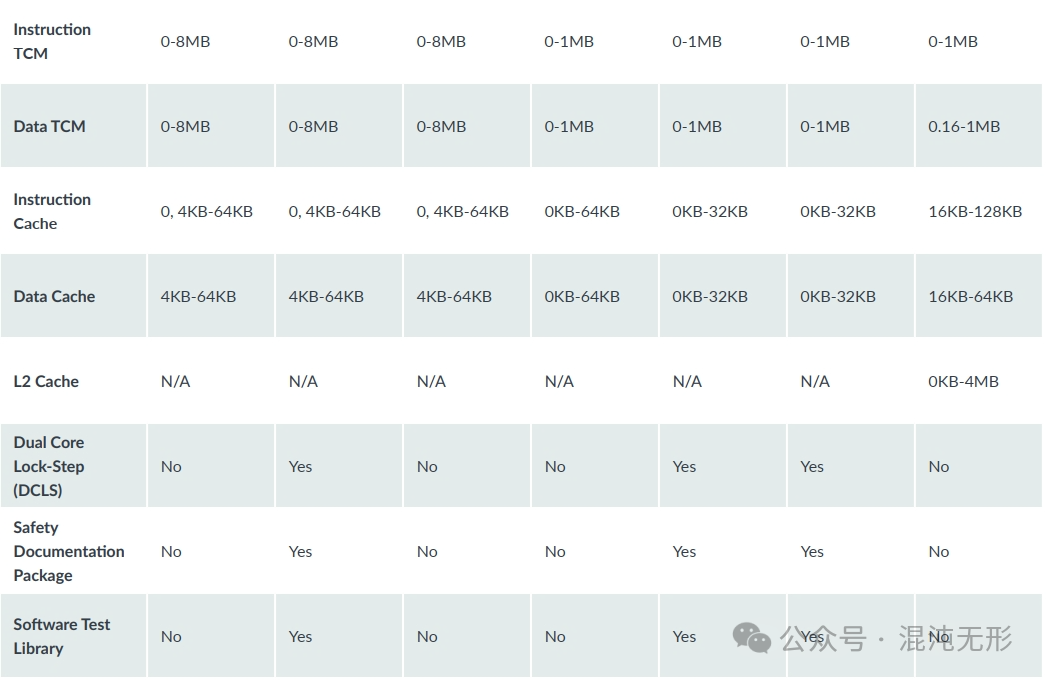
The above is a brief introduction to the R series. Here is a comparison table from the ARM official website for the corresponding R series processors, providing a comprehensive comparison of configurations, performance, and other aspects to facilitate users in chip selection and design development.
Overview of ARM Cortex-R Series
Finally, we have released two e-books: “ARM Cortex-R52 Learning Guide” and “ARM GICv3 Learning Guide.” Interested readers can click the links below to view them:
“ARM Cortex-R52 Learning Guide” Launch
“ARM GICv3 Learning Guide” Launch

Leave a Comment