Ningbo’s Chip Tycoon: Bold Acquisitions Break US-Japan Monopoly, Becoming the World’s Third
Who would have thought that Ningbo would produce a “chip tycoon” who boldly spent 15.3 billion yuan to acquire a global giant? It sounds unbelievable. Let me ask: have you ever seen such a “bold” acquisition? The protagonist is named Yu Renrong, hailing from Zhenhai, Ningbo, a Tsinghua University graduate, who after twenty years of entrepreneurship transformed from a small chip trader into a global sensor leader. While netizens marvel, saying, “A snake swallowing an elephant, how daring!” others question, “With such a big move, aren’t you afraid of bursting your stomach?” The scene resembles a game of Dou Di Zhu, where Boss Yu directly plays a bomb. But the question arises: what is the secret behind this significant leap in China’s chip industry?
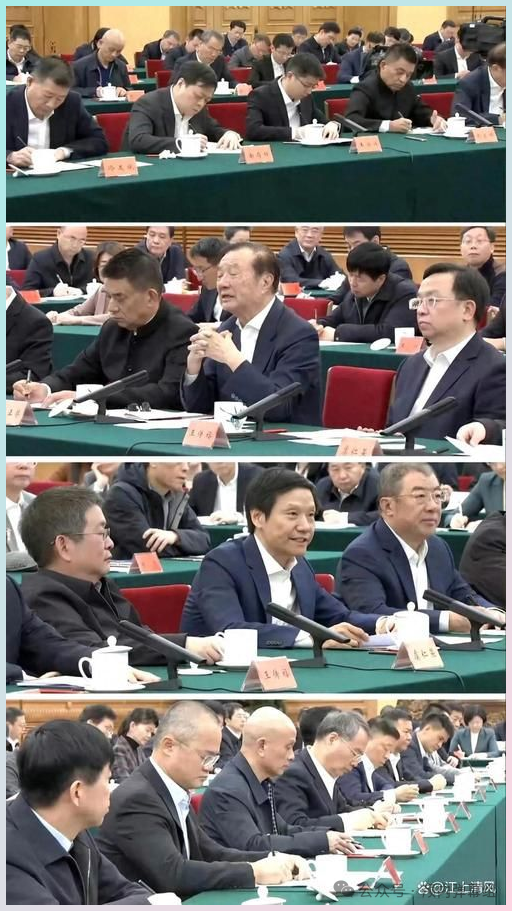
Speaking of Yu Renrong, his life experience seems almost extraordinary. In the 1980s, he was the top scorer in the college entrance examination in Zhenhai, Ningbo, majoring in radio at Tsinghua University. After graduation, he worked at Inspur Group. However, he did not seek a stable job; in 1998, he ventured into entrepreneurship, starting as a distributor, representing foreign brand components, and accumulating his first pot of gold. As his business grew, by 2006, he had become the largest distributor in Beijing. Many would have been satisfied at this point, but Boss Yu chose an unconventional path. In 2007, he moved to Shanghai and founded Weir Shares, focusing on the tough semiconductor design sector. It is often said that discrete devices have low barriers and thin profits, so he decided to upgrade and expand through acquisitions, rapidly broadening his business. In 2014, he acquired Beijing Taihe Zhi, in 2015, he acquired Wuxi Zhongpu Micro, and by 2017, the company was listed, with a pace that left competitors stunned.

What truly elevated Weir Shares was this wave of “snake swallowing elephant” acquisitions. In 2018, Yu Renrong set his sights on industry giant OmniVision Technologies. At that time, OmniVision’s revenue was more than twice that of Weir, and its assets were five times higher, which seemed like a fantasy. But Boss Yu was undeterred, teaming up with CITIC and Jinshi Capital to secure a staggering 15.3 billion yuan, swallowing OmniVision whole. In 2019, the acquisition passed the scrutiny of the China Securities Regulatory Commission, and even the US Committee on Foreign Investment gave its nod. Just how bold was that? It was like a small horse pulling a big cart, and it actually worked. After the acquisition, Weir Shares shifted its main business from distribution to high-margin CMOS image sensor chips, making a complete 180-degree turn in its business structure.
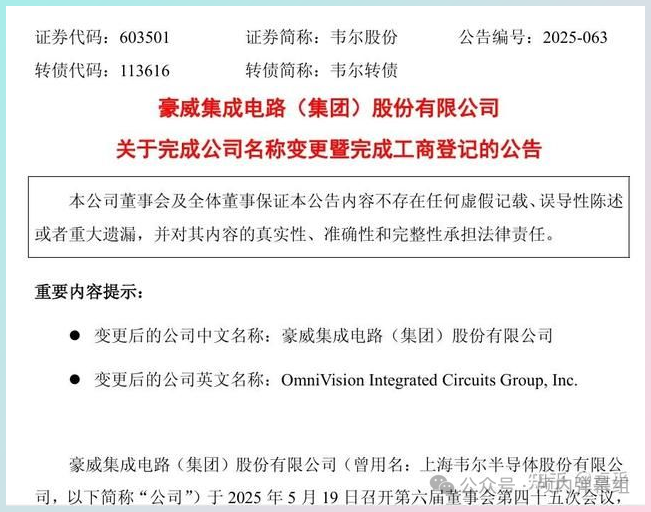
When it comes to breaking the US-Japan monopoly, this is no exaggeration. OmniVision Technologies is a leader in the CMOS image sensor field, alongside Japan’s Sony and South Korea’s Samsung, consistently ranking among the top three globally. After the acquisition, Weir Shares became the world’s third-largest CIS supplier, effectively tearing a hole in the technological barriers set by Japan and the US. Chinese brands have since established a foothold in the global high-end sensor market. Some say that relying on family connections is useless; it is the courage and vision that truly matter. In 2024, Weir Shares’ revenue reached 25.7 billion yuan, with net profits soaring nearly fivefold, truly becoming the “model child” of the industry. In 2025, they even changed the company name to “OmniVision Group,” standardizing the stock abbreviation to highlight their main business, ensuring you won’t mistake who they are.
Don’t think that he only knows how to make money; Yu Renrong is also generous in philanthropy. Just in terms of building universities, he can make many education officials blush. His hometown Ningbo is set to establish “Oriental University of Technology,” and Boss Yu generously pledged over 20 billion yuan initially, later increasing it to 30 billion, and even established his own education foundation. In 2024, he topped the Hurun China Charity List with a donation of 5.3 billion yuan. The university is already under construction and is expected to welcome its first batch of undergraduates in 2025, aiming to completely change the educational landscape of his hometown. Some say that earning money and not forgetting to give back to society is the hallmark of a true entrepreneur.
To be honest, Yu Renrong’s journey has been marked by both the grit of a grassroots entrepreneur and the strategic mindset of a chess player. With his keen sense and “bold” acquisitions, he has brought Chinese chip companies onto the global stage. Some say he is the “carp leaping over the dragon gate” of the industry, while others worry about whether he can digest the acquisitions well. Regardless, he has shown the world the confidence and ambition of Chinese chip makers. The next time someone asks, “Is China’s chip industry viable?” just take a look at this Ningbo tycoon’s answer.
So finally, I want to ask: Is it the “bold” acquisitions that have allowed China’s chips to stand on the world stage, or is it only those who dare to break the mold that can truly break the monopoly? How many more adventurers like Yu Renrong, who do not follow the conventional path, do you think there are in China’s chip dream? What are your thoughts on this?