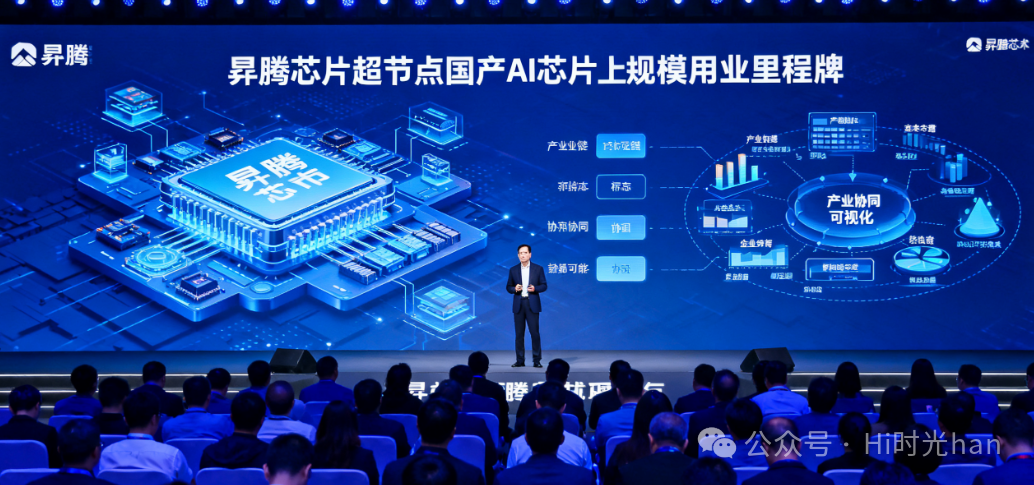
On September 18, at the Huawei Connect Conference, rotating chairman Xu Zhijun made a significant declaration: relying on the Ascend chip supernode technology and the collaboration of the entire industry chain, domestic AI chips will achieve large-scale commercialization within two years, marking a critical stage in China’s computing power breakthrough.
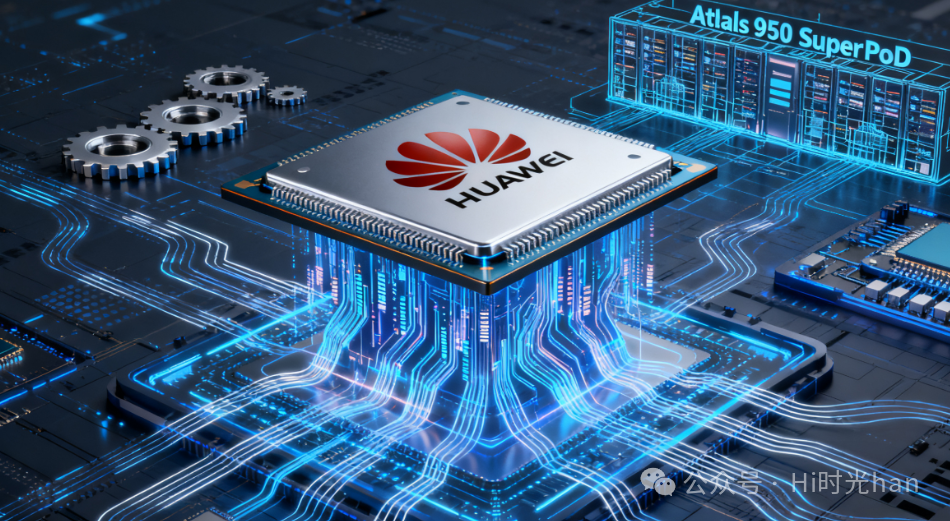
In the face of process limitations, Huawei has adopted a path of “asymmetric innovation.” Its self-developed Lingqu interconnection protocol has achieved a technological breakthrough, integrating 8192 Ascend cards into the Atlas 950 SuperPoD supernode through nanosecond-level fault switching and terabit-level bandwidth breakthroughs, surpassing NVIDIA’s similar products in terms of card scale and total computing power. Even more exciting is that the Ascend 950PR, set to launch in the first quarter of 2026, will feature self-developed HBM storage, directly addressing the “memory wall” bottleneck and potentially improving AI service performance by nearly 70%.
This breakthrough is backed by the resonance of the entire industry chain. SMIC has achieved 5nm process trial production using domestic DUV equipment, providing non-U.S. mass production capabilities for the Ascend chips; ecological enterprises such as Baode and Tiankuan have accumulated over 500 patents, forming a “design – manufacturing – application” patent closed loop. Huawei has also announced the open-sourcing of the CANN compiler and Mind series toolchain, and the opening of the Lingqu 2.0 specification, attracting companies like Alibaba and Baidu to co-build an ecological alliance.
Please open in the WeChat client
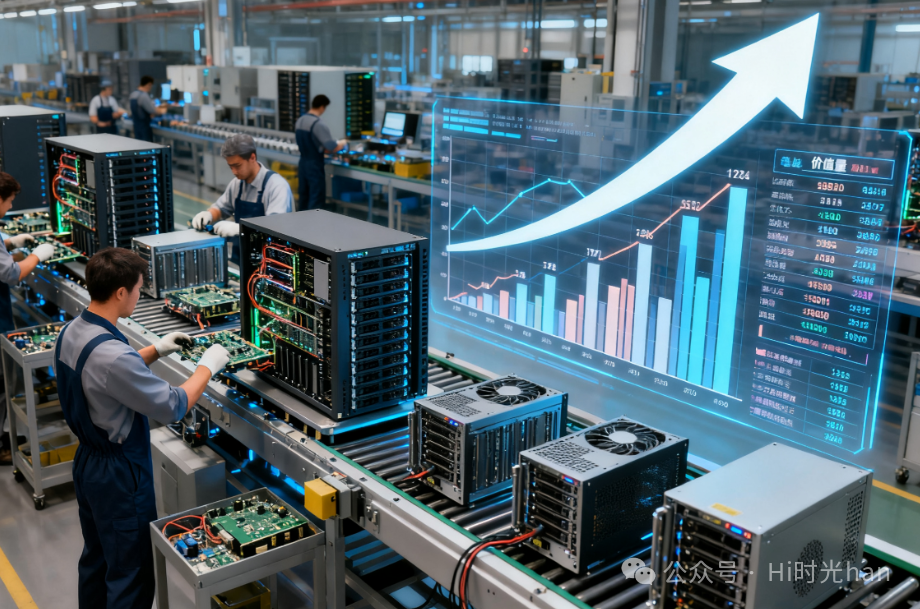
Xu Zhijun’s confidence stems from solid on-the-ground progress: over 300 sets of CloudMatrix 384 supernodes have been deployed, serving more than 20 customers; the upcoming million-card-level Atlas SuperCluster will meet high-end demands such as large model training. Shanxi Securities points out that the supernode solution will drive the value increase of the optical module and server industry chain, paving the way for commercial implementation.
From single chip catch-up to system superiority, Huawei’s strategy of “group computing compensating for single chips” allows domestic chips to seize opportunities in the global $158.7 billion AI computing power market. The commitment to commercialization in two years is not only a declaration of technological confidence but also a signal of accelerated self-control in China’s semiconductor industry.