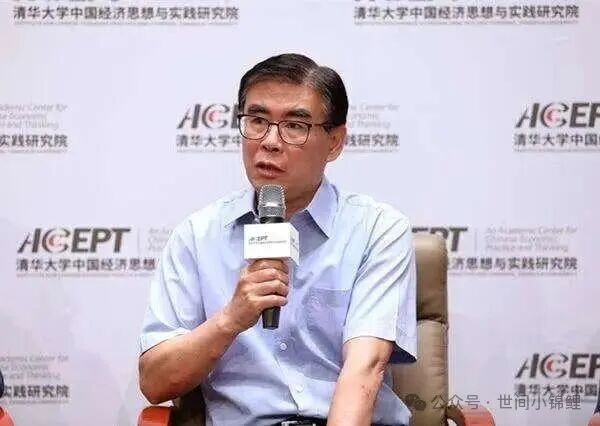
Recently, Professor Wei Shaojun from Tsinghua University’s Microelectronics Institute criticized those who claim that “Chinese chips are invincible” during a television program. He mentioned that some people are constantly shouting, “Certain chips make the U.S. fearful” and “Scientists returning to China make the U.S. anxious.” But what is the actual situation? Our chip technology is neither as miraculous nor as dire as portrayed. He believes that technological development should follow certain rules and that we should not always expect to achieve success overnight. A few days ago, I saw many people sharing exaggerated messages on short videos, and even my parents asked me if “Chinese chips have surpassed the U.S.” I felt embarrassed to say, “That’s not the case. What is the current level of domestic lithography machines?”
There are claims online that Shanghai Microelectronics has developed impressive equipment, but upon closer inspection, the latest certified domestic dry lithography machine can only achieve a precision of 65 nanometers and can barely produce 28-nanometer chips. Regarding more advanced immersion lithography machines, executives from ASML in the Netherlands previously stated, “Shanghai Microelectronics is still striving to overcome challenges and is far from mass production.” When it comes to EUV lithography machines, we can only conduct component research in laboratories, such as Harbin Institute of Technology working on light source technology. However, assembling the entire set of equipment is expected to take several years. Ironically, Chinese companies are currently hoarding ASML’s second-hand equipment. In 2023, ASML took advantage of the U.S. not fully sanctioning them and shipped a large number of immersion DUV lithography machines capable of producing 5-nanometer chips to China. According to ASML’s CFO, after 2024, the U.S. will no longer allow the sale of such equipment.

However, Chinese companies have already acquired many of these devices. Can we now achieve mass production of 7-nanometer chips using these devices? They are employing the “self-aligned multiple exposure” technology path that American companies have tried but failed. A Dutch journalist stated that this method exploits loopholes in regulations—legally acquiring equipment and then secretly researching advanced processes to buy time for our independent research and development. However, to be honest, this approach carries significant risks. ASML’s CEO mentioned that their lithography machines take three years from ordering to debugging. If the technology is not mature, the lithography machine could become useless. Moreover, the U.S. is currently keeping a close watch on us and may further intensify sanctions at any time. Additionally, there is a severe shortage of talent in the chip field, with reports indicating that 85% of top students prefer to go to the U.S. after graduation, making it difficult to form a stable team in domestic laboratories.

A classmate of mine complained, “Half of the PhDs graduating from their college have gone to Silicon Valley, and the rest have to juggle multiple projects, leaving little energy for innovation. Currently, Chinese companies are adopting a strategy similar to ‘surrounding the city from the countryside.’ First, they use ASML’s equipment to maintain the production capacity of mature chips, and then gradually tackle the challenges. For example, the Chinese Academy of Sciences is breaking down the EUV lithography machine into components like light sources and lenses, allowing different units to tackle the problems individually. Once everyone has completed their tasks, they will assemble everything together. This approach is reminiscent of assembling a computer; if you can’t buy a complete machine, you buy parts to assemble it yourself. However, the problem lies in whether the parts are compatible and who will fix them if something goes wrong. If every step gets stuck, we might have to wait another three to five years. Overseas experts say that hoarding equipment is actually a desperate move. After the U.S. excluded us from EUV collaboration, we had to seek alternative paths, but this route is slow and requires patience. I read on forums that some people claim, “We will definitely break through within two years,” but upon reviewing the materials, I found that even the light source technology has not been fully resolved, making such claims sound unreliable.
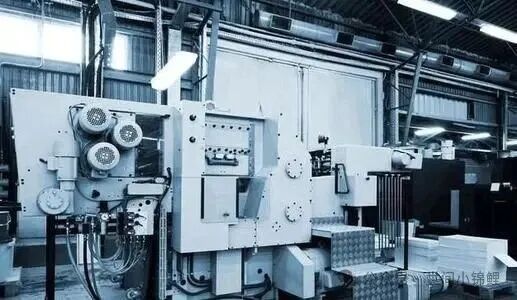
Recently, there was news about the Chinese Academy of Sciences making new breakthroughs in the field of lithography machine light sources, but it is still unclear when they will be put into use. This has sparked debates among netizens, with some saying, “Stop boasting; we need to focus on real R&D,” while others argue, “If we continue to exaggerate, we will definitely be ridiculed.” Professor Wei’s remarks are indeed correct; chips cannot be obtained through boasting, and being anxious is useless. Currently, everyone is worried about being overhyped. Didn’t the electric vehicle industry experience a similar situation a couple of years ago? What ordinary people care about most is whether mobile phone chips can drop in price and whether computers will no longer lag. But without technology, we can only rely on others’ goodwill. For instance, purchasing lithography machines now depends on inventory; what if the inventory runs out? I’ve heard that some companies are already moving towards less restricted fields like packaging and materials, but the results are slow and may take years to materialize. In summary, the chip issue cannot be judged solely by appearances. No matter how appealing the words are, they must be backed by reality. Professor Wei’s statements on the program are very accurate; we should neither overestimate ourselves nor lose heart. Technological breakthroughs require patience, but someone must first lay a solid foundation before building a house. Currently, this foundation is still lacking, but at least people are beginning to awaken—that may be the most crucial aspect.
Disclaimer: Over 80% of the main content of this article is original by the author, with a small amount of information organized with the assistance of AI technology. All viewpoints and data have been verified by the author one by one. All images are sourced from the internet or AI-generated, and no infringing materials have been used. The article focuses on positive social energy topics and rejects vulgar content. Readers can read with confidence.