In smart manufacturing workshops, when RFID readers frequently disconnect and data transmission delays disrupt production rhythms, have you ever questioned: why does the data link always seem to ‘break’ when the equipment parameters are up to standard? The introduction of Nexcom Automation’s Profibus data optical terminal is solving the communication challenges between RFID readers and control systems with its master-slave collaborative design, ensuring stable and fast industrial data transmission.
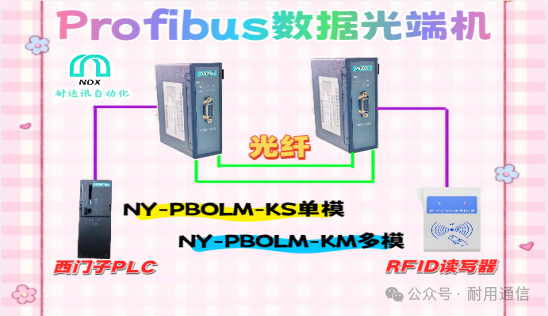
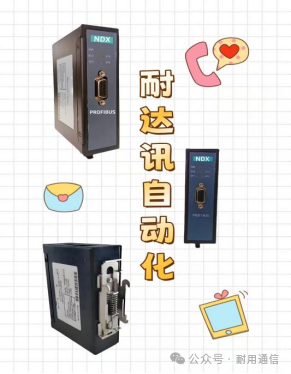
As a ‘bridge builder’ in industrial communication, this solution has a clear division of labor between master and slave: the master station of Nexcom Automation’s Profibus data optical terminal (model: NY-PBOLM-KS) connects to PLC, DCS and other control systems, receiving control commands through the Profibus-DP master interface, converting electrical signals into optical signals for transmission via fiber optics, supporting a maximum communication rate of 12Mbps, fully meeting the high-frequency data collection needs of RFID readers; the slave station (model: NY-PBOLM-KS) directly connects to RFID readers, receiving optical signals and converting them back to electrical signals, enabling bidirectional data exchange between the reader and the master station, while being compatible with mainstream RFID readers’ RS485/Profibus interfaces without the need for additional equipment modifications.
A certain automotive parts factory faced a significant challenge: severe interference from metal equipment in the workshop caused frequent loss of material information collected by RFID readers, leading to a production line downtime rate of up to 3%. After introducing Nexcom Automation’s Profibus data optical terminal, the master station connected to the workshop’s S7-400 PLC, and the slave station connected to 12 RFID readers, extending the transmission distance via single-mode fiber to 2km, significantly enhancing electromagnetic interference resistance. After the upgrade, the data transmission accuracy reached 99.99%, and the downtime rate dropped to below 0.1%, with monthly production capacity increasing by 12%, fully validating the industrial practicality of the solution.

The core advantages of this solution lie in ‘professional adaptation + stable reliability’: it adopts an industrial-grade design, supporting a wide temperature operating environment of -40℃ to 85℃, with a protection level of IP40, suitable for the harsh conditions of humid and dusty workshops; the master-slave stations support plug-and-play, requiring no complex configuration, allowing engineers to complete deployment in just 10 minutes; it also features optical power monitoring and fault alarm functions, facilitating quick problem localization for maintenance personnel.
Conclusion
The combination of Nexcom Automation’s Profibus data optical terminal and RFID readers, with clear master-slave division of labor, strong anti-interference capability, and convenient deployment experience, thoroughly resolves the stability issues of RFID data transmission in industrial scenarios. Whether in automotive manufacturing, logistics warehousing, or smart manufacturing plants, this solution can serve as a ‘reliable backbone’ for data transmission, assisting enterprises in achieving efficient digital transformation.