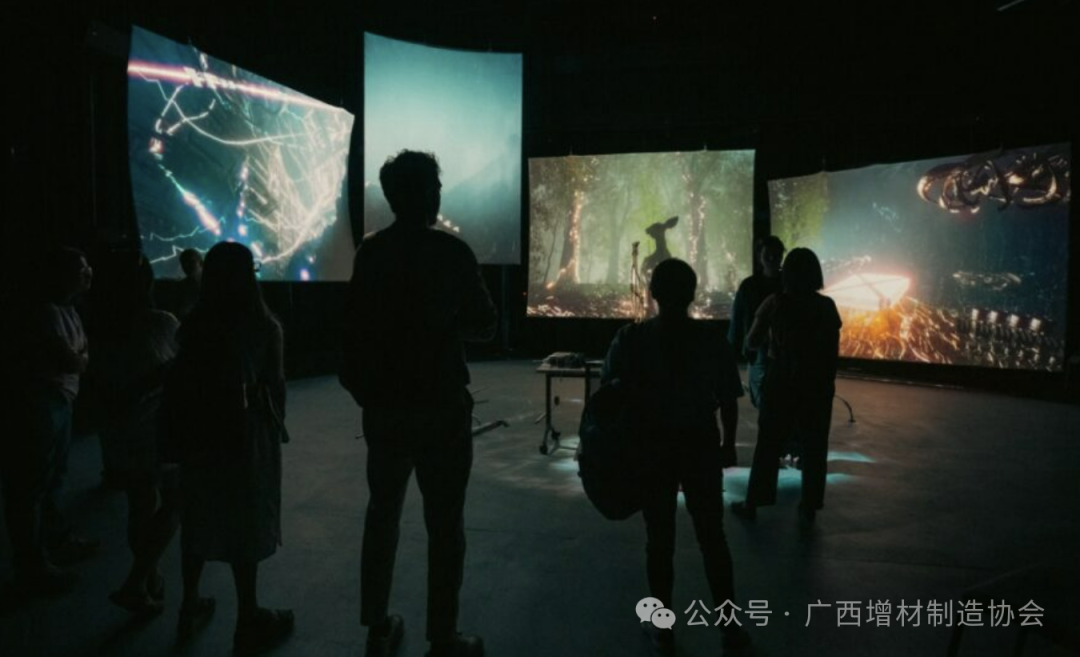
At the Media and Immersive Experience Center (MIX Center) of Arizona State University (ASU), artist Kevin Peter He is reimagining nature through technology. His immersive installation work, “Passage,” creates a sensory experience that explores what nature might look like in the digital age through synthetic trees, 3D printing, and projection.
This work is part of the MIX Center’s inaugural visiting artist residency program. This six-week program provides studio access for experimental creation, technical guidance, a modest stipend, and a final public exhibition. For He, this means utilizing nearly all the resources offered by the center: 3D printing from the Fab Lab, metalworking facilities, real-time simulation tools, and more.
Using resin, bent metal, motion sensors, and projection, He has created what he calls a “cybernetic forest”—a speculative landscape where artificial materials and digital tools present forms and spirits of nature. Growing up in Shanghai and now residing in Brooklyn, He combines cross-cultural perspectives with digital art creation, posing the question: If nature were birthed by computers, what would it become?
From Screen to Sculpture
“Passage” was initially a performance piece that blended elements of film, concert, and meditation. However, at ASU, it has evolved into a more tactile presence. Thanks to the university’s manufacturing resources, particularly the 3D printing tools in the Fab Lab, He and his collaborators have transformed their digital vision into tangible works.
“We are building sculptures in the Fab Lab, we are doing 3D printing, we are experimenting with Kinect interaction, and we are projecting real-time simulations onto large screens,” He said. “In terms of resources, this place has really provided us with great convenience.”
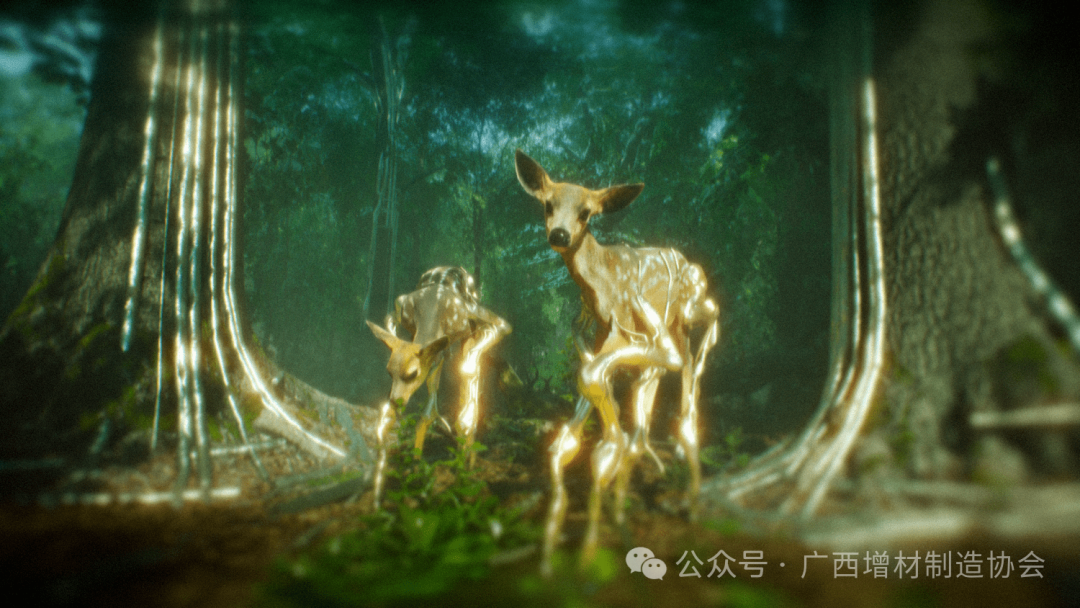
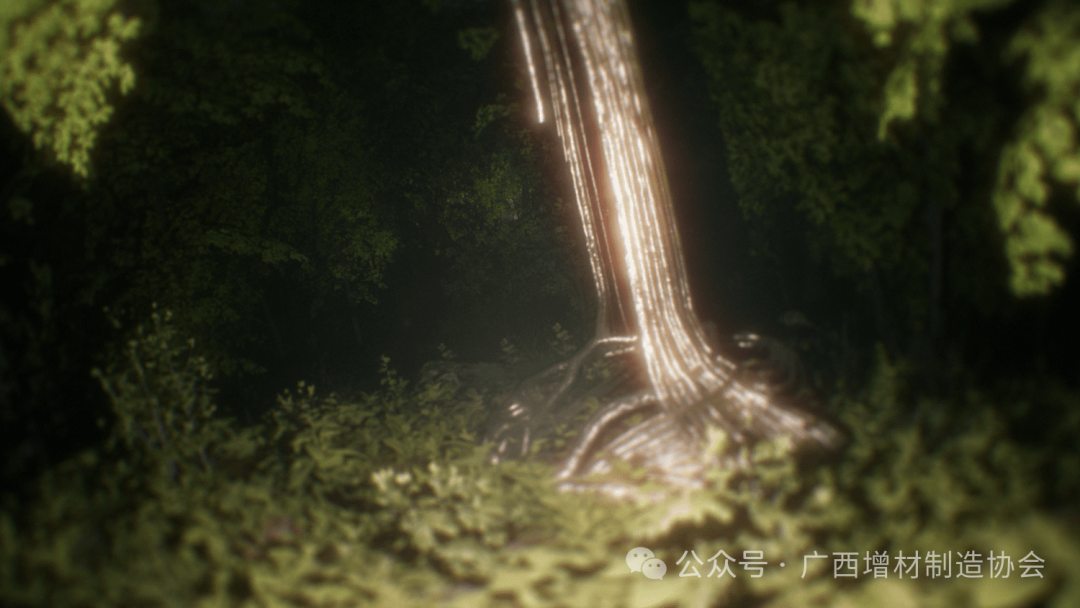
With the help of 3D printing, the team created tree-like sculptures using resin that mimic natural growth patterns. Metal tubes were bent and hammered to resemble branches. The result is a surreal synthetic forest that visitors can walk through, surrounded by projections and soundscapes that respond to their movements. This is a form of nature birthed from code rather than roots.
Choose Your Own Forest
One of the most interesting aspects of “Passage” is that it encourages movement. From a distance, four screens display a vast digital landscape. But as you approach, the experience changes. The layout of the screens and sculptures invites the audience to choose their perspective, turning and bending down to explore the space in their own way.
“It’s a bit like a ‘choose your own adventure’ experience,” He said. This setup encourages people to actively participate rather than just observe. Just as in 3D printing, where each object is built step by step, as visitors navigate through, they gradually construct their own experience of “Passage.” Thus, they are no longer just standing still.
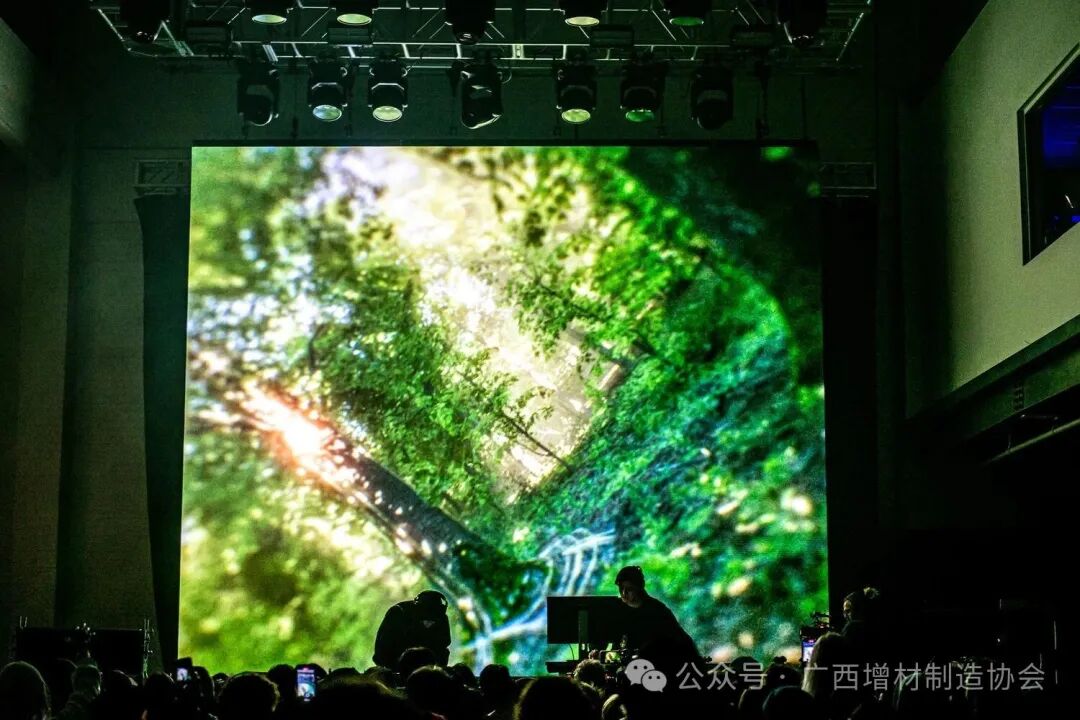
“Passage” is an artwork, but it also demonstrates how 3D printing can be part of a larger cultural shift. At the MIX Center, artists work alongside engineers. XR researchers communicate with sculptors. And 3D printing is no longer just used for prototyping or aerospace parts; it is being applied in live performances, virtual environments, and new ways of thinking about nature.
“Technology itself is a neutral tool,” He said. “Many times, when you learn these technologies, you can be limited by the framework of ‘this is how it’s meant to be used,’ but putting these different elements together allows people to see that technology can actually be utilized in different ways.”
The residency program exemplifies the MIX Center’s commitment to combining professional artistic practice with educational opportunities. Through workshops and community engagement, He’s residency sets an example of how visiting artists can contribute to the academic environment while advancing their own creative work.
“Seeing how the technology he uses aids his creation is really fascinating,” said Liliana Lopez, a graduate student in experience design at the design school, who attended a student workshop hosted by He. “I feel really lucky to interact with him and his art in such a one-on-one way. This experience is very personal, and I absorb more from it than I would from an online meeting or a lecture with hundreds of people, so I am very grateful.”
“Passage” can be seen as a departure from more traditional applications of 3D printing (such as in medical, dental, or industrial fields). It reminds us that additive manufacturing can also be a powerful creative tool for artists.