
Real-time biochemical monitoring is crucial in personalized medicine and disease diagnosis. Fiber electrochemical sensors have become ideal carriers for wearable devices due to their miniaturization and biocompatibility advantages. However, traditional surface functionalization preparation strategies lead to two major bottlenecks: first, the active materials are prone to delamination from the high-curvature fiber surface, resulting in mechanical degradation in dynamic biological environments (such as tissue deformation and immersion in body fluids), leading to monitoring failure; second, the uniformity of the coating is difficult to control, with batch performance differences reaching up to 80%, hindering large-scale applications.
The team led by Academician Peng Huisheng and Associate Professor Sun Xuemei at Fudan University has developed a universal co-extrusion strategy that achieves continuous fabrication of flexible fiber electrochemical sensors by co-extruding active materials with a conductive polymer PEDOT:PSS suspension. This technology allows for the uniform embedding of active materials within an interpenetrating conductive polymer network, forming a stable interface structure. The resulting sensors exhibit excellent stability and consistency (performance deviation <5%) in complex biological environments, successfully applied for dynamic monitoring of hydrogen peroxide (H₂O₂) in subcutaneous mice and continuous tracking of ascorbic acid (AA) in the brain for up to 14 days. The related paper titled “Co-Extrusion Strategy for Continuously Fabricating Flexible Fiber Electrochemical Sensors with High Stability and Consistency” was published inAdvanced Functional Materials.Figure 1 reveals the innovative structure of the co-extruded fiber sensor (EFS). The active materials of traditional coated sensors (Figure 1a-i) are prone to falling off due to bending or friction, while EFS (Figure 1a-ii) addresses the structural instability issue at its source through the uniform integration of active materials with the polymer network. The preparation process (Figure 1b) shows: mixing active materials (such as MnO₂ nanoparticles), PEDOT:PSS, dimethyl sulfoxide (DMSO), and dodecylbenzenesulfonic acid (DBSA) and extruding them into a silicone tube, followed by spontaneous gelation, washing, and drying, resulting in continuous fibers with a diameter of (42.31±0.52) μm (Figure 1c). The diameter and bending stiffness deviation of 50 sets of EFS are both <5% (Figure 1d), and SEM images (Figure 1f-g) and manganese element distribution maps (Figure 1h) confirm the uniform dispersion of active materials in the fiber cross-section, constructing a stable porous electrochemical active interface.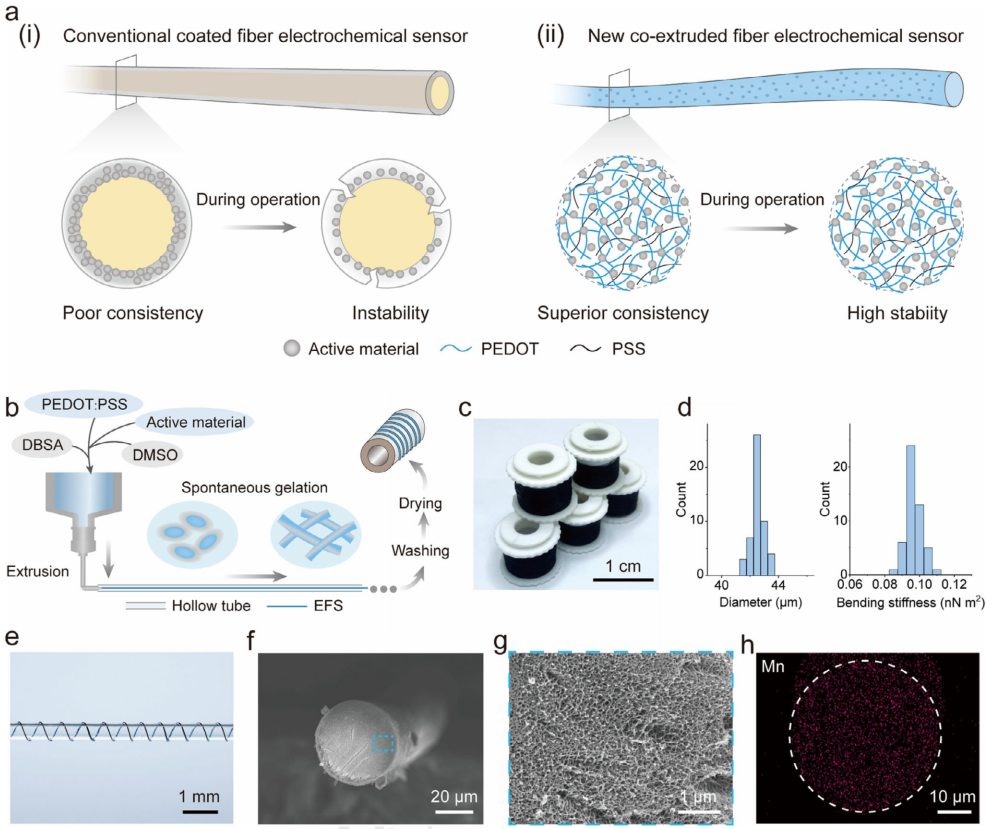
Figure 1 Preparation and structure of the co-extruded fiber sensor (EFS) a) Schematic diagram of traditional coated fiber sensors (i) and EFS (ii)
Figure 2 validates the excellent performance of EFS. Taking the hydrogen peroxide sensor (EFS-H₂O₂) as an example, its electrochemical active area (10.03 cm²/cm²) far exceeds that of coated sensors (1.24 cm²/cm²) (Figure 2a). At a voltage of -0.4 V, the response current to 1 mM H₂O₂ reaches 87.57 μA/cm², with sensitivity increased nearly 10 times (Figure 2b-c). The sensitivity deviation of 50 sets of EFS is only 4.9% (Figure 2e), far superior to the 80% of coated sensors (Figure 2f). After 1000 bending cycles (radius 2.5 mm) and friction cycles, the sensitivity decay is <10% (Figure 2g-j), and there is no significant performance decline after soaking in PBS for 14 days (Figure 2k-l), highlighting its mechanical and environmental stability.
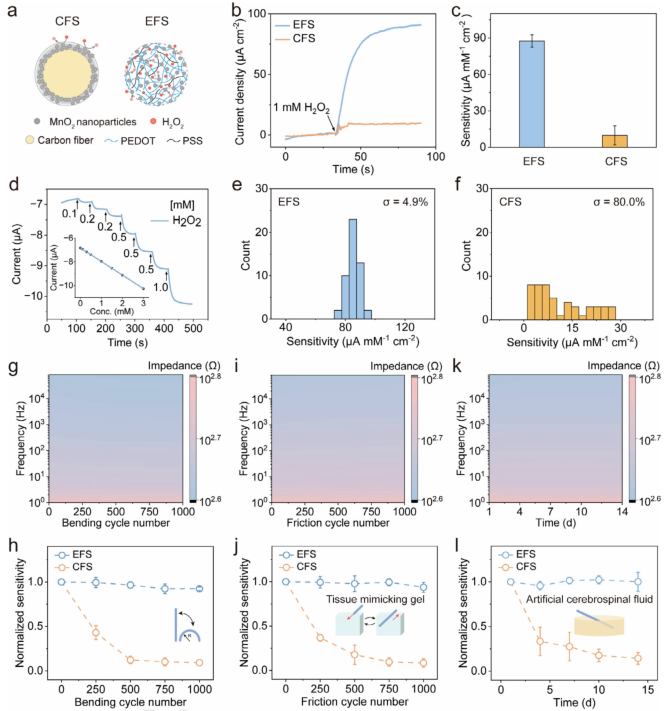
Figure 2 Electrochemical sensing performance, consistency, and stability of EFS
Figure 3 demonstrates the universality of the technology. By changing the active materials, the team successfully fabricated ascorbic acid sensors (EFS-AA, Figure 3a) and glucose sensors (EFS-Glucose, Figure 3d). EFS-AA has a linear detection range for AA from 1-600 μM (Figure 3b), selectively excluding neurotransmitter interference (Figure 3c); EFS-Glucose achieves a sensitivity of 198.80 μA/mM/cm² for glucose in 0.1 M NaOH (Figure 3e), effectively resisting interference from ascorbic acid and uric acid after Nafion modification (Figure 3f). Both maintain stable performance under dynamic deformation and long-term immersion (Figure 3g-i).
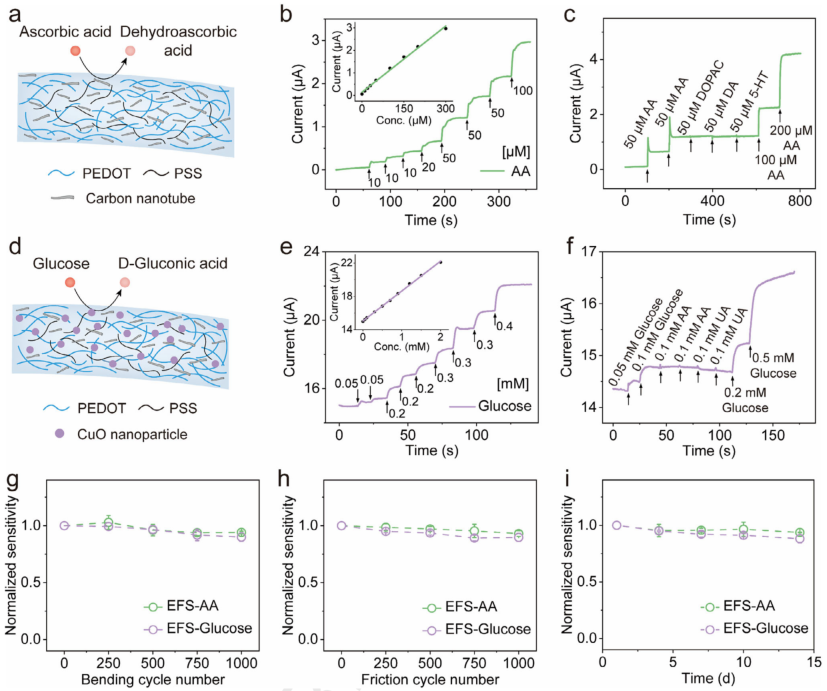
Figure 3 Universality of the co-extrusion strategy a) Schematic diagram of EFS ascorbic acid sensor (EFS-AA) structure
Figure 4 confirms the potential for in vivo applications. After 7 days of EFS implantation in subcutaneous mice, there was no inflammatory response in the surrounding tissue (Figure 4a-b), achieving dynamic monitoring of subcutaneous H₂O₂ (Figure 4c), and maintaining stable signals under pressure, bending, and friction disturbances (Figure 4d). More remarkably, the implanted EFS-AA in the brain operated continuously for 14 days, with no decay in the response current amplitude to ascorbic acid (Figure 4e-g), providing a new tool for chronic neurological disease research.
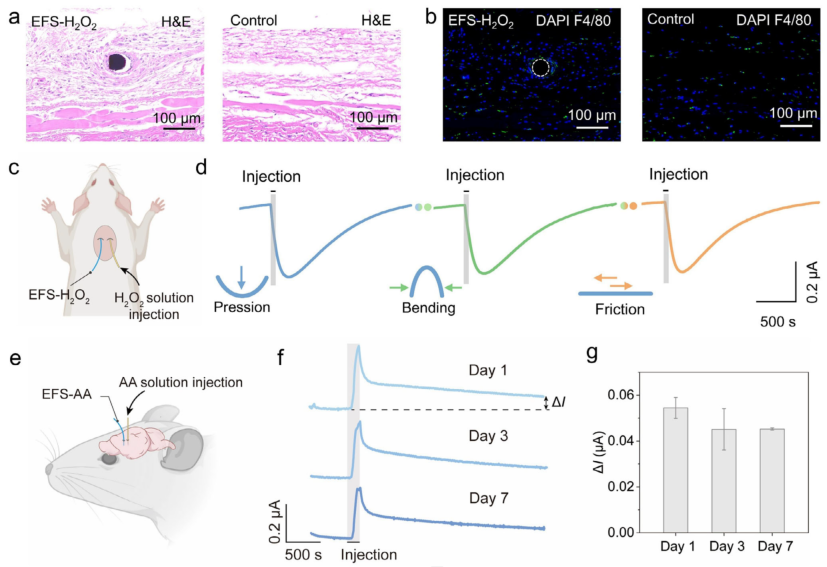
Figure 4 Long-term monitoring of biochemical substances in vivo by EFS
Prospects
This co-extrusion strategy opens up a new path for the large-scale production of high-performance fiber electrochemical sensors. In the future, expanding active materials and integrating multiple fibers is expected to achieve multifunctional monitoring with a single fiber, promoting the practical application of wearable medical devices in health management and chronic disease research.
New Textile Technology

– FANGZHIXINJISHU –

 Welcome to follow「New Textile Technology」, we are a technology media focused on cutting-edge technologies, innovative materials, and smart manufacturing in the textile industry! We are committed to providing the latest industry dynamics, technical analysis, trend insights, and practical cases for textile practitioners, researchers, and enthusiasts, helping to promote technological innovation breakthroughs in the textile industry!
Source: Frontiers in Polymer Science, if there is any infringement, please contact for deletion