“Which chip has the strongest computing power? NPU specializes in autonomous driving!”
When it comes to autonomous driving technology… how should I put it? Recently, it has been developing particularly fast, and the competition among various chip technologies is becoming increasingly fierce. As a journalist focusing on intelligent automotive configurations, I believe many people still have a somewhat vague understanding of the roles of NPU and GPU in autonomous driving. Today, let’s discuss this topic; it is indeed a very interesting technical issue.
Traditional GPUs are indeed very strong in graphics processing, which everyone knows. However, when it comes to autonomous driving, which requires real-time processing of massive amounts of data, GPUs seem to be… emmm, how should I say it, somewhat inadequate. The original design intention of GPUs was for graphics rendering, and although they have advantages in parallel computing, the power consumption when handling neural network inference tasks is really… too high! For a Level 4 autonomous vehicle, if it relies solely on GPUs for processing, the power consumption could exceed 300 watts, which would severely impact the range of electric vehicles.
To be honest, the emergence of NPUs is to solve this problem. NPU stands for Neural Processing Unit, which is specifically optimized for neural network computations. Did you know that its energy efficiency can reach 5-10 times that of GPUs? This data is really impressive. This means that under the same AI computing power requirements, the power consumption of an NPU is only about one-tenth that of a GPU… this difference is quite astonishing.
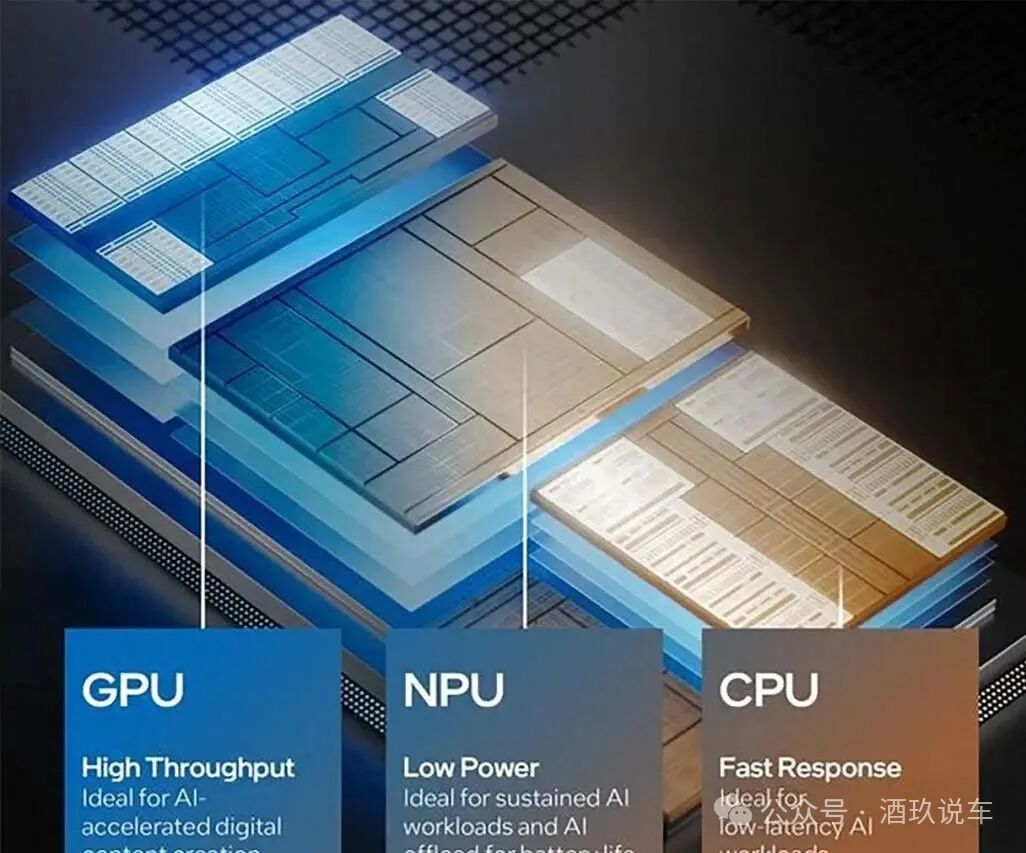
From a technical architecture perspective, NPUs adopt a specialized MAC array design, which is an array of multiply-accumulate units. These units directly simulate the structure of neural networks, allowing for shorter and more efficient data transmission paths within the chip. Although GPUs have thousands of processing cores, when handling AI inference tasks, 30-40% of the hardware resources may remain idle, which is a clear waste of resources. The Tesla FSD chip is a great example; its built-in NPU can achieve 144 TOPS of computing power while consuming only 25 watts. In contrast, to achieve the same computing power with GPUs, it might require 4-5 high-end GPU chips, easily exceeding 120 watts in power consumption. This comparison… how should I say it, the difference is quite obvious.
However, it’s not that GPUs are completely useless. In autonomous driving systems, GPUs and NPUs actually have a complementary relationship. GPUs handle sensor data preprocessing, such as coordinate transformation of LiDAR point cloud data and distortion correction of camera images; these tasks are still very efficient for GPUs. The preprocessed data is then sent to the NPU for AI inference, such as object recognition and path planning.
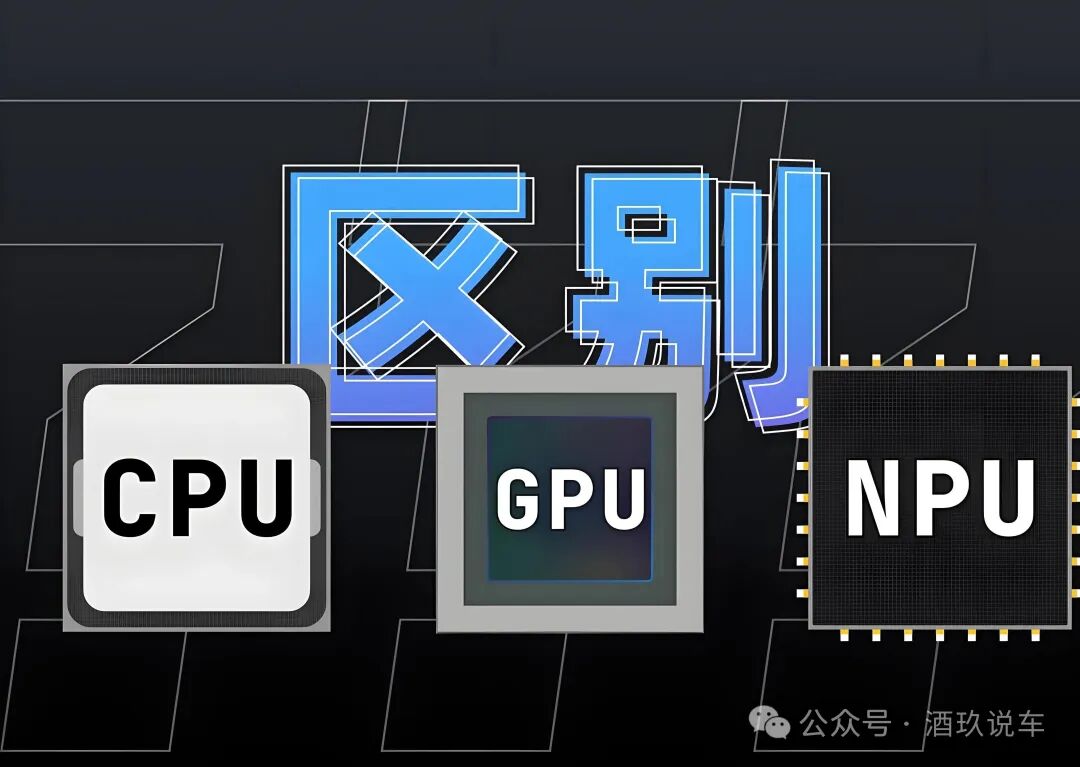
NVIDIA’s Thor chip adopts this approach, integrating both GPU and NPU to work in synergy. Test data shows that this collaborative model improves efficiency by about 40% compared to a single processor, while avoiding delays caused by frequent data transfers between different chips. In other words… this design is really clever.
From a cost perspective, the advantages of NPUs are also quite clear. The Huawei Ascend 310B NPU chip has a bulk purchase price of about $300, while achieving the same AI computing power with a GPU solution might cost over $4000. This cost difference… to put it bluntly, is a 4-5 times disparity, which puts significant pressure on automotive companies. In practical application scenarios, the low-latency characteristics of NPUs are also very important. Autonomous driving requires millisecond-level response speeds, especially in emergency obstacle avoidance situations, where every millisecond is crucial. NPUs can process a single frame of image in about 5-8 milliseconds, while GPUs may take 20-30 milliseconds; this difference could mean the difference between life and death at high speeds.
Of course, NPUs are not omnipotent. They are primarily optimized for inference tasks, and GPUs still have advantages in model training. Moreover, NPUs are sensitive to changes in sensor configurations; if a camera or radar is replaced, the model may need to be retrained. This… is indeed a challenge.
If I remember correctly, currently mainstream autonomous driving chips adopt a hybrid architecture of NPU + GPU. For example, the Horizon Journey 5 chip integrates an NPU with BPU architecture and GPU, specifically optimized for intelligent driving scenarios. This design ensures both the efficiency of AI computing and the needs of general computing. Overall, NPUs are indeed essential in the field of autonomous driving, as they address the shortcomings of GPUs in terms of power consumption, cost, and real-time performance. Although GPUs are still useful in certain scenarios, NPUs are the core of AI computing for autonomous driving. As technology continues to develop, we may see more integrated solutions that combine CPU, GPU, and NPU into a single chip.
However, the choice of this technical route is also related to the strategies of various manufacturers. Some companies may prefer to use off-the-shelf GPU solutions to reduce development risks; others may choose to develop their own NPUs in pursuit of higher performance and cost advantages. This… depends on each company’s technical strength and market positioning.
What do you think about the role of NPUs in autonomous driving? Do you feel that the speed of this technology’s development is really fast?