7.3.4 Level Sensors
(1) Concept
A level sensor is a device used to detect, measure, and monitor the height of liquid, slurry, or solid material surfaces. It converts the height information of the liquid level into an electrical signal output according to certain rules, facilitating display, alarm, recording, or control, with the function of achieving precise management of material reserves within a container.
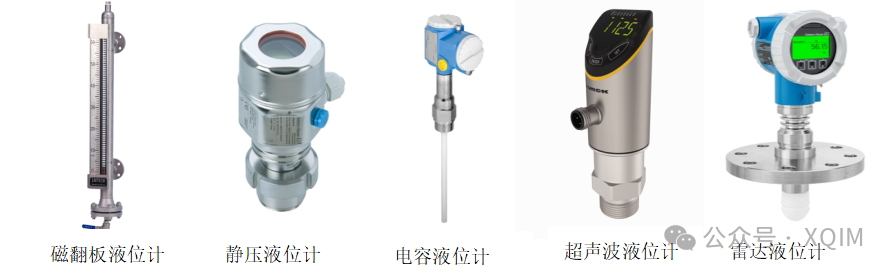
Figure 7-75 Level Sensor
(2) Categories
Level gauges can generally be divided into two main categories: local indication type and remote data transmission type, with many instruments capable of having both functions simultaneously.
1) Magnetic Float Level Gauge
Principle: Based on the principle of buoyancy and magnetic coupling, a float with a magnet is located in the main pipe of the connected container. The float rises and falls with the liquid level, driving an external red and white dual-color flip plate to rotate, thus clearly indicating the liquid level.
Advantages: Clear indication, no power supply required, safe sealing, can withstand high temperature and pressure.
Disadvantages: Requires on-site observation, has moving parts (the float may get stuck), relatively low accuracy, affected by the density of the medium.
Applicable occasions: Boiler steam drums, pressure vessels, storage tanks, etc., requiring on-site monitoring of clean liquids, especially suitable for high temperature, high pressure, and flammable or explosive media. A remote transmitter can be added for signal output.
2) Float Level Gauge
Principle: Utilizes the principle of buoyancy, the float rises and falls with the liquid level, driving an internal magnetic switch (reed switch) or angular displacement sensor through a mechanical lever, outputting a switch quantity or continuous signal.
Advantages: Simple structure, low cost, high reliability.
Disadvantages: Low accuracy, greatly affected by the density and viscosity of the liquid, moving parts prone to wear.
Applicable occasions: Level high and low limit alarms for water tanks and oil tanks (switch quantity form), suitable for clean liquids.
3) Hydrostatic Level Gauge
Principle: Based on the fluid statics formula P = ρgh. The sensor is installed at the bottom of the container, measuring the static pressure of the liquid, and converting it into liquid level height using known density.
Advantages: Simple installation, no moving parts, can measure a large range.
Disadvantages: Measurement accuracy heavily depends on the density of the medium; density changes can cause significant errors. Bottom installation may be blocked by sediment.
Applicable occasions: Large storage tanks with stable density (such as clean water pools, fuel tanks) and open containers (such as rivers, reservoirs) for water level measurement.
4) Magnetostrictive Level Gauge
Principle: A waveguide wire is inside the sensor rod. When powered, it generates an interrogation pulse that interacts with the magnetic field of the float’s magnet to produce a torsional wave. The time difference between the emitted pulse and the returning torsional wave is measured to accurately calculate the liquid level.
Advantages: Extremely high accuracy (millimeter level), high reliability, can simultaneously measure liquid level and temperature.
Disadvantages: Higher cost, installation must prevent the probe rod from bending or colliding.
Applicable occasions: Applications requiring high precision, such as oil tankers, storage measurement, hydraulic stations, and precise monitoring of lubricating oil tanks.
5) Capacitive Level Gauge
Principle: The probe rod and the container wall are viewed as two plates of a capacitor. Changes in liquid level lead to changes in the dielectric constant, resulting in changes in capacitance value, which indicates the liquid level by measuring the capacitance value.
Advantages: No moving parts, suitable for corrosive media and high-pressure situations.
Disadvantages: Measurement values are greatly affected by changes in the medium’s dielectric constant; medium adhesion on the probe rod can lead to significant measurement errors.
Applicable occasions: Small storage tanks, especially for measuring high-pressure, corrosive liquids. Can also be used to detect the interface between two liquids (such as oil-water layering).
6) Guided Wave Radar Level Gauge
Principle: High-frequency microwave pulses propagate along a metal rod or cable (guide wave rod). The pulse reflects upon reaching the liquid surface, and the time difference between emission and reflection is measured to calculate the liquid level.
Advantages: Extremely strong anti-interference capability, almost unaffected by changes in medium characteristics (pressure, temperature, density, dielectric constant), high accuracy, suitable for complex working conditions.
Disadvantages: Contact with the medium, cost higher than ultrasonic. Viscous media may adhere to the guide wave rod.
Applicable occasions: Containers with complex working conditions, such as those with stirring, large amounts of foam, steam, or dust. Also commonly used for interface measurement.
7) Ultrasonic Level Gauge
Principle: The sensor emits ultrasonic waves towards the liquid surface and receives the echo. The distance to the liquid surface is calculated based on the speed of sound in air and the time difference.
Advantages: Non-contact, easy to install and maintain, does not contact the medium, moderate cost.
Disadvantages: Sound speed is greatly affected by temperature, steam, and vacuum, requiring temperature compensation; foam and dust can absorb sound waves; there is a measurement blind zone.
Applicable occasions: Measurement of open containers such as sewage treatment pools, rivers, lakes, and granular solid material levels, making it the preferred choice for cost-sensitive non-contact measurements.
8) Radar Level Gauge
Principle: Emits microwaves (radar waves) towards the liquid surface and receives the reflected echo. The liquid level is accurately calculated by measuring the flight time of the microwaves (pulse radar) or frequency difference (FMCW radar).
Advantages: Non-contact, optimal performance. Almost unaffected by pressure, temperature, steam, dust, etc., with very high accuracy.
Disadvantages: Highest cost. Installation position requirements must avoid obstacles.
Applicable occasions: Accurate trade measurement of large storage tanks (such as oil, chemicals), extreme working conditions (high temperature, high pressure, strong corrosion), and situations requiring the highest reliability and accuracy.
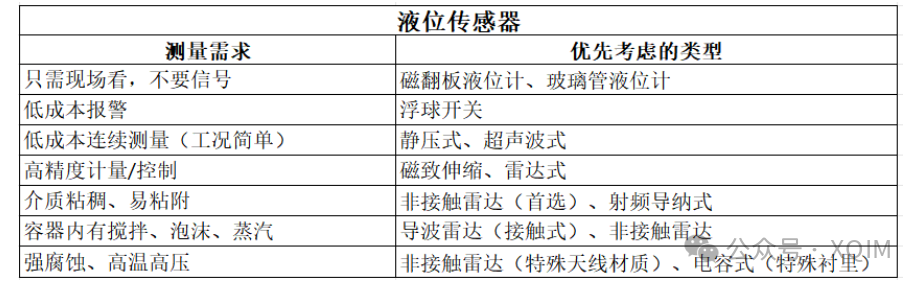
Figure 7-76 Selection of Level Sensor Types
(3) Main Parameters
1) Measurement Range: The minimum to maximum liquid level distance or height that can be measured.
2) Accuracy/Error: The maximum allowable deviation between the measured value and the true value, usually expressed as a percentage of full scale (e.g., ±0.5%FS) or in millimeters.
3) Resolution: The minimum liquid level change that the sensor can detect.
4) Output Signal: Switch quantity: relay output for high and low level alarms; analog quantity: 4-20mA, 0-5/10V for continuous measurement and control. Digital quantity: HART, Modbus, Profinet, etc., facilitating networking and communication.
5) Working Pressure/Temperature Range: The limits of pressure and temperature that the sensor can withstand in the medium and environment.
6) Medium Characteristics: Corrosiveness, viscosity, density, dielectric constant of the medium, and whether it is prone to foaming or steam.
7) Power Supply Voltage: The specifications of the power supply required for the sensor to operate normally (e.g., DC24V).
8) Protection Level (IP): Dust and water resistance capability, such as IP65, IP67.
9) Others: Explosion-proof rating and other certification documents.
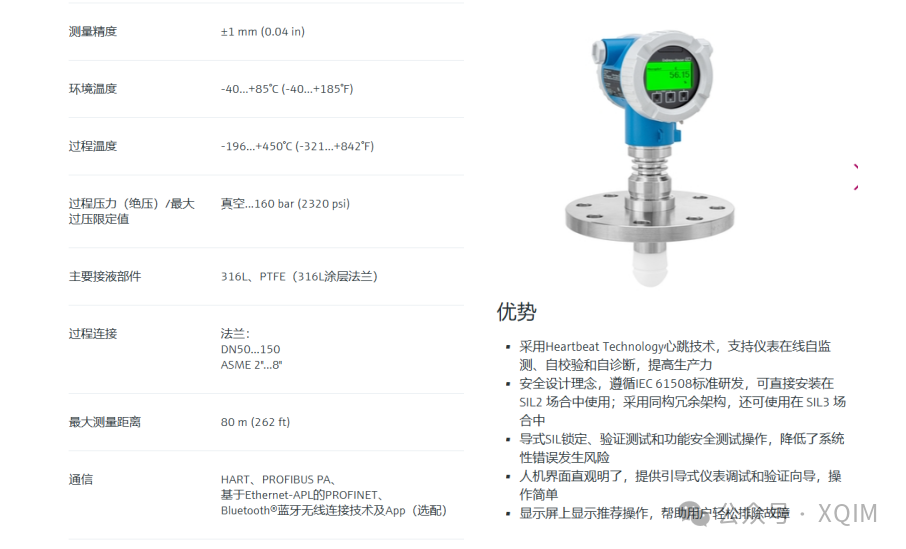
Figure 7-77 E+H Micropilot FMR62B Radar Level Gauge
(4) Selection
To ensure accurate selection of level sensors, we recommend compiling all information by filling out the “Instrument Condition Form” or “Automatic Control Condition Form” for comprehensive consideration; below is the condition form for level gauge selection;

Figure 7-78 Level Gauge Survey Form 1
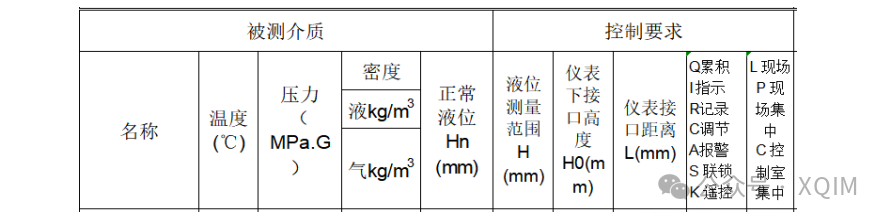
Figure 7-79 Level Gauge Survey Form 2
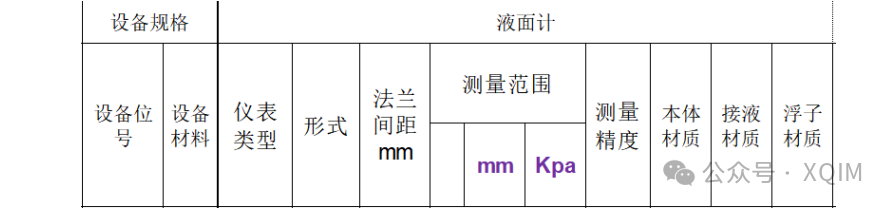
Figure 7-80 Level Gauge Survey Form 3
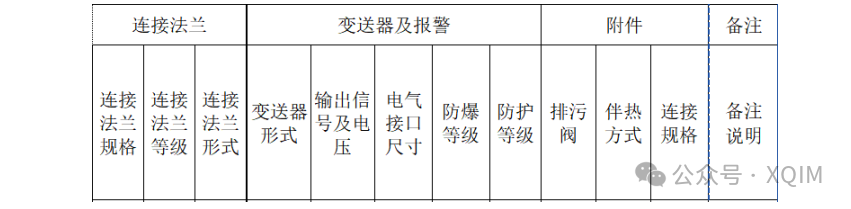
Figure 7-81 Level Gauge Survey Form 4
Supplement: Since the selection of instruments and valves greatly affects the control results and data accuracy of the process control system, generally, larger enterprises are equipped with instrument engineers to be responsible for the selection; it is recommended that the selection of instruments and valves be handled by experienced engineers and must be confirmed by the supplier.
(5) Precautions
1) For non-contact sensors (such as ultrasonic and radar), the probe must be above the liquid surface, avoiding obstacles such as feed ports, stirrers, and ladders.
2) Floats, guide wave rods, etc., should be installed vertically to avoid friction with the container wall.
3) Ultrasonic sensors have blind zones; ensure that the highest liquid level is below the blind zone during installation.
4) For static pressure sensors installed at the bottom, ensure that the pressure port is not blocked by sediment.
5) The sensor materials (diaphragm, sealing ring, probe, etc.) in contact with the medium must withstand the corrosion and temperature of the medium.
6) For sensors like ultrasonic that are greatly affected by sound speed/wave speed temperature, a built-in or external temperature sensor for compensation is required.
7) Ensure proper shielding of power and signal lines and outdoor lightning protection measures.
8) Calibration of zero point (empty tank) and full scale (full tank) is required after installation.
9) Regularly check the sensor for damage, corrosion, fouling, or adhesion, and clean promptly. Especially, dust and spider webs on the surface of ultrasonic probes can severely affect measurements.
10) In flammable and explosive environments, products with appropriate explosion-proof certification must be selected, and installation and wiring must strictly follow explosion-proof specifications.
———————————————————————–