Micro Robots Bring New Hope for Rescue Operations: Technological Innovations in Search and Rescue 🚑
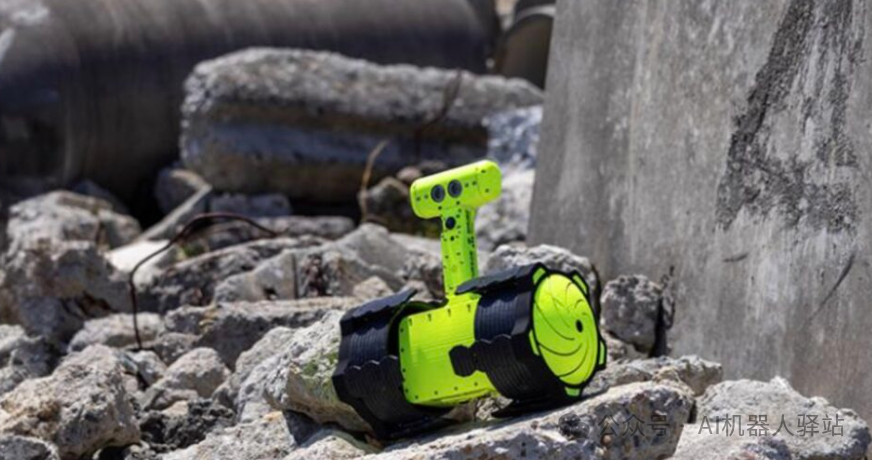
🔍Today’s Focus: The HAMR-E micro robot, jointly developed by ETH Zurich and the Swiss National Center for Competence in Research, provides a groundbreaking solution for disaster rescue. Weighing only 5 grams and measuring 4.5 centimeters, this micro robot can crawl flexibly in complex rubble environments and achieve inverted movement on metal surfaces through magnetic foot pads, significantly enhancing search and rescue efficiency in collapsed buildings.
🤖Technological Breakthrough: The HAMR-E robot is driven by multi-layer piezoelectric composite material actuators and features a four-degree-of-freedom leg design, with each leg equipped with two independent motors to ensure stable movement on rugged surfaces. The magnetic foot pads can generate an adhesion force exceeding 2.6 times its own weight, allowing it to crawl freely on vertical metal surfaces and ceilings. This design overcomes the movement limitations of traditional robots in complex environments.
🏗️Application Scenarios: In simulated disaster environments, the HAMR-E successfully demonstrated navigation capabilities within piping systems, metal frameworks, and mechanical devices. The research team tracked the robot’s position in real-time using an external motion capture system, laying the groundwork for positioning technologies in future actual rescue missions. This micro robot is particularly suitable for personnel rescue operations following disasters such as earthquakes and explosions.
📊Research and Development Progress: The research team is currently developing the next generation of the HAMR-E robot, focusing on enhancing its autonomous navigation capabilities and environmental perception functions. By integrating micro sensors and computing units, future versions will be able to perform rescue tasks autonomously without relying on external tracking systems. Additionally, the team is exploring collaborative schemes for robot swarms to improve rescue efficiency through multi-robot cooperation.
🌟Industry Impact: The development of micro robot technology brings new possibilities to the rescue industry. Compared to traditional rescue methods, micro robots can access areas unreachable by humans and large equipment, significantly increasing the success rate of rescues while reducing risks to rescuers. This technology is expected to be practically applied within the next 3-5 years, providing crucial technical support for global disaster relief efforts.
The HAMR-E micro robot crawling on a metal surface is executing a crawling task on a vertical metal surface.
Robotics: Overview of Mechanical Arm Control—Position, Trajectory, and Torque Control.