There is a set of data that might stir many hearts—during the first half of 2024, the sales of a certain domestic mid-size sedan surged over 60% year-on-year, directly penetrating the territory of joint venture brands, becoming a favorite among many young families and urban white-collar workers. Among them, the name Chery Arrizo 8 has increasingly appeared on sales lists, car enthusiasts’ reviews, and trending topics on social networks. Who would have thought that Chery, once jokingly referred to as a “tech nerd” by netizens, could make such a remarkable comeback in the sedan market? All the changes began with the new generation Arrizo 8.
Looking back at the history of Chery cars, the Arrizo series did not start with a halo. Once upon a time, domestic brands were firmly suppressed by joint ventures in the sedan field, and the Arrizo’s starting point was not high-profile. However, as the wheels of time roll forward, under the multiple waves of new energy vehicles, intelligent driving, and consumption upgrades, Chery chose a path that is not so “clever” but more technically sophisticated. The Arrizo 8 is a concentrated embodiment of this strategic confidence. Unlike the previous “cost-performance” label, the new generation Arrizo 8 emphasizes a comprehensive leap in quality, intelligence, and driving experience.
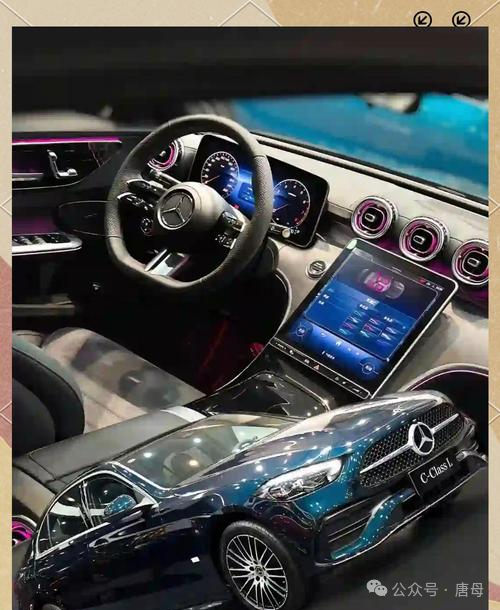
In terms of design, the Arrizo 8 has completely broken free from the shackles of the “copycat face.” The front features a large-size borderless grille, adorned with starry matrix-like dot chrome elements, which, when illuminated at night, instantly enhances the vehicle’s presence. The side profile flows seamlessly, with a dynamic contour that creates a sense of forward thrust. The rear is finished with a continuous LED taillight, complemented by a slightly raised ducktail spoiler, exuding both youthfulness and a hint of aggression. Standing beside it, one can feel both the sporty low stance and the broad presence expected of a mid-size car. Compared to the previous generation or similarly priced joint venture competitors, it is hard to describe it as “knockoff” or “mediocre” anymore. The visual impact has clearly entered the realm of mainstream aesthetics.
The size performance is also impressive. The Arrizo 8 has a wheelbase of 2790mm, a length close to 4.8 meters, and both width and height surpass previous domestic competitors in the same class. In actual seating experience, the front row offers ample space, and the rear legroom is quite generous, allowing even a tall person of 1.8 meters to stretch comfortably. The trunk space reaches 500L, making it easy to handle both family road trips and daily urban commutes. In terms of storage capacity, the central armrest box, door cup holders, and front and rear storage compartments are thoughtfully designed, reflecting a meticulous “engineer mindset” in the details.
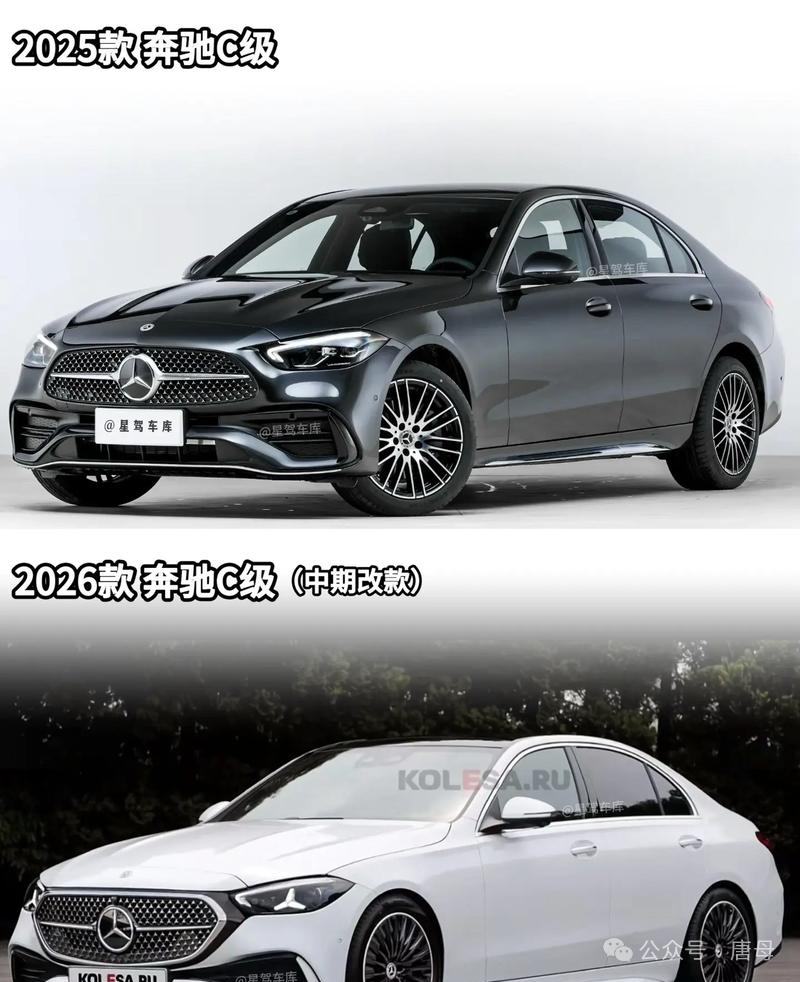
Entering the car, the interior of the Arrizo 8 overturns many people’s preconceived notions of the “plastic feel” of domestic brands. The dual 12.3-inch screens exude a strong sense of technology, with the center console covered in a large amount of soft materials, intricate stitching, and brushed metal trim creating an upscale atmosphere. The seats support multi-directional electric adjustments, with the driver’s seat equipped with heating, ventilation, and memory functions. High-end models even feature mainstream NAPPA leather, offering excellent touch and support. In terms of details, features like 64-color ambient lighting, keyless entry, automatic air conditioning, and wireless phone charging are all included, meeting the current mainstream users’ pursuit of “ceremony.”
Safety and intelligence are the secret weapons for the Arrizo 8 to enter the mainstream market. The new car is equipped with an L2+ level intelligent driving assistance system, including ACC adaptive cruise control, AEB automatic braking, lane keeping, blind spot monitoring, and more. High-end models also support full-speed adaptive cruise control and traffic jam assistance, capable of automatically following, decelerating, and stopping in urban congestion, making it a “traffic jam artifact.” In terms of the intelligent cockpit, the entire vehicle is equipped with a Qualcomm Snapdragon 8155 chip, providing smooth operation comparable to smartphones. Features like voice recognition, vehicle networking, OTA upgrades, and continuous dialogue have become standard rather than gimmicks. Some may argue that such configurations are already common in new force models, but in the price range of just over 100,000 yuan for domestic mid-size cars, the Arrizo 8’s “stacking” is undoubtedly generous.
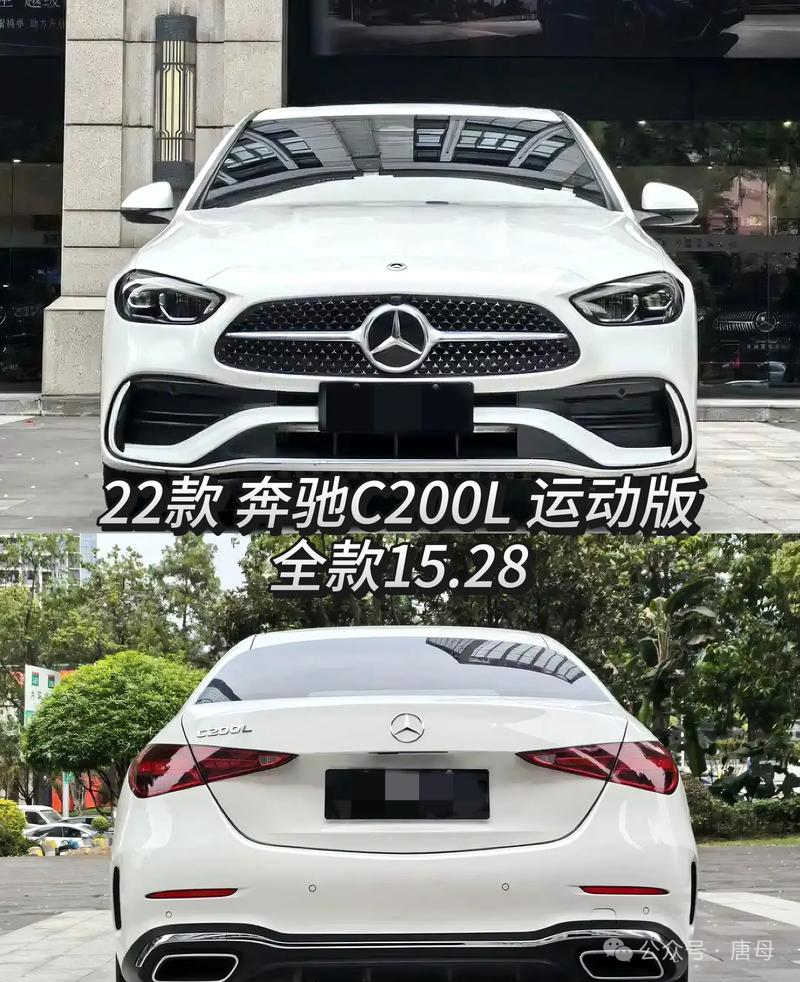
In terms of the power system, the Arrizo 8 primarily offers two engines: a 1.6T and a 2.0T, matched with a 7-speed wet dual-clutch transmission. The 1.6T engine has a maximum power of 197 horsepower and a peak torque of 290 Nm, with an official 0-100 km/h acceleration time of 7.6 seconds; the 2.0T model further increases to 254 horsepower and 390 Nm, with power reserves completely exceeding household needs. In daily driving, whether in urban commuting or highway overtaking, one can feel the agility of the throttle response and the smoothness of the shifting logic. The chassis tuning leans towards comfort, effectively filtering out minor road vibrations, yet still providing reliable lateral support during spirited driving, balancing driving pleasure with ride quality. In terms of fuel consumption, actual measurements show 7-8L/100km in the city, and even lower on the highway, with overall performance justifying the classification for this level.
In the competitive landscape, the Arrizo 8 faces formidable opponents. In the joint venture camp, models like the Volkswagen Lavida, Nissan Sylphy, and Honda Civic are perennial favorites; although they have high brand premiums, their configurations are sparse and power is mediocre, yet their prices are not friendly. Domestic competitors like Geely Xingrui, Changan Yidong PLUS, and BYD Qin PLUS are also continuously evolving in terms of intelligence, power, and cost performance. Compared to them, the Arrizo 8 clearly elevates its intelligent configuration and power performance, especially in high-end models where safety and intelligence are almost flawless. In terms of pricing, the 100,000 to 140,000 yuan range allows the main models to directly compete with top-spec joint venture A+ class sedans, while the configurations can “outperform” many mid-to-low spec joint venture B-class models, making the cost-performance advantage evident.
User demographics are also quietly changing. More and more post-90s and post-00s are becoming the main force in car purchases; they no longer blindly worship joint venture brands for “face value” but pay more attention to technology, intelligence, and experience. The Arrizo 8 perfectly aligns with this wave of consumption upgrade: no longer simply pursuing “adequate,” but rather “good to use, good looking, and fun.” Coupled with Chery’s consistent reliability in the three major components and high resale value, many young people who originally planned to buy joint venture brands ultimately find themselves “falling in love” after test driving and experiencing the vehicle.
The broader market trends are also worth noting. In 2024, the Chinese automotive market enters a “triple play” of new energy, intelligence, and the rise of domestic brands. The voice of joint venture brands is gradually being diluted, and consumer trust and recognition of domestic brands are increasing day by day. Although the fuel mid-size car market where the Arrizo 8 resides faces the “electrification impact,” it still carves out a unique path with its intelligent configuration and high value perception. Chery has also quickly sensed the trend, launching a plug-in hybrid version, accelerating its intelligent layout, and strengthening after-sales service to respond to market changes with faster product iteration.
Of course, no car is perfect. The Arrizo 8 still has gaps in chassis quality and NVH (noise, vibration, harshness) control compared to joint venture benchmarks, and some users have reported occasional lag in the central control system. The brand premium and market recognition still need further enhancement. However, when weighing cost performance, configuration, power, and intelligence, the Arrizo 8’s overall score is already compelling. It is no longer the underestimated “tech nerd” but is rewriting the market landscape for domestic mid-size sedans with its strength.
In the future, as the waves of electrification and intelligence surge, will the Arrizo 8 and similar models continue to hold their ground in the fuel vehicle market? Can Chery leverage the explosion of the Arrizo 8 to achieve a “qualitative change” in brand elevation? Is the rise of domestic brands merely a flash in the pan or a long-term counterattack? These questions have no standard answers. But one thing is certain—the protagonists of the Chinese automotive market are quietly changing.
What do you think? In the price range of 100,000 to 140,000 yuan, how would you weigh joint ventures against domestic brands, tradition against intelligence, and brand against experience? What would your choice be? Feel free to leave a comment and share your views.