The 3D printing market has become a battleground for materials.
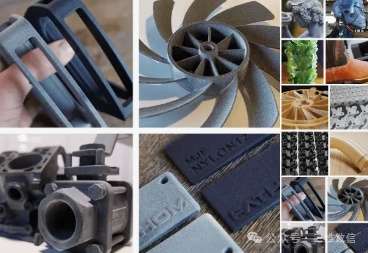
Stratasys maintains a strong position in proprietary thermoplastic materials, while 3D Systems dominates in photopolymer resins and metal powders. HP has carved out a niche market with its specialized powders optimized for Multi-Jet Fusion technology.
3D printing companies typically sell printers and provide software and prototyping services. Leading 3D printing companies are striving to develop polymers, metals, and specialized materials for specific industry applications to ensure their competitive position.
The patents for 3D printing materials reveal fierce competition over intellectual property. Major manufacturers like Stratasys, 3D Systems, and BASF are actively applying for patents on new material formulations, particularly in high-performance polymers and metal powders. Key qualities of material patents include temperature resistance, flame retardancy, lightweight properties, and sustainability.
Quality and special requirements of materials have become the main driving force behind the growth of the 3D printing market. Many companies are investing significant resources in material development to gain a competitive edge.
3D Systems encourages customers to use materials developed by the company, which has established a department in Finland for developing metal materials and a polymer material development company in Temple, Texas. 3D Systems can also develop specialized materials based on customer needs.
The goal of 3D printing companies is to achieve attractive material quality in the market, whether in terms of strength, lightweight properties, or ease of production.
Some companies maintain closed proprietary systems, while others offer open material platforms. We have seen materials developed to enhance durability or increase printing speed. Material certification and quality standards have become important differentiators, especially in regulated industries such as medical and aerospace.
In some cases, customers invest in the development of materials and hold ownership rights. “Boeing owns the intellectual property of the materials we produce. We have been producing for them for 20 years,” said Dunne from 3D Systems. “Boeing became a partial owner because they invested in the development of these materials. This is their proprietary technology. They do not want to share these materials with others.”
While price competition for standard materials is fierce, the competition for high-quality materials is different. Proprietary materials are often priced higher due to their unique characteristics and application-specific advantages. Some 3D printing companies are forming strategic partnerships with materials science companies and universities to accelerate R&D and bring innovative solutions to market faster.
Manufacturing Shifts to Materials
In the early days of 3D printing, materials were not a significant factor. “Ten, fifteen, or twenty years ago, the only use of 3D printers was prototyping. In that case, materials were less important. As long as it was cost-effective, people were excited,” said John Kawola, CEO of Boston Micro Fabrication. “However, once you shift to manufacturing, materials must be good. They must meet broader requirements than just prototyping.”
The evolution from prototyping to production has driven new developments in materials. “In the past five years, innovation and improvement around materials have reached a peak,” Kawola said. “You can now do things with 3D printers or 3D printing materials that would have surprised most people five years ago.”
While materials play a larger role in the development and growth of the 3D printing industry, the emphasis on materials is not new. “Thirty-five years ago, when Hans Langer founded EOS, it was a systems company,” Dunne said. “But Langer quickly realized that to gain a competitive advantage, you needed to master materials. So this has been part of our business model for 35 years.”