1. Virtualization Technology
(1) Concept and Classification of Virtualization Technology
The essence of virtualization technology is to abstract physical resources into logical resources, breaking the traditional deployment model of “one server corresponds to one application,” and achieving pooled management and dynamic allocation of computing, storage, and network resources.
Conceptually, virtualization technology can be divided into full virtualization and paravirtualization. Full virtualization means that the guest OS runs completely on top of the Virtual Machine Monitor (VMM) without any modifications. Paravirtualization, on the other hand, requires some modifications to the guest OS so that it can be aware of its operation in a virtualized environment, allowing for more efficient interaction with the VMM. Regardless of the type of virtualization, the core component is the VMM, which is responsible for virtualizing hardware resources and providing a unified runtime environment for virtual machines.
In terms of application scenarios, virtualization technology is widely used in servers, storage, and networks. Server virtualization allows multiple virtual machines to run simultaneously on a single physical server, with each virtual machine having its own operating system, application software, and system configuration, enabling dynamic resource allocation as needed. This not only greatly improves server resource utilization and reduces energy consumption and space occupancy but also achieves goals such as application isolation, load balancing, and high availability. Storage virtualization abstracts heterogeneous physical storage devices into a unified logical storage resource pool, simplifying storage management and improving data access efficiency. Network virtualization, through technologies like Software-Defined Networking (SDN), decouples network infrastructure from application services, enabling flexible configuration and centralized management of network resources.
(2) Application of Virtualization Technology in Data Center Infrastructure
From the perspective of resource utilization, virtualization technology can partition a physical server into multiple virtual machines, each capable of independently running operating systems and applications, thus achieving full utilization of computing resources. Administrators can dynamically adjust the configuration of virtual machines based on business needs, such as CPU, memory, and storage, making resource allocation more precise and efficient. This not only improves hardware utilization but also reduces the total cost of ownership (TCO) of the data center, facilitating rapid deployment and elastic scaling of business.
From the perspective of operations and maintenance management, virtualization technology greatly simplifies the daily operations of data centers. Through a virtualization management platform, administrators can centrally manage all virtual resources, achieving full lifecycle management of virtual machines, including creation, deletion, migration, and backup. This not only reduces operational complexity and improves work efficiency but also minimizes the risks associated with human error. Additionally, virtualization possesses strong high availability features, supporting HA (High Availability), FT (Fault Tolerance), and VMotion (live migration), ensuring uninterrupted business operations and guaranteeing the continuity and reliability of the data center.
From the perspective of green energy efficiency, virtualization technology can effectively reduce energy consumption in data centers. In traditional data centers, a large number of servers remain in low-load or idle states for extended periods, leading to significant power waste. By consolidating through virtualization, the number of physical servers can be reduced, improving equipment utilization and achieving energy-saving goals. Furthermore, virtualization supports intelligent power management, automatically adjusting server operating states based on load conditions, such as shutting down idle devices or lowering frequency and voltage, further reducing energy consumption. This not only decreases the operational costs of the data center but also responds to the call for energy conservation and emission reduction, reflecting the corporate social responsibility. From the perspective of business innovation, virtualization technology provides strong support for data centers to respond to rapidly changing business demands. In today’s era, enterprises face challenges such as a volatile market environment, personalized user demands, and innovative business models. Traditional data centers struggle to respond quickly to these changes, while virtualization endows the infrastructure with great flexibility. Based on virtualization platforms, enterprises can rapidly develop and deploy new application systems, flexibly adjust resource configurations, and achieve agile business innovation. The development of emerging technologies such as cloud computing and big data also benefits from the elasticity, scalability, and efficiency provided by virtualization technology.
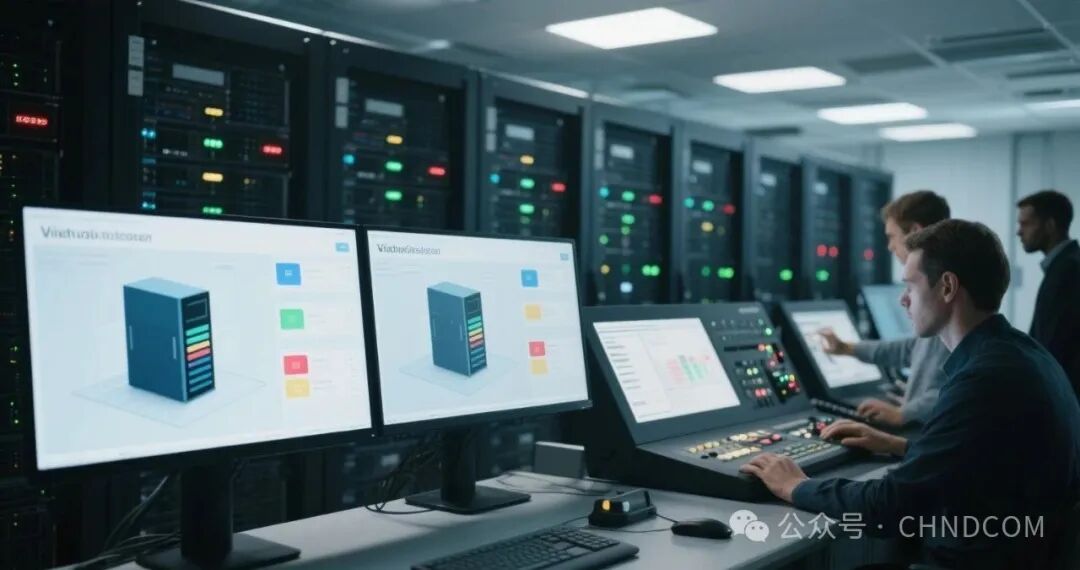
(3) Challenges and Solutions Facing Virtualization Technology
Low resource utilization and the “island” phenomenon are significant factors hindering the effectiveness of virtualization technology. Traditional data centers typically adopt a “one application, one server” deployment model, leading to a large amount of server resources being idle and wasted. Even with the introduction of virtualization technology, if there is a lack of unified resource scheduling and management, it is still difficult to achieve resource sharing between different business systems, resulting in “information islands.” To address this issue, the industry has proposed the concept of Software-Defined Data Center (SDDC). By pooling computing, storage, and network resources and building a unified resource scheduling and management platform, resource utilization can be significantly improved, breaking down the barriers of “islands.” Additionally, introducing cloud management platforms and other tools to achieve centralized monitoring and scheduling of the virtualization environment is also an effective way to optimize resource allocation.
The complexity and variability of network architecture also pose challenges for the implementation of virtualization technology. Data center networks need to support a massive number of virtual machines and applications while meeting multiple requirements such as multi-tenancy, high performance, and high reliability. Traditional multi-layer tree network architectures struggle to meet the demands of virtualization environments, often leading to network bottlenecks and single points of failure. To solve this problem, flat network architectures have emerged. By introducing technologies like Spine-Leaf architecture and VXLAN, network structures can be simplified, enhancing network flexibility and scalability. The emergence of Software-Defined Networking (SDN) further empowers network virtualization. By decoupling network forwarding and control through SDN controllers, the automation level of network configuration and scheduling can be significantly improved, reducing operational complexity.
Moreover, the security issues of virtualization environments are also worth noting. Risks such as virtual machine escape, malicious traffic between virtual machines, and vulnerabilities in management platforms can pose threats to the information security of data centers. To address these risks, building a defense-in-depth system is crucial. Technologies such as micro-segmentation, multi-tenant isolation, and virtualization security protection can strengthen the security barriers of virtualization environments from different levels. Additionally, enhancing the security hardening of virtualization management platforms and establishing a comprehensive security operation mechanism are also necessary conditions for ensuring the stable operation of virtualization environments.
To be continued《Key Technologies in Data Center Infrastructure—— Cloud Computing Technology》.
-END-
Unauthorized reproduction is prohibited.Official Account: Data Center Infrastructure Operation Management
☼Previous exciting content
☞Free access to data center infrastructure operation and maintenance materials
☞[Video Sharing] Data Center Infrastructure Operation Engineer Training
☞Data Center Infrastructure Engineering Pre-acceptance Inspection Checklist – Excel Sheet
☞《Data Center Infrastructure Operation Engineer Training Materials》
☞[Video Sharing]Data Center Infrastructure Planning and Design Video Tutorial
☞Summary of Data Center Infrastructure Operation Engineer Training
☞Summary of Data Center Infrastructure Operation 3P Files
[Copyright Statement]
All articles marked with the source or reprinted from this public platform are owned by the original author and original source, for learning and reference purposes only. If the source is incorrectly marked or infringes your rights, please inform us, and we will delete it immediately.
[Disclaimer]This public platform maintains neutrality regarding the content, statements, and opinions of the shared articles and does not provide any express or implied guarantees regarding the accuracy, reliability, or completeness of the content, for reference only.