
This special issue invites experienced experts and scholars in the fields of ubiquitous computing and ubiquitous operating systems to introduce the concept, technology, and challenges of ubiquitous operating systems aimed at the integration of humans, machines, and objects, starting from the historical development and current status of ubiquitous computing. It also presents various application examples, technical challenges, and future developments of different ubiquitous operating systems in various human-machine-object integration scenarios.
The operating system is one of the most fundamental pieces of software in computer systems, responsible for managing computer hardware and other software resources, providing support for the development and operation of upper-level applications. Since the development of the first operating system GM-NAA I/O for the IBM 704 computer by General Motors and North American Aviation in 1956, operating systems have undergone more than 60 years of development: from the earliest computers that had no operating systems and directly ran application software, to the present where operating systems are indispensable for almost all computers and computing systems; from the commonly seen desktop operating systems Windows/Linux and smartphone operating systems Android/iOS, to various forms of operating systems used in cloud computing, data centers, and even various embedded systems. We can see that operating systems have played a key role in promoting the prosperous development of computer software and applications, as well as the entire information technology through platformization and standardization.
From the development history of operating systems, on one hand, with the upgrading of computing devices, different types of operating systems emerge; on the other hand, the development of application modes and scenarios also poses new demands on operating systems. With the comprehensive extension of the Internet into human society and the physical world, as well as the rise of new technologies such as cloud computing, big data, and artificial intelligence, various new application modes and scenarios have emerged, presenting many challenges and transformations for operating system-related technologies. The concept of operating systems has begun to show a trend of generalization, aiming to shield heterogeneous resource management downward and refine application commonalities upward, giving rise to a series of new operating systems. With the arrival of the era of ubiquitous computing integrating humans, machines, and objects, various ubiquitous IoT terminals on a scale of hundreds of billions and new ubiquitous computing modes have emerged, leading to the birth of ubiquitous operating systems.
The naming of ubiquitous operating systems mainly comes from the continuous extension and expansion of operating systems with technological development, that is, the continuous generalization from host operating systems, personal (desktop) operating systems, mobile terminal operating systems, to IoT terminal operating systems. In the future, the networked ubiquitous operating systems will manage terminals including servers, desktops, edge devices, and IoT terminals, each with its own focus at different stages of development. Currently, the focus is on the “human-machine-object” triad integration computing model, and the development focus of ubiquitous operating systems is on connecting and controlling IoT terminals, as well as supporting various network application development and operation platforms, including IoT terminals.
Although the concept of ubiquitous operating systems was formally proposed in 2018, research related to ubiquitous operating systems has a long history. Built on traditional operating systems, operating systems aimed at new ubiquitous computing application modes can take various forms, with typical representatives including: HomeOS for home operating systems, ROS for robotic operating systems, Urban OS for smart city operating systems, TinyOS for sensor network operating systems, and cloud computing operating systems. Ubiquitous operating systems have the same functional goals as traditional operating systems like Linux and Windows, namely to shield heterogeneous resource management downward and refine application commonalities upward; at the same time, they also reflect the generalization of the operating system concept, constructing different operating systems aimed at different computing modes and application scenarios.
In recent years, experts at home and abroad have conducted extensive research on the architecture, construction methods, and key technologies of ubiquitous operating systems, and have also carried out a certain scale of application practice in many fields. To summarize the current development status of ubiquitous computing and ubiquitous operating systems aimed at the integration of humans, machines, and objects, and to look forward to future development directions, this special issue invites experienced experts and scholars in the field of ubiquitous computing and ubiquitous operating systems to introduce the concept, technology, and challenges of ubiquitous operating systems aimed at the integration of humans, machines, and objects, and to present various application examples, technical challenges, and future developments of different ubiquitous operating systems in different human-machine-object integration scenarios (industrial IoT, smart robotics, smart transportation, smart homes, etc.), including the following six articles:
Professor Shi Yuanchun from Tsinghua University and others in their article “From Ubiquitous Computing to Human-Machine-Environment Integrated Computing” summarize and review the historical development and current status of ubiquitous computing, deeply exploring the challenges of ubiquitous computing in the era of human-machine-environment integration, and introducing the system architecture, technical characteristics, and development direction of the NUIX (Lingxi) natural human-computer interaction operating system aimed at human-machine-environment integration.
Professor Guo Yao from Peking University in his article “Ubiquitous Operating Systems: Technical Challenges and Future Prospects” systematically introduces the concept, framework, and technical challenges of ubiquitous operating systems aimed at human-machine-object integration computing scenarios, interprets the connotation and extension of the concept of ubiquitous operating systems, and looks forward to the future development of ubiquitous operating systems.
Researcher Cao Donggang from the Peking University Institute of Information Technology and others in their article “Ubiquitous Operating Systems for Industrial IoT” introduce the reference architecture and key technologies of ubiquitous operating systems aimed at industrial IoT scenarios based on the characteristics and demands of industrial IoT scenarios, and comprehensively summarize the research status, development trends, and future challenges of ubiquitous operating systems in the industrial IoT field at home and abroad.
Vice President of Smart Transportation at Tencent Research Institute, Shi Xuesong, and others in their article “Research and Practice of Smart Transportation Operating Systems” introduce the characteristics of smart transportation scenarios and the demands on operating systems, focusing on the design ideas, overall architecture, key technologies for software-defined ubiquitous resources, and convenient support for application construction of Tencent’s smart transportation operating system, as well as specific products and application cases in the fields of rail transportation and highways.
Technical Director Xu Zhifang from the National Innovation Center for High-end Intelligent Home Appliances and others in their article “Research and Practice of Smart Home Ubiquitous Operating Systems” introduce the ubiquitous operating systems aimed at smart home scenarios from the industry demands and technical challenges of smart homes, particularly the practical case of Haier’s smart home operating system UHomeOS, focusing on the overall architecture of software-defined ubiquitous resources, software-defined ubiquitous resources, and the construction of an open ecosystem.
CEO Huang Xiaoqing from Dalu Robotics Co., Ltd. and others in their article “Ubiquitous Operating Systems for Intelligent Robots” introduce the technical challenges of intelligent cloud robots, presenting the HARIX architecture based on “cloud-network-end” distributed intelligent computing collaboration, as well as the HARIX operating system that provides cloud brain services for intelligent robots and its key technologies and related application scenarios.
Ubiquitous operating systems remain an emerging research field, and with the further development of human-machine-object integrated ubiquitous computing, the research demand for ubiquitous operating systems will become more extensive and in-depth. Due to the diverse characteristics of ubiquitous operating systems, they face some new technical and research challenges based on traditional operating system research. For example, the construction methods of ubiquitous operating systems aimed at different application scenarios and fields will become an important research direction, while privacy protection and security mechanisms for ubiquitous operating systems have also become more urgent needs.
For a long time, operating systems have been a very important and challenging research field. Ubiquitous operating systems bring new challenges and opportunities to operating system research, and we particularly hope that more experts and scholars will pay attention to and participate in the related research of ubiquitous operating systems. We also look forward to significant breakthroughs in our country’s research in the field of system software, achieving a place on the international stage.
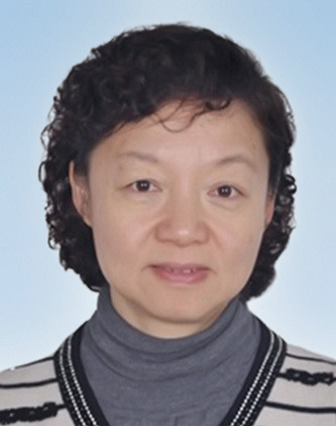
Jin Zhi
CCF Fellow, Executive Director, 2021 CCF Summer Pei Su Award Winner. Professor at the School of Computer Science, Peking University, and Executive Deputy Director of the Key Laboratory of High-Confidence Software Technologies of the Ministry of Education at Peking University. His main research directions are knowledge engineering and software requirements engineering.
Guo Yao
Senior Member of CCF. Professor and Vice Dean of the School of Computer Science, Peking University. His main research directions are operating systems, mobile computing, and software security.
Special Statement: The China Computer Federation (CCF) holds all copyrights to the content published in the “Communications of the China Computer Federation” (CCCF). Without CCF’s permission, no text or photos from this publication may be reproduced, otherwise it will be considered infringement. CCF will pursue legal responsibility for infringement.
Recommended by CCF
[Featured Articles]
-
CCCF Special | Ubiquitous Context Intelligence
-
CCCF Selected | Thoughts on Operating System Architecture and Evolution Towards 2030

Click “Read the original text” to see more CCCF articles.