Recently, a report from Semicast indicated that Texas Instruments (TI) continues to hold the top position in the industrial semiconductor market. The report stated that the global industrial semiconductor market size was $42.2 billion in 2016, up from $40.7 billion in 2015, marking a growth of 3.7%. The main growth drivers still rely on traditional analog ICs, optoelectronic components, and power devices.
In fact, TI has been the leader in the industrial semiconductor market since 2010, and by acquiring National Semiconductor, it further solidified its dominant position in the industrial semiconductor sector. So, how has TI further strengthened its leadership in the industry over the years, especially as the Industry 4.0 revolution approaches? TI’s General Manager of Sales and Applications for East China, Lyu Yuzhao, provided his insights.
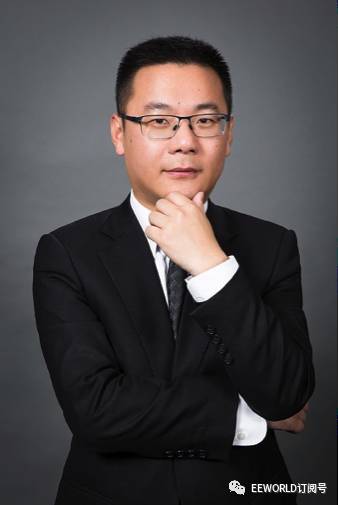
Texas Instruments (TI) General Manager of Sales and Applications for East China, Lyu Yuzhao
First, how do we define industry?
According to Semicast’s classification, the industrial sector includes traditional industrial fields such as factory automation, motor drives, lighting, building automation, testing and measurement, power and energy, as well as medical electronics and industrial transportation, but excludes sectors like aerospace and defense. In fact, TI also operates based on a similar broad concept of industry. “We know that traditional industries include variable frequency drives and servos, but at TI, the scope of industry is very broad, encompassing a total of 14 industrial markets, including factory automation and control, motor drivers, building automation, power delivery, medical, testing and measurement, etc. It is precisely because TI has a comprehensive product system and a wide range of solutions provided by its system teams that it can support the development of applications across a broader industrial field.” Lyu Yuzhao stated.
Where will the growth points in the future industrial market be? Lyu Yuzhao indicated that there are opportunities in all fields. From a macro perspective, Industry 4.0, China Manufacturing 2025, artificial intelligence, and other trends bring hope for the future of the industrial market. From a micro perspective, efficiency, intelligence, and sustainability are eternal topics in the industry, from small-scale testing and measurement to power grid infrastructure.
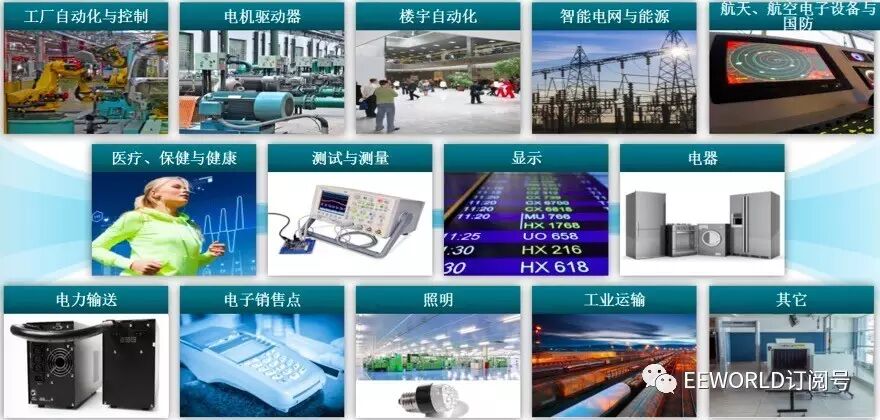
TI’s concept of large industry
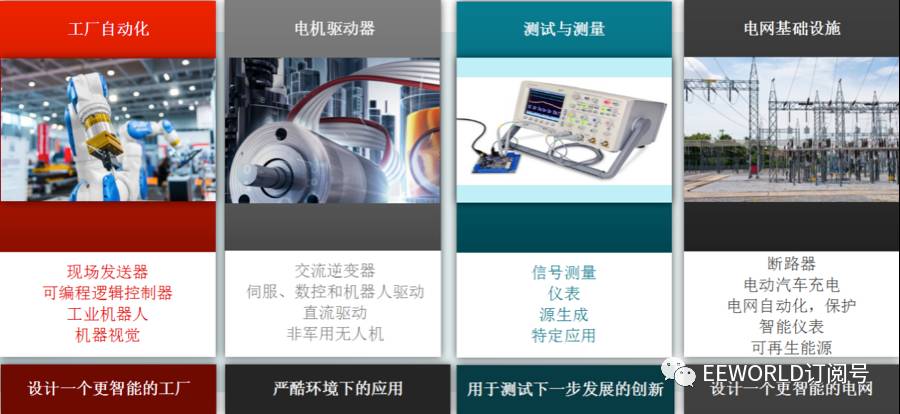
Key areas of TI’s development in the industrial sector
What are TI’s advantages?
Innovation is the competitive edge in the semiconductor market. TI has a renowned Kilby Laboratory dedicated to developing new technologies that meet future needs for the next five to ten years or even longer, including TI’s current GaN process, capacitive isolation technology, and more, all originating from this lab.
In addition to breakthrough innovations, TI continuously upgrades existing market products. For example, the C2000 series, which has been on the market for over a decade, is still undergoing various technological innovations to meet the latest market demands. The new C2000™ Delfino™ MCU and DesignDRIVE Position Manager technology address the challenges of interfacing position sensors in industrial servos and AC inverter drives. The new TMS320F28379D and TMS320F28379S microcontrollers (MCUs) are extensions of the TIC2000™ Delfino™ MCU product line. By reducing the board area required for FPGA or ASIC-based solutions, it also helps developers lower system costs. The capabilities that TI can achieve on a single chip are becoming increasingly powerful, which, to some extent, also raises the overall power density requirements.
The second point is a more complete coverage of the industrial line. The coverage of industrial systems is broad and diverse, so having over 100,000 products, TI covers everything from processors, microcontrollers, wireless, to ADC/DAC products, enabling it to meet customer needs comprehensively.
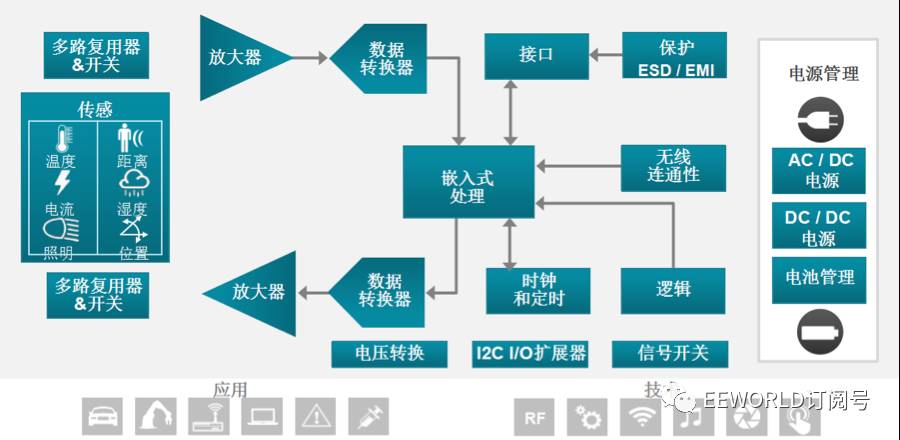
TI’s analog and embedded processing technologies at the core of industrial systems
The third point is a stable, reliable, and long-term supply cycle. TI’s 300mm analog wafer fab and global factories can ensure a relatively stable supply cycle, and as a manufacturer with over 80 years of experience, it also provides considerable assurance regarding product lifecycle.
The fourth point is understanding the Chinese market. China is gradually transitioning from a market follower to a market leader, and being close to Chinese customers and meeting their needs is essential for establishing a foothold in the global industrial market.
The fifth point is accelerating customers’ design and development cycles and supporting innovation among small and medium-sized customers.
Points four and five were emphasized by Lyu Yuzhao.
Closer attention to the Chinese market
As East China is the region with the richest industrial applications in China, Lyu Yuzhao, as the regional general manager, has witnessed the industrial upgrading process of Chinese customers.
“In the power protection and distribution market, most of the leading customers were in Europe and the United States in the early years, but in recent years, there has been a noticeable trend where Chinese customers are guiding and influencing market development. For example, their demand for ADC/DAC is increasing, and the requirements for ADC/DAC are evolving towards higher levels and precision, which is also due to the rapid development and increasing demands of the Chinese market. In the European and American markets, as seen in traditional industrial markets, design cycles are often long, whereas in China, we see that customers’ design cycles are becoming shorter, with some industrial sectors having design cycles of only 3-4 quarters. This means that faster time-to-market has become a core demand, and China will thus have a greater impact on and lead the industry and market. In other words, if a company can succeed in China, it can relatively succeed globally as well,” Lyu Yuzhao stated.
To this end, TI continues to invest in R&D, production, and sales in China, establishing 18 offices nationwide, with the establishment of the Chengdu factory and the Shanghai distribution center aimed at being closer to the Chinese market.
With the surge of entrepreneurship in China, many innovative startups in industrial sectors have emerged, including new industrial fields such as drones and electronic locks for shared bicycles. “It is precisely because our sales reach is nationwide that we can respond to market changes and demands more quickly.” Lyu Yuzhao stated.
TI reference designs are becoming increasingly important
“Currently, TI Designs not only provide reference designs but also offer complete schematics, PCB layouts, and Gerber files. This allows customers to spend more time on application implementation and product differentiation rather than hardware design,” Lyu Yuzhao said. “TI can handle hardware-related demands and provide customers with more complete reference designs, effectively saving their resources and time.“
“TI reference designs address common market needs. We also hope to help customers solve common pain points in specific market applications.” Recently, several TI Designs released by TI have addressed customer pain points, with performance parameters significantly higher than those of customer-designed solutions.
The TIDA-00915 reference design released by TI, a GaN power stage design capable of driving 200-V AC servo drives and robots, achieves an efficiency of up to 99%. Such an efficient reference design allows customers to commercialize it directly without any modifications. “This reference design is the first solution based on the GaN process released last year. The benefits of this reference design are: 1. With the increased switching frequency, it maximizes the optimization of power supply design solutions, resulting in higher overall power supply design efficiency. 2. It enhances control precision, especially at high-speed operations. 3. With GaN, designers can optimize switching performance, reduce motor power loss, and minimize the size of heat sinks, thus saving board space. Overall, it will be more cost-effective, with higher integration, improved efficiency, and greater energy savings. It will also enhance precision control and power density during high-speed operations.”
Lyu Yuzhao stated: “We see an increasing number of customers becoming interested in the power efficiency of GaN. Many early-stage products and R&D products in the industrial sector are currently using GaN. These applications are often related to power delivery, but some are also applied in household appliances, power grid infrastructure, and other fields. TI can provide GaNFETs with integrated drivers (such as LMG3410 & LMG5200) and GaN drivers. TI currently offers 13 types of TI Design solutions related to GaN, which can help customers integrate GaN into their applications.”
Additionally, TI released a 2 kW isolated bidirectional DC/DC converter reference design TIDA-00951 for uninterruptible power supplies (UPS) and energy storage systems, which is also the industry’s most efficient reference solution. “The benefits of this reference design are: 1. For most traditional designs, if transitioning from 48V to 400V or from 400V to 48V, two separate systems are usually required. Two systems mean higher costs, as different systems are needed to achieve two functions. TI’s advantage is that it combines these two systems into one, achieving bidirectional functionality and saving significant costs. 2. In terms of efficiency, this reference design can achieve over 94% efficiency, whereas customers in the industry typically achieve around 90% overall efficiency. 3. Regarding the board layout area, because some surrounding components also use TI’s most advanced technologies, including the industry’s most efficient current sensing chip INA240, the highest performance isolation amplifier AMC1301, and the fastest isolation gate driver UCC21520, the combination of TI’s complete solution results in lower overall costs, more compact board space, and maximum performance.”
Lyu Yuzhao stated that the current TI Designs reference designs are also designed by teams in China, serving not only the Chinese market but also the global market.
Accelerating industrial innovation through system-level solutions
Industrial upgrades are ongoing; for example, the advent of the iPhone has created new demands for battery testing, driving changes in testing. Smart buildings have increased the demand for fingerprint locks, and smart wristbands can transform medical insurance and services. Even agriculture requires sensors to perceive changes in the land for intelligent irrigation.
“We see that even in traditional fields, the speed of iterative innovation is accelerating, which means that TI Designs will play an increasingly important role in accelerating customers’ product launch cycles. TI hopes to provide customers with ‘modular’ solutions, whether for Industry 4.0 or China Manufacturing 2025, ultimately needing to be realized as functional modules. TI aims to break it down into each module to assist customers in achieving this. TI Designs are the tools for implementing these functional modules, and TI’s chips are components of these modules. Users can innovate directly based on TI Designs without starting from scratch, providing better convenience for customers.” Lyu Yuzhao concluded: “Customers may not necessarily care about the functions of a specific chip, but rather whether that chip can achieve the desired functionality within the system. This requires a system-level perspective for more accurate judgment. This is why TI has evolved from providing chip-level solutions to offering more system-level solutions, as only by solving customers’ system issues can more products be promoted; conversely, system optimization will also raise higher demands for products, helping to promote product development and create products that better meet customer needs.”
Long press the QR code below to add WeChat IDhelloeeworldas a friend, send your profession or EEWORLD forum account + areas of interest, and upon approval, you will be added to our WeChat group established in various fields.