A-PHY is an embedded vision interface standard developed by the MIPI Alliance, originally designed for automotive applications, and has now expanded into the field of industrial automation.
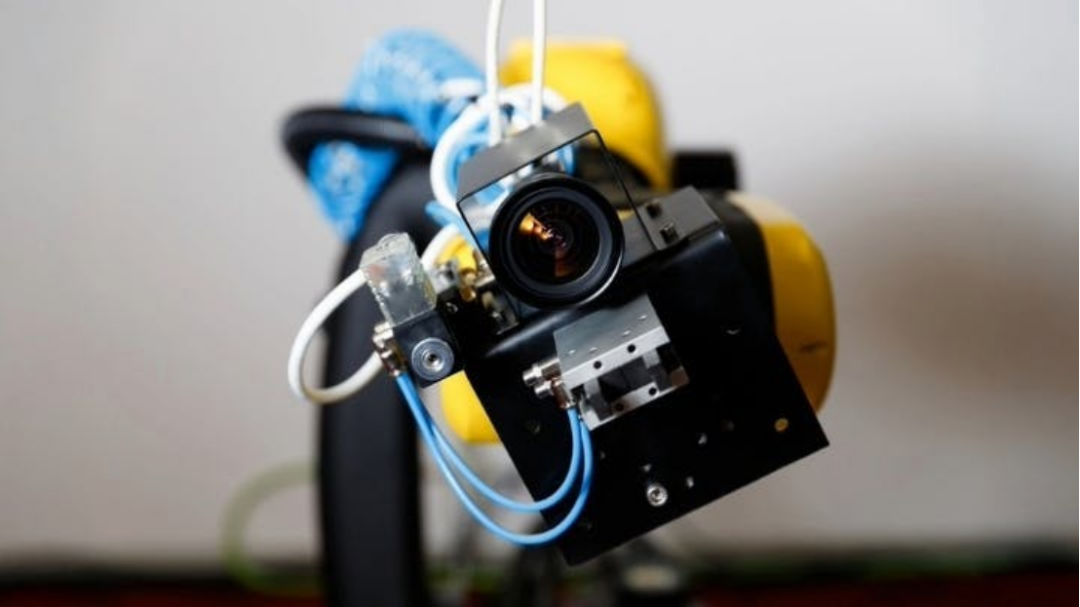
Figure 1: The MIPI Alliance’s A-PHY physical layer interface standard is not only applicable to automotive applications but also to industrial automation fields such as online inspection and warehouse automation.
Machine vision has been used in factory workshops for automated quality inspection and process monitoring for decades. Traditional industrial vision systems rely on PCs to operate, as analyzing large amounts of image data requires powerful processing capabilities. However, recent advancements in processor technology and artificial intelligence have opened new possibilities for implementing industrial vision in embedded systems, while also reducing device size and costs.
A-PHY was originally designed as an embedded vision interface standard for automotive applications, providing advantages in bandwidth, cable length, electromagnetic interference (EMI) performance, and scalability for industrial vision systems.
What is MIPI A-PHY?
A-PHY, short for Automotive PHYsical layer, is a high-speed, long-distance transmission physical layer protocol developed by the MIPI Alliance. It was initially designed for automotive applications to achieve long-distance high-speed data transmission while maintaining low power consumption, ensuring that machine vision systems can operate seamlessly even in harsh industrial environments. These advantages make it highly attractive for visual systems in industrial settings, especially for applications such as online quality inspection and warehouse automation.
Here are some core features that the MIPI A-PHY interface can empower embedded vision applications:
(1) High-Speed Data Transmission
Most industrial machine vision applications are time-sensitive, requiring high-resolution images to be transmitted and processed in real-time to detect defects and sort out non-conforming products without slowing down the production line. This necessitates a high-bandwidth camera interface.
MIPI A-PHY is designed for safety-critical devices in vehicles, such as autonomous driving or driver assistance systems, providing high-speed data transmission rates of up to 32Gbps over long distances, ensuring that the massive data generated by machine vision cameras can be transmitted quickly and reliably without loss of image quality.
(2) Long-Distance Transmission Capability
Industrial inspection systems are often integrated into machines or robots, requiring sensors and cameras to be placed far from the processing unit to capture product images from different angles. This is also the reason for the widespread use of Gigabit Ethernet (GigE) in the industry, as it supports cable lengths of up to 100m. However, most embedded cameras and sensors use the MIPI CSI-2 standard, which has very limited transmission distances of only a few dozen centimeters.
In-vehicle vision systems also require longer cables to connect external cameras and sensors to internal processing units, and the cables need complex routing paths to navigate around mechanical components or passenger cabins. Therefore, A-PHY supports transmission distances of up to 15m or even further, which is crucial for scenarios where cameras or sensors are located far from the processing unit (e.g., mounted on robotic arms).
This extended transmission distance provides engineers with the flexibility to design embedded vision systems that can deploy devices further away without sacrificing data integrity or performance.
(3) Robust Transmission in Harsh Environments
Industrial environments present unique challenges, including electromagnetic interference (EMI), vibration, and various harsh conditions, necessitating extremely reliable image data transmission to meet quality inspection demands.
Since MIPI A-PHY is designed for safety-related automotive applications, it possesses noise immunity and electromagnetic compatibility (EMC), making it suitable for challenging harsh environments.
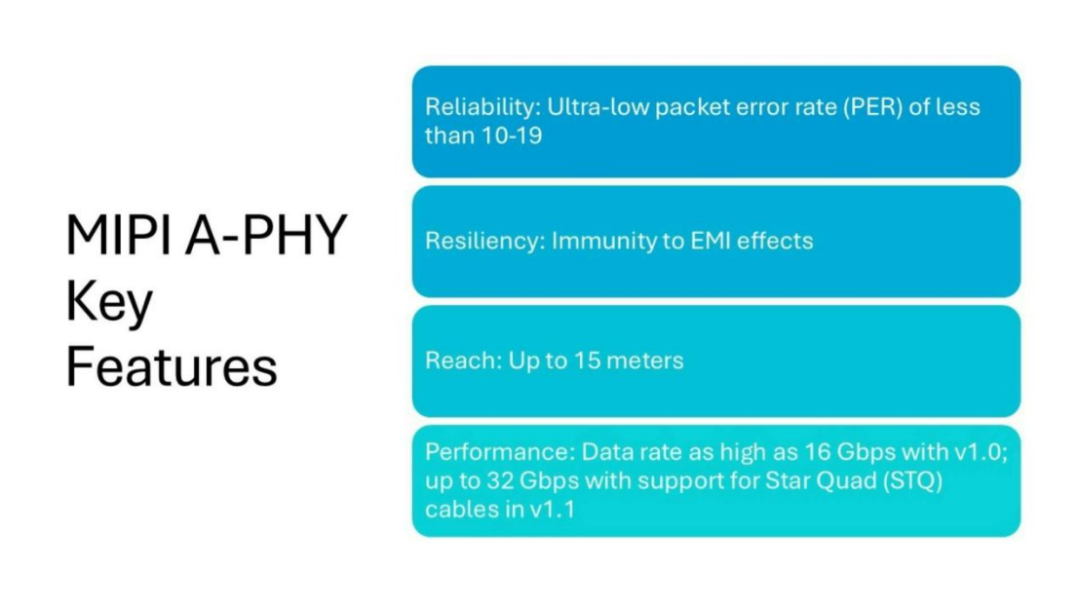
Figure 2: MIPI A-PHY brings numerous advantages to industrial vision systems in terms of bandwidth, cable length, EMI performance, and scalability.
(4) Low Power Characteristics
As an automotive interface, MIPI A-PHY needs to operate in environments without grid power and in compact spaces with multiple systems coexisting, thus low power consumption was a key design consideration. Its efficient data transmission mechanism helps ensure that machine vision systems minimize energy consumption while maintaining high performance.
Although the power consumption requirements for industrial machine vision are generally not as strict as for mobile applications, low power is still crucial in certain scenarios. For example, excessive power consumption leading to component heating can significantly affect the performance and reliability of image sensors or damage adjacent systems; in mobile applications such as Automated Guided Vehicles (AGVs) and Autonomous Mobile Robots (AMRs) in warehouse automation, low power is also particularly critical.
(5) Scalability for Complex Systems
As industrial machine vision systems become increasingly advanced, the demand for scalable architectures that can support more cameras, sensors, and other devices is more urgent than ever. MIPI A-PHY supports multiple cameras and sensors connected to a single data bus, providing a flexible and scalable solution that can expand as system demands increase.
This scalability allows manufacturers and industrial operators to integrate more sensors and cameras into their vision systems based on demand without the need for a complete overhaul of the entire infrastructure. This ability to expand systems with minimal additional cost and effort will help ensure the future adaptability of machine vision systems.
(6) Optimized System Integration
Industrial machine vision relies on unified standards to ensure reliable operation and interoperability of components such as cameras and image processing software from different suppliers.
MIPI A-PHY is compatible with MIPI CSI-2 (Camera Serial Interface) and other MIPI protocols, allowing integration with existing embedded vision systems. This compatibility reduces the time and cost of integrating new components and technologies, helping manufacturers bring new products and innovations to market quickly.
Moreover, the widespread adoption of the standardized MIPI A-PHY interface ensures that components in machine vision systems (such as cameras, sensors, processors, and displays) work together, enhancing the overall reliability and performance of the system.
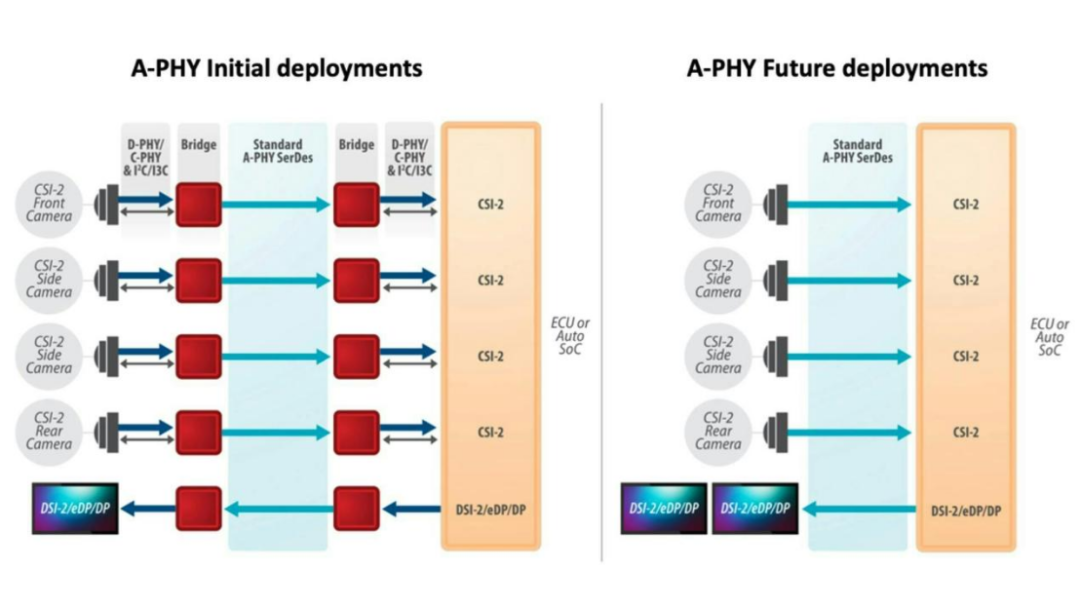
Figure 3: A-PHY supports direct connections between sensors and processors, simplifying the foundational design of machine vision. (Image source: Valens Semiconductor)
(7) High Reliability and Durability
In industrial environments, equipment is often subjected to extreme temperatures, vibrations, and electromagnetic interference. MIPI A-PHY is designed to operate reliably in such conditions, ensuring data integrity even under the most challenging circumstances.
This durability reduces the need for frequent maintenance or replacement of system components, ultimately lowering costs and ensuring more stable operational performance in the long run.
(8) Future-Proof Technology
As industrial machine vision is not a mass-market business, this field has historically adopted and adapted some common standards from the IT or consumer electronics industries (such as USB or GigE) to benefit from the advancements and economies of scale of these technologies. The application of embedded vision in machine vision is still in its early stages, so system integrators naturally wish to choose technologies that will remain applicable in the future.
As an automotive standard, MIPI A-PHY was designed with high capacity and future-oriented foresight from the outset, and its high-speed, long-distance, low-power characteristics will remain relevant even as new technologies such as AI vision systems and 5G connectivity become widespread.
By adopting MIPI A-PHY, companies can integrate the latest innovations into their vision systems without extensive reconstruction.
(9) Cost Advantages
Adopting A-PHY, a standard originally aimed at the automotive industry, can also bring numerous cost advantages, not only in terms of using low-cost, readily available cables and connectors but also in the hardware required for deployment.
Machine vision cameras based on CXP, GigE, or USB Vision standards often rely on expensive FPGAs, but A-PHY is designed for mass production industries like automotive, thus utilizing more cost-effective Application-Specific Integrated Circuits (ASICs). Replacing or eliminating FPGAs can not only reduce hardware costs but also simplify system integration, ultimately lowering development costs.
MIPI A-PHY is not only a solution for automotive applications but also suitable for industrial machine vision systems. Its features such as high-speed data transmission, low power consumption, long-distance transmission, and durability make it an ideal choice for high-performance, high-reliability industrial environments.
About Us
“Vision System Design” magazine has been an important source for machine vision professionals to obtain industry news and technical information. Since its inception in 2012, “Vision System Design” has been dedicated to reporting the latest technologies, solutions, and trends in imaging devices, equipment, methods, and processes, providing reference information for professionals in the machine vision field, and has become the most influential professional media in the machine vision industry.
 Your “shares”, “likes”, and “views” contribute to the advancement of technology in China!