If you don’t have enough money to burn, don’t have many excellent engineers, and don’t have good relationships with wafer fabs, then don’t think about positioning your product in the high-end market. There are still many opportunities for domestic FPGAs in various niche markets, as long as there is sufficient strength and a very good market positioning, domestic FPGAs can also be self-sufficient.
“Like most integrated circuit design companies in China, we (Jingwei Yage) are still very small and have been struggling on the path of independent innovation.” Recently, the operational difficulties faced by the integrated circuit design company Jingwei Yage have caused quite a stir in the industry, and the above is the company’s response to negative news in an open letter.
From the information disclosed by the media and Jingwei Yage itself, it is clear that Jingwei Yage has indeed encountered significant setbacks, and the development of the situation still needs to be observed.
However, for many netizens, they may have never heard of Jingwei Yage or what an FPGA is. Through the Jingwei Yage incident, we may realize the harsh international competitive environment of FPGAs and the strict technical barriers. Achieving breakthroughs in domestic chips is a long and difficult road.
What is FPGA
“FPGA is the abbreviation for Field Programmable Gate Array, which is a type of logic circuit and one of the types of chips required for information processing,” explained Zhang Peiheng, a researcher at the Institute of Computing Technology, Chinese Academy of Sciences.
If classified from the perspective of information processing, the required chips can be roughly divided into three categories: CPU (Central Processing Unit), FPGA (Field Programmable Gate Array), and ASIC (Application-Specific Integrated Circuit).
“The CPU is the most general chip, and everyone is most familiar with it,” said Zhang Peiheng. As the processing core of general-purpose computers, the CPU has the ability to handle various instruction requirements and operates under the control of programs stored in external memory. Therefore, for information processing, the CPU is the most flexible and general-purpose, but if it is only used to process a certain type of fixed algorithm, the cost-effectiveness and performance ratio of the CPU may be relatively low.
The highlight of ASIC lies in its specialization; since it is custom-made, it executes tasks quickly and has a very high cost-performance ratio and efficiency when applied on a large scale. However, the R&D costs of ASIC are also very high, and once produced, its functions cannot be modified.
“FPGA is between CPU and ASIC,” said Zhang Peiheng. FPGA chips are pre-configured with a large number of basic logic component resources and routing resources, and users can change its connection relationships through online programming. Once the connection relationships are changed, it gains the processing capability of a certain function.
As a type of processor with strong performance characteristics, FPGAs have gradually occupied an important position in some application fields. According to netizen Lin Ming, the application fields of FPGAs are both broad and narrow. They are broad because they can be used in almost any field that requires digital circuits; they are narrow because due to costs, power consumption, and development difficulty, they cannot dominate every field.
Numerous Barriers
Based on the characteristics of FPGAs, their main applications are in communication systems, industrial control, weapon control, medical electronics, consumer electronics, and other fields. For example, communication technology requires high speed and complex protocols, while consumer electronics applications focus on power consumption control and rapid delivery. These applications are areas where FPGAs can excel. One of the most notable trends in recent years is the continuous expansion of FPGA application fields. Baidu has attempted to use FPGAs to create AI-specific chips and has achieved the first version of the AI-specific chip—Baidu Brain, making Baidu one of the first companies in the world to scale the application of FPGAs in the field of artificial intelligence.
The highly anticipated Internet of Things (IoT) also poses extraordinary requirements for chips. FPGA products, which are highly flexible and have strong parallel processing capabilities, can increase throughput, shorten response times, and improve energy efficiency. They not only support the acceleration of data analysis and control functions but also securely bridge the various wired and wireless interface standards that are constantly evolving in IoT applications, making them key to meeting the demands of emerging IoT applications.
Data shows that in 2014, the global FPGA market reached $5 billion, with China’s market share reaching $1.5 billion, accounting for one-third of the global market. Analysts predict that by 2020, the global FPGA market will reach $8.4 billion. Zhu Changhua, chairman of Shichuang Guoxin, has stated to the media that with the rise of cloud computing, cloud storage, industrial internet, autonomous vehicles, and 5G communication, the market prospects for FPGAs cannot be underestimated.
However, the entry threshold for FPGAs is very high. Currently, the four most active chip manufacturers in the market are Xilinx, Altera, Lattice, and Achronix. These four companies have built a knowledge property barrier with nearly 9,000 patents, which largely blocks the path for latecomers to catch up. Over the past decade, dozens of companies, including Intel, IBM, and Samsung, have attempted to enter this field, but apart from Intel’s successful acquisition of Altera for $16.7 billion, the rest have failed.
“The design difficulty is high, the development cycle is long, the process requirements are strict, and the production scale is small. These are all factors that restrict the development of FPGAs,” said Zhang Peiheng. It is understood that a blog post by a netizen mentioned that with Xilinx and Altera sharing most of the market, and the mid-to-low-end market still needing to compete with Lattice and Achronix, Jingwei Yage is naturally struggling on the road of independent FPGA R&D.
Where to Go from Here
Yu Kai, founder and CEO of Horizon Robotics, candidly told reporters that his company’s deep learning for robotics has very high requirements for FPGAs, stating, “We have never used domestic FPGA chips.”
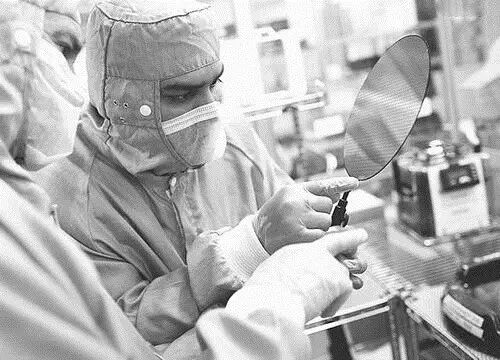
Industry segmentation may be the path for domestic FPGA chips. Image source: Baidu Images
The research center where Zhang Peiheng works also often uses FPGAs from Xilinx or Altera for the development of high-performance computing systems and high-performance reconfigurable computing. “Domestic FPGA chips may first make a mark in the low-end market.”
Industry segmentation may be the path for domestic FPGA chips.
The market positioning of products is very important. Netizen Xiong Fei offered advice in a signed article: If you don’t have enough money to burn, don’t have many excellent engineers, and don’t have good cooperation with wafer fabs, then don’t think about positioning your product in the high-end market.
If positioning in the low-end market, FPGA developers must do things that MCU (Microcontroller Unit) and DSP (Digital Signal Processing) cannot do, achieving results in cross-domain areas such as patented algorithms, high-speed interfaces, special processes, protocol stacks, etc. Xiong Fei believes these are all development strategies.
For the FPGA field, the construction of the entire ecosystem is also very important. In addition to the chips themselves, there is also a need to vigorously develop EDA (Electronic Design Automation) tools. Only through high-performance EDA tools can the potential of FPGA chips be fully developed.
In many niche markets, domestic FPGAs still have many opportunities. Xiong Fei mentioned that as long as there is sufficient strength to support R&D expenses and a very good market positioning, domestic FPGAs can also be self-sufficient.
Source: China Science Daily