If you look at a printed circuit board (PCB), you will easily find many symbols on these boards. These symbols represent the designations of electronic components, which can help engineers quickly identify and manage components during the design and production stages, as well as improve maintenance efficiency. So, how can we distinguish the component designations on a PCB board?
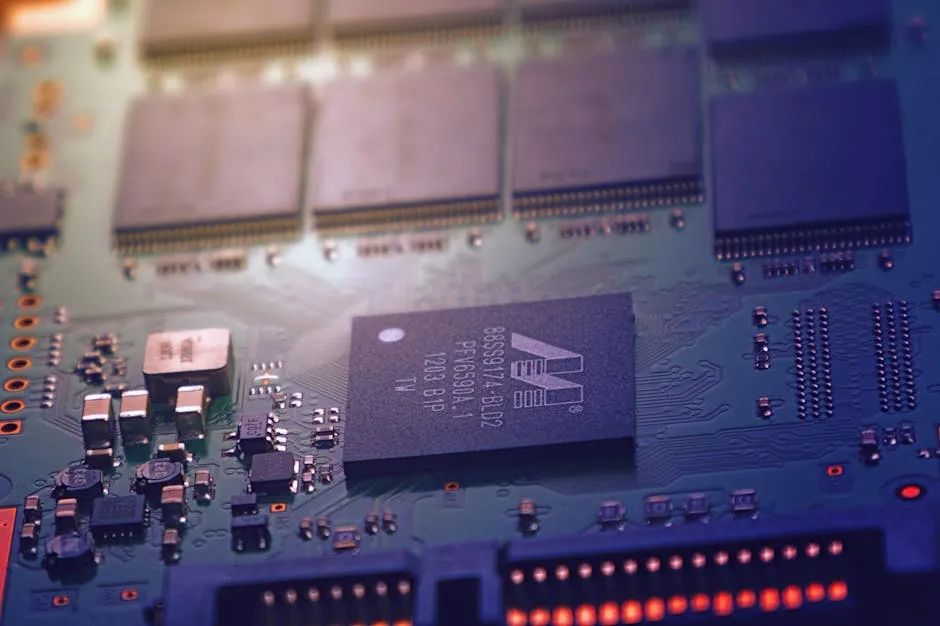
1. Resistor (Rx): Used to limit the current in a circuit, common designations include R1, R2, etc., where the number represents the sequence; 2. Non-Polarized Capacitor (Cx): Used for filtering, coupling, and other circuit functions, with no polarity requirement; 3. Integrated Circuit Module (IC): Contains multiple circuit components in an integrated circuit chip, designation usually starts with IC; 4. IC Component (Ux): Specifically refers to integrated circuit components, the designation is similar to IC but more focused on individual IC identification; 5. Test Point (Tx): Connection points for factory testing, convenient for testing circuits during production; 6. Speaker (Spk1): A device used to produce sound, commonly used for alarms or prompts; 7. Transistor (Qx): An electronic component with three electrodes, commonly used for amplification, switching, etc.; 8. Electrolytic Capacitor (CEx), Bypass Capacitor (CNx), Bypass Resistor (RNx), Connector (CONx): Represent different types of electronic components, where Ex, Nx indicate sequence or type; 9. Diode (Dx): An electronic component with two electrodes, commonly used for rectification, switching, etc.; 10. Inductor/Magnetic Bead (Lx): Components used to store and release magnetic field energy, commonly used for filtering, resonance, etc.; 11. Light Emitting Diode (LEDx): A diode that emits light, commonly used for indication, display, etc.; 12. Crystal Oscillator (Xx): A component used to generate a stable frequency, an essential part of many electronic devices; 13. NTC Thermistor (RTH): A resistor whose resistance changes with temperature, commonly used for temperature monitoring and control; 14. Y Capacitor (CY) and X Capacitor (CX): Specific types of safety capacitors used for power supply filtering and anti-interference; 15. Voltage Regulator (W): A component used to stabilize voltage, ensuring voltage stability in the circuit; 16. Switch Type (K): Includes various switching devices, such as power switches, push-button switches, etc.; 17. Crystal Oscillator (Y): Same as the previous Xx, used to generate stable frequency components; 18. Specific Components: For example, R117 indicates a resistor with sequence number 117 on the main board, T101 indicates a transformer on the main board, SW102 indicates a switch, LED101 indicates a light-emitting diode, LAMP indicates an (indicator) light, Q104(E,B,C) indicates the emitter, base, and collector of a bipolar transistor.
This article is an original piece by Fan Yi Enterprise Training. Please indicate the source when reprinting!
Submission/Recruitment/Advertising/Course Cooperation/Resource Exchange; please add WeChat: 13237418207