Introduction
During a voyage, the chief engineer received a call from the duty engineer in the engine room, reporting that the cylinder oil injector for cylinder NO4 (SULZER 5RTA 62U) was spraying water and mist from the cooling water jacket at the front left side, possibly due to aging of the injector’s cooling water jacket seal.
The chief engineer immediately instructed the duty engineer to notify the bridge to reduce speed and consider stopping for repairs.
Upon arriving in the engine room, the chief engineer found that the main engine had been reduced from full speed to half speed, and observed water spraying from the pressure cap of the cooling water jacket of the injector for cylinder NO4.
I. Inspection After Stopping
After stopping, the engineer removed the pressure cap of the leaking injector’s cooling water jacket and pulled out the water jacket, discovering that the seal was severely aged.
After replacing the seal, the vessel resumed sailing, but when the speed was increased to half, the injector end cap began leaking again, showing no signs of improvement, and the leakage increased with the main engine speed.
The chief engineer suspected that there might be a through-crack in the cylinder liner and ordered an emergency reduction to slow ahead.
Later, in the central control room, it was found that the temperature of the lower part of the piston in that cylinder had reached 90°C, which was significantly higher than the other cylinders by 20°C.
He then notified the bridge to stop again for inspection.
Inspection revealed abnormal wear marks on the surfaces of the four piston rings in that cylinder, and all piston rings were retracted into the ring grooves, with the gap of the second piston ring being only half of the normal value.
He immediately consulted the company’s technical department and organized the engine room personnel to begin emergency cylinder lifting repairs.
During the cylinder lifting process, measurements showed that the inner diameter of the cylinder liner was worn beyond limits, and a through-crack was found in the liner, necessitating a temporary replacement of the cylinder liner.
After completing the cylinder lifting and normal running-in of the new rings and liner, the vessel resumed sailing. Ten days later, when the vessel reached the anchorage for refueling, the chief engineer arranged for the senior oiler to check the condition of the main engine piston rings. Surprisingly, all the chamfers of the piston rings in that cylinder had been worn away, and there were significant signs of excessive wear on the outer surface of the rings and the inner wall of the liner.
However, the oil injection rate for that cylinder was 1.1g/kWh, indicating that the oil injection amount was theoretically not insufficient.
The chief engineer immediately reported this phenomenon to the company’s technical department.
After analysis and judgment, the company suspected a failure in the main engine’s cylinder oil injection system, which had caused abnormal wear of the piston rings and cylinder liner, leading to poor sealing of the cylinder and gas leakage, resulting in damage to the cylinder liner as the root cause.
It was highly likely that the timing of the cylinder oil injection was disordered.
II. Problem Analysis
1. Checking the Cylinder Oil Injection Rate
The cylinder oil injection rate for the main engine was checked to be 1.1g/kWh, which is normal, and the indicator for the oil injection steel ball lift was also normal.
If the cylinder oil injection rate is too low, the high-temperature combustion conditions in the cylinder will cause the viscosity of the cylinder oil to decrease, making it difficult to form a complete lubricating oil film, which will exacerbate wear between the piston rings and the cylinder liner, increase gas leakage, and even lead to piston ring seizure or breakage.
If the cylinder oil injection rate is too high, it will result in excessive cylinder oil, leading to carbon deposits on the piston top, piston ring grooves, scavenging ports, and exhaust valves, causing piston rings to stick and narrowing the scavenging port passage due to severe carbon buildup, affecting combustion quality.
At the same time, excess cylinder oil will adhere to the cylinder wall, become burnt and form abrasives, which will fall into the space between the piston rings and the cylinder liner, causing abrasive wear and leading to abnormal wear in a short time.
On the other hand, excess cylinder oil scraped off the cylinder wall by the piston rings will accumulate in the lower space of the piston in the scavenging box, easily causing poor scavenging box discharge.
Once the sealing between the piston rings and the cylinder liner is poor, gas leakage can easily lead to unexpected fires in the scavenging box.
The typical characteristics of the cylinder’s internal state under the best oil injection rate are:
The cylinder wall surface is moist and clean, the first ring is dry, the second ring is half dry and half wet, the remaining rings are moist, the ring surfaces are shiny, and the chamfers are present.
2. Checking the Timing of Cylinder Oil Injection
With the cylinder oil injection amount being normal, the next consideration is whether the injection timing is normal.
The main engine’s cylinder oil injector consists of multiple plunger-type oil pump units, primarily relying on adjustments to the frequency of the oil pump to change the amount of cylinder oil injected into the cylinder, while the frequency of the oil pump is controlled by the main engine load indicator shaft.
Each cylinder of the main engine has four oil pump units, with every two units responsible for injecting oil into six injection points through a distributor, with each cylinder having twelve injection points.
When the main engine is running, the oil pump stores the cylinder oil in the accumulator at the rear of the cylinder oil injector. When the piston moves up, near the top dead center, the first piston ring aligns with the injection hole position, and during the piston’s downward movement, when the pressure in the cylinder drops below the accumulator’s pre-charge pressure, the check valve at the injection gun connection opens, allowing the injection gun to inject cylinder oil into the cylinder for lubrication.
From this, it can be analyzed that the accumulator of the cylinder oil injection gun and the check valve inside the injection gun can both affect the timing of cylinder oil injection.
III. Solutions
The crew disassembled the accumulator of the injection gun and found that it contained a pressure piston, a pressure diaphragm, and a pressure spring (which serves to convert the pressure of the cylinder oil into stored elastic energy in the accumulator, maintaining a corresponding constant oil injection timing).
Upon disassembly, it was discovered that multiple pressure diaphragms in various cylinders were damaged and translucent, completely unable to maintain pressure.
When the diaphragm of the main engine’s cylinder oil injector is damaged, as long as the oil pressure inside the injection gun is higher than that in the cylinder, it will inject cylinder oil into the cylinder, and after the pressure drops, it will stop injection, leading to disordered cylinder oil injection timing and abnormal lubrication, resulting in abnormal wear of the main engine’s piston rings and cylinder liner (as shown in Figure 1).
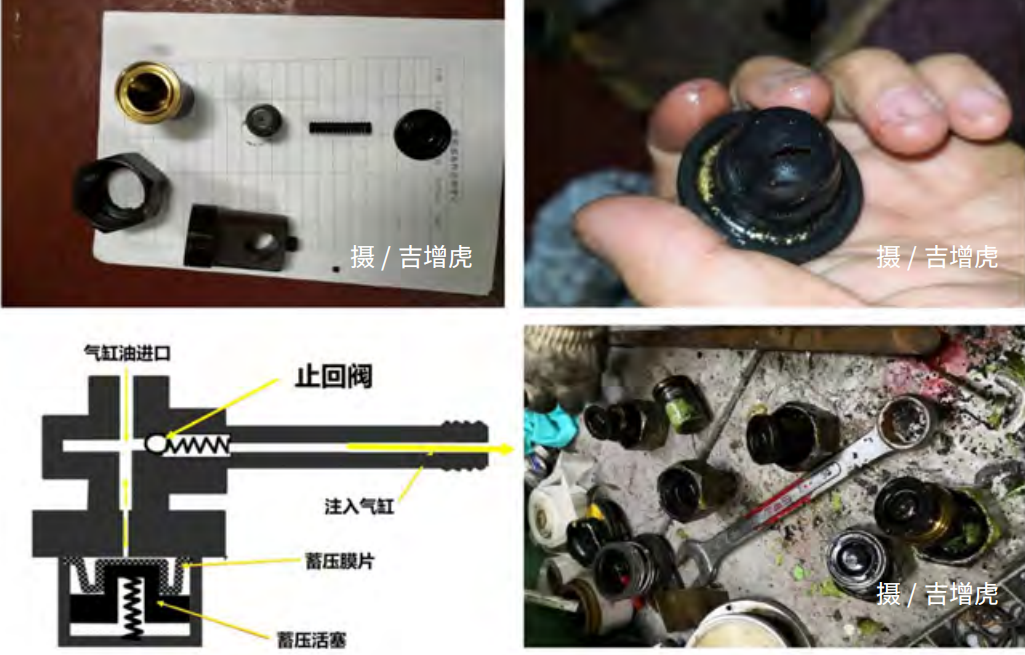
Figure 1: Damage found upon inspection of the cylinder oil accumulator diaphragm
The true cause of the damage to the main engine’s piston rings and cylinder liner was identified, and the diaphragm of the cylinder oil injector was promptly replaced.
After running for a period, the condition of the piston rings and cylinder liner in that cylinder was checked again, revealing that the working state of the piston rings was: the rings and the working surface of the cylinder were shiny and moist, with no signs of excessive wear.
The original author is:
Shanghai XunYuan Shipping Co., Ltd. Ji Zenghu
Previous Posts (Click to Read):
Benefits: Latest Crew Examination Textbooks, Question Banks, and Public Test Paper Analysis
2022 National Seafarer Medical Examination Institutions
National Health Inspection Examination Points and Yellow Fever/Cholera Precautions
2022 Global Ship Emission Control Areas and Ship Oil Change
2022 China Ship Emission Restriction Oil Change Areas with Coordinates
Knowledge Increase: How to Handle Accidents on Ships
Common Medicines on Board: What to Bring Before Boarding During Special Periods
Shipping Customs: Ship Cargo Bill of Lading English Vocabulary
Disclaimer: This article only represents the author’s personal views, and some information is sourced from the internet; this public platform does not guarantee or promise the authenticity, completeness, or timeliness of the text, and is for reference only. If there is any infringement, please contact us for immediate deletion.
 For more selected content from the Shipping Elite Circle, please scan to follow