On August 27, the mass event of the 15th National Games (hereinafter referred to as the “15th Games”) concluded with the gateball competition. During the six-day event, athletes fiercely competed on the field, while a silent “technology power supply” was simultaneously underway offstage.
Drones autonomously patrol along flight paths, while robotic dogs conduct sensitive inspections at substations… This high-tech scene originates from the Shenzhen Power Supply Bureau of the Southern Power Grid, which has built a three-dimensional intelligent inspection system for land, sea, and air using “AI + robots.” It is reported that this system has transformed power supply assurance from a “human sea tactic” to “human-machine collaboration,” establishing a smart defense line for the digital grid during the 15th Games and the Special Olympics.
“Aerial Vanguard” Multi-functional and Efficient
Inspection Efficiency Increased by 6 Times

Amidst the mountains and dense forests, silver lines stretch across the sky, continuously delivering electricity to thousands of households. In Shenzhen, such “power highways” exceed a total length of 4,300 kilometers, equivalent to the distance of a round trip from Shenzhen to Beijing.
“In the past, workers had to traverse mountains and rely on binoculars to inspect the lines. However, even then, it was difficult for the human eye to fully identify subtle hazards in the components of the transmission towers. Now, we have drones,” said Shu Mingjie, a skills expert at the Transmission Management Office of the Shenzhen Power Supply Bureau.
With a light touch on the remote control, a drone occupying nearly one square meter instantly takes off, using its high-precision instruments to conduct a comprehensive “photographic examination” of the lines, compressing what used to take about one day of manual inspection into just over one hour, achieving an efficiency increase of approximately 6 times.

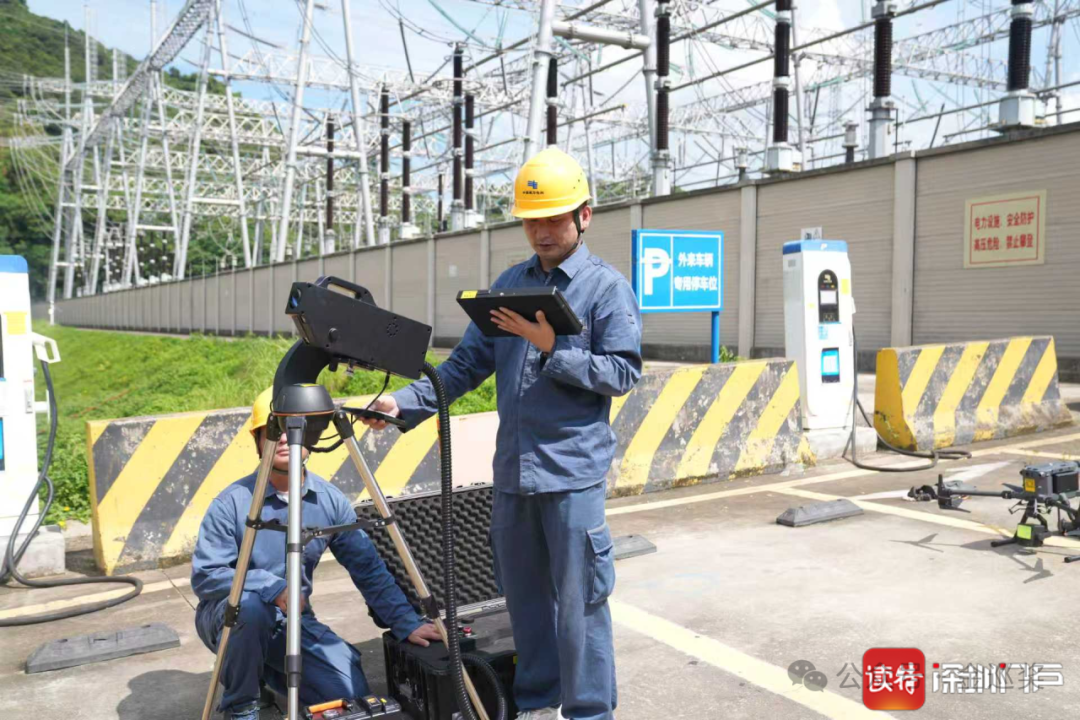
Staff operating the equipment.
“Drones can accurately generate three-dimensional models of the lines and surrounding environments, allowing us to quickly assess whether there are any danger factors on the computer,” Shu Mingjie explained. “Once tree obstacles are detected, we can deploy drones equipped with ‘scissors’ to ‘prune’ branches with one click, avoiding the risks of high-altitude work and power outages while maximizing the protection of tree growth, truly achieving three benefits in one action.”
In substations, the “Aerial Vanguard” also showcases its capabilities. Power supply personnel can remotely dispatch drones from their nests to execute autonomous patrol tasks with just a click of a mouse in the office. According to Zhong Tianyong, the head of the 500 kV Modern Patrol and Maintenance Center, “This drone power inspection system was independently developed by the Southern Power Grid, and there are approximately 1,900 shooting points set up within the station, effectively compensating for the monitoring blind spots of ground cameras.”
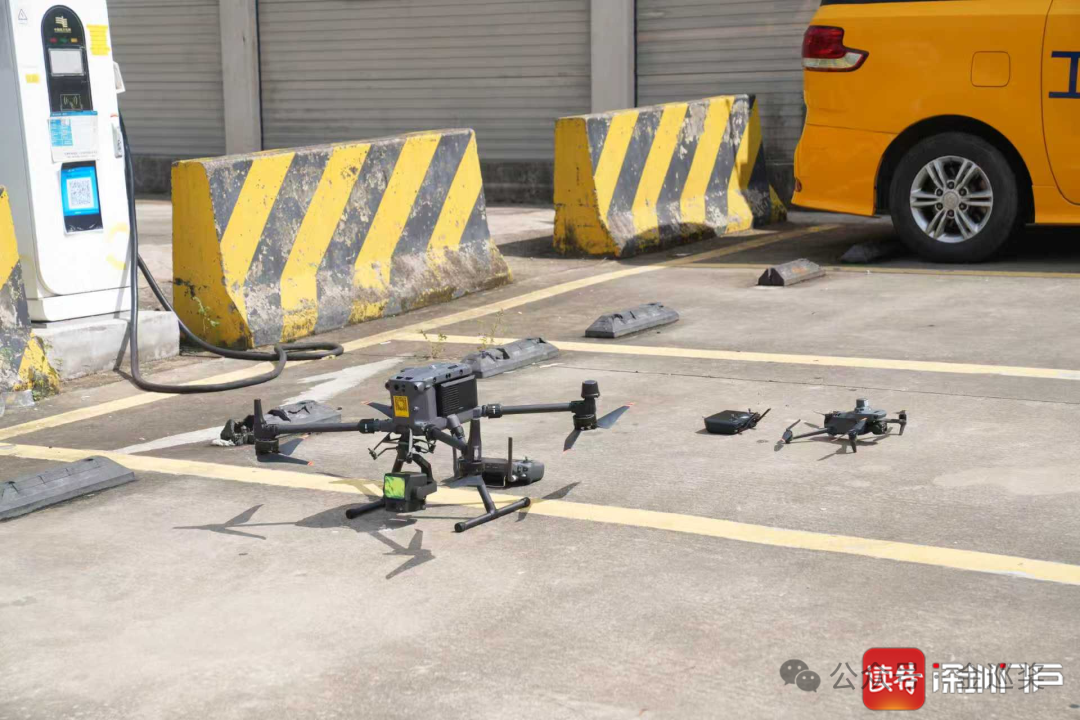
Drone preparing for takeoff inspection.
Deng Shicong, the head of the power supply guarantee office for the 15th Games, mentioned in an interview, “Relying on Shenzhen’s solid low-altitude industry foundation, we actively collaborate with local leading drone R&D and manufacturing companies to jointly promote the technological development and application expansion of power inspection drones, enhancing power supply efficiency while further enriching the application scenarios of drones, contributing to the accelerated development of Shenzhen’s low-altitude economy.”
“Cyber Dogs” Fearless in Complex Environments
Complete Station Inspection in Half an Hour
In addition to the drones patrolling the skies, the “Cyber Dog Squad” also excels in complex environments. Observing the reporters, the robotic dog is similar in size to a real dog but possesses “eighteen skills.” Sensors, autonomous navigation algorithms, high-definition visible light cameras, infrared thermal imaging devices, and 3D navigation radars… a series of intelligent equipment gives the robotic dog the ability to perform infrared temperature measurement, meter identification, abnormal sound detection, and other tasks, while real-time transmitting inspection data to assist power supply personnel in achieving AI intelligent diagnosis.
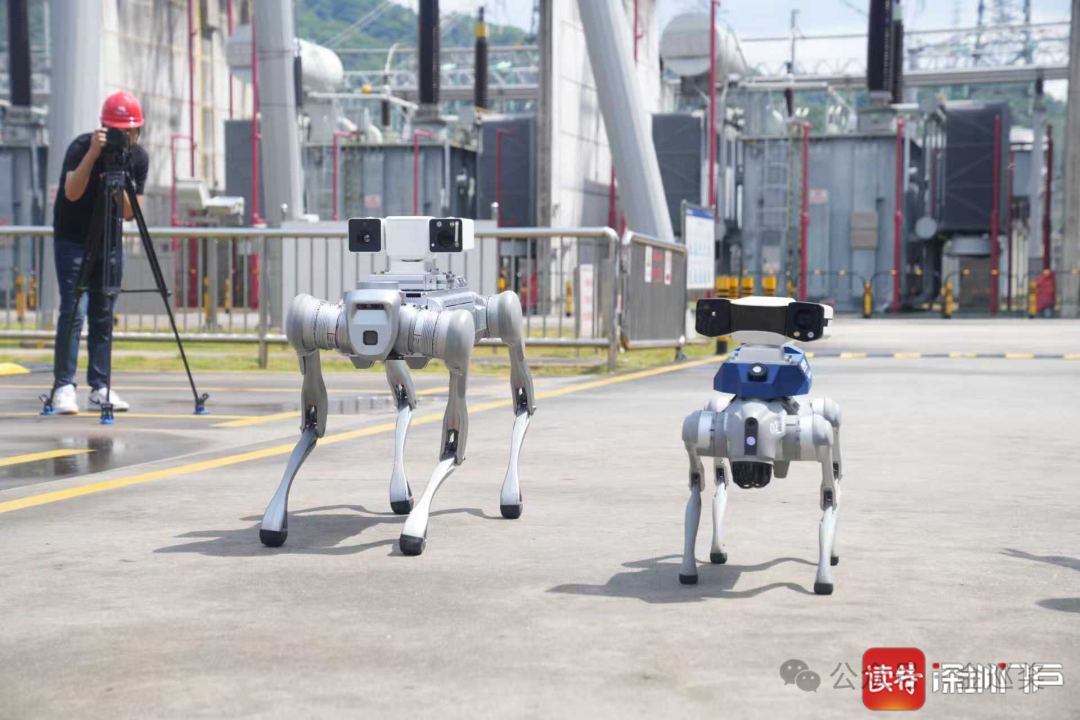
Inspection robotic dog.
“We only need to issue commands in the background, and the robotic dog can travel along the predetermined route, conducting a comprehensive ‘look, listen, ask, and feel’ inspection of the station’s equipment,” Zhong Tianyong explained. “The ‘Cyber Dog Squad’ is currently mainly responsible for important power supply monitoring points such as Shenzhen substations, cable tunnels, and distribution rooms. Even in the face of harsh weather and complex terrain, they can respond effectively, improving the efficiency of handling power supply emergencies.”
It is reported that this year, the Shenzhen Power Supply Bureau also applied underwater robots for the first time in the country to inspect the pile foundations of overhead transmission lines at sea, enhancing the three-dimensional intelligent inspection system for land, sea, and air.
From traditional manual work to intelligent collaboration, what kind of improvement does this transformation bring? Wang Xunjiang, deputy director of the production monitoring department at the Shenzhen Power Supply Bureau, provided a comparison: “For a 220 kV substation, it used to require two people to work on-site for 4 hours, but under the intelligent inspection model, only one person can operate remotely, and it takes just 30 minutes to remotely overview the station’s equipment.” This new model of “AI + human” intensive, standardized, and regulated operation is gradually becoming a strong support for high-quality power supply assurance.
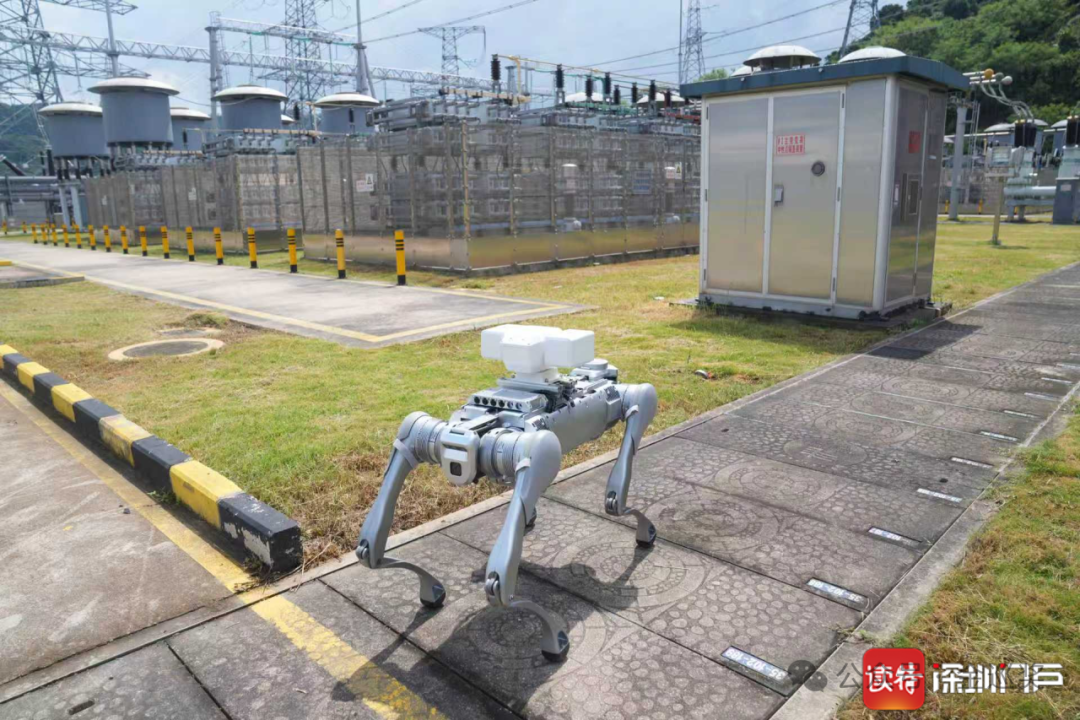
Robotic dog in action.
“Smart Brain” Monitors Grid Status Across the Entire Chain
Real-Time Data “Mastered in One Map”
In the overall system of digital power supply assurance, both frontline intelligent robots and the precise command of the “smart brain” are essential.
Entering the main control room of the power command center of the Shenzhen Power Supply Bureau, a large screen is displaying the “Power Supply Assurance Map” in real-time. The power supply status of the Shenzhen Universiade Center Stadium, where the recently concluded gateball competition of the 15th Games took place, is fully condensed here. Power facility data is updated in real-time, and live video footage is continuously played, allowing power supply personnel to trace from a 220-volt socket all the way back to the operational status of the associated 500 kV high-voltage equipment. If any abnormalities occur in the venue’s power supply, they can be captured and alerted immediately.
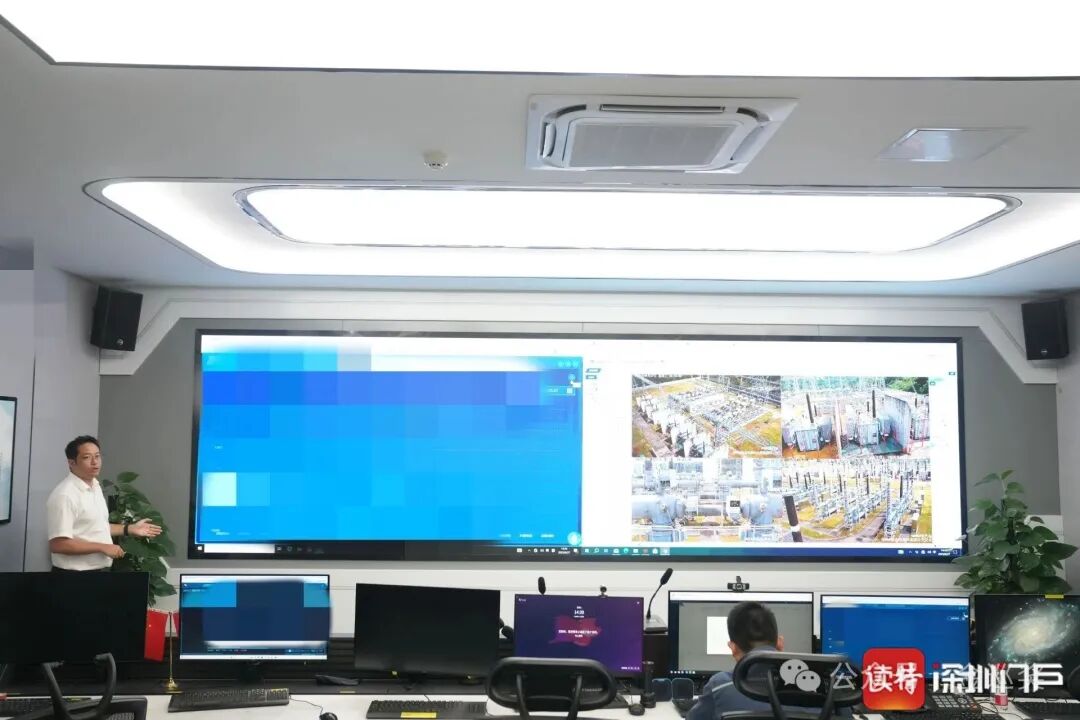
Main control room of the Shenzhen Power Supply Bureau’s power command center.
“This is the smart power supply assurance system we customized for the 15th Games,” said Chen Zuowei, the head of the power supply assurance office for the 15th Games at the Shenzhen Power Supply Bureau. “The system relies on the ‘digital twin grid map’ and combines the ‘Electric Honghua’ IoT devices, which are being applied on a large scale for the first time in practical combat, allowing command personnel to clearly understand what to protect, who will protect it, and how to protect it in the venue’s power supply.”
In addition, the system achieves seamless data communication across three platforms: large screens, PCs, and mobile devices, enabling command instructions and abnormal alerts to be transmitted directly from the command center to frontline personnel, realizing “state perception across the network, command execution to the end, task control at the frontline, and resource allocation in an integrated manner.”
It is understood that there are a total of 108 power supply assurance locations in the Shenzhen competition area of the 15th Games and the Special Olympics, involving one-third of the substations in the Shenzhen power grid and about 450 return distribution lines. “We will continue to closely align with the technological requirements of the Games, promoting the large-scale application of new technologies such as ‘Electric Honghua,’ robots, and artificial intelligence in power supply assurance locations,” Deng Shicong stated, aiming to make the sports event even more exciting with the support of technology in power supply assurance.
-END-
(The content of this article comes from Dute News. The articles published by this account are for learning and communication purposes only, with no commercial use, and we pay tribute to the original authors. We apologize for any infringement due to the inability to find the original authors of some articles that have been reprinted multiple times. If there is any infringement, please inform us, and we will delete it promptly. This article is for learning and communication only; we emphasize sharing and do not use it for commercial purposes; copyright belongs to the original author.)