With the rapid development of the times, PCB and high-speed PCB design have become essential design skills that contemporary electronic engineers must master. It is also necessary to understand PCB manufacturing processes and PCB simulation methods. Today, we will discuss and analyze the classification and characteristics of PCBs.
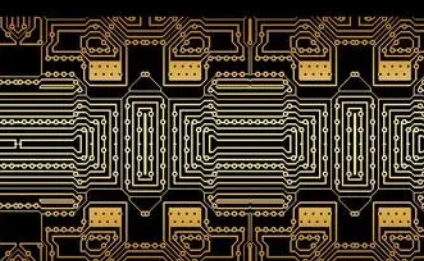
Generally speaking, printed circuit boards can be categorized in various ways based on different purposes:
1. Single-Sided PCB
This is a printed circuit board with conductive patterns on only one side. Since the wires only appear on one side, this type of printed circuit board is called a single-sided PCB, or simply single-sided board. There are many strict limitations in the design of circuits on a single-sided board, as it requires that the wiring must not cross but instead follow a unique path. Therefore, it is only used in simple circuits.
2. Double-Sided PCB
This refers to a printed circuit board that has conductive patterns on both sides. Both sides of this circuit board have wiring; however, to use the wires on both sides, there must be appropriate circuit connections between the two sides. This “bridge” between the circuits is called a via. A via is a small hole filled or coated with metal on the printed circuit board, allowing connection between the wires on both sides. Since the area of a double-sided board is twice that of a single-sided board, and the wiring can interlace (can wrap around to the other side), it is more suitable for more complex circuits.
3. Multi-Layer PCB
Generally, PCBs with 4 or more layers are referred to as multi-layer boards. Commonly used multi-layer boards are 4-layer, 6-layer, or 8-layer. Complex multi-layer boards can have over a dozen layers. They are made by alternating layers of conductive patterns and insulating materials that are laminated together, referred to as multi-layer boards. The conductive patterns between layers must be connected as needed. Multi-layer boards often use several double-sided boards, with an insulating layer placed between each layer of the board and then bonded securely (laminated). The number of layers in the board represents the number of independent wiring layers, and typically, the number of layers is even, including the two outermost layers.
End