After purchasing a drone, one essential item you need to buy is a memory card.
In daily life, the common types of memory cards are TF cards and SD cards. Many people are unsure which type of card their device requires, often leading to purchasing the wrong one, which wastes time and energy, affects mood, and can seriously delay tasks.
Below, I will share how to choose a memory card for drones, hoping to help everyone.
First: What Common Cards Are Available on the Market
The main types of memory cards currently available are MicroSD (also known as TF (Trans-flash Card) cards), SD, SDHC, and SDXC.
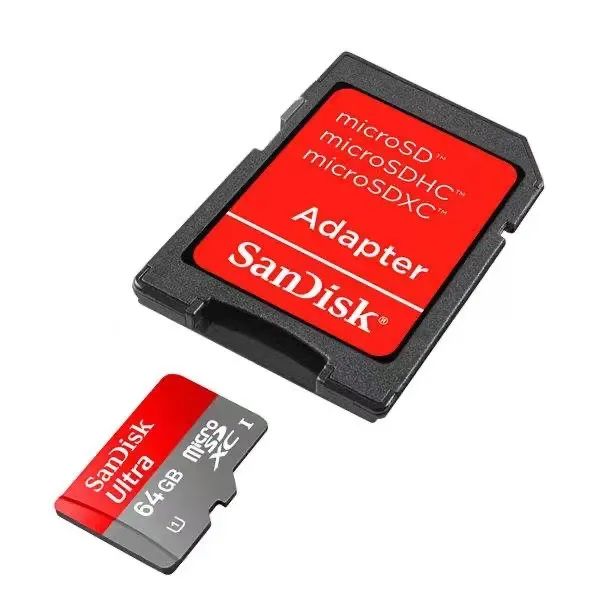
The size of SD cards and TF cards is different. The specific type of card you need depends on the card slot of your device. If it has a TF card slot, you can only buy a TF card. If it has an SD card slot, you can use an SD card or a TF card with an SD card adapter.
For the same memory size, SD cards are more expensive than TF cards, and the read and write speeds of SD cards are also faster than those of TF cards.
Due to the small size of MicroSD (TF cards), most aerial drones use MicroSD cards.
In terms of compatibility, devices that support UHS-II also support UHS-I, but UHS-II performs better. If you use UHS-I, you can only achieve the maximum data transfer speed of UHS-I. Devices that support UHS-I also support UHS-II, but using UHS-II would waste its performance, only achieving the same transfer speed as UHS-I.
Second: Card Performance
So, what capacity memory card is appropriate to choose?
Most new drones support video resolutions above 4K at 30fps, or even higher. Therefore, it’s best to choose a high-speed card, at least 64GB or more. If you record a lot of videos, a memory card of 128GB or more is preferable.
The following data is for reference only:
A 20-megapixel JPG photo is approximately 10MB in size;
A 20-megapixel DNG photo is approximately 35MB in size;
A 4K 30FPS video is approximately 15MB per second;
A 4K 60FPS video is approximately 20MB per second;
A 5.4K 30FPS video is approximately 20MB per second.
Next, let’s take a look at the specific parameters of memory cards.
First, we need to understand an important label on TF cards – speed class.
Early MicroSD cards had slower data transfer speeds and used the Class standard for grading. As speeds have increased, the class standard has been phased out and replaced with a more advanced terminology, UHS, which includes the following types.
New standards:
UHS-1, also known as UHS-I, divided into U1 and U3 levels, with a maximum transfer rate of 104MB per second.
UHS-1 U1 can reach a maximum reading speed of 104MB per second and a minimum writing speed of 10MB per second. Many U1 cards are still marked with class 10.
UHS-1 U3 can reach a maximum reading speed of 104MB per second and a minimum writing speed of 30MB per second.
UHS-2, also known as UHS-II, can reach a maximum transfer rate of 312MB per second.
UHS-3, also known as UHS-III, can reach a maximum transfer rate of 624MB per second.
Additionally, there are new grades specifically designed for video speeds, denoted by the letter V followed by a number, such as V6, V10, V30, V60, V90.
Here, the number after V indicates the minimum sustained speed in MB/S; for example, V30 indicates a minimum sustained speed of 30MB/S.
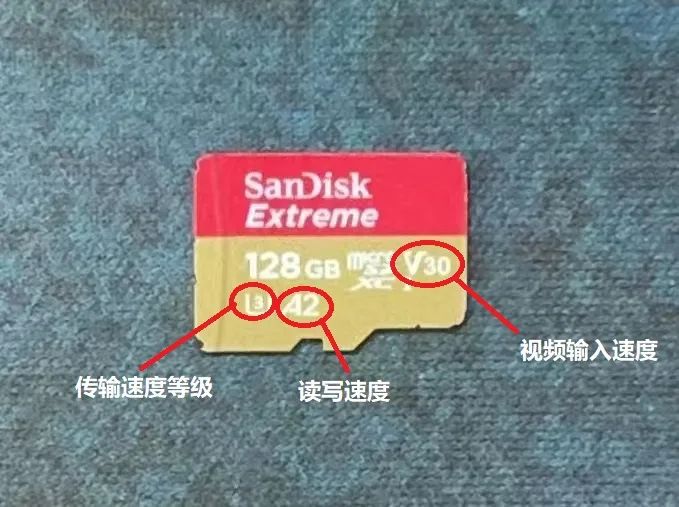
Generally speaking, if the video bitrate does not exceed 200Mbps, a UHS-I memory card with U3 or V30 markings is sufficient; if the video bitrate exceeds 200Mbps, you need to choose a UHS-II card with V60 markings or higher. Based on the current mainstream consumer drones from DJI, a UHS-I memory card with U3 or V30 markings is adequate. Of course, this excludes the wealthy.
Finally, since the DJI Mavic 3 can shoot at 4K resolution at 120 frames, along with panoramic images, it is advisable to prioritize choosing a SanDisk V30 U3 A2 card.
DJI Innovation Tangshan Aegean Sea Authorized Experience Store
Consultation Phone: 0315-5033288
AOPA Drone Pilot Training: 18631520880
DJI Industry Applications: 19930079005