
The First Drone Management Regulations Issued
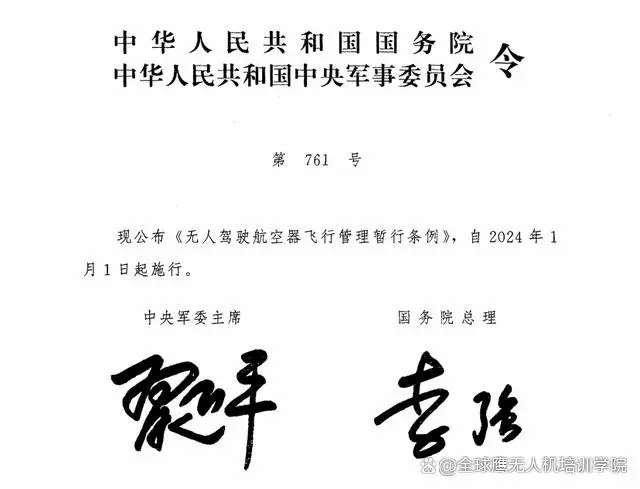
Recently, the State Council and the Central Military Commission announced the “Interim Regulations on the Flight Management of Unmanned Aerial Vehicles,” which will take effect on January 1, 2024. This is the first specialized administrative regulation for the management of unmanned aerial vehicles in China and is of great significance for the development of the drone industry.
Applicable Conditions
Before continuing to read this article, please note that the following situations do not require understanding of this regulation:
-
Indoor flights are not subject to this regulation
-
Items that do not count as drones are not subject to this regulation
-
This regulation takes effect on January 1, 2024, and can be temporarily ignored before that date
Question
Do model aircraft and toy drones count as drones?
Self-powered flying toys are considered drones, and must comply with this regulation. The specific methods will be developed by the relevant departments of the State Council in conjunction with air traffic management agencies and the civil aviation authorities.
Details of the Regulation
Article 10: Owners of civil unmanned aerial vehicles must register in real name according to the law, and the specific methods will be formulated by the civil aviation authorities of the State Council in conjunction with relevant departments. Civil unmanned aerial vehicles involved in overseas flights must register their nationality according to the law.
Interpretation:
-
Anyone who purchases a drone must register in real name.
-
Overseas flights of drones must register their nationality.
Legal Responsibilities
Article 47: Violating the provisions of this regulation, if a civil unmanned aerial vehicle conducts flight activities without real-name registration, the public security authority shall order correction and may impose a fine of less than 200 yuan; for serious circumstances, a fine of between 2,000 and 20,000 yuan may be imposed. Violating the provisions of this regulation, if a civil unmanned aerial vehicle involved in overseas flights fails to register its nationality according to the law, the civil aviation management department shall order correction and impose a fine of between 10,000 and 100,000 yuan.
Article 12: Using civil unmanned aerial vehicles for commercial flight activities, as well as using small, medium, and large civil unmanned aerial vehicles for non-commercial flight activities, must legally obtain liability insurance.
Interpretation:
-
Purchasing a drone must legally obtain liability insurance.
Legal Responsibilities
Article 48: Violating the provisions of this regulation, if a civil unmanned aerial vehicle fails to legally obtain liability insurance, it will be fined; for serious circumstances, the unit engaging in flight activities may be ordered to suspend operations until its operating certificate is revoked.
Drone Classification
Article 16: Personnel operating small, medium, and large unmanned aerial vehicles must meet the following conditions and apply to the civil aviation authority of the State Council for the corresponding unmanned aerial vehicle operator license (hereinafter referred to as operator license):
(1) Must have full civil capacity;
(2) Must receive safety operation training and pass the assessment by the civil aviation management department;
(3) Must not have a medical history of diseases that may affect the operation of civil unmanned aerial vehicles or a record of drug abuse;
(4) Must not have a criminal record for intentional crimes that endangered national security, public safety, or violated citizens’ personal rights, or disrupted public order within the last 5 years.
Personnel engaged in routine agricultural operations with unmanned aerial vehicles are not required to obtain an operator license, but must be trained and assessed by the producers of agricultural unmanned aerial vehicle systems according to the provisions of the civil aviation and agricultural authorities of the State Council, and obtain an operation certificate upon passing.
Interpretation:
-
Operators of small and larger drones must obtain a drone license.
-
Requirements for applying for a license include: having full civil capacity, passing training assessments, no medical history affecting flight, no drug abuse, and no criminal record within the last 5 years.
-
Operators of agricultural drones do not need to obtain a license but must undergo training and assessment to obtain an operation certificate.
Legal Responsibilities
Article 50: Violating the provisions of this regulation, if a civil unmanned aerial vehicle is operated without obtaining an operator license, the civil aviation management department will impose a fine of between 5,000 and 50,000 yuan; for serious circumstances, a fine of between 10,000 and 100,000 yuan may be imposed.
Violating the provisions of this regulation, if operating a civil unmanned aerial vehicle exceeds the scope specified in the operator license, the civil aviation management department will impose a fine and suspend the operator license for 6 to 12 months; for serious circumstances, the operator license will be revoked, and applications for the operator license will not be accepted for 2 years.
Violating the provisions of this regulation, if engaging in routine agricultural operations without obtaining an operation certificate for civil unmanned aerial vehicles, the agricultural authorities of the local government at or above the county level will order the cessation of operations and impose a fine of between 1,000 and 10,000 yuan.
Article 17: Personnel operating micro and light civil unmanned aerial vehicles are not required to obtain an operator license but should be proficient in the operation methods of related models and understand risk warning information and relevant management systems.
Individuals without civil capacity may only operate micro unmanned aerial vehicles, while individuals with limited civil capacity may only operate micro and light unmanned aerial vehicles. Individuals without civil capacity operating micro unmanned aerial vehicles or individuals with limited civil capacity operating light unmanned aerial vehicles must be guided on-site by individuals with full civil capacity who meet the conditions of the preceding paragraph.
Personnel operating civil unmanned aerial vehicles in controlled airspace must have full civil capacity and must pass training as per the regulations of the civil aviation authority of the State Council.
Interpretation:
-
Operators of micro and light drones do not need to obtain a license.
-
Individuals without civil capacity may only operate micro drones; individuals with limited civil capacity may only operate micro and light drones. To cross boundaries, they must have guidance from individuals with full civil capacity on-site.
-
Individuals operating light drones in controlled airspace must have full civil capacity.
Legal Responsibilities
Article 50: Individuals without civil capacity or individuals with limited civil capacity violating the provisions of this regulation by operating civil unmanned aerial vehicles will have their guardians fined by the public security authority between 500 and 5,000 yuan; for serious circumstances, the unmanned aerial vehicles used for illegal flights will be confiscated.
Article 19: The state will delineate controlled airspace for unmanned aerial vehicles as needed (hereinafter referred to as controlled airspace).
Airspace above 120 meters, prohibited areas, restricted areas, and surrounding airspace, military aviation low-altitude flight airspace, and airspace above the following areas should be designated as controlled airspace:
(1) Airports and surrounding areas within a certain range;
(2) Areas within a certain range on the side of the national boundary line, actual control line, and border line;
(3) Military prohibited areas, military management areas, sensitive units, and surrounding areas;
(4) Important military industrial facility protection areas, nuclear facility control areas, flammable and explosive materials production and storage areas, and large storage areas for combustible important materials;
(5) Public infrastructure such as power plants, substations, gas stations, water supply plants, public transportation hubs, navigation hubs, major water conservancy facilities, ports, highways, electrified railway lines, and surrounding areas, as well as drinking water source protection areas;
(6) Facilities requiring special electromagnetic environment protection such as radio astronomy observatories, satellite monitoring (navigation) stations, aviation radio navigation stations, radar stations, and surrounding areas;
(7) Important revolutionary memorial sites, important immovable cultural relics, and surrounding areas;
(8) Other areas specified by the national air traffic management authority.
Interpretation:
-
Controlled airspace includes areas above 120m; near airports, military, and other important facilities; and revolutionary memorial sites.
-
Flying in controlled airspace requires reporting and applying for flight permission.
-
Areas outside the controlled airspace are suitable flying areas, specifically airspace below 120m. Suitable for micro and light drones, no application or reporting is required.
-
In special situations, national major events, military tasks, and emergency rescues, flight tasks may be prioritized.
Legal Responsibilities
Violating the provisions of this regulation, if operating micro, light, or small civil unmanned aerial vehicles in controlled airspace without approval, or operating model aircraft in airspace designated by air traffic management agencies, the public security authority shall order the cessation of flight and may impose a fine of less than 500 yuan; for serious circumstances, the unmanned aerial vehicles used for illegal flights will be confiscated, and a fine will be imposed.
Article 35: Units using civil unmanned aerial vehicles for surveying activities must legally obtain a surveying qualification certificate before engaging in surveying activities.
Foreign unmanned aerial vehicles or unmanned aerial vehicles operated by foreign personnel are prohibited from conducting surveying, radio parameter testing, and other flight activities within China.
Interpretation:
-
Engaging in surveying activities requires obtaining a surveying qualification certificate.
-
Foreign pilots are prohibited from conducting surveying flight activities in China.
Legal Responsibilities
Article 53: Violating the provisions of this regulation, if foreign unmanned aerial vehicles or unmanned aerial vehicles operated by foreign personnel conduct surveying flight activities within China, the surveying and geographic information authorities of the local government at or above the county level shall order the cessation of illegal activities, confiscate illegal gains, surveying results, and unmanned aerial vehicles used for illegal flights, and impose a fine of between 100,000 and 500,000 yuan; for serious circumstances, a fine of between 500,000 and 1,000,000 yuan will be imposed, and the public security and national security authorities will determine the deadline for exit or expulsion according to their responsibilities.
Operating Qualification Certificate
Article 11: Units using civil unmanned aerial vehicles for flight activities other than micro drones must meet the following conditions and apply to the civil aviation management department of the State Council or regional civil aviation management agencies (hereinafter collectively referred to as civil aviation management departments) for a civil unmanned aerial vehicle operating qualification certificate (hereinafter referred to as operating qualification certificate):
(1) Have the necessary management organization, management personnel, and qualified operators for safe operations as required by this regulation;
(2) Have unmanned aerial vehicles and related facilities and equipment that meet safety operation requirements;
(3) Have management systems and operational procedures necessary for safe operations, ensuring the ability to continuously operate safely according to systems and procedures;
(4) Units engaging in commercial activities must also be legal entities for profit.
Units using agricultural unmanned aerial vehicles with a maximum takeoff weight not exceeding 150 kg for agricultural operations in suitable flying areas are not required to obtain an operating qualification certificate.
After obtaining the operating qualification certificate, engaging in commercial general aviation flight activities and routine agricultural unmanned aerial vehicle operations does not require obtaining a general aviation operating permit and operating qualification certificate.
Interpretation:
-
Units operating micro drones do not require an operating qualification certificate.
-
Units operating agricultural drones in suitable flying areas do not require an operating qualification certificate.
-
Conditions for applying for an operating qualification certificate:
-
Management organization, management personnel, qualified operators
-
Qualified unmanned aerial vehicle facilities and equipment
-
Qualified management systems and operational procedures
Legal Responsibilities
Article 49: Violating the provisions of this regulation, if engaging in flight activities without obtaining an operating qualification certificate or violating the requirements of the operating qualification certificate, a fine of between 50,000 and 500,000 yuan will be imposed; for serious circumstances, operations may be suspended until the operating qualification certificate is revoked.
Article 26: Unless otherwise provided in Article 31 of this regulation, units or individuals organizing unmanned aerial vehicle flight activities must submit a flight activity application to the air traffic management agency at least 12 hours before the intended flight. The air traffic management agency must make a decision to approve or disapprove by 9 PM the day before the flight.
Units may apply for long-term flight activities after approval for regular flight activities in fixed airspace according to national regulations, and must submit the flight plan to the air traffic management agency for filing at least 12 hours before the intended flight.
Interpretation:
-
Units or individuals must submit applications at least 12 hours before the intended flight.
-
Units may apply for long-term flight activities after approval for regular activities in fixed airspace.
The Significance of the Issuance of the Regulation
In simple terms, the issuance of this regulation defines the production standards, usage norms, suitable flying areas, and regulatory measures for unmanned aerial vehicles, which will have a profound impact on the production, application, regulation, and development of the drone industry.
Management is Not One-Size-Fits-All
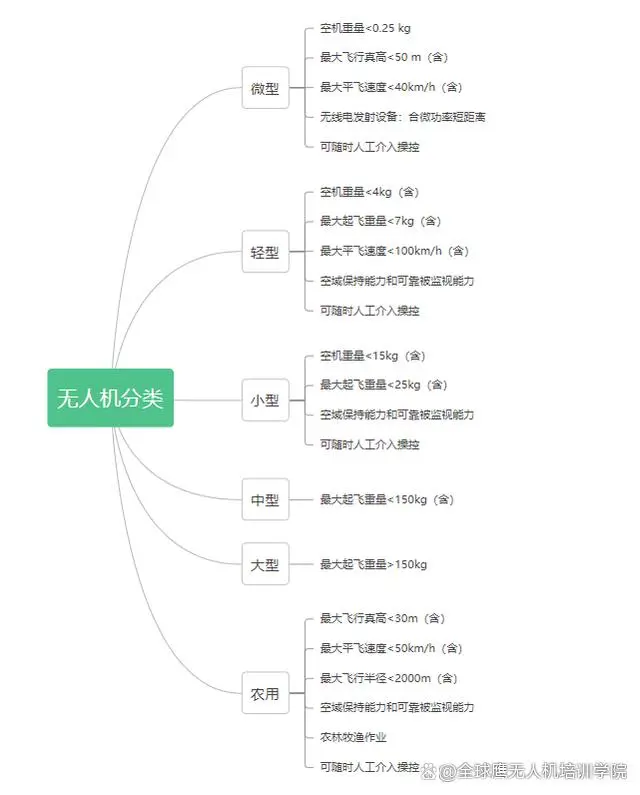
Due to the diverse types of drones, their performance, uses, and operational risks vary greatly. Therefore, the management of drones cannot be handled in a one-size-fits-all manner. The regulation adopts a classified management approach, categorizing unmanned aerial vehicles into five categories: micro, light, small, medium, and large based on performance indicators such as weight, flight altitude, and flight speed, while agricultural drones are managed according to demand. The regulation clarifies standards and specifies differentiated requirements in terms of design, production, operator requirements, airspace delineation, and flight activity regulations, which is of great significance for industry development.
Supporting Sustainable Industry Development
In recent years, China’s drone industry has developed rapidly and has been widely used in agriculture, logistics, national defense, and other fields, playing an important role in promoting social and economic development. However, alongside this prosperous development, issues such as “black flights” and injuries have become increasingly prominent, threatening aviation safety, public safety, and national security. The formal issuance of legal regulations signifies the end of the barbaric production phase of China’s drone industry, and the risks that previously posed threats to society and the nation will be eradicated.
From an industry perspective, the implementation of these regulations is conducive to stimulating the endogenous development motivation of industry enterprises, making production and manufacturing more standardized and orderly, ensuring user safety and convenience, and enabling management departments to perform their duties more effectively and efficiently, while creating a favorable institutional environment and external conditions for the development of related industries under the premise of maintaining safety standards.
In the short term, the policy for industry rectification will indeed disrupt the phased development rhythm of enterprises and may somewhat dampen consumer purchasing desire. However, in the long run, clear regulations indicate the standards and red lines for industry development, which will continuously promote the healthy and sustainable development of the industry.
Source | Emergency Management Department Cadre Training Institute