This issue takes you to explore three highly creative FPGA open source projects. These projects not only showcase the hardcore capabilities of FPGA in the fields of network security, retro computing, and modern peripherals but also provide developers with a complete reference from design to verification in a fully open-source manner.Clavier
Project Overview
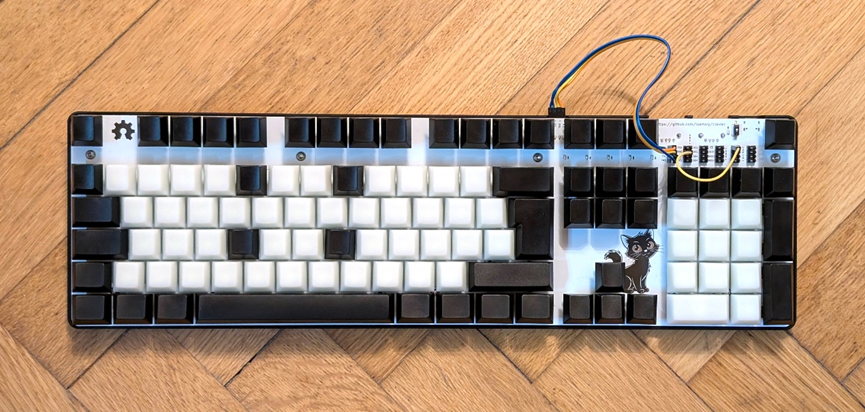
This open-source project named “Clavier” is a fully functional mechanical keyboard based on FPGA that integrates a USB Hub and various communication interfaces, showcasing innovative design in FPGA hardware open source.
Technical Features
-
Full-size design: Supports105 keys ISO standard layout, with an additional feature“coffee key“;
-
Advanced performance: AchievesN key rollover, providing1000Hz ultra-high polling rate;
-
Zero interference architecture: Completely non-multiplexed design, thoroughly eliminating ghost key phenomena;
Hardware Configuration
-
Compatible withPCB mounted Cherry MX mechanical switches;
-
Integrated dual-port USB 2.0 Hub;
-
Rich interface expansion: JTAG, SPI, I²C, dual UART and 8 GPIO;
-
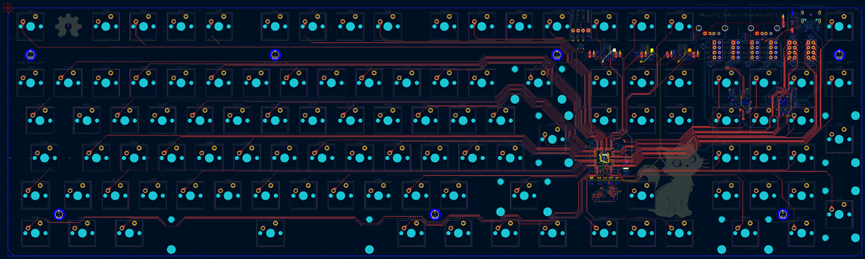
Utilizes 4 layer PCB design, with the core being BGA packaged FPGA chip;
Building an Open Source Ecosystem
The project adheres to a fully open-source philosophy:
-
UsesKiCad for PCB design;
-
FreeCAD/OpenSCAD for making the case;
-
OSS CAD suite completes FPGA development process;
-
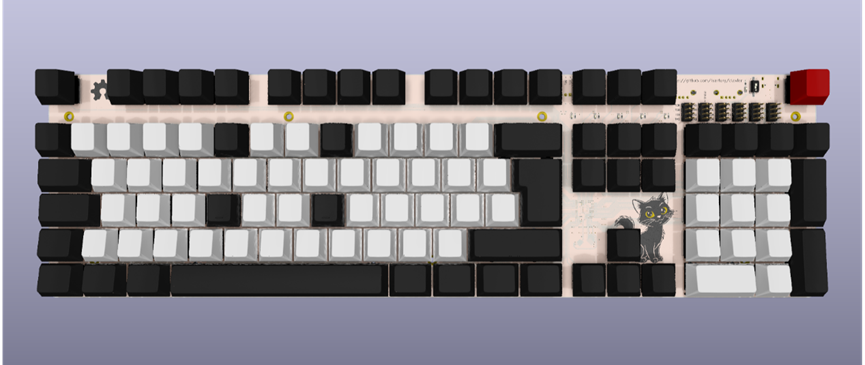
Includes complete schematics and 3D model files;
Practical Innovative Features
“coffee key” design is very clever:
-
Short press locks the computer, reminding users to take a break;
-
Long press5 seconds to achieve FPGA hard reset;
This project not only provides a high-performance input solution but also demonstrates the enormous potential of open-source hardware based on FPGA in modern peripheral design, offering a complete learning and practice platform for technology enthusiasts. All design files are open source.
Open Source Links
https://github.com/lsartory/Clavier
Wireguard FPGA
Project Overview
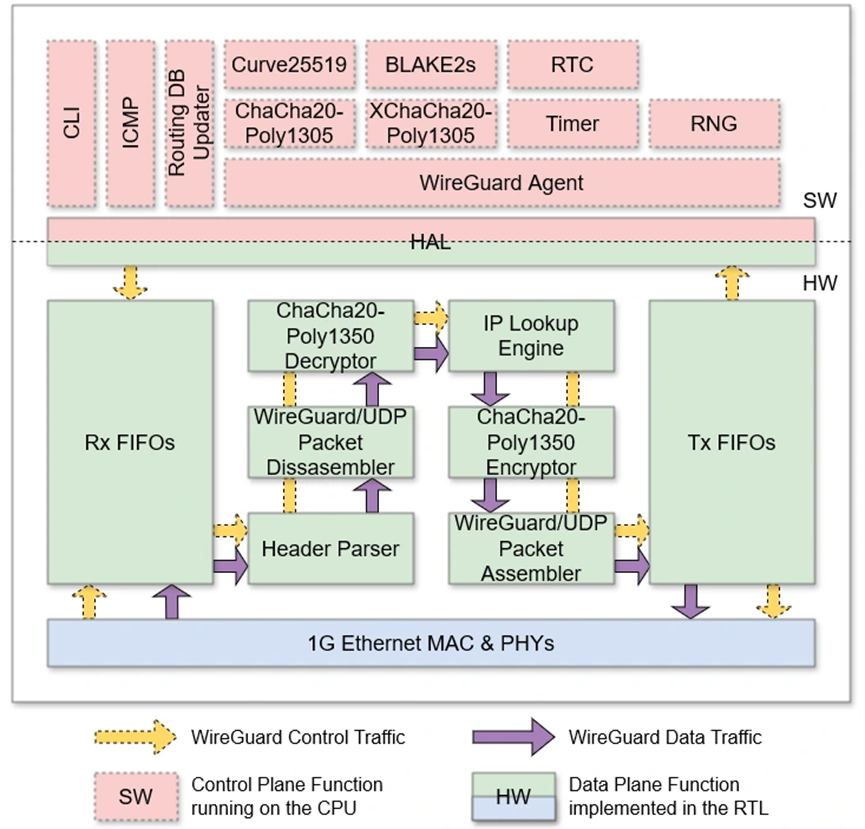
This is an open-source hardware implementation project based on FPGA for WireGuard VPN, aiming to break through the performance bottlenecks of traditional VPN through a purely open-source solution.
Technical Highlights
-
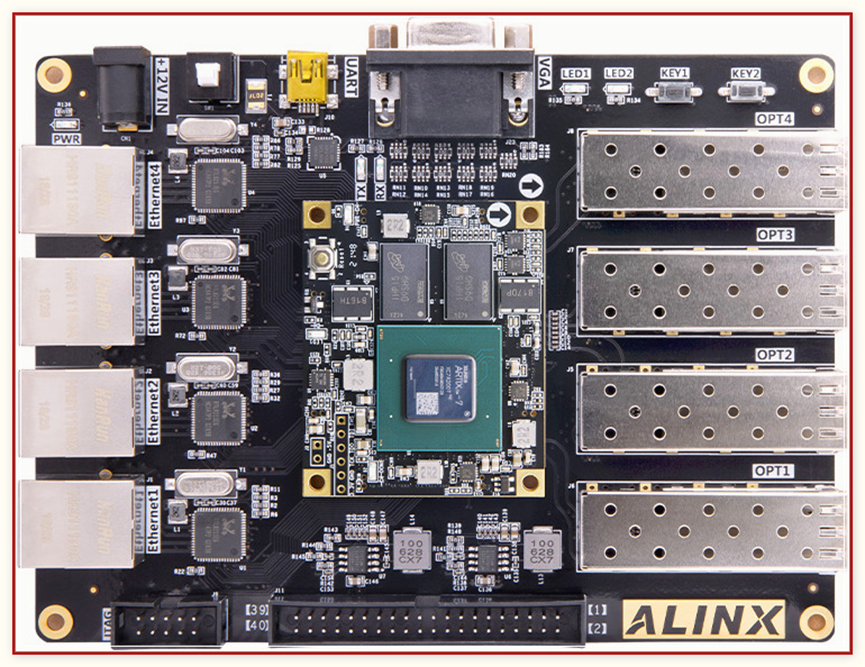
Artix7 FPGA platform, fully developed based on SystemVerilog;
-
Integrated four-port gigabit Ethernet, supporting line-speed encrypted transmission;
-
System control implemented through RISC-V soft-core processor, with encryption processing in the PL part;
-
Supports the complete WireGuard protocol stack, including ChaCha20 encryption, Poly1305 authentication, and other algorithms;
Open Source Value
-
The first truly fully open-source WireGuard hardware implementation;
-
Uses open-source toolchains (OpenXC7 etc.), breaking the dependency on commercial EDA tools;
-
Provides a complete simulation testing framework and collaborative verification environment;
Project Progress
Currently in a multi-stage development process, hardware platform verification and architecture design have been completed, and the basic data plane and encryption module are being implemented. This project aims to create a low-cost, high-performance open-source VPN solution, bringing a new hardware-level choice to the field of network security.
Open Source Links
https://github.com/chili-chips-ba/wireguard-fpga
IBM-PC-XT
Project Overview
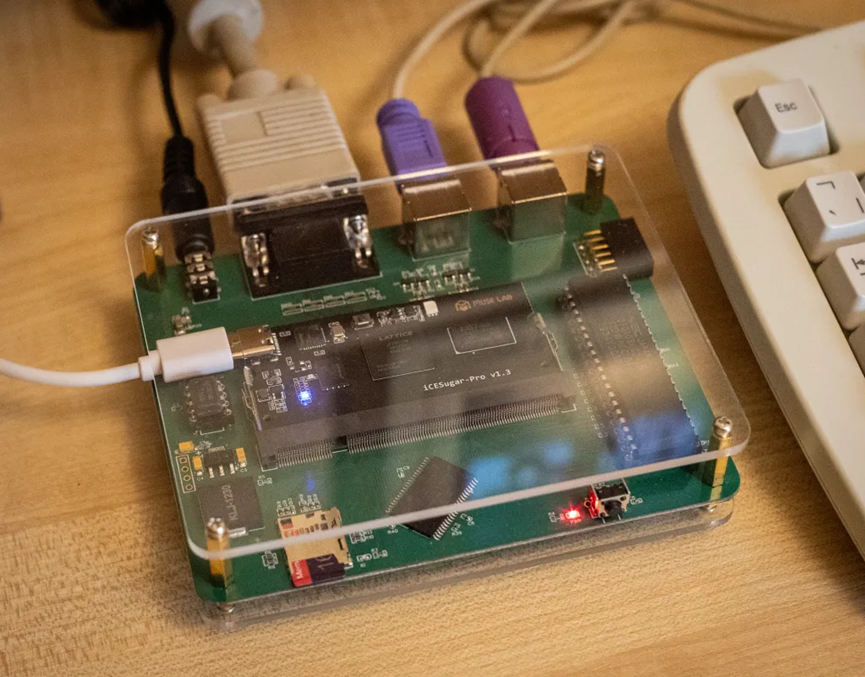
This is a retro open-source project based on FPGA aimed at completely replicating the classic IBM XT personal computer from the 1980s. The project successfully implements complete functionality, including mouse support, hard disk read/write, and Adlib audio, by mixing original components with modern technology.
Core Highlights
-
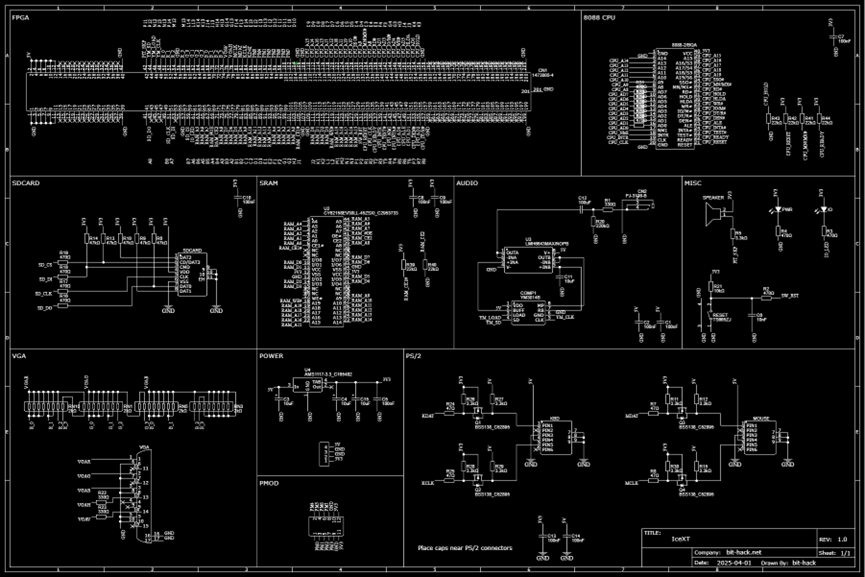
Innovative hardware design: Utilizes low-power NEC V20 CPU combined with modern FPGA technology, equipped with 1MB SRAM system memory;
-
Complete peripheral support: Integrates dual PS/2 interfaces, Micro SD card hard disk emulation, YM3014B DAC;
-
Software development achievements: Implemented XT BIOS system, CGA/EGA graphics support, and disk access functionality;
Technical Features
-
Accurately matches the timing requirements of V20 CPU through custom bus controllers and state machines;
-
Utilizes FPGA block memory to achieve dual-port access to video memory, with system memory and video display processed independently;
-
Innovatively implements PS/2 mouse to serial mouse protocol conversion, solving compatibility issues with old systems;
Project Value
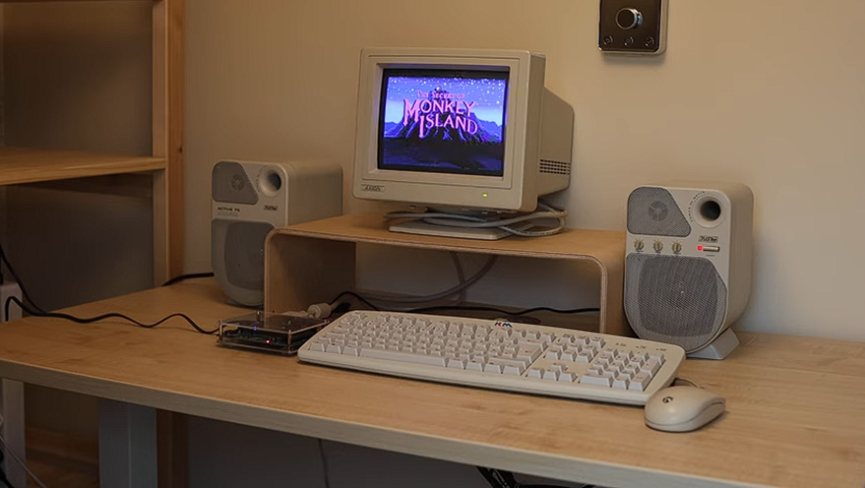
This project not only successfully runs classic games such as “Monkey Island” but also demonstrates the strong potential of open-source hardware in the retro computing field. All source code, schematics, and other files have been open-sourced on GitHub providing valuable learning resources for technology enthusiasts.
This innovative practice, which merges retro nostalgia with modern technology, opens up new paths for the preservation and research of classic computer systems.
Open Source Links
https://github.com/bit-hack/iceXt

Sharing of open-source projects by UK FPGA expert Adam Taylor (Part 1)
Sharing of open-source projects by UK FPGA expert Adam Taylor (Part 2)
Sharing of some excellent FPGA open-source IP cores from abroad
High-quality FPGA open-source project – UDP 10G fiber Ethernet communication
High-quality FPGA open-source project – PCIe communication
High-quality FPGA open-source project – UDP RGMII gigabit Ethernet
A fully open-source full-frame mirrorless digital camera driven by FPGA
FPGA-based open-source USB3.0 industrial camera – interchangeable lens and sensor
Nyan Keys: An FPGA-based open-source mechanical keyboard
ThunderScope: An FPGA-based open-source high-performance oscilloscope
FPGA empowers E-ink: Creating a high-performance, low-latency open-source ink screen display
Haasoscope Pro: Fully open-source high-bandwidth real-time sampling USB oscilloscope
ScopeFun: Can one FPGA board achieve the functions of five common instruments?