Operating System Conference & openEuler Summit 2025
The Software Research Institute of the Chinese Academy of Sciences has made two advancements in the open-source graphics stack for RISC-V:
-
Successfully ran the Imagination open-source driver on the Xuantie TH1520 chip, completing the test program and running example games;
-
Successfully added support for the Zink feature of the Volcanic architecture in Mesa 24.0.9.
Current State of the RISC-V Graphics Stack
Currently, RISC-V SoCs commonly adopt Imagination’s GPU solutions. These solutions rely on a large number of closed-source components: from low-level firmware, DDK drivers, to Mesa patches and display server patches, the entire graphics stack requires closed-source support. This leads to difficulties in system adaptation and high maintenance costs.
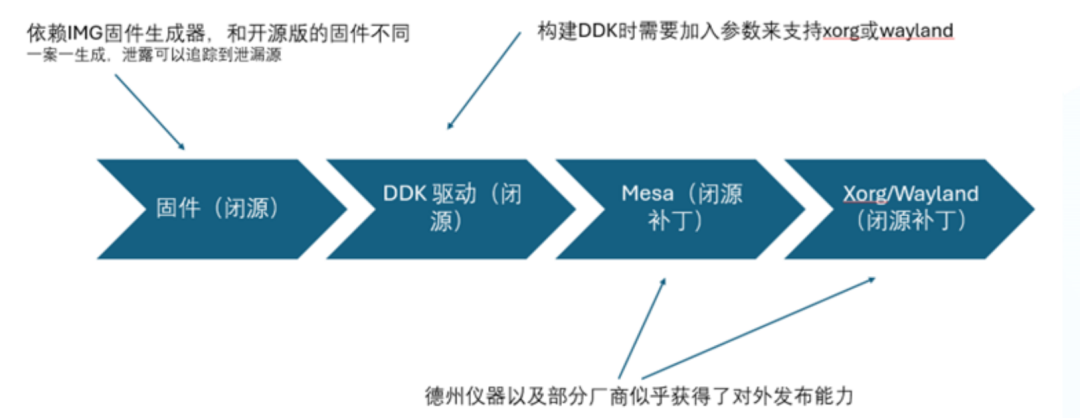
The emergence of open-source drivers provides a new approach to solving this problem. It can simplify the technology stack, retaining only the low-level firmware as closed-source.
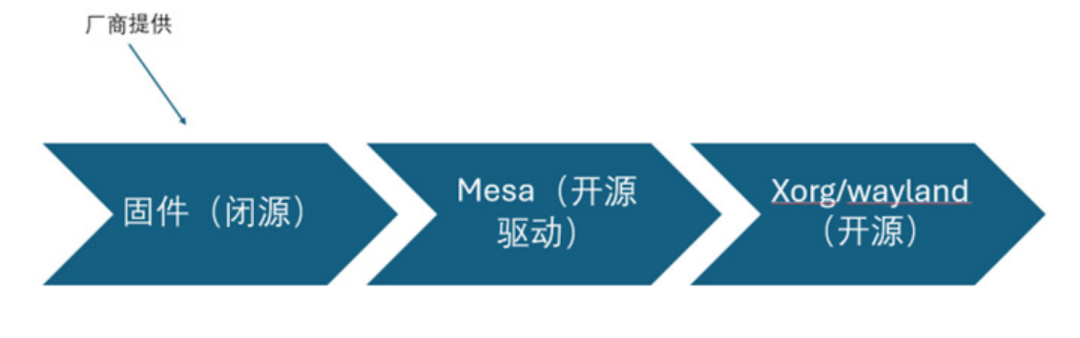
The Mesa open-source driver (PowerVR driver) officially developed by Imagination currently supports Vulkan 1.2 and has passed the official certification of Vulkan 1.1’s CTS, but it does not yet support Zink. This means that while Vulkan applications can run normally, many applications that heavily use OpenGL are temporarily unsupported.
Our Work
01
Exploration of Open-Source Driver Adaptation
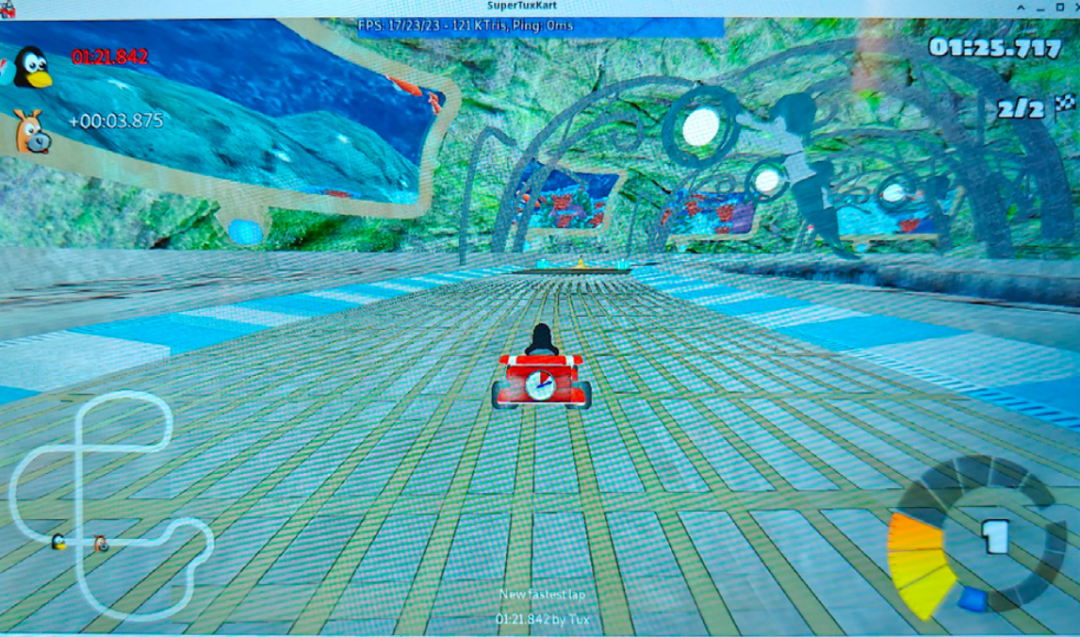
We successfully ran the open-source driver on the Xuantie TH1520 chip (BXM-4-64), completing the vkmark test program and running the open-source game SuperTuxKart. This proves the feasibility of open-source drivers on domestic RISC-V chips. However, there is still a distance to fully replace closed-source drivers.
02
Zink Optimization Work
What is Zink?
Zink is a driver in the Mesa 3D graphics library. It acts as a translation layer that can translate OpenGL graphics interface calls into Vulkan interface calls in real-time, allowing applications and games originally developed for OpenGL to run on hardware that only has Vulkan drivers.
Challenges Faced
The 2024 version of the IMG DDK first supports Zink, but there are serious limitations on Volcanic architecture GPUs. The system can only use the outdated Mesa 22.3.5 version and cannot be upgraded to newer versions like Mesa 24.0.1. This results in poor performance and limited functionality.
Our Breakthrough
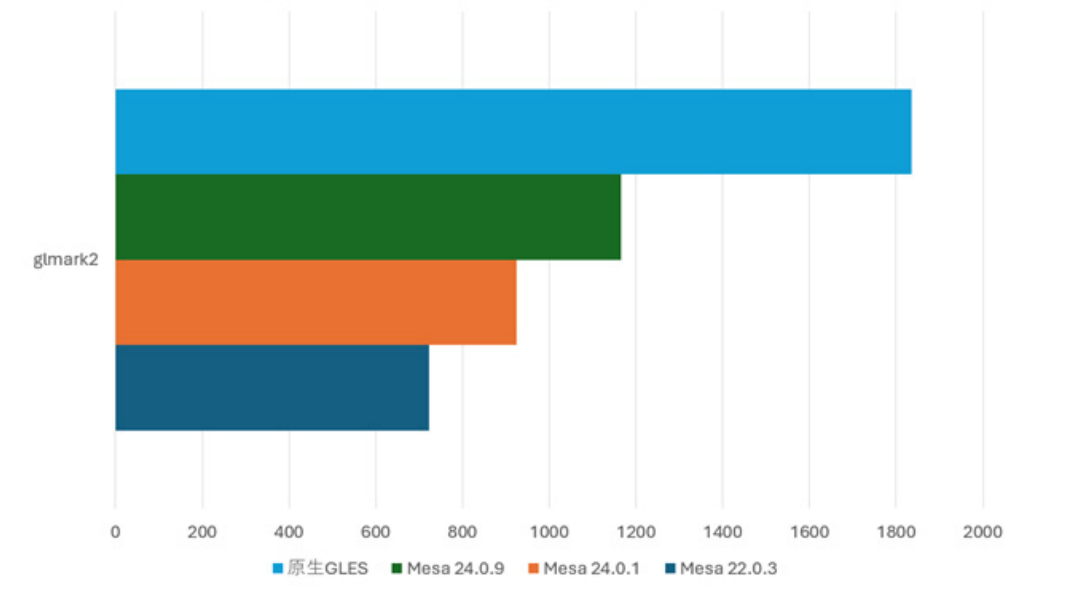
We successfully enabled Mesa 24.0.1 to support the Zink feature of the Volcanic architecture. Compared to Mesa 22.3.5, performance improved by over 20%. Based on this, we continue to advance and upgrade the supported version to Mesa 24.0.9, achieving even greater performance and functionality improvements.
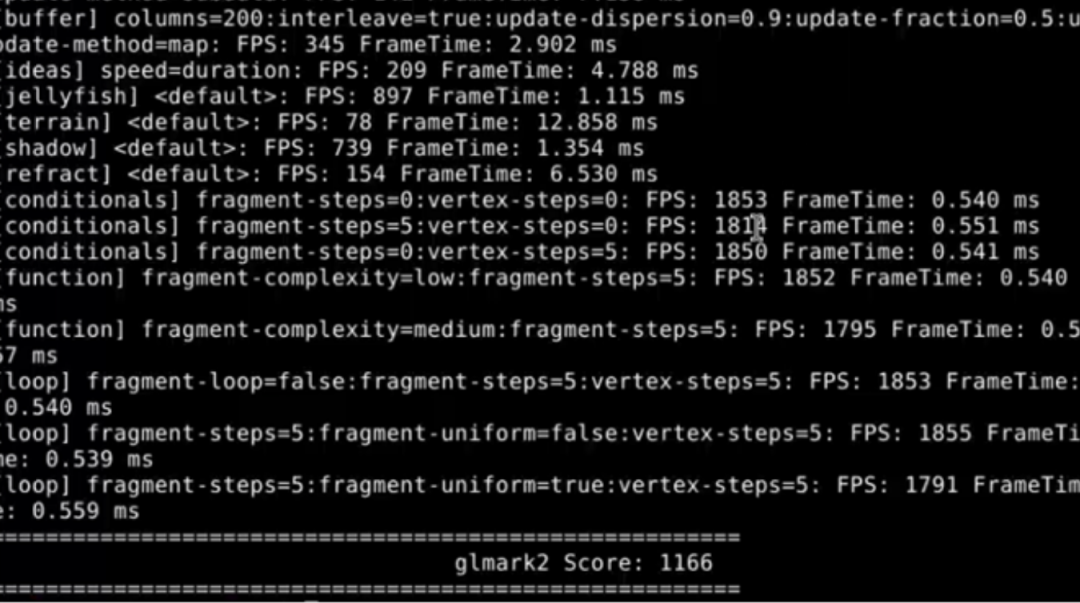
In practical tests on the RISC-V platform (equipped with the IMG AXM-8-256 GPU), the glmark2 benchmark reached approximately 1166 points, and OpenGL applications ran smoothly, providing a mature and usable graphics solution for RISC-V chips.
Contact Us
Partners interested in OERV work can join the openEuler RISC-V community development group to get more instant information. The OERV team is continuously recruiting full-time/part-time/interns, and resumes can be sent to [email protected]
Related Links
-
Gitee Collaboration Homepage:https://gitee.com/openeuler/RISC-V
-
Build Repository Collaboration Address:https://build.tarsier-infra.isrc.ac.cn/
-
Third-party repo source:https://repo.tarsier-infra.isrc.ac.cn/openEuler-RISC-V
-
OERV Work Center:https://github.com/openeuler-riscv
-
Email List:[email protected]
-
Discord Invitation Link:https://discord.gg/drG6qUsRc4