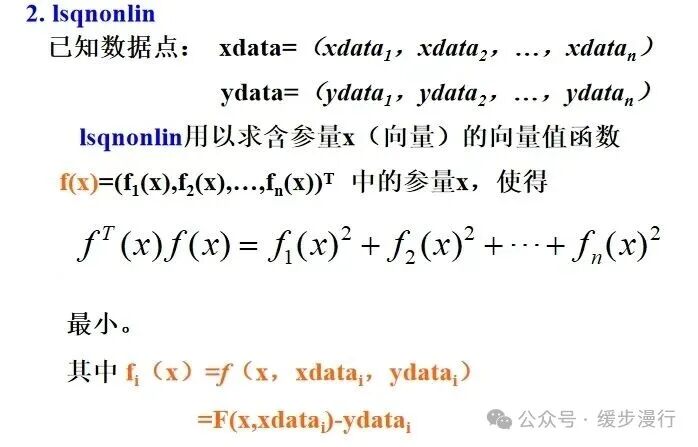
MATLAB provides two functions for nonlinear least squares fitting: lsqcurvefit and lsqnonlin. Both commands require the creation of an M-file fun.m where the function f(x) is defined, but the way to define f(x) differs between the two. Today, we will explore how they help us uncover the truth behind the data.
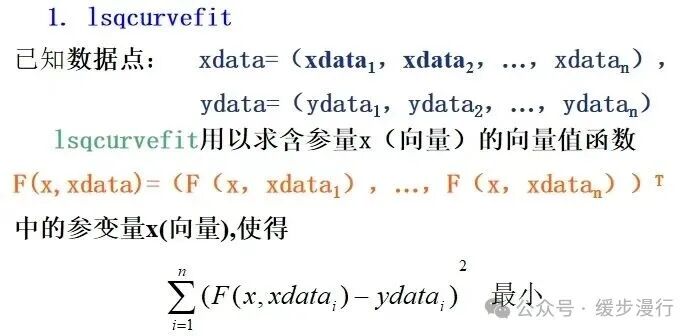
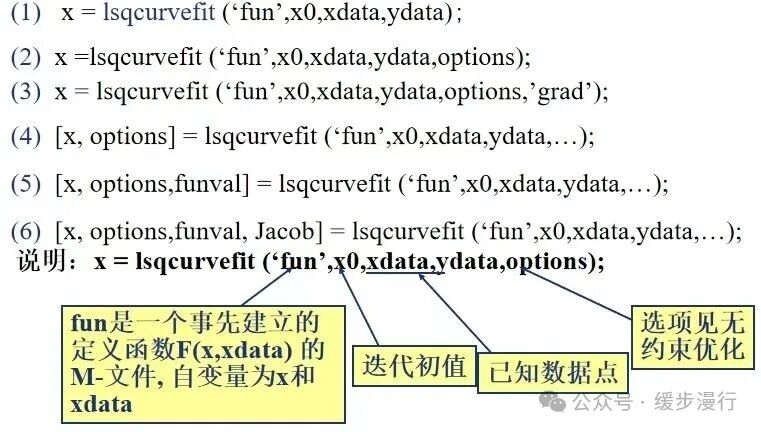
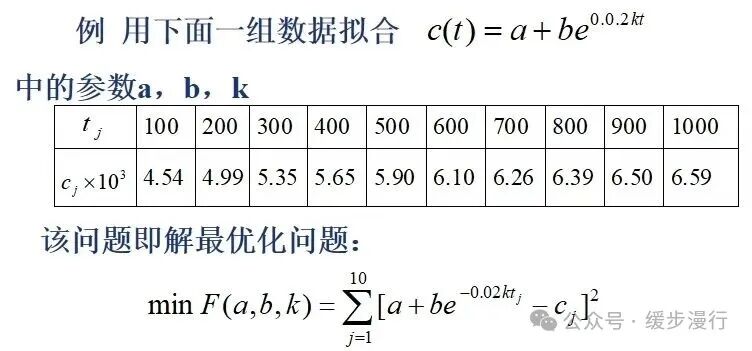
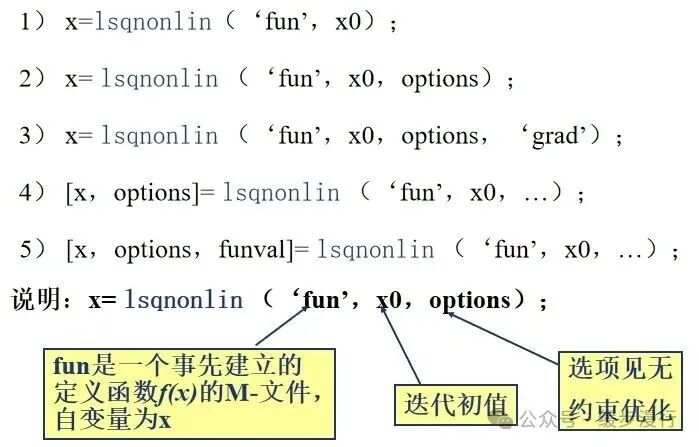
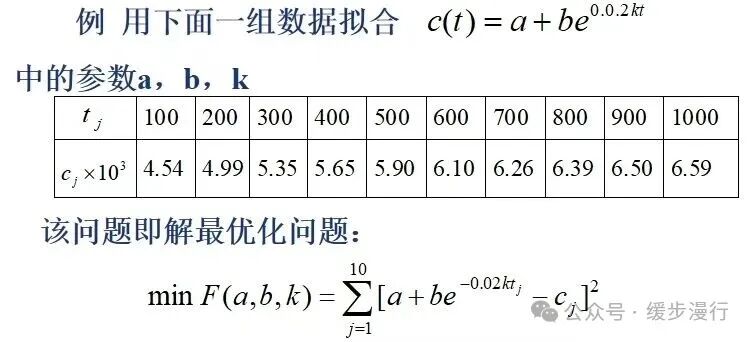
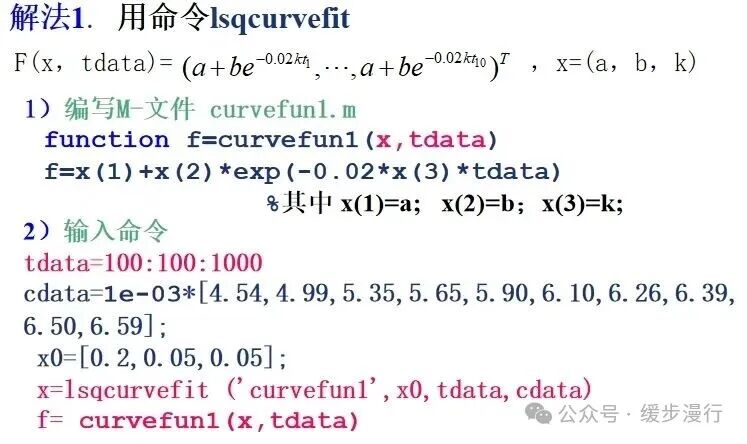
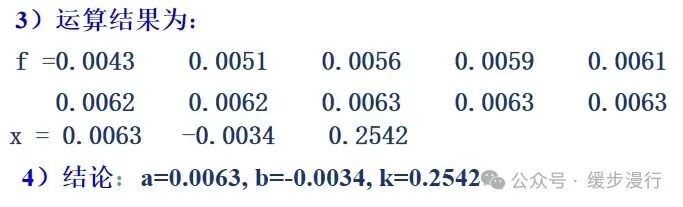
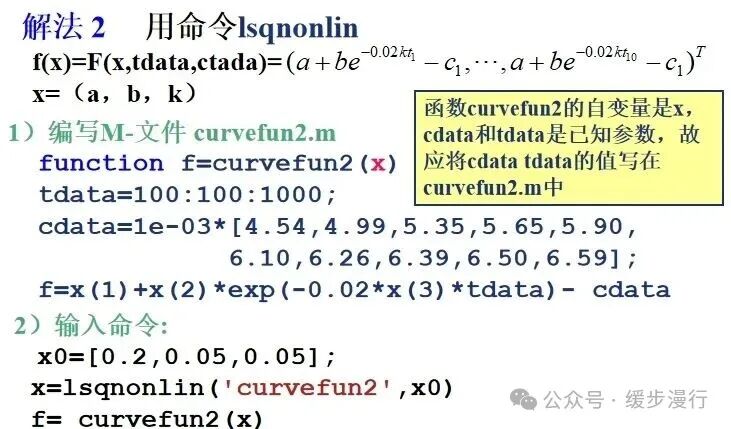
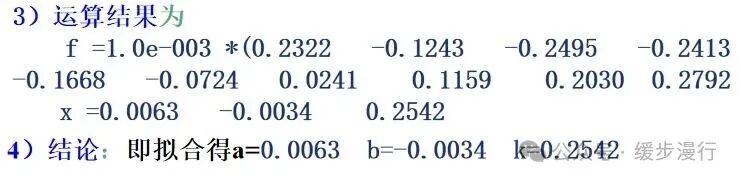
lsqcurvefit is suitable for fitting known function forms when you clearly know what function the data should conform to, such as: exponential decay, sinusoidal fluctuations, or polynomial trends.
lsqnonlin is a more flexible general-purpose option, allowing you greater freedom to define fitting criteria when your function form is more complex or custom.
Tips for Sharing: Secrets to More Accurate Fitting
Initial values are crucial: A good start is half the battle; reasonable initial guesses can speed up convergence;
Focus on residuals: The smaller the resnorm value, the better the fitting effect;
Data visualization: Always plot the results after fitting to see the results visually.
Common Issues Troubleshooting Guide
Issue 1: Unsatisfactory fitting results?
Check if the function form is correctly chosen, try different initial values, and consider whether the data needs preprocessing.
Issue 2: Slow convergence?
Adjust optimization options (TolFun, TolX), and check if the data volume is too large.
Issue 3: Unstable results?
Run multiple times to take the average, and check for outliers in the data.
In true mathematical modeling, fitting is not just a technical operation but a process of scientific thinking. The issues to consider in fitting include:
Mechanism analysis: Choose function forms based on physical/chemical/biological knowledge;
Parameter estimation: Use MATLAB to accurately solve parameters;
Model validation: Test the model’s predictive ability with new data;
Model application: Use fitting results to solve practical problems.
Through MATLAB’s fitting tools, we can extract patterns from chaotic data, describe the real world with mathematical models, predict future trends, and optimize engineering parameters.
Remember, good fitting is not about making the curve perfectly pass through every point, but about capturing the essential laws behind the data. This requires a perfect combination of theoretical knowledge, practical experience, and MATLAB skills.