A capacitor has the property of resisting changes in voltage amplitude in a circuit. It has the ability to store energy in an electric field. There are two types of capacitors: electrolytic capacitors and non-polarized capacitors. Non-polarized capacitors are made from vacuum, gas (such as air or nitrogen), ceramics, or liquid dielectrics. Non-polarized capacitors do not require a polarized DC voltage to be applied across them. In contrast, electrolytic capacitors are characterized by the use of a metal oxide film dielectric and require a polarized DC voltage to operate. The SI Definition of Capacitance The farad (F) is the SI unit of capacitance, derived from volts (V), seconds (S), and amperes (A) through the SI unit of charge, the coulomb (C). Its definition is as follows: 1F=1C/1V 1C=1A*1s In other words, when a constant current of 1A is applied to a capacitor of 1F, the voltage across it will increase continuously at a constant rate of 1V/s. 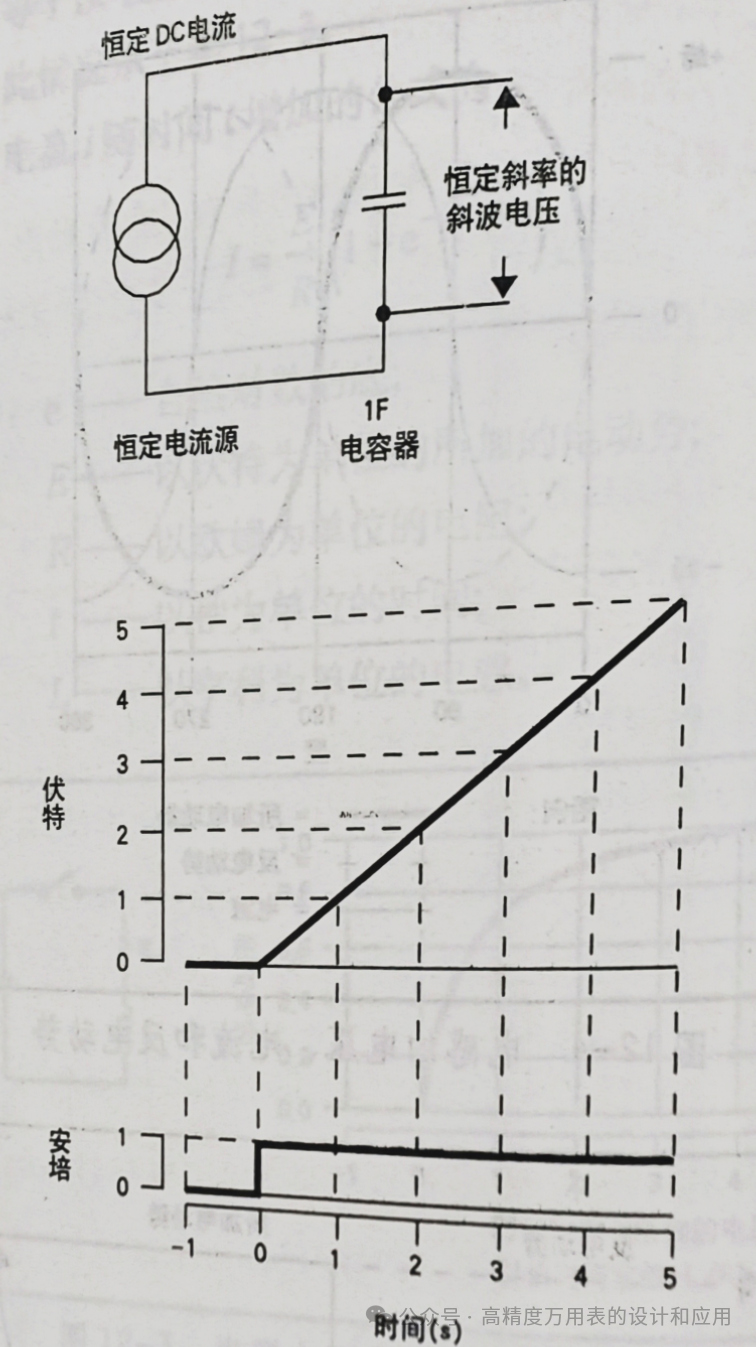 The realization of the farad is achieved by manufacturing calculable capacitors. The following diagram illustrates the working principle of the Thompson-Lamphard “Cross-capacitor”. In this simplified diagram, four rigid rods are placed in a frame such that, when viewed from their end faces, these four rods are positioned at the vertices of a rectangle, with two sets of rods in diagonal positions, each set forming a capacitor. This is C1 between rods A and B, and C2 between rods C and D.
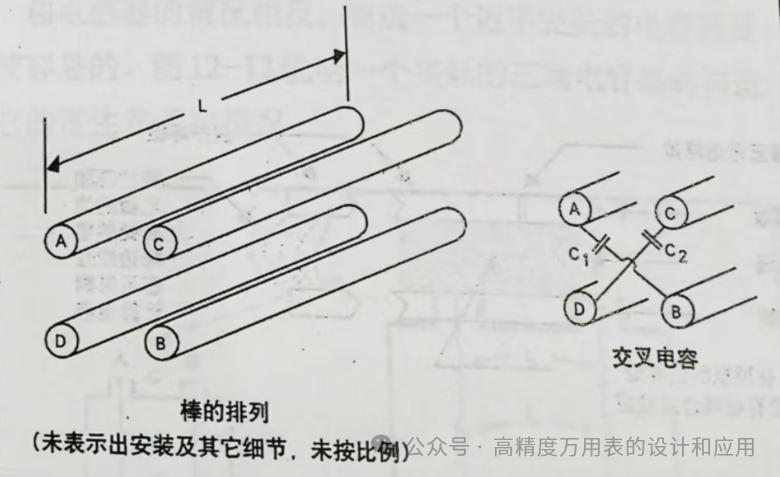 When these rods have nearly equal diameters and their lateral and diagonal distances are almost equal, the average capacitance per meter of the two sets of diagonally positioned rods is a constant value. Furthermore, for any such set of rods, this constant value can achieve high accuracy. Even when there are slight variations in the spacing and cross-sectional area of these rods, the capacitance value remains constant. This constant average capacitance is given by the following formula:
 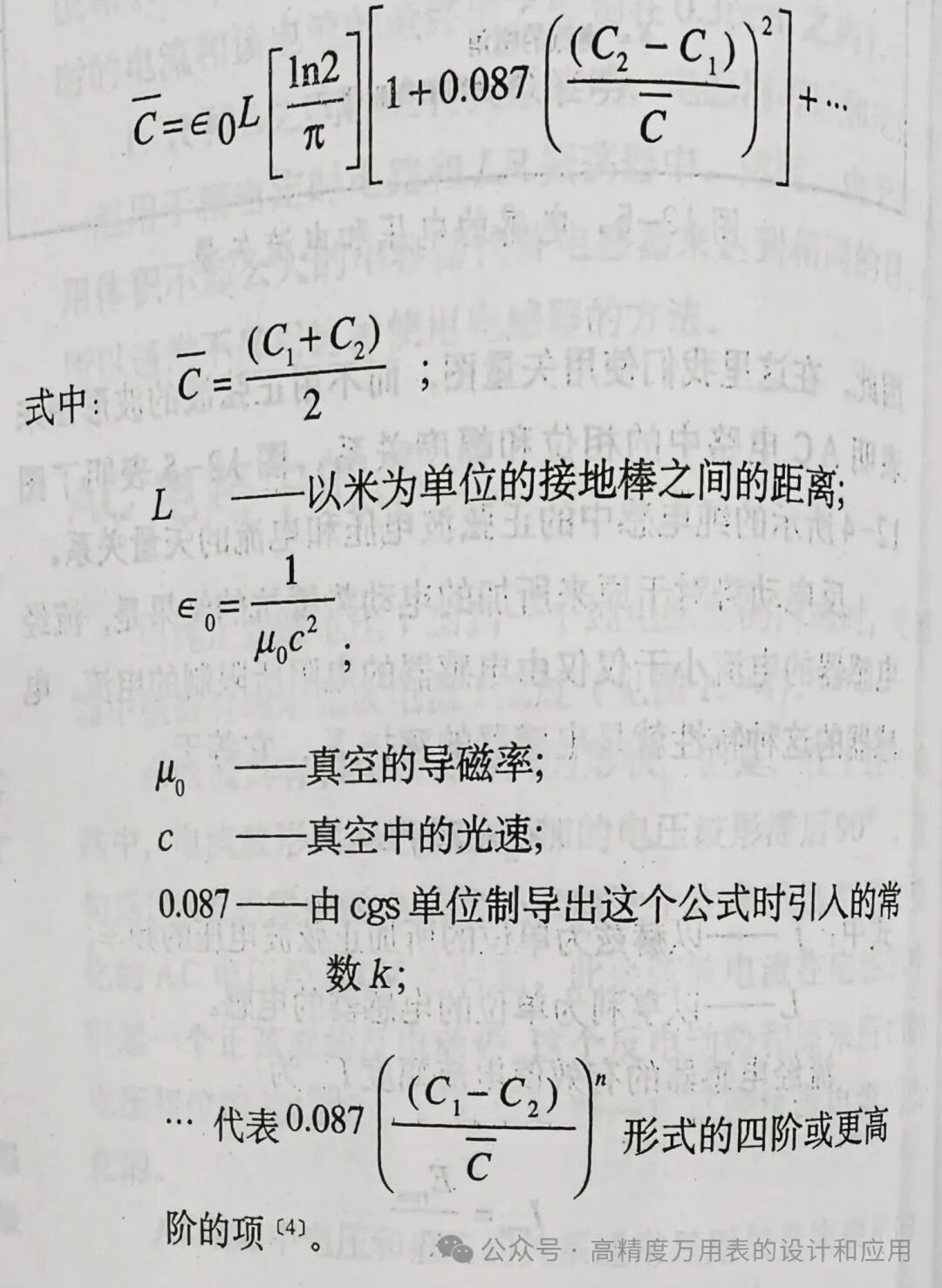 Terms of fourth order or higher can be neglected. Thus, its capacitance is approximately 2pF/m. Therefore, the cross-capacitance of this set of rods can be used as a capacitance standard, with a unit length capacitance that has higher accuracy. Unlike inductors, it is easy to shield capacitors from external magnetic fields, and the uncertainty of the farad achieved through this method is ±0.015ppm relative to the SI unit definition.Traceability Standards for Capacitance A laboratory can have several commercially available standard capacitors with different values. These standard capacitors are typically three-terminal, sealed, and filled with nitrogen dielectric.
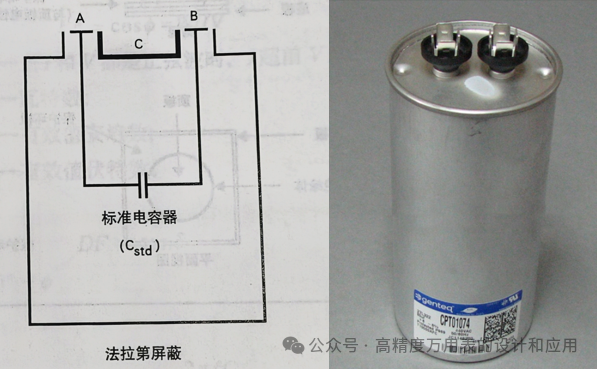 In this diagram, terminals A and B are the input and output terminals of the standard capacitor, while terminal C is the Faraday shielding terminal. Standard capacitors should be sent to NIST for calibration approximately every two years, according to NIST’s capacitance working standards. The uncertainty for a 1000pF capacitor at a frequency of 1KHz is 0.5ppm.