💥💥💞💞Welcome to this blog❤️❤️💥💥
🏆 Blogger’s Advantages:🌞🌞🌞The blog content aims to be logically coherent and clear, to facilitate readers.
⛳️Motto:Those who travel a hundred miles are halfway at ninety.
💥1 Overview
The power system load flow calculation refers to the process of calculating the voltage magnitudes and phase angles at various nodes in the power system, as well as the current magnitudes and phase angles on each branch. Load flow calculation helps power system operators understand the voltage and current conditions at various nodes and branches in the grid, enabling reasonable operation and scheduling.
The basic principle of load flow calculation is to establish a load flow calculation model for the entire power system based on the power balance equations at the nodes and the load flow-voltage relationship equations for the branches, and then iteratively solve these equations to obtain the voltage and current at each node and branch in the system. Common calculation methods include the Gauss-Seidel method and the Newton-Raphson method.
Asymmetrical short-circuit analysis refers to considering asymmetrical faults in the power system, such as three-phase short circuits, two-phase short circuits, and single-phase ground faults, to calculate the current and voltage at the fault point, as well as the current conditions on each branch. Asymmetrical short-circuit analysis helps power system designers and operators understand the current and voltage distribution in the system under different fault conditions, enabling reasonable equipment selection and protection design.
Research in these two areas is of great significance for the design, operation, and maintenance of power systems, helping to ensure the safe and stable operation of the power system. Researchers typically delve into the theories and methods related to power system load flow calculation and asymmetrical short-circuit analysis by establishing power system models, developing corresponding calculation programs, and conducting simulations and experiments.
Based on the selected operating mode, we will provide a power grid load flow calculation program in the MATLAB environment, following the manual calculation method, and present the calculation results. It is particularly noted that the focus of the load flow calculation is on the high-voltage side of the grid, and the power that the generator should provide will be given.
Simultaneously, based on the selected operating mode, we will choose a busbar at the point where the S× type circuit breaker operates and consider the scenarios of three-phase short circuit, two-phase short circuit, two-phase ground fault, and single-phase ground fault at that busbar. We will provide a step-by-step short-circuit current calculation program in the MATLAB environment, following the manual calculation method, and present the calculation results. It is particularly noted that we will focus on providing the current and voltage at the fault point, as well as the current on each branch of the high-voltage network and the current on the generator side.
Finally, we will write a design report that will present the equivalent circuit of the power grid at each key stage of the load flow calculation and short-circuit calculation process in detail.
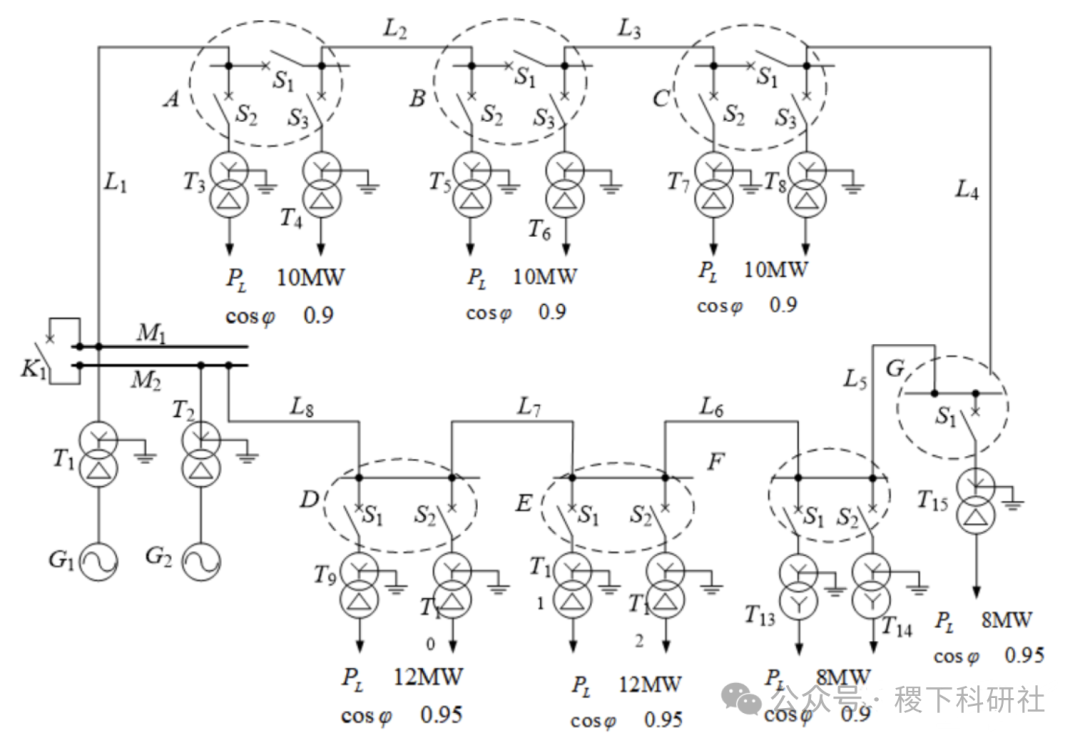
Research on Power System Load Flow Calculation and Asymmetrical Short-Circuit Analysis
Abstract
Power system load flow calculation and asymmetrical short-circuit analysis are fundamental to steady-state operation and fault analysis of power systems. Load flow calculation is used to determine the voltage and branch currents at each node in the system, while asymmetrical short-circuit analysis is used to assess the current and voltage distribution under asymmetrical faults. This paper details the basic principles, common methods, and applications of load flow calculation and asymmetrical short-circuit analysis in power systems, and verifies the correctness and effectiveness of the related algorithms through MATLAB simulations.
1. Introduction
With the continuous expansion and increasing complexity of power systems, the requirements for steady-state operation and fault analysis of power systems are also rising. Load flow calculation and asymmetrical short-circuit analysis, as two fundamental components of power system analysis, are of great significance for ensuring the safe and stable operation of power systems. Load flow calculation helps operators understand the voltage and current conditions at various nodes and branches in the grid, enabling reasonable operation and scheduling; asymmetrical short-circuit analysis helps designers understand the current and voltage distribution in the system under different fault conditions, enabling reasonable equipment selection and protection design.
2. Power System Load Flow Calculation
1. Basic Principles of Load Flow Calculation
Load flow calculation refers to the process of calculating the voltage magnitudes and phase angles at various nodes in the power system, as well as the current magnitudes and phase angles on each branch. Its basic principle is to establish a load flow calculation model for the entire power system based on the power balance equations at the nodes and the load flow-voltage relationship equations for the branches, and then iteratively solve these equations to obtain the voltage and current at each node and branch in the system.
2. Common Methods for Load Flow Calculation
Common methods for load flow calculation include the Gauss-Seidel method and the Newton-Raphson method. Among them, the Newton-Raphson method is widely used in practical power system load flow calculations due to its fast convergence speed and fewer iterations.
3. Applications of Load Flow Calculation in Power Systems
Load flow calculation has a wide range of applications in power systems, mainly including the following aspects:
- Power System Planning and Design: Through load flow calculation, the power capacity and network structure can be reasonably planned, and suitable reactive power compensation schemes can be selected to meet the requirements for load flow exchange control, peak shaving, phase adjustment, and voltage regulation.
- Power System Operation Analysis: Load flow calculation can predict the weak links in the system under different operating modes, providing daily operational references for dispatchers and suggesting improvements to the grid structure for planning and construction units.
- Power System Stability Analysis: Load flow calculation is the basis for power system stability analysis. By calculating the reactive power flow between nodes, potential areas that may lead to voltage collapse or frequency drop can be identified in a timely manner.
3. Asymmetrical Short-Circuit Analysis in Power Systems
1. Types of Asymmetrical Short-Circuits
Asymmetrical short-circuits in power systems mainly include single-phase ground faults, two-phase short circuits, and two-phase ground faults. These faults can lead to asymmetrical currents and voltages in the system, posing a threat to the safe and stable operation of power equipment and systems.
2. Basic Principles of Asymmetrical Short-Circuit Analysis
The basic principle of asymmetrical short-circuit analysis is the symmetrical component method. The symmetrical component method decomposes the asymmetrical three-phase currents and voltages into three sets of symmetrical components (positive sequence, negative sequence, and zero sequence), and then solves each of these three sets of symmetrical components separately, finally obtaining the solution for the original asymmetrical currents and voltages through the superposition principle.
3. Steps of Asymmetrical Short-Circuit Analysis
The steps of asymmetrical short-circuit analysis mainly include the following aspects:
- Establish Sequence Network Model: Based on the fault type, establish the corresponding positive sequence, negative sequence, and zero sequence network models.
- Calculate Equivalent Reactance: Calculate the positive sequence, negative sequence, and zero sequence equivalent reactance at the fault point in the system.
- Calculate Additional Reactance: Based on the fault type, calculate the additional reactance used to correct the positive sequence network.
- Solve Fault Point Currents and Voltages: Use the symmetrical component method and the superposition principle to solve the sequence currents and voltages at the fault point, and then synthesize the three-phase currents and voltages.
- Calculate Branch Currents: Based on the sequence network model and the fault point currents, calculate the currents on each branch.
4. Applications of Asymmetrical Short-Circuit Analysis in Power Systems
The applications of asymmetrical short-circuit analysis in power systems mainly include the following aspects:
- Equipment Selection and Protection Design: Through asymmetrical short-circuit analysis, the current and voltage distribution in the system under different fault conditions can be understood, enabling the selection of suitable electrical equipment and the design of reasonable protection schemes.
- Relay Protection Setting Calculations: Asymmetrical short-circuit analysis is the basis for relay protection setting calculations. By calculating the currents and voltages during faults, the action values and action times of protection devices can be determined.
- System Stability Analysis: Asymmetrical short-circuits may lead to system instability. Asymmetrical short-circuit analysis can assess the stability of the system and take corresponding measures to improve system stability.
4. MATLAB Simulation Verification
1. MATLAB Simulation of Load Flow Calculation
In the MATLAB environment, the powerful matrix processing capabilities can be utilized for load flow calculation. By writing a load flow calculation program using the Newton-Raphson method, load flow calculations for the power system can be performed, yielding the voltages and currents at each node and branch. Simulation results indicate that the MATLAB-based load flow calculation method has advantages such as ease of operation, intuitive graphical interface, stable operation, and accurate calculations.
2. MATLAB Simulation of Asymmetrical Short-Circuit Analysis
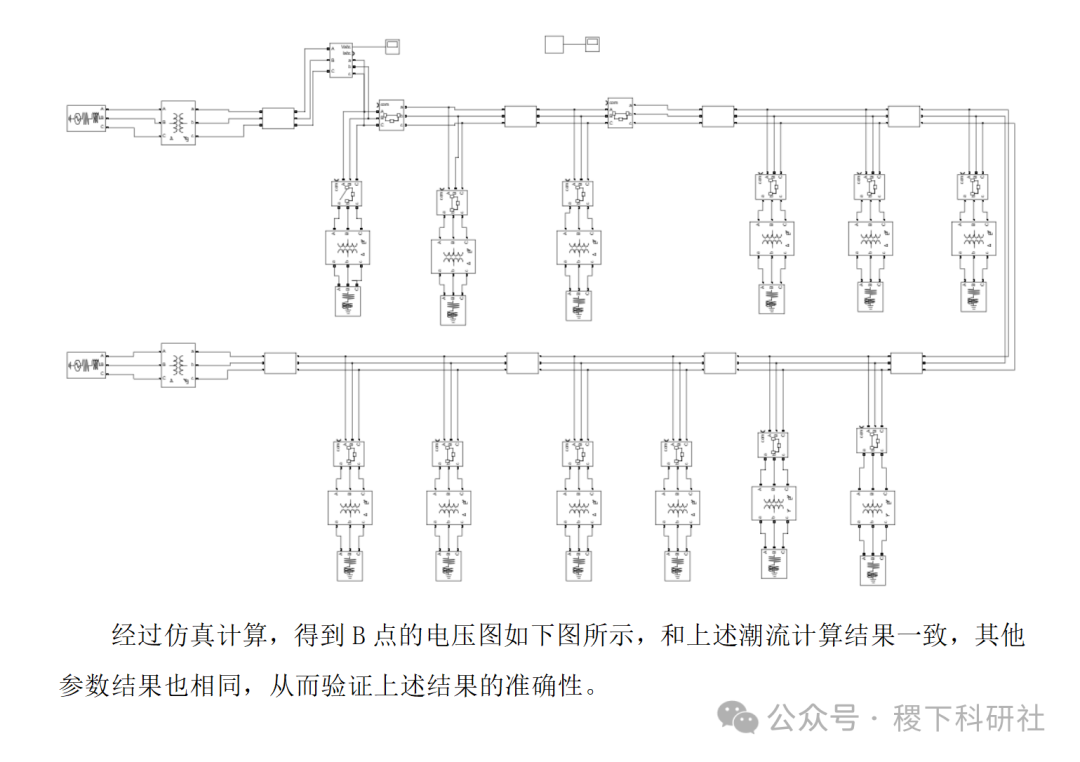
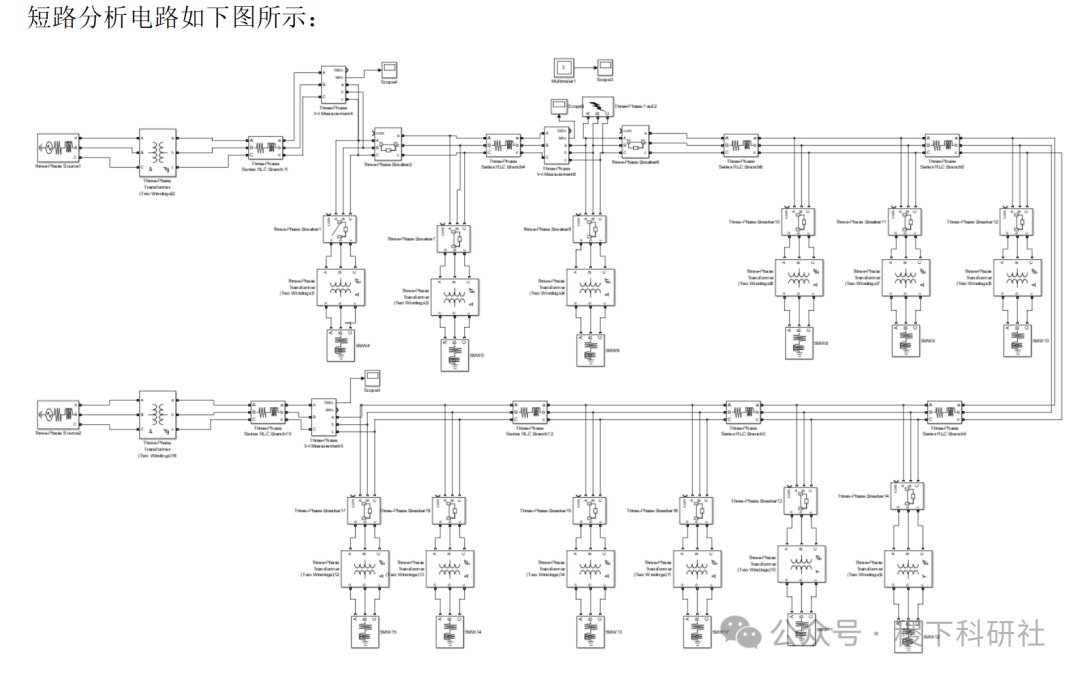
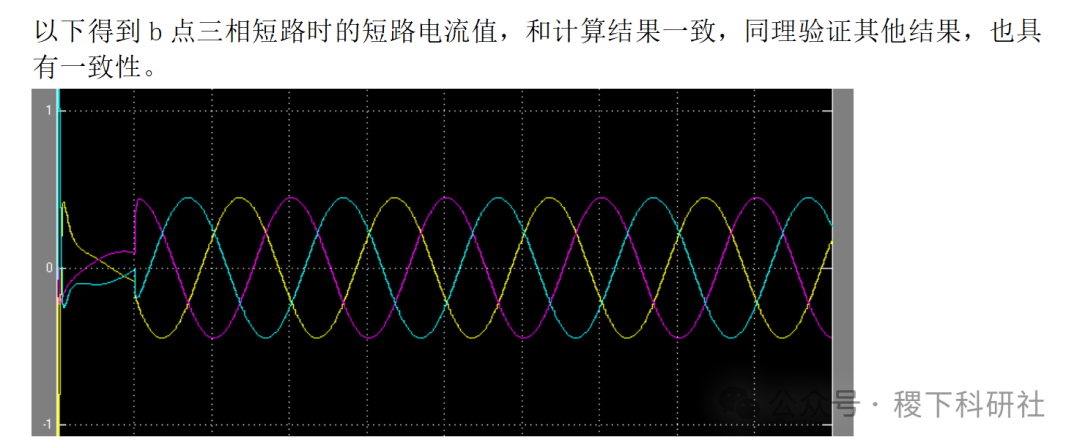
In the MATLAB environment, the Simulink or Simpowersystems toolbox can be used for asymmetrical short-circuit analysis. By establishing a simulation model of the power system and setting different fault types, the current and voltage distribution in the system under different fault conditions can be simulated. Simulation results show that the MATLAB-based asymmetrical short-circuit analysis method can accurately calculate the currents and voltages during faults, providing a reliable basis for equipment selection and protection design in power systems.
📚2 Operation Results
2.1 Document Directory

2.2 Asymmetrical Short-Circuit Composite Sequence Network Diagram
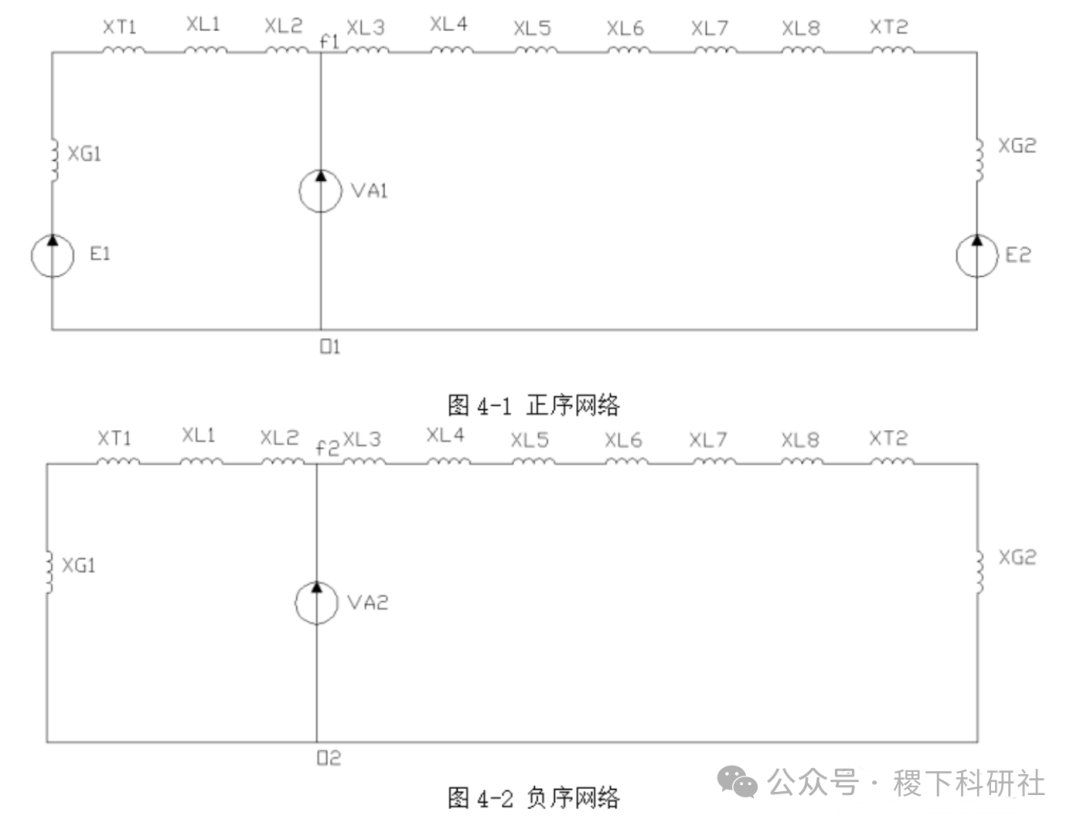
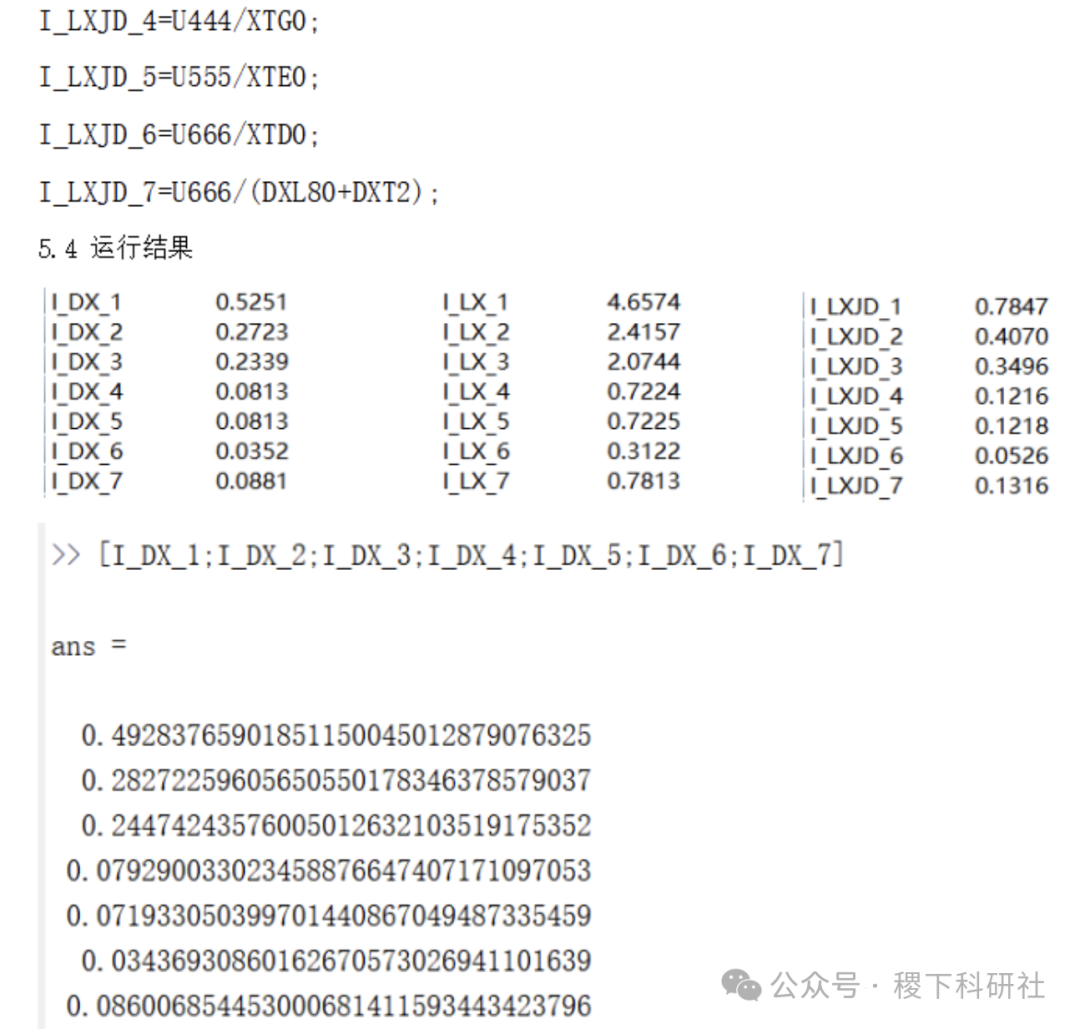
2.3 Operation Results
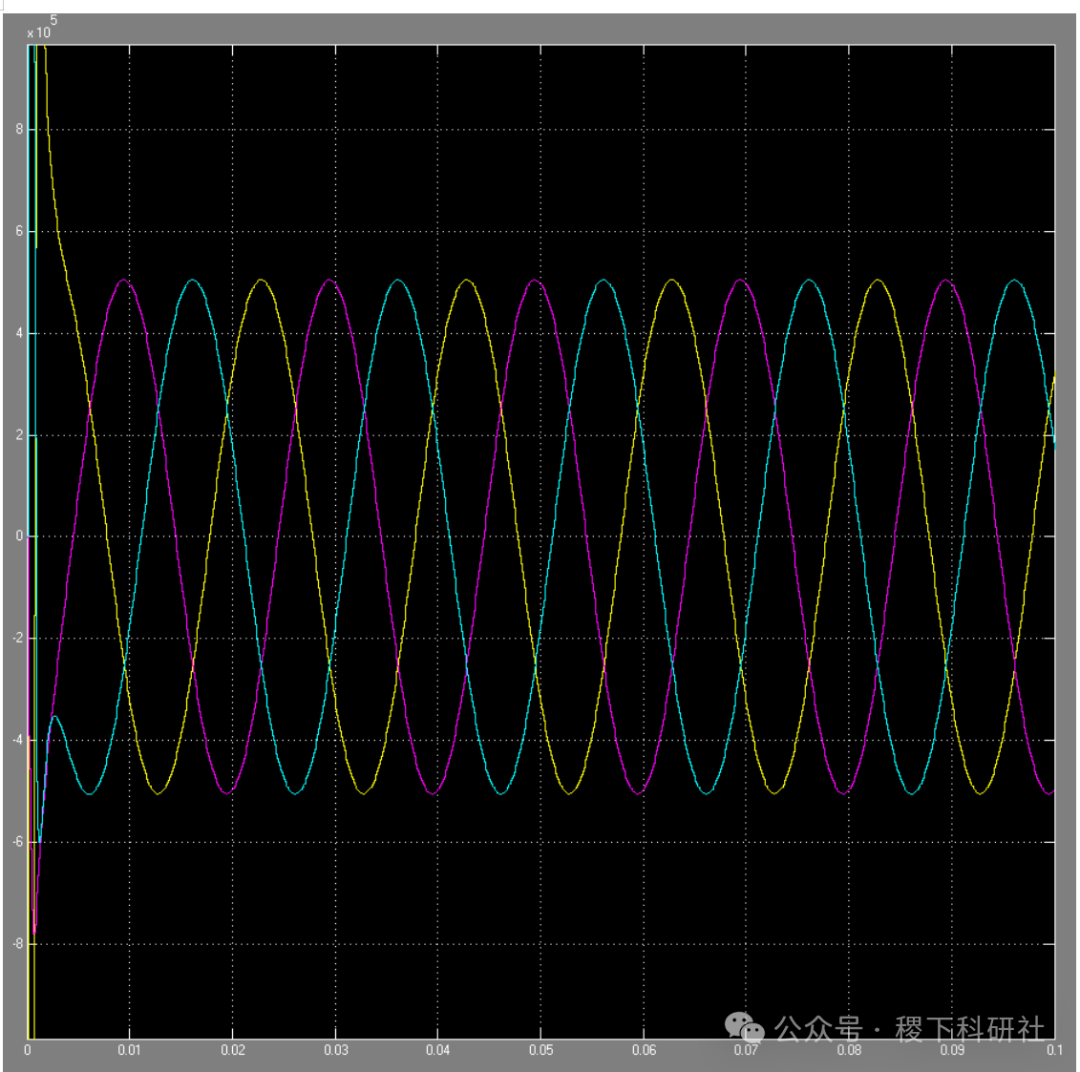
Document Simulink simulation results:
Partial code:
PL1=10;QL1=PL1/0.9*sin(acos(0.9));% Calculate reactive load at point a Sta=(PL1^2+QL1^2)*0.5*(RT2+1i*XT2)/VN^2; St0a=2*(P02/1000+1i*Q02); Sa=PL1+1i*QL1+Sta+St0a+1i*QB1+1i*QB2;% Calculate capacity Sa at point a Stb=(PL1^2+QL1^2)*(RT2+1i*XT2)/VN^2; St0b=(P02/1000+1i*Q02); Sb=PL1+1i*QL1+Stb+St0b+1i*QB2+1i*QB3;% Calculate capacity Sb at point b Stc=(PL1^2+QL1^2)*0.5*(RT2+1i*XT2)/VN^2; St0c=2*(P02/1000+1i*Q02); Sc=PL1+1i*QL1+Stc+St0c+1i*QB3+1i*QB4;% Calculate capacity Sc at point c PL2=8;QL2=PL2/0.95*sin(acos(0.95)); Stg=(PL2^2+QL2^2)*(RT4+1i*XT4)/VN^2; St0g=(P04/1000+1i*Q04); Sg=PL2+1i*QL2+Stg+St0g+1i*QB4+1i*QB5;% Calculate Sg 🎉3 References
Some content in this article is sourced from the internet, and references will be noted or cited as references. If there are any inaccuracies, please feel free to contact us for removal.
[1] Sun Qiuyue. Power System Analysis [M]. People’s Posts and Telecommunications Press, 2012.
[2] Zhao Zhijie. Analysis of Load Flow Calculation in Angang Power System [J]. Industry C, 2015(36):103-103.
[3] Zhang Guodong, Yao Fuqiang, Pu Haitao, et al. Exploration of Teaching Methods for Key Difficulties in the Course “Power System Analysis”—Taking Asymmetrical Short-Circuit Calculation as an Example [J]. Modern Education, 2019, v.6(98):207-208. DOI:CNKI:SUN:JYXD.0.2019-98-075.