Abstract:The power supply and distribution system is a crucial component of the data center infrastructure, as various IT devices rely on its stable and safe operation for computing and storage. With the development of the digital industry, the power supply and distribution systems in data centers have also expanded, which raises higher requirements for their operation and maintenance. To support the reliable operation of data centers and achieve green energy-saving and sustainable development goals, the application of new-generation intelligent operation and maintenance technologies for power supply and distribution systems is imperative.Keywords:Data Center; Power Supply and Distribution System; Intelligent Operation and Maintenance As the digital economy rapidly develops in the new era, the scale of data center construction continues to expand. Originally, data centers had low power loads, and their power supply and distribution systems were simple and single. Currently, the scale of major data centers has exceeded 3,000 racks, with some even reaching tens of thousands, and their power supply and distribution systems have construction capacities exceeding 10 MVA, featuring numerous transformers and complex wiring. The power supply and distribution system plays a pivotal role in the operation of data centers, and enhancing maintenance levels is crucial for the safe and reliable operation of these systems. The traditional manual operation and maintenance methods can no longer meet the demands of large data centers, and the introduction of new technologies to implement intelligent operation and maintenance management models will gradually replace the traditional models.
1. Background of Operation and Maintenance of Power Supply and Distribution Systems in Data Centers
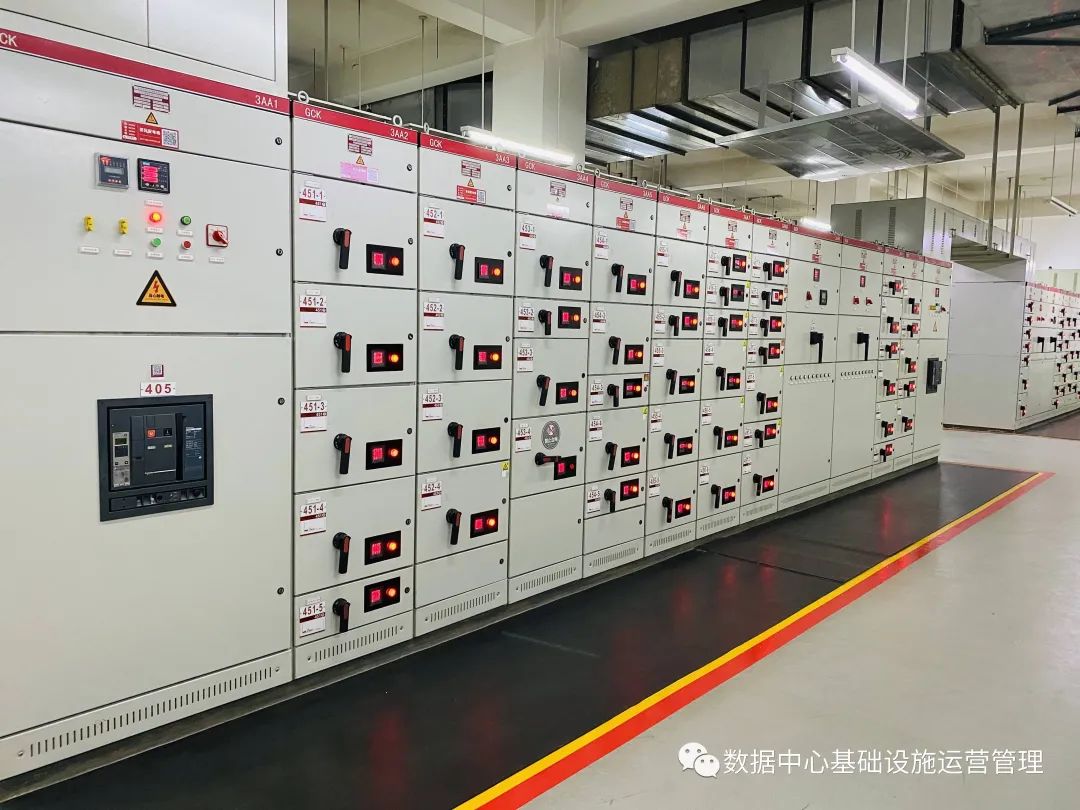
In the early stages of the information industry, technology was not advanced enough, and data rooms were relatively small, usually only set up on a certain floor of a building, sharing a set of power supply and distribution systems with office and power loads. The uninterruptible power supply for data rooms only needed to connect to the building’s 0.4 kV distribution device, and daily maintenance was performed simply through manual methods. The power supply for data rooms involved only a few low-voltage circuit breakers and isolation switch operations, with daily inspections mainly focusing on the main distribution cabinet, uninterruptible power supply, and battery operating conditions. Maintenance personnel only needed basic knowledge of low-voltage distribution.
As times progressed, the demand for data rooms surged, and standalone data centers or data parks became the norm. High-power cabinets gradually became standard in data rooms, leading to a rapid increase in power loads, and the voltage levels of power supply systems rose to 10 kV dedicated lines, even reaching 110 kV and 220 kV dedicated lines. The power supply and distribution systems in data centers now include high-voltage distribution devices, transformers, low-voltage distribution devices, uninterruptible power supplies, or high-voltage direct current power supplies, with capacities and quantities continuously increasing, making the systems more complex. For the ever-evolving power supply and distribution systems in data centers, traditional manual operation and maintenance methods are becoming inadequate, and their shortcomings are becoming increasingly apparent. High labor costs, difficulties in interconnectivity between various power supply and distribution devices, lack of real-time control, low levels of intelligence, and poor safety and reliability are all issues that need addressing. Moreover, in the spatial dimension, operation and maintenance cannot achieve comprehensive supervision, leading to phenomena such as false reports, missed reports, and concealment by maintenance personnel; in the temporal dimension, operations and maintenance are often delayed, resulting in inaccurate and untimely responses to risks and faults due to data lag. Particularly during the pandemic, data centers using manual and traditional management methods faced significant operational impacts due to maintenance personnel being unable to return to work as scheduled.
2. Significance of Intelligent Operation and Maintenance of Power Supply and Distribution Systems in Data Centers
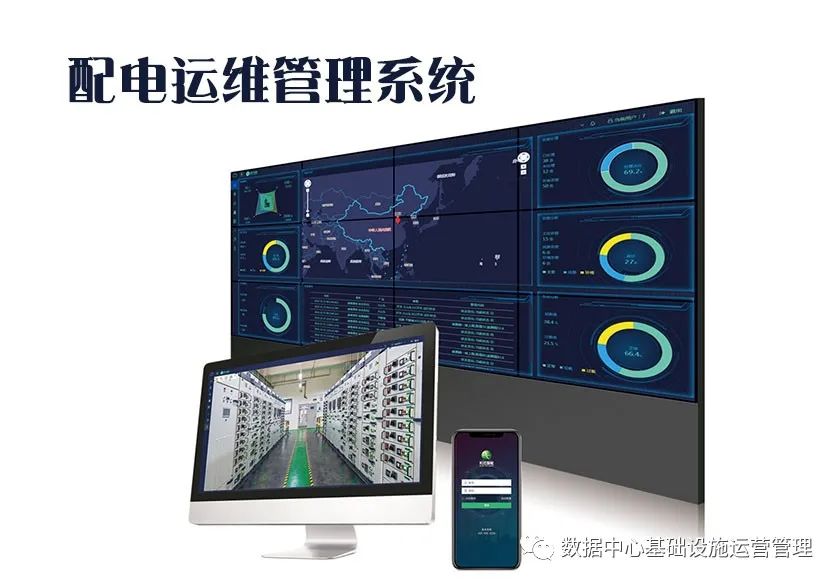
Today, advanced technologies such as intelligent monitoring, the Internet of Things, and big data are maturing, creating conditions for establishing a scientific intelligent operation and maintenance model for power supply and distribution systems in data centers. By setting monitoring points at various links and nodes of the power supply and distribution system, collecting electrical parameter information, and uploading it to the backend, maintenance personnel can view the operating conditions of each device from the control room, reducing the frequency of on-site inspections and significantly lowering labor costs.
The application of advanced intelligent operation and maintenance technologies in power supply and distribution systems not only organically integrates technology, data, and processes, improving overall work efficiency but also contributes to ensuring effective work outcomes. Intelligent operation and maintenance utilize remote telemetry, backend analysis and judgment, and remote control technologies. In the event of an abnormal occurrence in any power supply and distribution system device, standard management processes can be immediately executed to successfully complete work tasks, thus enhancing the level of operation and maintenance management processes. Intelligent operation and maintenance technologies preserve long-term operational data of devices and utilize scientific modeling and big data analysis to provide early warnings for potential faults, locate fault points, and make predictions, greatly improving the operational safety of power supply and distribution systems. Therefore, intelligent operation and maintenance of power supply and distribution systems enhances the intelligence level of data center operations and effectively addresses a series of operation and maintenance issues arising from the expansion of data center scales.
3. Content of Power Supply and Distribution Systems in Data Centers
The operation of IT equipment in data centers is characterized by continuity, with sustained high power loads. During the design process of their power supply and distribution systems, it is necessary to comprehensively analyze the nature of the electrical load and the surrounding area’s power supply. At the same time, data centers have high requirements for various electrical parameter indicators and power supply reliability, and the configuration of each link in the power supply and distribution system should facilitate the stability of system operation and the orderly functioning of electrical energy transmission and distribution to ensure the normal operation of data centers.
Large data centers have high loads, and from an economic perspective, backup power supply systems generally adopt medium-voltage generator redundancy schemes. Medium-voltage generators and medium-voltage parallel systems are uniformly arranged in independent power centers. Medium-voltage distribution devices, transformers, low-voltage distribution devices, uninterruptible power supplies, or high-voltage direct current power supplies are arranged in the central areas of each floor of the data center, close to load centers, with distribution rooms, power rooms, battery rooms, etc. Data center rooms are mainly located on both sides of each floor, and the main distribution equipment includes micro-module cabinet top dual-bus distribution units, end air conditioning distribution boxes, etc.; the first floor of the data center also includes distribution rooms for chillers and conventional building electrical distribution boxes. The power supply and distribution systems in data centers have characteristics of numerous devices and wide distribution, leading to extensive daily maintenance management content.
Digital industries such as cloud computing, big data, and fintech have high operational requirements for data centers. The construction of data centers is mainly implemented according to the A-level data center construction requirements outlined in the “Data Center Design Specifications,” where the power supply and distribution systems should have fault tolerance capabilities, providing dual-loop power supply from front to end; equipment such as transformers, uninterruptible power supplies, high-voltage direct current power supplies, and generators are configured with redundant capacities for mutual backup operation; at the same time, considering the economic feasibility of data center construction investments, uninterruptible power supplies and generators adopt multi-module parallel connection methods to save costs and facilitate future partial replacements. Therefore, the power supply and distribution systems in data centers also feature multiple subsystems and complex wiring, where human errors or misjudgments can lead to operational accidents, resulting in significant economic losses. Consequently, switching between various power supply modes and handling fault operations require extensive logical analysis and process management before implementation, placing immense pressure on maintenance personnel.
4. Principles of Intelligent Operation and Maintenance Application for Power Supply and Distribution Systems in Data Centers 4.1 Safe Operation and Maintenance The application of intelligent operation and maintenance in power supply and distribution systems should be based on safety, emphasizing the establishment of safety management mechanisms, implementing data classification and grading, protecting important data, assessing data management maturity, and actively organizing the secure sharing, collaborative handling, algorithm regulation, and scientific modeling of processes for each subsystem’s data. Continuous enhancement of key technologies for data security is necessary to timely mitigate significant data security and operational safety hazards. 4.2 Scientific Operation and Maintenance The intelligent operation and maintenance of power supply and distribution systems should utilize advanced intelligent technologies to reduce maintenance costs and avoid risks caused by human factors. The intelligent operation and maintenance system should optimize and reduce manual inspection tasks, monitor equipment operating conditions in real-time, alert for potential risks in equipment operation, promptly detect and address faults, and establish standardized processes to orderly implement automated power control modes, ensuring the rational and reliable use of electrical resources. 4.3 Economic Operation and Maintenance, Green Energy Saving Data centers consume a large amount of electricity, contributing significantly to social carbon emissions. Against the backdrop of the “dual carbon” initiative, the national requirements for energy efficiency indicators (PUE) in data centers continue to rise, and the green development of data centers faces significant challenges. The intelligent operation and maintenance of power supply and distribution systems in data centers should adhere to green development principles, focusing on innovation and leadership. The intelligent operation and maintenance system should pay attention to energy consumption analysis of each subsystem and each power supply link, determine the most economical operational mode for the data room, propose micro-module IT equipment layout plans, and control power consumption intervals; it should intelligently sense external natural conditions to reasonably control the number of air conditioning systems in operation through distribution switches or directly utilize fresh air systems for natural cooling; based on peak and off-peak electricity prices, it should intelligently store energy and cooling, implementing staggered adjustments to the operational modes of data center infrastructure, significantly saving electrical energy; and intelligently control the lighting system, using advanced sensing technologies to shut down unnecessary auxiliary equipment. 4.4 Development Adaptability The intelligent operation and maintenance system should adopt an open information system architecture, utilizing standard communication protocols to meet the needs for digital upgrades of systems and further optimize the overall functionality of the system, adapting to the development needs of data centers.
5. Applications of Intelligent Operation and Maintenance in Power Supply and Distribution Systems 5.1 Intelligent Monitoring and Energy Saving of Power Supply and Distribution Systems
The power supply and distribution system in data centers includes high-voltage switchgear, transformers, low-voltage distribution cabinets, uninterruptible power supplies, or high-voltage direct current power supplies, as well as end distribution boxes, with numerous devices distributed across various functional areas of the data center, making daily maintenance challenging.
① The daily inspection cycle is relatively long due to the large capacity of the power supply and distribution system and the numerous devices, primarily using a multi-layer configuration method, resulting in dispersed characteristics of the equipment. If manual inspections are used, they will generate substantial maintenance budgets.
② Large data centers’ power supply and distribution systems contain many subsystems, and the connections between these systems are relatively weak. ③ The difficulty of early warning is high, making it challenging to promptly identify safety hazards. After the data center is put into operation, if maintenance personnel continue to use traditional methods to assess system status, they cannot fulfill the early warning function, and the reliability of the power supply and distribution system cannot be guaranteed. ④ After a fault occurs, timely diagnosis is difficult, impacting the restoration to normal operational status. Using traditional power supply and distribution systems, due to inadequate monitoring systems for equipment data collection, when faults occur, manual debugging methods are required, consuming considerable time to eliminate faults, which impacts the operation of the data center. Intelligent operation and maintenance of the power supply and distribution system requires embedding various sensors and sensing devices at each node of the power supply and distribution, along with configuring intelligent meters with communication functions to collect and record parameters such as operating voltage, current, active power, reactive power, and harmonics; simultaneously, a unified platform should be built in the data center’s monitoring room to integrate intelligent monitoring systems, utilizing embedded artificial intelligence technology to combine various intelligent components and digital functions. This not only provides the basic functionalities of the power supply and distribution system but also facilitates remote scheduling, fault diagnosis, and equipment management. During operation, each node collects equipment data in real-time and transmits it to the backend via 485 lines or optical fibers, with the monitoring system closely linking the operating parameters of each link device. By comparative analysis, it determines whether they correspond, judging whether a fault exists at a certain node; the monitoring system can also discover potential risks in the equipment early by comparing historical parameters in the database; concurrently, the intelligent operation and maintenance system can record and analyze energy consumption under various operational modes of the power supply and distribution system and air conditioning system, considering the peak and off-peak electricity pricing situation, proposing scientific energy-saving operational plans for the data center, and achieving reasonable operation of the air conditioning system through control of end distribution switches, ultimately realizing the goal of reducing carbon emissions in data centers. 5.2 Medium-Voltage Intelligent Load Control System Currently, large data centers primarily utilize medium-voltage multi-source power supply, with the operational requirements for the medium-voltage system as follows: ① 10 kV adopts single bus segmented wiring, with two external power sources supplying power simultaneously under normal operating conditions. ② If one external power source loses power, the incoming switch of the faulty power source needs to be opened, and the segmented switch must be closed, utilizing the other external power source to supply all loads of the system. ③ If both external power sources lose power simultaneously, the incoming switch, segmented switch, and all load-side switches must be opened, and both generator power source switches must be closed. After the generator starts and stabilizes, the load-side switches are gradually closed. ④ After one external power source is restored, the power source switch is opened to disconnect the generator power, switching to the external power source, and then the segmented switch is closed to resume power supply from the external power source, issuing a shutdown signal to the generator.
⑤ Once both external power sources are restored, normal operating modes can be resumed.[6]
Conventional microcomputer comprehensive protection devices for medium-voltage distribution can achieve mutual backup functions for dual power sources. However, the power supply and distribution systems in large data centers have added the functions of starting and switching medium-voltage generators, which require shutting down large-capacity loads in the data center before switching to avoid damaging the generator due to downtime. If the microcomputer comprehensive protection device continues to drive each switch for switching, it will require a large number of intermediate relay components for various operational logical relationships, making secondary wiring complex and increasing many potential fault points, leading to poor reliability. If a fault occurs, leading to multiple power sources being connected, it could cause accidents in the upstream power grid, increasing the difficulty and pressure on maintenance personnel.
During the operation of large data center power supply and distribution systems, it is necessary for the medium-voltage system to have the ability to promptly engage backup power sources while avoiding accidents of interconnected power sources in each circuit, ensuring the stability and safety of the entire system’s operation. The medium-voltage intelligent load control system utilizes programmable logic controllers to enhance the openness, logic, and safety of secondary equipment in the medium-voltage system, significantly improving the level of intelligent operation and maintenance technology in data centers. The medium-voltage intelligent load control system receives information about the state of the medium-voltage system’s external power source and generator parallel system status and connects to auxiliary contact signals of switches. The system automatically analyzes faults, effectively judging the operational status of each point in the medium-voltage system, and quickly outputs the necessary signals to drive the corresponding medium-voltage switches to meet the operational demands of the power supply and distribution system in the data center.
6. Conclusion With the continuous development of information technology, there is a need to further enhance the intelligence of hardware equipment and data models, improving the efficiency of intelligent operation and maintenance for power supply and distribution systems in data centers while reducing overall costs, laying the foundation for the development of unmanned and automated operations.
References:
[1] Li Chengzhang. Usability Graded Management of Power Supply and Distribution Systems in Data Centers [J]. Electrical Applications, 2018(20):4-6.
[2] Fan Ruoming. Design and Application of Power Supply and Distribution Systems for the New Media Core Data Room of Nanjing Broadcasting Group [J]. Modern Television Technology, 2022(10):156-159.
[3] Liu Yan, Zhang Yi, Qin Weiyong, et al. Research on the Construction of Integrated Intelligent Distribution Network Monitoring Systems Under the Background of New Engineering [J]. China Education Informatization, 2021(1):87-92.
[4] Yang Weili. Design of Power Supply and Distribution Systems in a Certain Data Center Project [J]. Real Estate World, 2021(5):128-130.
[5] Ding Xuepeng, Wu Panfeng. Design of 20 kV Power Supply and Distribution Systems and Diesel Generator Sets in Data Centers [J]. Electrical Applications, 2020(5):89-93.
[6] Chen Jianxiu. Thoughts on the Direction of Power Supply and Distribution Based on Big Data Applications in Data Centers [J]. Communication Power Technology, 2019(1):249-251.
Unauthorized reproduction is prohibited.WeChat Official Account: Data Center Infrastructure Operation Management
-END-
Extended Reading Links:
☞ Free Access to Data Center Infrastructure Operation and Maintenance Materials☞ Collection of Data Center Infrastructure Operation and Maintenance Materials☞ Compilation of Data Center Related Standards and Specifications (with Download Method)☞ Construction Process and Standards for Data Centers (with Download Method)☞ Data Center Infrastructure Engineering Acceptance Inspection Checklist – Excel Template☞“Training Materials for Data Center Infrastructure Operation and Maintenance Engineers”☞ Summary of Electrical Calculation Excel Templates☞ “Video Tutorial on Data Center Infrastructure Planning and Design“☞ Compilation of Data Center Standards and Specifications
☞ Summary of Training for Data Center Infrastructure Operation and Maintenance Engineers
Disclaimer
The content is sourced from the internet, public media, etc., and is intended to convey more information. The content is for reference only. Readers should not simply accept the information from the official account in place of their independent judgment and should make their own decisions and assume risks. This official account does not bear any responsibility for any losses caused by the use of the content contained herein. The copyright of reproduced articles belongs to the original author or organization. If there is any infringement of copyright, please notify us, and we will delete it within 24 hours!