In the past decade, it has been a decade of the industrial internet, a decade of theoretical development and practical exploration. Technology and application system suppliers are continuously merging and innovating, committed to providing more integrated and intelligent systems to connect various aspects of enterprise operations and production management.As a frontline solution for manufacturing enterprises, MES has developed rapidly in recent years. MES enables the collection and tracking of production data for products and components, management of operators, real-time monitoring of production status, and quality control. This enhances the execution capability of ERP plans, allowing production instructions to be effectively executed on the shop floor, achieving low-cost, visual management, and has become the preferred choice for manufacturing enterprises to cope with market challenges.For manufacturing enterprises, responding to market changes and meeting customer personalized needs ultimately requires a quick response and adjustment of production processes. Therefore, MES, as a management and control tool for frontline production, is crucial. More importantly, MES must seamlessly connect with management systems to achieve a closed loop from demand to production to delivery.
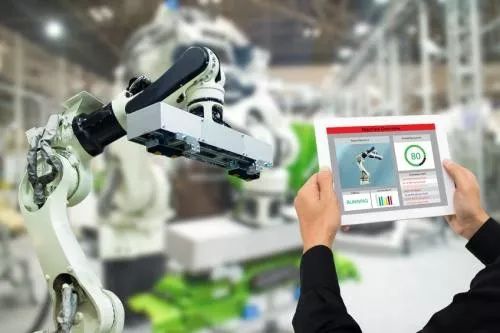
Manufacturing Execution Systems (MES) for Smart Factories
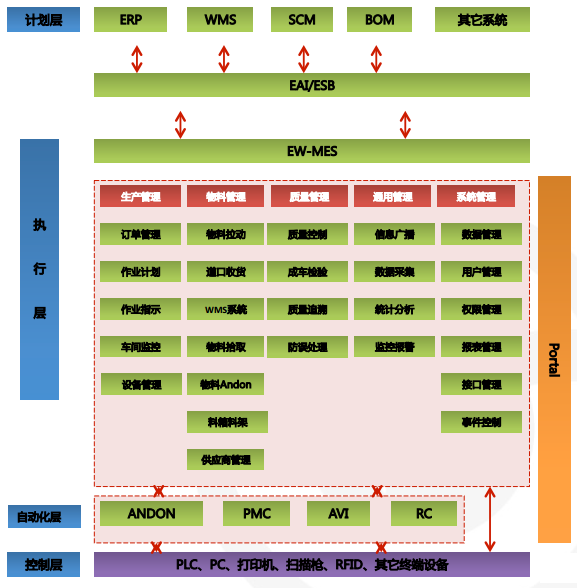
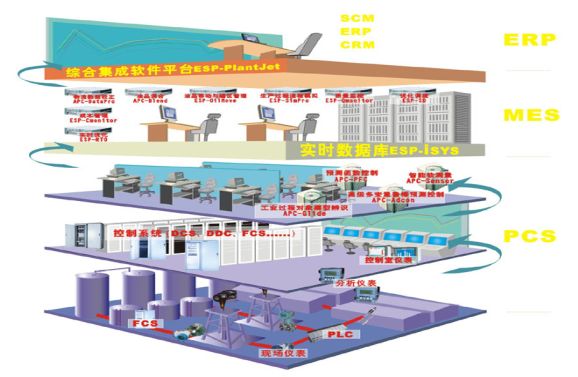
One characteristic of a “smart factory” is the reconfigurability of production systems, which changes the attributes and parameters of related production systems. Production management systems (such as production control) must consider this, so new production management systems need to continuously update the current status of affected production systems. The affected systems include not only local systems but also various other systems throughout the production process. The resources of the entire supply chain must be visible and completely transparent in terms of availability. To achieve intelligent production, transparency must first be established.MES (Manufacturing Execution System) plays a bridging role in the entire production process of an enterprise, situated between ERP and the bottom-level automation of the workshop. It is an essential information technology tool for enterprises to achieve lean manufacturing and flexible production.
What is MES?
MES stands for “Manufacturing Execution System,” and it can be translated into Chinese as “制造执行系统” or “生产实施系统.”MES is a new concept proposed by the American manufacturing research and production management community in the 1990s regarding production organization and management. According to the definition by MESA International, “MES can optimize the management of the entire product production process from order placement to product completion through information transmission, respond and report to real-time events occurring in the factory promptly, and provide corresponding guidance and processing with current accurate data.”
Background of MES Development
(1) The Need for Development of Workshop-Level Production Management SystemsBefore MES appeared, workshop production management relied on several independent single-function software, such as workshop operation planning systems, process scheduling, work hour management, equipment management, inventory control, quality management, and data collection software. These software lacked effective integration and data sharing, making it difficult to achieve overall optimization of the workshop production process.To improve the automation and intelligence level of workshop production process management, it is necessary to integrate the management of the workshop production process, achieve information integration and sharing, thereby achieving the overall optimization of the workshop production process.(2) The Need for Further Development of MRPII/ERPMRPII/ERP emphasizes the planning of enterprises, and good planning should be based on real-time, accurate, and comprehensive information.
MRPII/ERP cannot timely obtain real-time information from the workshop production site, causing a lack of synchronization between “production planning” and “production information,” greatly undermining the rationality of the plans.
Therefore, it is necessary to establish a real-time connection between “production” and “planning.”However, MRPII/ERP itself cannot directly connect with the control level of the production site, thus MES emerged as a bridge connecting the two.
(3) MES Bridges the Gap Between Planning and Control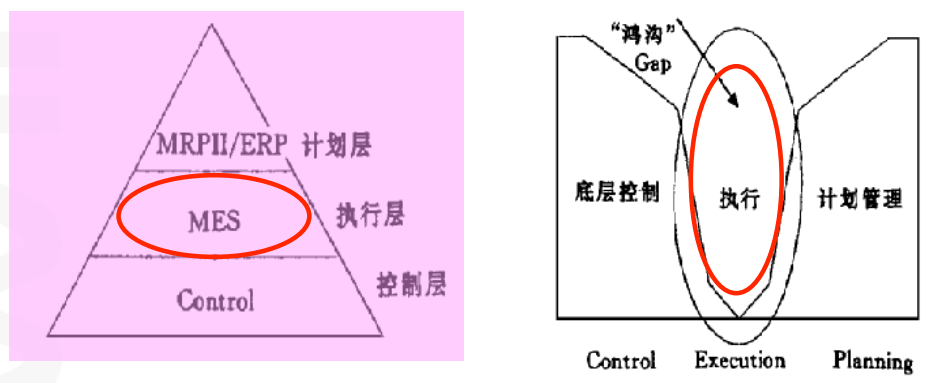 (4) The Need for Development of Other Advanced Manufacturing and Management ModelsComputer Integrated Manufacturing Systems (CIMS): The need for automation of workshop-level manufacturing processes and management, as well as integration with other subsystems;JIT/Lean Production: The need for implementing “zero inventory” control on the production site;Networked Manufacturing: The need for informatization, integration, and networking of workshop production processes and data management;Agile Manufacturing: The need for integrated, intelligent, and flexible workshop production processes. (5) The Development of Related Technologies Provides Technical Support for MESThe development of computer networks, databases, and computer software technologies: Internet/Intranet/LAN/Field Bus/MAP, large distributed databases, distributed object computing, soft bus, and component technologies;Automatic control and sensing detection technologies: PLC/DCS/SCADA, smart instruments, digital sensors, networked CNC technology, etc.;The popularization and development of computer-aided production management technologies: production planning and control, equipment management, tool management, quality management and control, process management, and workflow technologies.
Comprehensive Benefits of MES
Business Synergy. This makes the traditional production process “black box” transparent, not only improving the degree of information integration of enterprises but also greatly enhancing the “synergy” between business departments;Plan Adaptability. This not only makes the production plans formulated by enterprises more operable, ensuring more effective execution of plans, but also allows enterprises to further improve the precision and adaptability of plans under conditions that guarantee plan execution, thus effectively allocating and utilizing limited resources; Cost Reduction Potential. Based on acquiring a large amount of more accurate step cost data, it not only allows enterprises to more precisely calculate and control product costs but also points out directions and methods for reducing product costs;Measurability of Process Performance. By obtaining a large amount of real-time process data, it not only allows enterprises to have a clear understanding of the current state of the production process but also facilitates enterprises to measure process performance based on evidence;Improvement of Process Performance.Based on accumulating a large amount of historical process data, it allows enterprises to quickly establish process targets and also facilitates enterprises to implement process improvements through data analysis;
The Role of MES Systems in Smart Factories
The functions of MES systems in the construction process of smart factories are mainly reflected in four aspects: networking functions, transparent management functions, paperless functions, and precision functions. These four aspects are also the ultimate goals of smart factory construction. The key to achieving these functions is that the MES system must be built on the basis of big data collection from various production links in the factory, achieving comprehensive tracking and analysis of data through powerful cloud computing capabilities, ultimately realizing intelligent factory solutions.
First, achieving networking in smart factories. With the continuous development of information technology, the industrial internet has become an important driving force for industrial development. The MES system can enhance the networking level of the factory through the internet. It integrates workshop equipment, enabling integrated control management of workshop equipment and information exchange between equipment and computers, changing the traditional single-machine operation mode, linking the entire production system together, helping enterprises optimize resource allocation and reorganization, reducing labor costs, and greatly improving equipment utilization. Secondly, enhancing the transparent management capability of smart factories, the MES system monitors workshop production equipment in real-time through the internet, understanding the production status of workshop equipment and the working status of workers during the industrial production process. This enables enterprises to have a clear view of the status of smart workshop equipment and processing information, improving management transparency, helping managers formulate objective production plans, and dispatching them to the production space, achieving scientific management of production. Thirdly, achieving paperless operations in smart factory workshops. By introducing the MES system, smart factories can enhance their paperless capabilities. Computer network technology and database technology allow the production processes in smart factory workshops to be uniformly managed over the internet, realizing digital production. During production, production information is transmitted in real-time in the form of data, avoiding the loss of paper documents during transmission, ensuring timely backups of data during transmission, enhancing information storage efficiency while guaranteeing information security, and achieving rapid operations. Finally, improving the precision of production in smart factories. Today’s enterprises no longer pursue simple production processes but have higher demands for precise management of production. By utilizing MES technology, quantitative production processes can be achieved. By setting more precise production ratios through computers, factories can achieve precision production.
The Trend of MES System SaaS in the Industrial Internet
The future of equipment networking for manufacturing equipment companies serves two purposes: one for equipment maintenance and the other to provide equipment status data for customers (manufacturing enterprises) during the production process. The equipment of manufacturing enterprises needs to be integrated with enterprise management systems, and in the future, data from the industrial internet platform will be networked, with the foundation of data coming from the equipment, and MES bridges the gap between equipment data and operational data.The future development path of the industrial internet platform involves two approaches: one is platform companies, which must first achieve MES functionality (referring to manufacturing-type enterprises; if equipment operation and maintenance enterprises are the focus, the first step is to achieve equipment monitoring); the other approach is the SaaSification of MES functionality.The platform + MES functionality means implementing MES on the platform, first establishing the SaaS framework to complete the MES functionality; or the SaaSification of MES, providing MES as a service through the platform. Regardless of the path, MES will eventually have SaaS capabilities (current MES functionalities will be layered; management-based MES functionalities will be SaaSified, while functionalities requiring fast and timely data processing will be on the edge computing side, but a portion of functionalities will certainly be SaaSified).SaaSification of MES is a major trend. However, the SaaSification of MES is a long-term process that requires many foundational environments to be established. Without this foundation, the SaaSification of MES carries significant risks.Initially, enterprise software was project-based, realized through software development, where the success of software projects depended on the project team; some general functionalities of projects formed products, leading to packaged enterprise applications. Enterprises vary widely, even within the same industry and of the same scale, so the popular model in the enterprise application software industry is packaged software + consulting implementation teams to complete the process. Although packaged software reduces the risks of purely project-based development, the differences in effectiveness caused by inconsistent service team levels and the scarcity of service teams restrict the scalability of enterprise application software.Enterprise application software companies will provide services with common processes and similar functionalities in a SaaS model, lowering the cost threshold for users (early investment is low, pay-as-you-go), and reducing the technical capability threshold (enterprises do not need to establish their own server rooms, lowering the technical threshold for system operations and maintenance). This will promote more enterprises to use SaaS software.SaaS software needs standardization, allowing the same functionality to serve more enterprises. Only with scale effects can profitability be achieved at lower charges.The SaaSification of MES functionalities must first be generalizable, suitable for most users; at the same time, it needs to have a certain standardization to achieve scalability.The MES in the era of the industrial internet may redefine itself, extending beyond the current internal personal and organizational scope in collaborative manufacturing to connect with suppliers and customers. In terms of manufacturing intelligence, it will not be limited to collecting, analyzing, and presenting data but will further achieve real-time analysis on-site, collaborative intelligent decision-making, and timely adjustments to the manufacturing execution process. The Manufacturing Execution System will evolve into a Manufacturing Excellence System. The next decade will undoubtedly be a decade of practical and rapid development of the industrial internet. With the development of SMAC and M2M technologies, enhancing and expanding MES to meet new customer demands and market competition will be crucial for manufacturing enterprises.
Reprinted from the Sensor Technology public account