Edge computing systems & edge AI computers & edge AI systems (brain)
- Closed OODA LoopA four-stage decision-making framework consisting of Observation, Orientation, Decision, and Action
The OODA Loop is a decision-making framework proposed by U.S. Air Force Colonel John Boyd, with the four stages abbreviated in English as follows:
-
Observe (Observation)
-
Orient (Orientation)
-
Decide (Decision)
-
Act (Action)
This loop emphasizes rapid perception, analysis, decision-making, and execution in dynamic environments to gain a competitive advantage.
-
ISR & POL
ISR and POL are commonly used abbreviations in military, intelligence, and security fields, with the following specific meanings:
-
ISR (Intelligence, Surveillance, and Reconnaissance)
-
Intelligence: Collecting, analyzing, and utilizing information to support decision-making.
-
Surveillance: Continuously observing targets or areas to gather information.
-
Reconnaissance: Actively probing targets or environments to obtain specific data.
ISR systems are widely used in military, homeland security, and counter-terrorism operations, such as drone reconnaissance, satellite monitoring, and signals intelligence (SIGINT).
SIGINT is a commonly used abbreviation in military and intelligence fields, representing:
SIGINT = Signals Intelligence
Refers to the technical means of obtaining intelligence by intercepting and analyzing the electronic signals of adversaries or targets, mainly including the following two categories:
-
COMINT (Communications Intelligence)
-
Intercepting and analyzing communication content (e.g., radio, satellite communications, encrypted calls).
-
For example: Decoding enemy encrypted radio stations, eavesdropping on phone calls.
ELINT (Electronic Intelligence)
-
Collecting and analyzing non-communication electronic signals (e.g., radar, missile guidance systems, electronic warfare equipment radiation signals).
-
For example: Identifying enemy radar frequencies or electronic characteristics of missile launch systems.
-
POL (Pattern of Life)
-
Pattern: Behavioral patterns of targets or individuals.
-
Of (of)
-
Life (life/activity)
POL analysis involves long-term monitoring of a target’s daily activities (e.g., travel routes, communication habits, social networks) to predict future behavior or identify anomalies.
Related Applications
-
AI-Enhanced ISR: For example, Resecurity’s ContextAI analyzes threats using generative AI to enhance decision-making efficiency in C4ISR (Command, Control, Communications, Computers + ISR)..
-
POL Behavior Recognition: For example, the AI system from Skunk Works detects subtle changes in targets using multimodal sensor data (infrared, LiDAR) to predict anomalous behavior..
-
Predictive Targeting: For example, the PreVAIL system uses machine learning to predict vehicle trajectories, optimizing space-based ISR missions..
If you need more specific cases or technical details, we can further discuss related systems (e.g., drone ViDAR detection or skeletal behavior analysis).
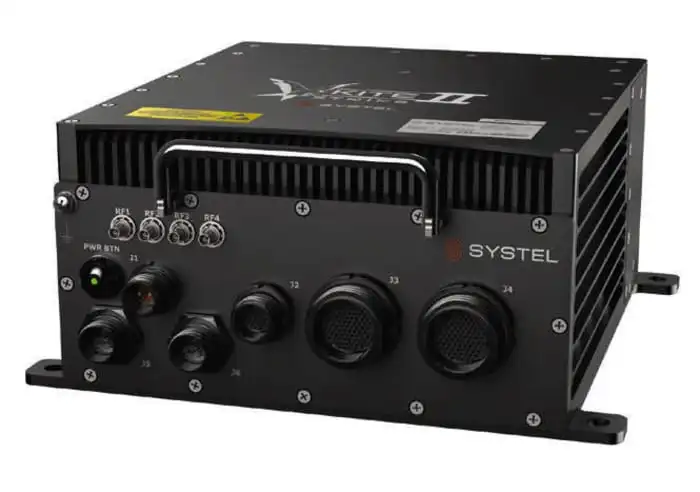 Kite Strike II is a next-generation rugged small form factor (SFF) embedded computing solution that achieves significant advancements in edge deployment processing technology and capabilities. It integrates the world’s most powerful embedded AI computing engine, the NVIDIA Jetson AGX Orin SOM, designed for demanding computer vision and sensor fusion data processing workloads in edge AI and autonomous critical mission applications.As drones incorporate more intelligent features, especially supporting AI-enabled ISR and targeting capabilities (including target detection and recognition, Pattern of Life (POL) and behavior recognition, as well as predictive analytics), the demand for more powerful edge computing that can capture and process data “locally” at the edge will grow.
Sending data (including time-sensitive intelligence data) back to command centers for analysis will no longer be feasible, as this could delay decision-making processes and potentially lead to mission failure. Similarly, platform-level autonomous decision-making will eliminate the need for continuous human intervention in operations.
Edge computing will achieve this by reducing reliance on centralized headquarters or control stations, which are vulnerable to attacks in contested environments and where bandwidth is limited or unavailable. This enables tactical commanders or the platform itself to make faster decisions (often in real-time), translating into operational advantages.
Since edge computers must operate on the front lines, they must be robust enough to withstand the harsh environments that drones will encounter and reliable enough to endure the high pace of major combat operations. This means they must meet or exceed military-grade environmental standards, such as MIL-STD-810 (covering temperature, vibration, shock, altitude, humidity, as well as ruggedization specifications for sand and water resistance) and MIL-STD-461 (covering electromagnetic interference (EMI) and compatibility (EMC) ruggedization specifications).
Furthermore, to maximize interoperability, upgradability, and cost efficiency, edge computers need to be designed using a modular open systems approach (MOSA) according to open standards.
Edge computers also need to be designed according to the limited size, weight, and power (SWaP) constraints on UAS platforms, which have been engineering challenges faced by drone manufacturers since their inception. Traditionally, advanced AI processing requires larger processors and more power, which is difficult to achieve on power-constrained platforms like UAS with extremely limited space.
Latest Edge Computers
The latest generation of military edge computers can now deliver exceptional performance in increasingly smaller form factors, especially in data-intensive applications such as edge AI and processing. This is particularly important in the UAS field, where SWaP considerations are critical, and the demand for AI-supported systems and autonomy is growing.
The latest MIL-SPEC rugged embedded computers leverage the latest commercial off-the-shelf (COTS) technology, capable of integrating sensor capture/encoding, processing, networking, storage, control, and distribution into a single powerful and highly configurable line-replaceable unit (LRU).
These computers also utilize system-on-module (SOM) technology, integrating key components onto a single printed circuit board, making them ideal for embedded and edge applications.
SOMs can integrate GPUs, CPUs, and memory, making them particularly suitable for tasks requiring powerful processing capabilities, such as video analysis using machine learning algorithms, and allowing multi-sensor platforms like drones to analyze information at the source. High-end SOMs can perform very complex AI and robotic tasks, although this comes with higher demands in terms of cost and SWaP.
These components also utilize next-generation interfaces to ensure high-speed and efficient data transfer, which is critical as the volume of data generated by multiple drone sensors continues to increase. These interfaces include PCI Express, which has now entered its fifth generation (PCIe 5.0), and as more components become compatible, Systel is rolling out this interface.
Kite-Strike II is a miniaturized, MIL-SPEC level military-grade embedded mission computer developed by Systel, specifically designed for edge AI and autonomous mission processing scenarios.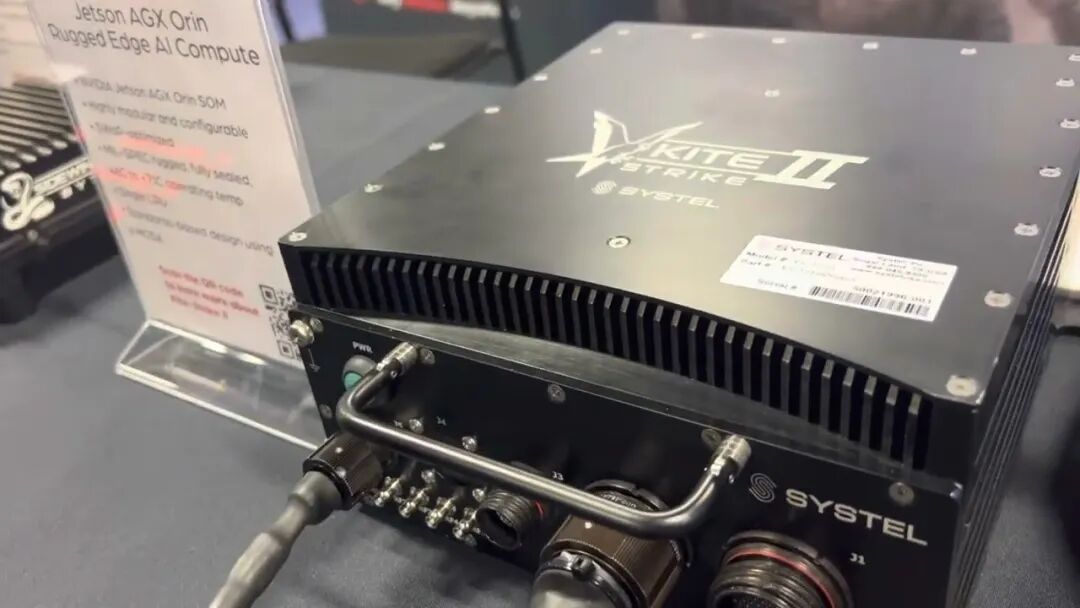
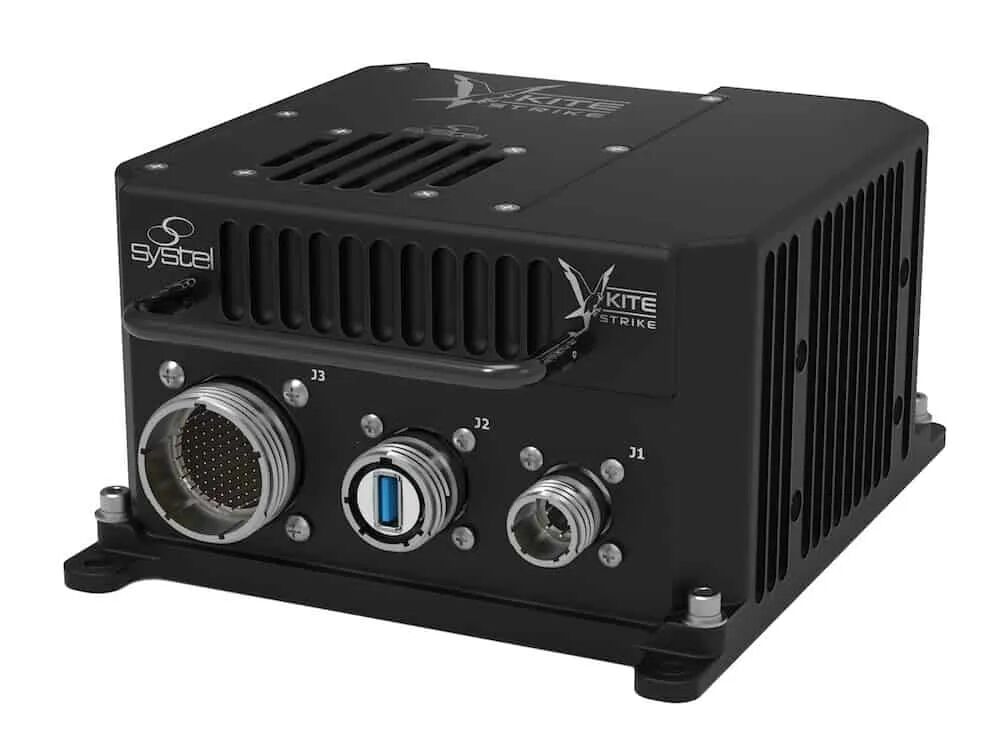
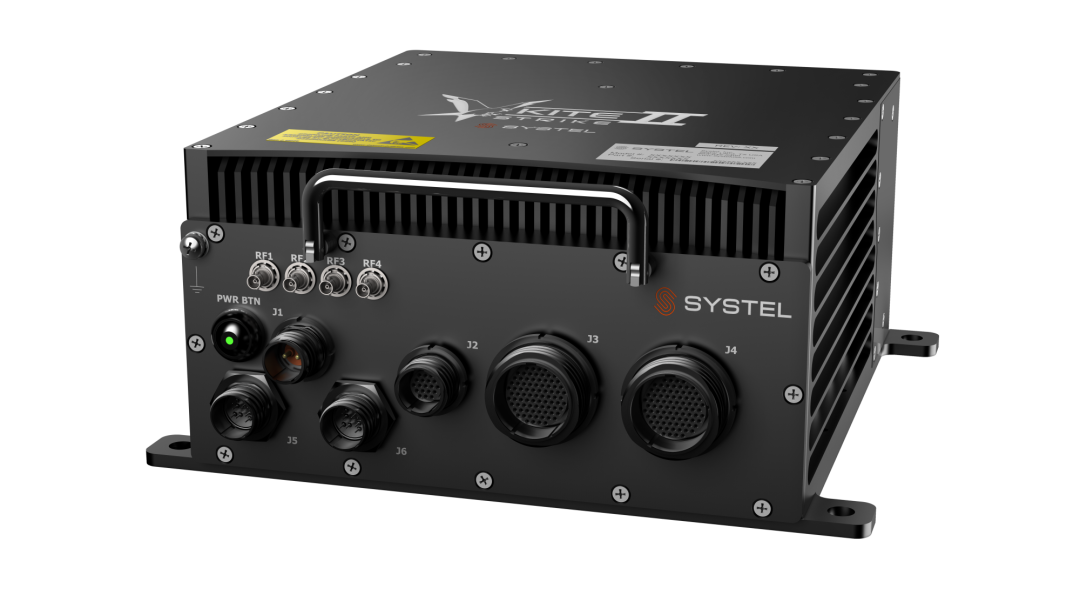
Two Major Versions:
1. Jetson AGX Orin Version (Model EC7210)
-
Equipped with NVIDIA Jetson AGX Orin SOM, featuring up to 275 TOPS of AI inference performance.
-
Includes various high-density I/O: Multiple GbE (optional 10 GbE copper or fiber expansion), USB 3.0/2.0, CAN FD, serial ports, HDMI, etc.
-
Supports flexible expansion, including video capture/encoding, ARINC 429, MIL-STD-1553, GPS/LTE, etc.
2. Intel x86 COM-HPC Version (Model EC7220)
-
Equipped with next-generation Intel x86 COM-HPC module, supporting Windows and Linux systems for running complex control, communication, or sensing systems.
-
Rich IO interfaces: 2.5 GbE (with TSN support), optional 10 GbE, USB 3/2, serial ports, dual HDMI, internal M.2/mSATA, external U.2 storage options.
Key Features
-
Rugged and Durable: Compliant with MIL-STD-810H, MIL-STD-461G, MIL-STD-1275E/704F certifications, IP67 dust and water resistant, operating temperature range from −46 °C to +65 °C (or +71 °C).
-
SWaP Optimized Design: Dimensions approximately 7.87″ × 8.62″ × 4.25″, total weight about 8.8 lbs, power consumption baseline 120 W, maximum up to 220 W.
-
Highly Modular: Adopts a Modular Open Systems Architecture (MOSA), using replaceable expansion slice cards for customized I/O or functional expansion.
-
Industry Recognized: Received the 2023 Military & Aerospace Electronics Innovation Award Platinum Honor, and the AUSA 2022 Best in Show Four-Star Award in the military-grade embedded computing category.
Use Cases
-
Edge AI Inference: The Jetson Orin version is ideal for drones, unmanned vehicles, C5ISR, target recognition, and complex sensor fusion scenarios.
-
Control and Communication Tasks: The x86 version is more suitable for integrating control systems, communication devices, sensor management, and other non-AI compute-intensive but stable and reliable application scenarios.
-
Adapting to Space-Constrained Environments: Particularly suitable for integration into tactical platforms, airborne or ground-based UGV systems, meeting low volume, low power, and high-performance requirements.
Kite-Strike II is a high-performance edge computing platform designed for deployment in harsh environments, offering two different chip architecture options (AI Orin and controllable stable x86), with strong modularity and expansion capabilities. Whether for AI inference-intensive tasks or control and communication management applications, it features a rugged, compact design that meets strict military standards.