 The automotive industry is undergoing a major transformation not seen in a century. As the dual-carbon goal, dominated by green energy, meets technological changes driven by cloud computing, artificial intelligence, and edge computing, the electrification and intelligence of the transportation sector has become a hot topic of the era.
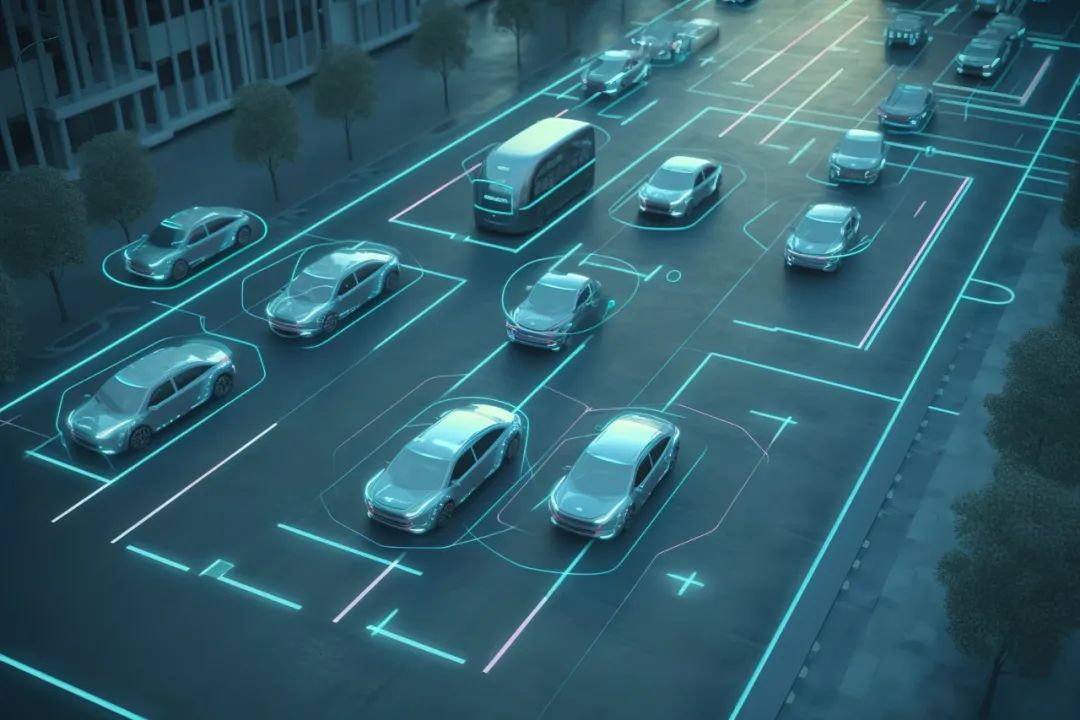
Under the influence of trends such as hardware intelligence and software-defined vehicles, the transformation process of automobiles is accelerating rapidly. The acceleration of autonomous driving is a clear example—driven by multiple factors including technology, market, and policy, the industrial chain supporting autonomous driving is becoming increasingly mature, and “getting on the road” is transitioning from a dream to reality.However, for high-level autonomous driving to “get on the road”, the evolution of the vehicle alone is far from sufficient. Transitioning from single vehicle intelligence to vehicle-road coordination is an inevitable trend. This requires vehicles to have strong onboard computing power, high-precision sensors, and operating systems, and it also relies on the comprehensive enhancement of roadside perception, computing, and communication capabilities, making systematic upgrades to edge computing infrastructure urgent.From the perspective of roadside infrastructure, the leap in performance, reliability, and the combination of hardware and software of edge computing infrastructure cannot be achieved overnight; suitable breakthroughs must be identified to achieve significant results. Against this backdrop, the emergence of the roadside computing unit for vehicle-road coordination is timely.Recently, at the edge computing conference hosted by Inspur Information, Inspur and Baidu jointly released the first generation of the roadside computing unit for vehicle-road coordination (RSCU) aimed at smart transportation scenarios, leveraging both parties’ strengths in infrastructure, operating systems, algorithms, and applications. This product’s flexible computing design can meet the computing power requirements for high-level autonomous driving applications from L2 to L4, and supports Baidu’s open and compatible Zhilu OS operating system, connecting various upper-layer scenarios. It can fully perceive the status of traffic lights, cameras, LiDAR, road signs, and weather stations at a two-way 8-lane intersection, and has already been deployed for testing in cities like Beijing and Wuhan.
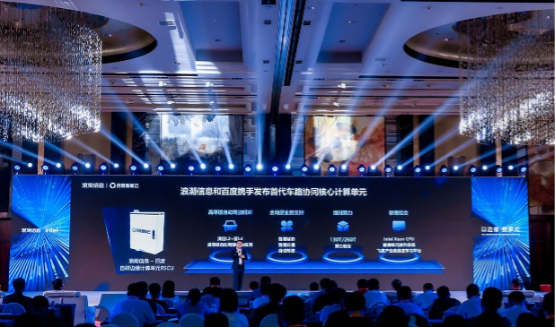
It is not hard to see that the emergence of the roadside computing unit RSCU is a clever solution to the vehicle-road coordination “chess game”, possessing unique pioneering value for the actual implementation of smart transportation, and exploring a new path for the intelligent leap of edge computing infrastructure.To solve the challenges of vehicle-road coordination, we must start with edge computing.In fact, the concept of vehicle-road coordination did not begin with autonomous driving, but originates from China’s transition from a major transportation country to a strong transportation nation, where the factors of people, vehicles, and roads have multiplied, posing unprecedented challenges for traffic management.Statistics show that China’s total highway mileage has exceeded 5.35 million kilometers, with the number of motor vehicles reaching 420 million and over 510 million drivers. Every year, more than 34 million new motor vehicles are registered, leading the world in both total and incremental numbers. The large scale and high growth rate are highlights in transportation development, but also challenges for travel management, leading to high hopes for smart transportation solutions represented by vehicle-road coordination.Of course, there have been industry disagreements regarding the evolution path of vehicle-road coordination and the role of edge computing in it. The most typical controversy is—how much computing power should be deployed at the roadside edge? For a long time, the mainstream approach was to transmit data from cameras or perception devices to data centers, as the data centers, with their advantages in computing power expansion and cost-effectiveness, seemed more favored than edge computing deployment.However, as various application scenarios for vehicle-road coordination continue to deepen, the computing power deployment model based on data centers has encountered many challenges. On one hand, maintaining real-time performance is very difficult; for example, if a warning is issued to a vehicle about a danger ahead, if the entire link takes more than a few seconds, the warning becomes ineffective, leading to significant safety hazards. On the other hand, the roadside infrastructure suffers from a historical issue of “chimney-style” layout, where various devices and business links operate independently, making it quite difficult to consolidate them.When faced with obstacles, it may be worthwhile to explore alternative paths. Edge computing can not only solve the problems of rapid perception and computation, but also aggregate data at the edge, improving efficiency through business integration and avoiding waste of computing power investment. Importantly, in the context of the rapid development of intelligent technologies like artificial intelligence, the close-to-field characteristics of edge computing give it the opportunity to connect perception, computation, and execution, thus forming a true intelligent entity that advances roadside edge infrastructure to a higher level.The first generation of roadside computing units creates a new path for vehicle-road coordination.Although edge computing has great prospects in the field of vehicle-road coordination, it cannot be achieved overnight and requires a step-by-step exploration on solid ground to overcome various obstacles along the way.As the core of roadside perception, computation, and communication, traditional edge computing infrastructure lacks the capability for distributed computing and AI computation to support the integration, analysis, processing, and decision-making of various data types from cameras, millimeter-wave radars, weather stations, etc., as well as the classification, recognition, transcoding, and compression of video materials. Additionally, to ensure the safe operation of vehicle-road coordination, higher reliability and cloud-edge collaboration capabilities are required for roadside computing units. The time window for promoting the overall upgrade of edge computing infrastructure has now opened.It is evident that “letting smart vehicles drive on smart roads” is gradually becoming a consensus in the industry. The release of the first generation of roadside computing unit RSCU by Inspur Information in partnership with Baidu Intelligent Cloud is a key step toward achieving this goal. Starting from this point, both parties will construct a new foundation that unifies hardware and software for smart cities, intelligent transportation, and high-level autonomous driving across all scenarios, fully releasing the computing power of roadside edge computing.In the past, to cope with the complex and variable environments of rain, snow, and fog across the country, manufacturers typically used roadside edge devices with relatively lower computing power to more easily meet wide-temperature design requirements, but this inevitably led to compromises in performance and reliability.Facing the increasing demand for computing power in vehicle-road coordination scenarios, the roadside computing unit RSCU rises to the challenge, optimizing its design for performance to support up to 260 TOPS of computing power and can support data transmission from traffic lights, cameras, LiDAR, road signs, and weather stations at eight two-way lane intersections. In L2 to L4 high-level autonomous driving scenarios, RSCU can provide more accurate real-time detection and analysis of all elements including people, vehicles, roads, environments, and traffic events, ensuring safety for smart cities and smart transportation.
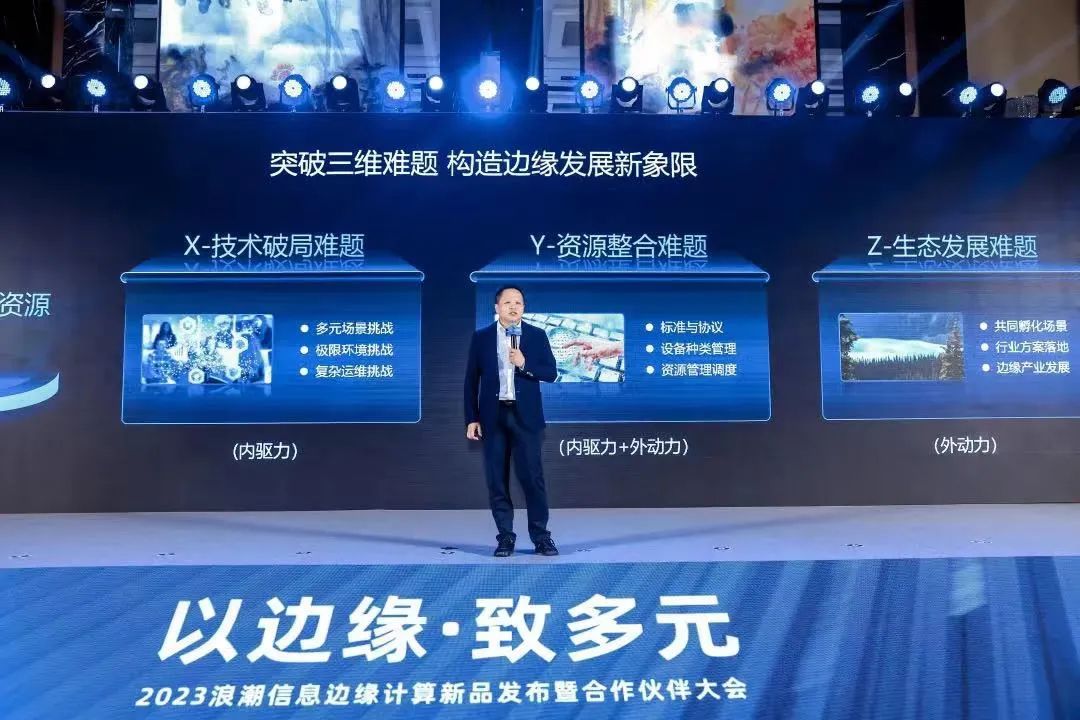
Sun Bo, General Manager of the Edge Computing Product Department at Inspur Information, believes that the increased computing power demands higher requirements for the machine’s power consumption and heat dissipation, necessitating more proactive cooling solutions to succeed. Inspur Information has innovatively designed an isolated cooling system that keeps the core components of the server in a clean internal environment, achieving heat exchange with the outside world through a secondary cooling airflow, resolving the conflict between computing power and power consumption.It is worth noting that similar challenges are not uncommon on the journey of vehicle-road coordination; often, only strong partnerships can help overcome difficulties. Inspur Information and Baidu have been collaborating for over ten years, initially focusing on innovative cooperation around data centers, and in recent years, leveraging each other’s strengths in infrastructure, operating systems, algorithms, and applications to jointly tackle the challenges of vehicle-road coordination, achieving fruitful results.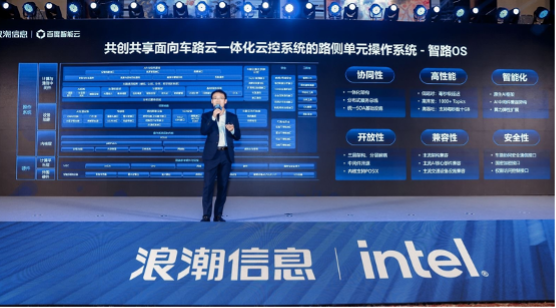 Wang Miao, Chief Architect of Baidu’s Vehicle-Road Coordination, stated that the new roadside computing unit supports Baidu’s open and compatible Zhilu OS operating system, which can better connect upper-layer autonomous driving and vehicle-road coordination application scenarios, featuring six major characteristics: high performance, intelligence, openness, compatibility, collaboration, and safety, laying a solid foundation for the accelerated evolution of vehicle-road coordination. Edge computing: from vehicle-road coordination to the vast ocean of AIGC.As a leader in smart transportation AI technology, Baidu has taken the lead in testing the roadside computing unit RSCU in high-level autonomous driving demonstration zones in Beijing, Wuhan, and Fuzhou, proving its capability to provide full-scene service capabilities from autonomous driving to urban traffic governance, providing strong support for establishing city-level “vehicle-road-cloud integration” demonstration application areas.Testing data shows that the “perception-computation-communication” roadside edge intelligent system built on the first generation of vehicle-road coordination core computing unit can achieve real-time detection and analysis of all elements at intersections, including people, vehicles, roads, environments, and traffic events—location accuracy ≤1.0m (human-machine non-average), speed accuracy ≤1.5m/s (average), recognition precision for traffic object perception location type ≥90%, and roadside object perception end-to-end delay (including communication delay) ≤300ms (average).When a path is successfully traversed, more possibilities often emerge. The breakthrough of edge computing units supporting large computing power in the field of vehicle-road coordination will help it continue to expand in the new environment of computing power explosion. The achievements of the collaboration between Inspur Information and Baidu can also be applied to various rich scenarios such as water conservancy, highways, manufacturing, energy, and power grid inspection, fully opening up the imaginative space of edge computing.From a long-term perspective, in the era of AIGC, the demand for computing power for large model training is growing exponentially, placing unprecedented demands on the adaptability and performance of the computing power environment in edge AI inference scenarios. In the next 5 to 10 years, there will be significant opportunities for innovative products and solutions surrounding edge-side infrastructure, and a bright future for edge computing is worth looking forward to.🖋Author: Guan Jian, Partner and Chief Writer of “IT Creation Record”; previously served as Executive Vice President and Editor-in-Chief of “Computer Business News” and Assistant Editor-in-Chief of “China Computer News”, with over 10 years of media experience.Guan Jian has long focused on the dynamics and trends of the technology industry, engaging in dialogue with over a hundred leaders of high-tech companies and serving as a guest host at numerous technology conferences and forums.—— The More You Look, The More Wonderful It Becomes ——
【IT Creation Record】 focuses on enterprise-level technology ecology, strategies, and business knowledge. You can find the “IT Creation Record” column and the “IT Creation Record · Short Video” column on various mainstream media platforms. If you have relevant content you wish to share, please leave a message on our official account.