Source | Bit NetworkIn recent years, “Internet of Things” has become a familiar high-frequency term, reaching a new peak this year.On April 20, the National Development and Reform Commission (NDRC) first clarified the scope of “new infrastructure,” with IoT listed as an important development category of new infrastructure. On May 24, at a press conference held by the State Council Information Office, IoT was mentioned again. NDRC Deputy Director Ning Jizhe stated that efforts should be made to accelerate the layout of new infrastructure such as IoT, 5G networks, and data centers to support new types of consumption.The Internet of Things, which connects everything, is an extension and expansion of the internet based on various information sensing devices combined with the internet, forming a vast network that enables interconnection between people, machines, and objects at any time and place.
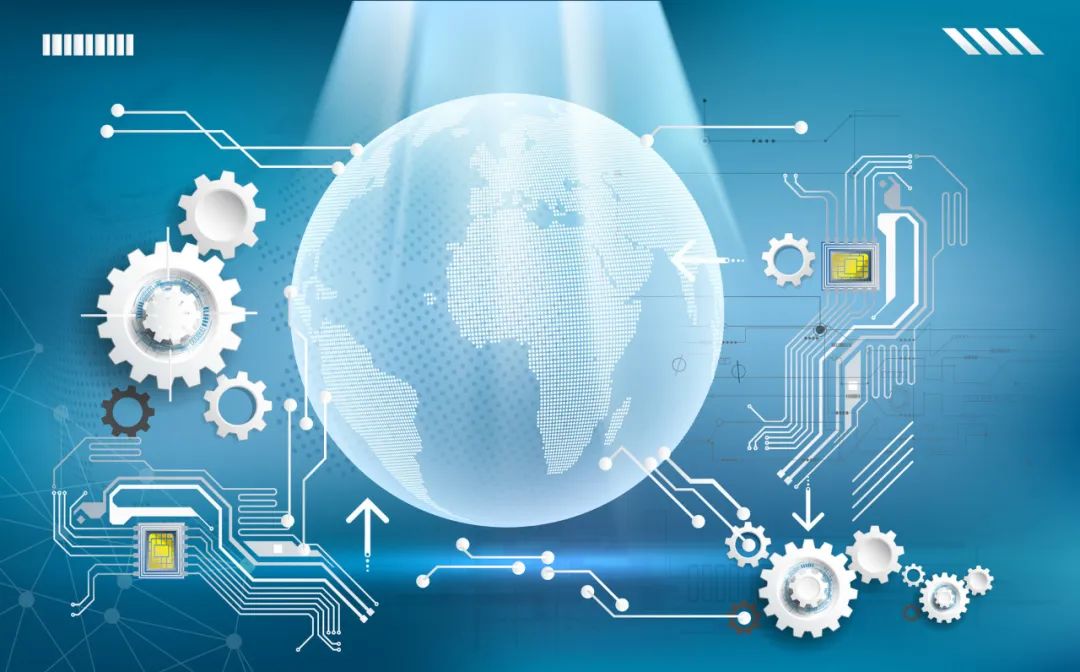
With the rapid development of information technology, IoT technology has gradually matured and begun to be widely applied in urban management, smart homes, industrial production, transportation, and other fields, driving society towards a smarter direction. According to the latest global IoT market report released by GSMA, the global IoT market (including connections, applications, platforms, and services) is expected to reach $1.1 trillion by 2025, indicating a very broad market prospect.It should be noted that the data generated by IoT devices must be processed before it can be used. Generally, this data is transmitted over the network to a cloud computing center, where the computing power of the cloud computing center is utilized to centrally solve computing and storage problems.According to the “Global IoT Device Data Report” released by the International Data Corporation (IDC), it is predicted that by 2025, the number of global IoT devices will reach 41.6 billion, including various machines and their sensors, smart homes, vehicles, wearable devices, and industrial equipment, generating an annual data volume of 79.4 ZB, with 45% of the data generated by IoT processed at the network edge.In this context, if all data must first be transmitted through the network to the central data center for processing, and then the results transmitted back to the respective locations, two prominent issues will arise. First, there is insufficient real-time performance; transmitting data to the cloud computing center and then requesting processing results increases system latency. Second, there is insufficient bandwidth; transmitting data to the cloud puts significant pressure on network bandwidth.To solve these problems, edge computing has emerged. Edge computing refers to an open platform that integrates network, computing, storage, and application core capabilities, providing services close to the source of data. Its applications initiate at the edge, resulting in faster network service responses.
If we understand edge computing from a bionic perspective, we can make this analogy: when a hand touches something hot, before feeling the heat (or burning), the hand immediately retracts. This is a natural unconditioned reflex. If we assume that if the hand or other body parts encounter a high-temperature object and the brain must react based on gathered information before taking action, the hand could already be burned.If we regard human conditioned reflexes as edge computing and brain reactions as cloud computing, we can easily understand the differences between edge computing and cloud computing. In fact, compared to cloud computing, edge computing better supports mobile computing and IoT applications, with three very obvious advantages:1. Faster Data ProcessingBy using edge computing, a large amount of temporary data can be processed at the network edge, reducing intermediate transmission processes and enhancing service response capability;2. Lower Network Bandwidth RequirementsWith the increase in connected devices, network transmission pressure will increase. However, during the edge computing process, data exchange with cloud servers is minimal, significantly alleviating the pressure on network bandwidth and data center power consumption;3. Greater Data SecurityIf all data is transmitted back to the server for processing, it can easily be attacked during this process. By using edge computing, IoT devices process data at edge data centers or locally, reducing the risk of network data leakage and protecting user data security and privacy.With the help of edge computing, the intelligence of IoT can be enhanced, promoting IoT to take root in more and more vertical industries.Autonomous DrivingAutonomous vehicles need to quickly respond to their surroundings while moving at high speeds. Uploading sensor data to the cloud computing center would increase the difficulty of real-time processing, potentially resulting in serious consequences. Edge computing processes data close to the data producer, greatly reducing system latency.Smart HomesUsing IoT devices, the internal status of the home can be monitored in real-time, and adjustments to the home environment can be made, enhancing the convenience of home living. Since home data involves personal privacy, uploading data to the cloud for processing increases the risk of privacy leakage. Edge computing can reduce the outflow of home data, lowering the possibility of data leakage.Road DetectionIn urban road detection, sensors installed on streetlights on both sides of the road collect city road information, detecting environmental data such as air quality, light intensity, and noise levels. When streetlights malfunction, feedback can be promptly sent to maintenance personnel.In ConclusionFor IoT, breakthroughs in edge computing technology mean that more control can be achieved through local devices without needing to transmit to the cloud, which will undoubtedly greatly improve processing efficiency. How edge computing will further promote the development of IoT in the future remains to be seen.
Disclaimer: This article is from Bit Network,we respect the original author’s copyright. If there are any copyright issues, please contact the editor of this public account in a timely manner. Thank you!
◆ ◆ ◆ ◆ ◆
Recommended Reading
● Sui Rui Group becomes one of the first official suppliers signed by the Beijing Winter Olympics Organizing Committee
● Wuhan, we are with you!
● Supporting the Winter Olympics, Sui Rui takes the lead
● The authoritative list of the ICT industry for 2019 is announced, Sui Rui Technology Group won two awards
● Sui Rui CEO Shu Cheng attends the 2020 China Academy of Information and Communications Technology ICT Deep Observation Report Conference
● China Mobile × Sui Rui Group: Communication + Cloud, everywhere is a kindred spirit!
● Sui Rui Technology Group won the ICT China Best Industry Solution Award
● Sui Rui Technology Group Chairman Shu Cheng invited to attend the 70th Anniversary Celebration of the Founding of New China
Company Profile
About Sui Rui Technology Group
Sui Rui Technology Group is a well-known “Intelligent World Builder & Operator” in the industry and is also the official collaborative office software supplier for the Beijing 2022 Winter Olympics and Winter Paralympics, enjoying a long-standing reputation in the government and enterprise market and corporate internet field. Sui Rui has over 700,000 self-owned clients in government/enterprise, with cumulative platform service end-users exceeding 100 million, providing solutions and supporting services in the field of intelligent world for a wide range of government and enterprise clients. The products cover various technology fields including artificial intelligence, IoT, industrial internet, cloud computing (including communication cloud), big data platforms, edge computing, and information security.
Contact Us
Headquarters: No. 1 Baosheng South Road, Haidian District, Beijing, Building 18/19, Aobei Technology Park
Beijing Sui Rui Center
Global Customer Hotline: +86 400-010-6066