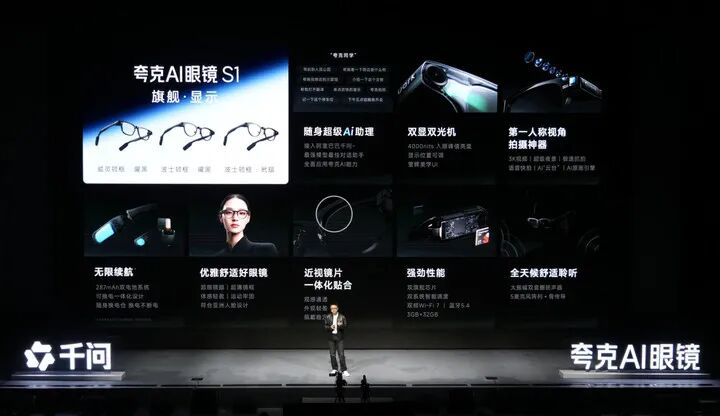
On November 27, Alibaba officially launched its first self-developed AI glasses – the Quark AI Glasses S1, positioned as a “super assistant for all-day, multi-scenario use.” This core hardware, which embodies Alibaba’s “full-stack AI” strategy, sold over 7000 units on the first day of its launch on Tmall, achieving the top spot in both the smart device XR category and store sales.

As a key component of Alibaba’s “full-stack AI” strategy, the Quark AI Glasses S1 carry the important mission of bringing the capabilities of Qianwen AI from the virtual world into the physical world. This article will analyze the product’s parameters, materials, and technical pathways from the perspective of industry practitioners.
1. Core Hardware Parameters: Precise Matching of Performance and Scenarios
The parameter design of the Quark AI Glasses S1 revolves around three core goals: “lightweight and portable + ecological interaction + multi-scenario adaptation.” The trade-offs in key parameters fully reflect Alibaba’s deep understanding of the usage scenarios for AI glasses, which can be divided into five core modules:
1. Computing Core: The Golden Combination of Dual-Core and Dual-System
As the “brain” of the AI glasses, S1 adopts a dual-flagship chip architecture with Qualcomm Snapdragon AR1+ and Hengxuan BES2800, paired with 3GB+32GB storage and dual systems of Android and RTOS, forming a precise balance of “performance + power consumption,” representing the industry’s top configuration:
Qualcomm Snapdragon AR1 (Main Chip): 4 cores Cortex-A78 architecture, integrating Adreno 650 GPU and a dedicated NPU (capable of 150 trillion AI operations per second), responsible for core tasks such as AI visual computing, image ISP processing, and ecological application loading, providing computational support for real-time responses and product recognition. Compared to the commonly used XR1 chip in the industry, its NPU performance is enhanced by 30%.
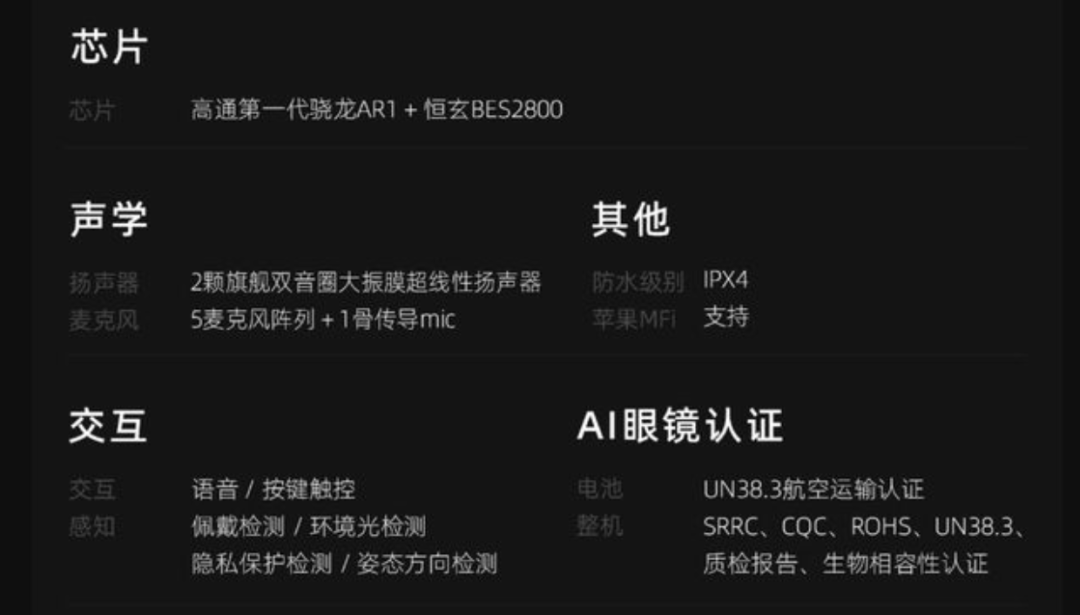
Hengxuan BES2800 (Co-processor): Focused on low-power tasks, supporting Bluetooth 5.3, LC3 high-definition encoding, responsible for audio decoding, Bluetooth connectivity, and all-day standby. Paired with the RTOS system, it can reduce standby power consumption to below 5mA, ensuring 25 hours of wake standby time, addressing the traditional AR glasses’ endurance pain points.
Alibaba’s Quark AI Glasses product manager Jin Xian revealed in a technical interview: “The glasses need to handle multiple tasks in parallel, and relying solely on a single chip cannot balance high performance and long endurance. The dual-core architecture allows us to maintain response speed while achieving the goal of all-day wearability.”
2. Display Module: 4000nits Brightness + Ultra-thin Waveguide for Outdoor Adaptation
Display quality is the core of “all-day use,” S1 adopts a “2D binocular diffraction waveguide + Micro-LED” solution, balancing display quality and wearability:
Core hardware and supply chain: Equipped with JBD the world’s smallest mass-produced AR light engine (0.15cc volume, reduced by 50% compared to the previous generation), MicroLED monochrome display (1920×1080 resolution, 3000PPI), with an eye brightness of 4000 nits (nits) – far exceeding the industry average of 2000-3000 nits, clearly displaying navigation, payment codes, and other information even under direct sunlight.
Waveguide technology highlights: Utilizing ZhiGe Technology’s 0.7mm thick diffraction waveguide (weight < 4g), 1.8 high refractive index glass substrate paired with a 2D grating, achieving a light transmittance of over 92%, and a field of view of 40°. The grating position design suppresses “rainbow patterns,” and the underlying process optimization achieves privacy protection, making it difficult for others to notice the lens’s light; the image distance adjustment technology accommodates users with different vision without the need for additional prescription lenses.
3.Imaging System: Redefining First-Person Perspective Shooting
S1 is the first to introduce mobile-level imaging capabilities into the smart glasses field, combining its Sony IMX681 flagship sensor + dedicated ISP to provide a reliable visual entry for AI interaction.
Hardware configuration highlights: 12 million pixel ultra-wide-angle lens supports 109° field of view, equipped with “Super Raw” low-light enhancement technology and dual stabilization systems. 0.6 seconds rapid capture capability ensures no moment is missed, providing technical support for product recognition, document scanning, and other scenarios.
Real-world performance: According to data from VR gyroscopes, S1 accurately reproduces colors in daylight, with clear leaf textures and excellent noise control in dark scenes. This stable imaging quality fully meets the demands of image Q&A, real-time price comparison, and other AI functions.
The breakthrough in imaging capabilities is not only about image quality but also a key step for AI glasses to upgrade from “display devices” to “perception devices.” S1 provides the “eyes” for the Qianwen large model to perceive the physical world.
4. Audio and Interaction: 5 Microphones + Bone Conduction for All-Scenario Adaptation
S1 achieves precise voice interaction in different environments through a hardware combination of “5 microphone array + bone conduction sensors.”
Microphone system design: 3 far-field microphones are responsible for ambient sound collection, 2 near-field microphones focus on capturing human voice, while the bone conduction sensor recognizes the user’s voice through bone vibrations in noisy environments. This combination ensures wake-up capability in all scenarios, from quiet offices to noisy streets.
Audio output optimization: 0.5mm custom speaker units are professionally tuned by the Golden Ear team, providing three audio modes: “standard, powerful, and quiet.” Directional sound transmission technology ensures personal privacy while maintaining sound quality.
Innovative interaction logic: The four interactive zones on the temple (camera, display, media, power) are designed with tactile differences, allowing users to operate blindly without visual confirmation. The capacitive sensing design in the camera area further enhances capture efficiency, accommodating scenarios where both hands are occupied.
5. Battery Life and Power Supply: Practical Dual-Battery Hot-Swap Design
Battery life is key to widespread adoption, S1 adopts an innovative dual-battery hot-swap architecture to address pain points:
Core configuration: The temples house 287mAh dual batteries, providing a total battery life of 7 hours (navigation + music + interaction), with a wake standby time of 25 hours, far exceeding the industry average of 3-4 hours; the soft-pack lithium polymer material balances safety and miniaturization.
Hot-swap advantages: The battery supports hot-swapping to achieve “continuous power during battery replacement,” paired with the MiniBag battery replacement compartment, allowing for 3 full charges, the “one use, one replace” mode completely alleviates long-distance endurance anxiety, making it more suitable for outdoor use than traditional wired charging.
2. Key Material Selection: Experience Upgrade and Cost Balance in Details
The materials used in the Quark AI Glasses S1 have undergone multiple optimizations in terms of lightweight, durability, and comfort, with some selections reflecting industry-leading craftsmanship:
1. Body Structure: 7.5mm Ultra-Narrow Temples Craft Breakthrough
S1 is designed with the core principle of “integrating into daily life,” addressing the pain point of the “social awkwardness” of smart glasses:
Structural design breakthrough: The thinnest part of the temples is only 7.5mm, with the upper frame as thin as 3.3mm, and the overall weight including 0 degree lenses controlled at 51 grams. The 1: 1 front and rear weight distribution design effectively reduces the pressure on the nose during long-term wear.
Material selection logic: The titanium alloy frame provides sufficient structural strength, ensuring that the temples do not deform after 100,000 bending tests. The liquid silicone material on the inner side of the temples ensures stability during wear while avoiding the indentation issues caused by traditional hard materials.
Detail handling philosophy: The silver decorative strips on the left and right frames cleverly hide the camera and indicator light, diminishing the product’s technological feel, bringing it closer to the aesthetics of traditional glasses. This “technological invisibility” design significantly lowers the psychological barrier for users in social scenarios.
2. Optical Lenses: Optimization of Light Transmittance in High-Refractive Glass Waveguides
Waveguide lenses, as core optical components, use 1.8 high-refractive quartz glass material, which can reduce lens thickness by 25% compared to ordinary soda-lime glass at the same field of view. The lens surface is coated with multiple anti-reflective layers, increasing light transmittance from ordinary glass’s 85% to 92%, effectively reducing reflections and visual fatigue. Additionally, the lenses are treated with a fingerprint-resistant coating, achieving a surface contact angle of 110 degrees, making them less prone to fingerprints during daily use, thus lowering cleaning costs.
3. Internal Components: Customized Choices for Ecological Adaptation
S1’s core competitiveness lies in Alibaba’s deep integration of its ecosystem, with customized hardware building a solid barrier:
Ecological services: NXP PN7150 NFC module supports Alipay’s “Look” payment (0.3 seconds response); tri-mode positioning (GPS/ Beidou/ Galileo) combined with Gaode algorithms achieves 1 meter accuracy, seamlessly integrating services like Taobao price comparison and Fliggy reminders.
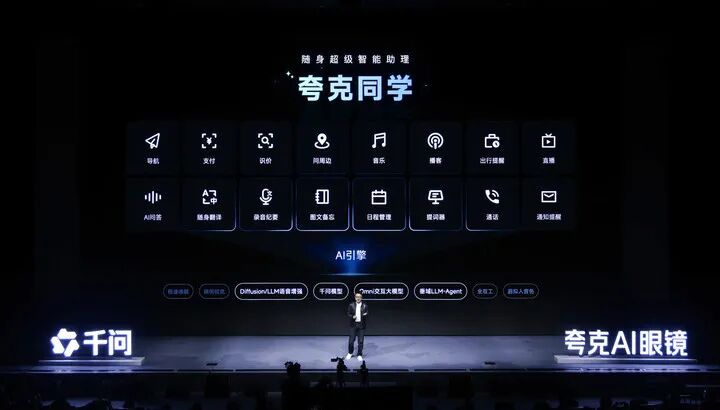
AI and the future: Built-in “Quark Classmate” AI assistant (based on the Qianwen model), voice wake-up adapts to cooking, driving, and other scenarios; Alibaba’s vice president Wu Jia revealed plans to add eye-tracking and heart rate sensors in the future, upgrading to a sports health monitoring platform.
3. The Collaborative Logic of Parameters and Materials: Design Philosophy Serving the Ecosystem
S1’s parameters and materials form a triple collaboration around “Alibaba ecosystem implementation,” reflecting the design philosophy:
1. Dual-core and dual-system adaptation for multiple scenarios: Snapdragon AR1 ensures high-performance needs for AI vision, imaging, etc., while Hengxuan BES2800 handles low-power standby; Android loads ecological applications, RTOS ensures basic response, balancing functionality and endurance.
2. Display and imaging support AI interaction: 4000 nits brightness + privacy waveguide ensures practical outdoor payment/ navigation; Sony IMX681 + Super Raw technology enhances image recognition accuracy, achieving “seeing is serving.”
3. Lightweight promotes frequent use: 51 grams weight + comfortable wear reduces daily barriers, with essential services like Alipay and Gaode transforming glasses from “toys” to “tools,” significantly enhancing user stickiness.
4. Market Positioning: Dual-Line Layout Covering Diverse Needs
Based on the 3999 yuan S1 and 2199 yuan G1 dual product strategy, Alibaba has established a clear market coverage in the smart glasses sector.
S1 (3999 yuan) positions itself as a flagship all-rounder with dual binocular waveguides, dual flagship chips, and mobile-level imaging, targeting tech pioneers and business professionals who seek a complete AR experience and have a strong need for real-time information display.
G1 (2199 yuan) lowers the entry barrier by removing the waveguide display system, adopting a pure AI assistant form, accurately covering budget-conscious consumers eager to experience AI interaction.
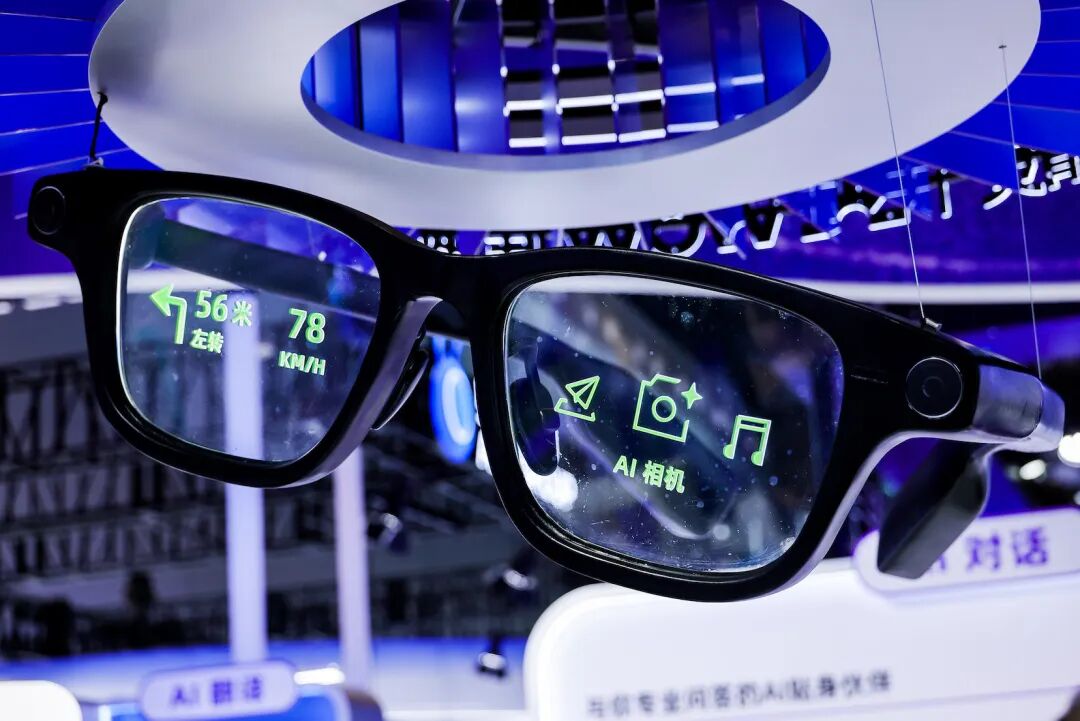
In simple terms, the price is not cheap, but the materials are indeed good. The most critical aspect is embedding its own “Qianwen” large model, allowing users to conveniently use various Alibaba applications.
Conclusion: A Classic Carrier for Large Model Application Implementation
The launch of S1 marks Alibaba’s formation of a full-link closed loop of “computing power infrastructure – model platform – application implementation – ecological collaboration.” It is no longer just a smart accessory but a new entry connecting the digital and physical worlds, setting a new benchmark for the AI hardware industry with its “material stacking + ecology” approach.
Of course, there is room for optimization: for example, while the monochrome light engine meets information display needs, it lacks color display capabilities, limiting experiences in entertainment and AR social scenarios; the volume and sound quality of the bone conduction speakers still have room for improvement in noisy environments. If future iterations can further optimize display color and audio output, a comprehensive upgrade in experience is expected.
Overall, the parameter and material design of the Quark AI Glasses essentially embodies Alibaba’s “ecology + hardware” strategy – providing a reliable carrier for AI technology to transition from the virtual world to the physical world through precise matching of hardware performance and ecological scenarios.
Recommended Reading: Detailed Explanation of AI Glasses Hardware Architecture and Circuit Design (2025 Latest Edition)