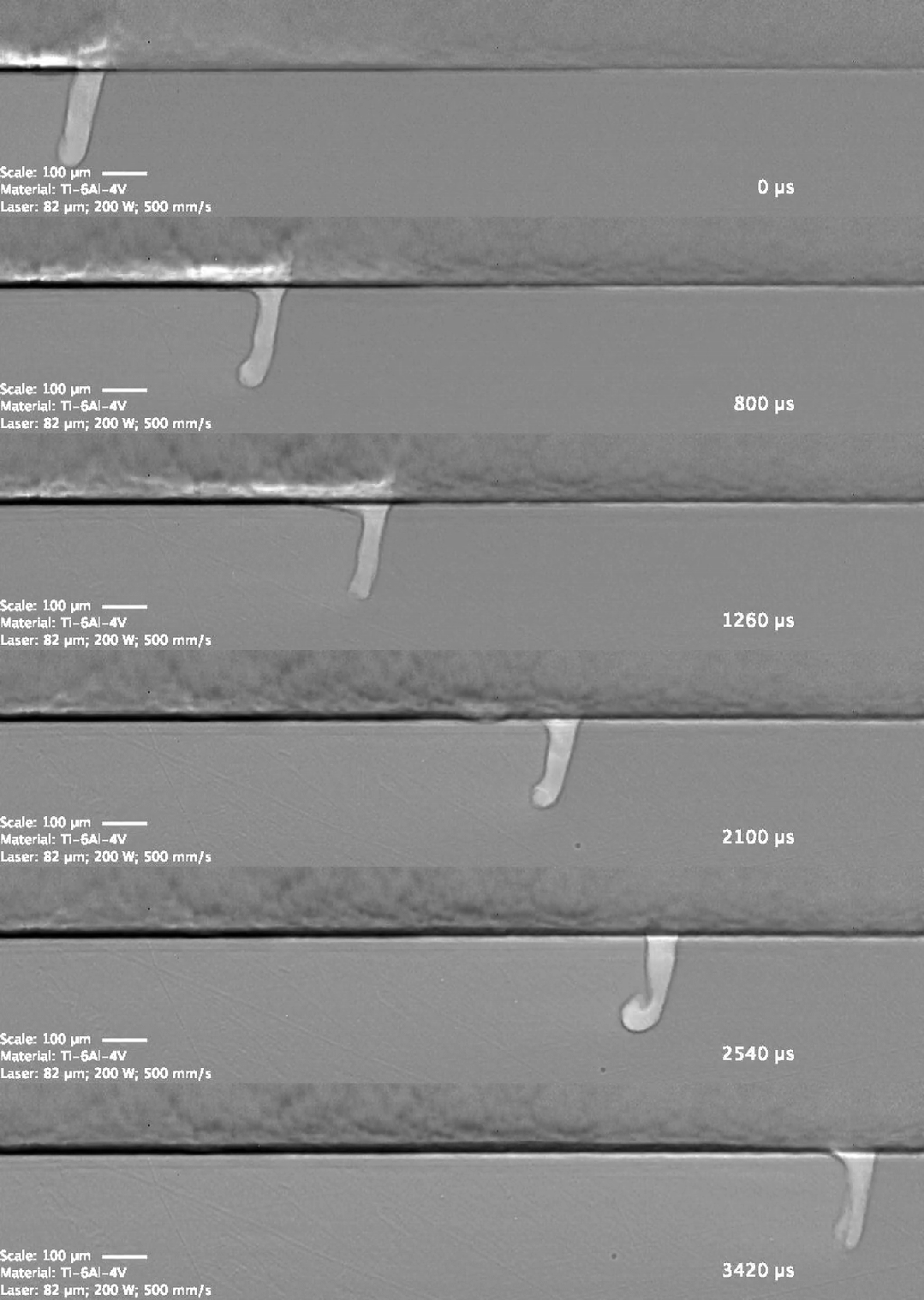
△The generation process of random pores in Ti6Al4VFull text link: https://www.science.org/doi/10.1126/science.add4667Five, “Nature”: Vision-Controlled Jetting (VCJ) Technology Researchers from MIT, the pioneering advanced additive manufacturing solutions company Inkbit™, and ETH Zurich have jointly developed anew 3D inkjet printing system that demonstrates how to use its Vision-Controlled Jetting (VCJ) technology to directly manufacture complex multifunctional systems in a single print without the need for assembly of subcomponents, and with a wider range of materials. The VCJ technology they employed utilizes computer vision to automatically scan the 3D printing surface and adjust the amount of resin deposited by each nozzle in real-time to ensure appropriate material in any area. This groundbreaking research, titled “Vision-controlled jetting for composite systems and robots,” was published in Nature on November 15, 2023.
Inkbit’s VCJ technology originates from traditional inkjet 3D printing and has now been elevated to a new level by integrating an AI-supported 3D computer vision scanning system that captures the printing geometry of each layer in real-time. This digital closed-loop feedback control operation eliminates the need for mechanical leveling devices and allows for printing with slow-curing chemicals, enabling more precise construction of polymer chains. Therefore, VCJ can directly and accurately print complex, multi-material parts with various mechanical properties.The practical applications of this technology are extensive. VCJ not only enhances the resolution and functional capabilities of printed components, but it can also manufacture complex internal networks of channels and cavities to transmit signals, power, or fluids through structures. With VCJ, it is now possible to directly manufacture complex multifunctional systems capable of performing complex physical tasks on a large scale. To demonstrate the capabilities of VCJ, researchers printed various complex systems, such as: a tendon-driven hand modeled from MRI data, a pneumatic walking robotic hand, a heart-mimicking pump, and novel metamaterial structures.Full text link: https://www.nature.com/articles/s41586-023-06684-3Six, “Nature”: 3D Printing Titanium Alloys –α-β Ti-O-Fe Alloys,Strong, Ductile, and Sustainable! According to Antarctic Bear, scientists from the Hong Kong Polytechnic University, in collaboration with RMIT University and the University of Sydney, have successfully addressed long-standing issues in titanium alloy production, such as quality and waste management, using 3D printing. This research, titled “Strong and ductile titanium–oxygen–iron alloys by additive manufacturing,” was published in Nature.
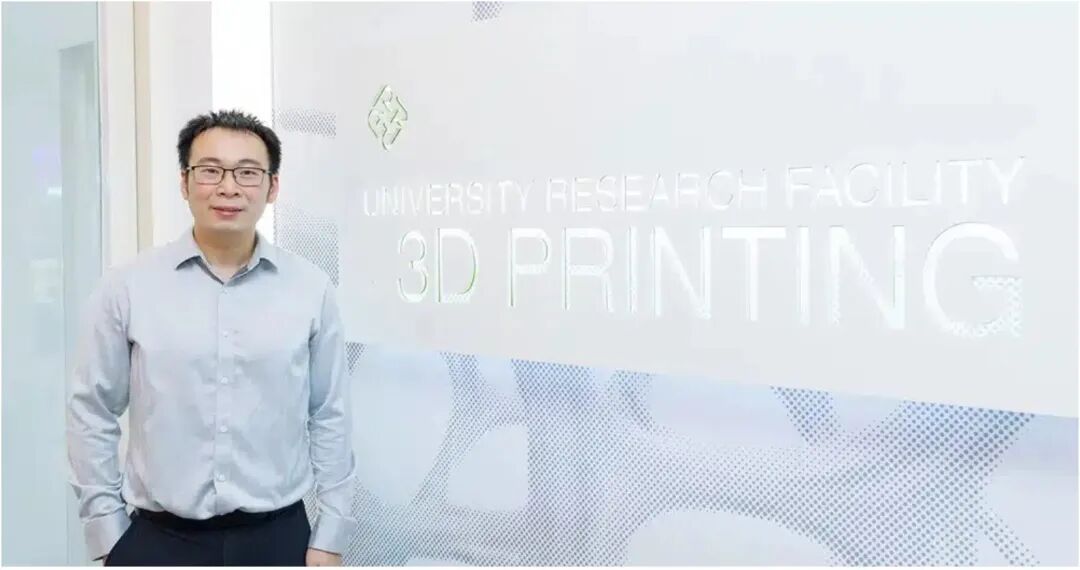 △Dr. Chen ZibinTitanium alloys are advanced lightweight materials that play an indispensable role in many critical applications. The research team found that innovatively using additive manufacturing to produce titanium alloys and other potential metallic materials has many advantages, such as cost reduction, performance improvement, and sustainable waste management.By using 3D printing, the research team produced a new type of strong, ductile, and sustainable titanium alloy (α-β Ti-O-Fe alloy). These properties were achieved by incorporating inexpensive and abundant oxygen and iron, which are two of the most powerful stabilizing elements and reinforcers of α-β phase titanium alloys. The new titanium alloy shows great potential in various applications—from aerospace and marine engineering to consumer electronics and biomedical devices.Full text link: https://www.nature.com/articles/s41586-023-05952-6Seven, “Nature”: High-Throughput Printing of Gradient Materials, Changing Ink Mixing Ratios During Printing
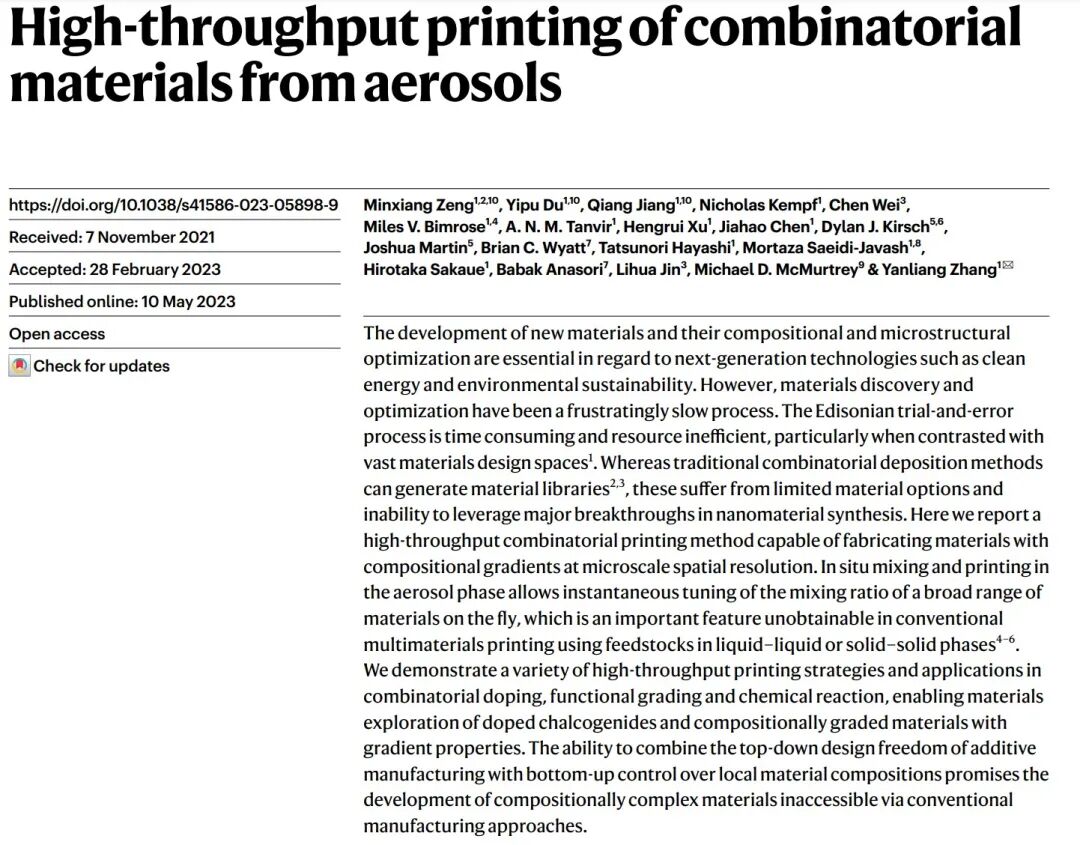 Yanliang Zhang, an associate professor of aerospace and mechanical engineering at the University of Notre Dame in Indiana, has developeda novel 3D printing method that completes printing by mixing multiple atomized nanomaterial inks in a single print nozzle, capable of producing materials in ways that traditional manufacturing methods cannot achieve. This research, titled “High-throughput printing of combinatorial materials from aerosols,” was published in Nature.
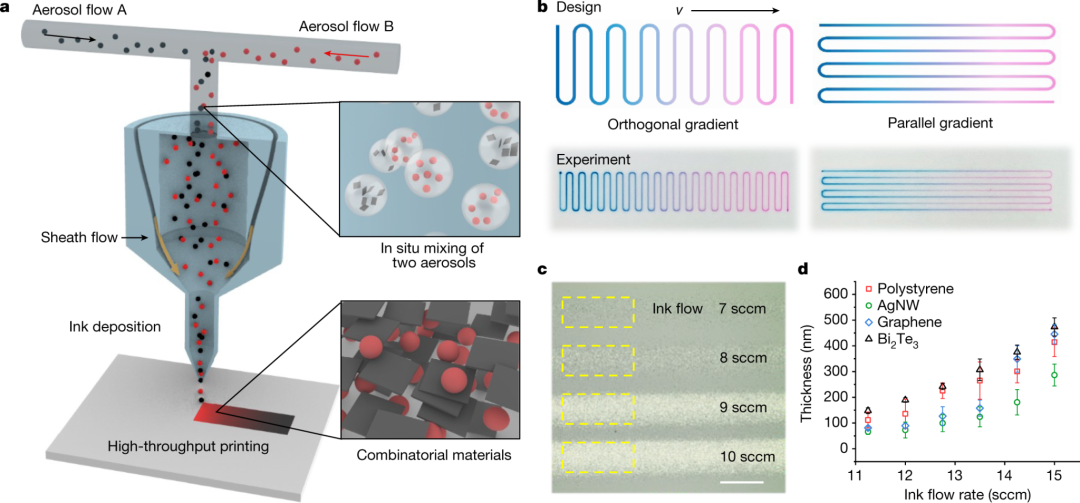 This new 3D printing process is called High-Throughput Combinatorial Printing (HTCP), which is accomplished by mixing multiple atomized nanomaterial inks in a single print nozzle, and the ink mixing ratio can be changed during the printing process. The HTCP method allows for control over the 3D structure and local composition of the printed materials, producing materials with gradient compositions and properties at micro-scale spatial resolution.Full text link: https://www.nature.com/articles/s41586-023-05898-9Eight, “Nature”: New 3D Printed Alloys Can Withstand Extreme Conditions
 A research team from NASA and Ohio State University has made breakthroughs in 3D printing high-temperature materials, which may lead to stronger and more durable components for aircraft and spacecraft. The related research is titled “A 3D printable alloy designed for extreme environments” and was published in Nature. The paper details the characteristics of the new alloy GRX-810, which was developed under NASA’s “TTT” project with support from the agency’s R&D program.
 △3D printing of the NASA logo.GRX-810 is an oxide dispersion strengthened alloy. In other words, tiny particles containing oxygen atoms dispersed throughout the alloy enhance its strength. This alloy is an excellent candidate for manufacturing aerospace components used in high-temperature applications, such as parts inside aircraft and rocket engines, as they can withstand harsher conditions before reaching their breaking point. Currently, the most advanced 3D printed high-temperature alloys can withstand temperatures up to 2000 degrees Fahrenheit. Compared to these, GRX-810 has twice the strength, over 1000 times the durability, and twice the oxidation resistance.In summary, the researchers proposed a new NiCoCr-based ODS alloy GRX-810’s design, characterization, and performance, which exhibits superior performance in extreme environments compared to existing AM alloys. The use of computational modeling in alloy design produced compositions that balance performance and processability, with advanced characterization providing insights into potential microstructures and mechanisms. Compared to currently used high-temperature alloys, GRX-810 shows an order of magnitude improvement in creep performance at 1093°C, allowing AM to be used for complex components in extreme environments.Full text link: https://www.nature.com/articles/s41586-023-05893-0Nine, “Nature”: Rotational Multi-Material 3D Printing Expands Existing Printing Details to Structures Smaller than “Voxels”
 Antarctic Bear 3D Printing Network notes that researchers from Harvard University’s John A. Paulson School of Engineering and Applied Sciences and Wyss Institute for Biologically Inspired Engineering have combinedmulti-material and rotational elements and applied them to 3D printing technology, creating a new rotational multi-material 3D printing platform (RM-3DP) that achieves sub-voxel control in 3D printed filaments. They utilized this method to manufacture high-fidelity helical dielectric elastomer actuators, opening possibilities for the development of functional artificial muscles. Additionally, the research team created layered lattices, embedding rigid springs within flexible frames using structured helical pillars, paving new avenues for biomimetic multifunctional materials.
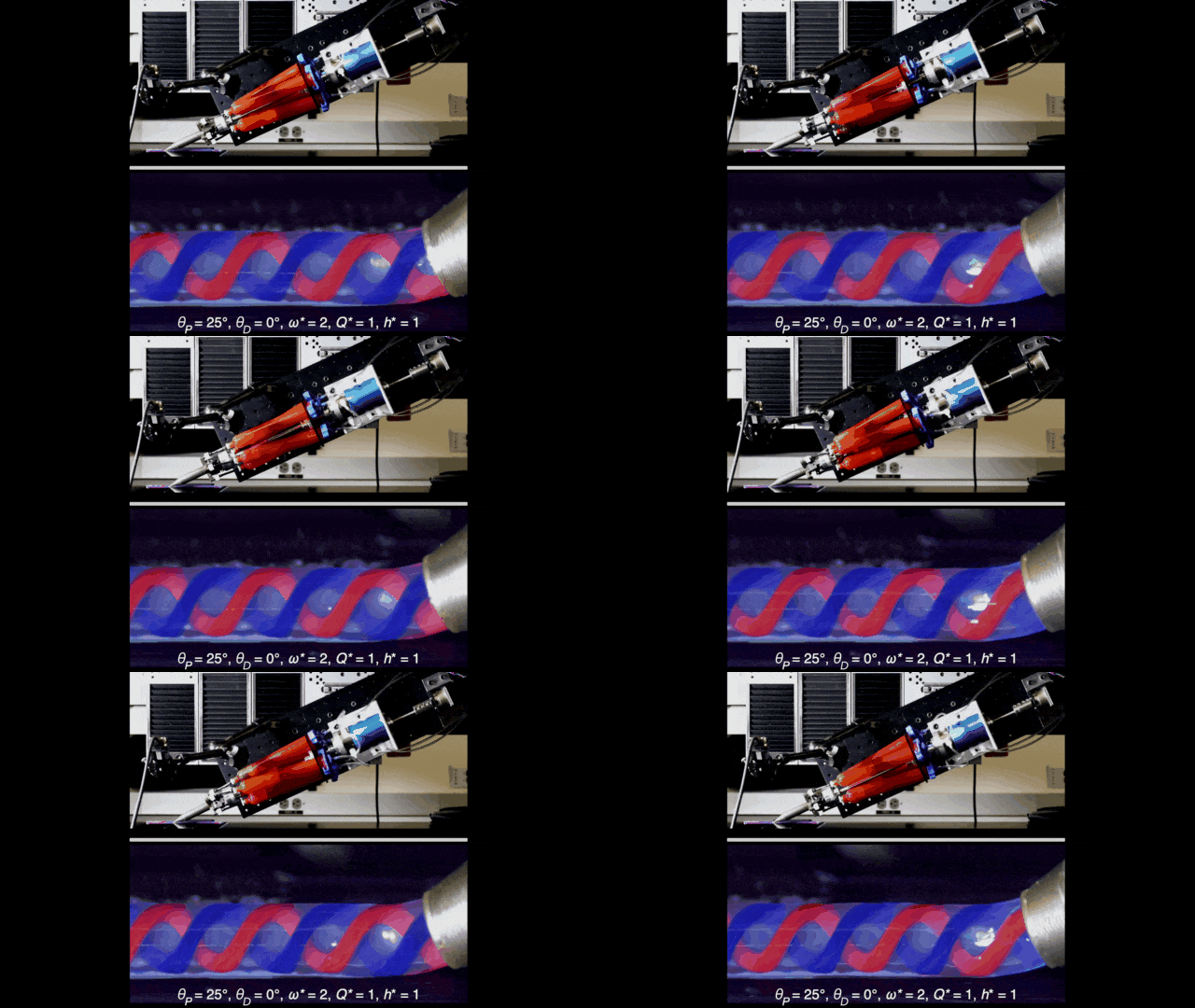 △Sub-voxel manufacturingIt is understood that RM-3DP has two features:1. A multi-material nozzle with orientation-heterogeneous sub-voxel characteristics2. The print head is equipped with multiple pressure-controlled ink reservoirs and a freely rotating nozzle functionThe RM-3DP printing method combines fused deposition with photopolymerization, selecting the FDM gantry control system for structural aspects, while mixing polydimethylsiloxane (PDMS) or other oligomers with photoinitiators and corresponding additives to create a viscous “ink” that is cured by UV light. Through these technologies, the research team can manufacture substructures with vertical or helical shapes within the printed filaments, expanding existing printing details to structures smaller than “voxels”.Full text link: https://www.nature.com/articles/s41586-022-05490-7
Recent Hot Topics
“We want to establish a 200 million yuan 3D printing industry fund, are you interested?”
“China’s 3D printing talent pool – please register if you are looking for a job”
“Technology breakthrough, support-free metal 3D printing will create a Chinese wind”
“Titanium alloy 3D printing consumer electronics market expected to exceed 10 billion yuan, major manufacturers like Apple and Honor actively embrace new processes”
“The number of domestic metal 3D printers exceeds 3500 units, industry applications continue to rise, could reach one million in the future?”
“Great potential but incomplete industrial chain, if entering the binder jetting 3D printing, please look here”