In internet communication, HTTP and HTTPS are the core protocols for data transmission between clients (such as browsers) and servers. There are essential differences between the two in terms of security, working principles, and more. Below, we will provide a detailed analysis from the perspectives of concepts, working principles, and core differences.
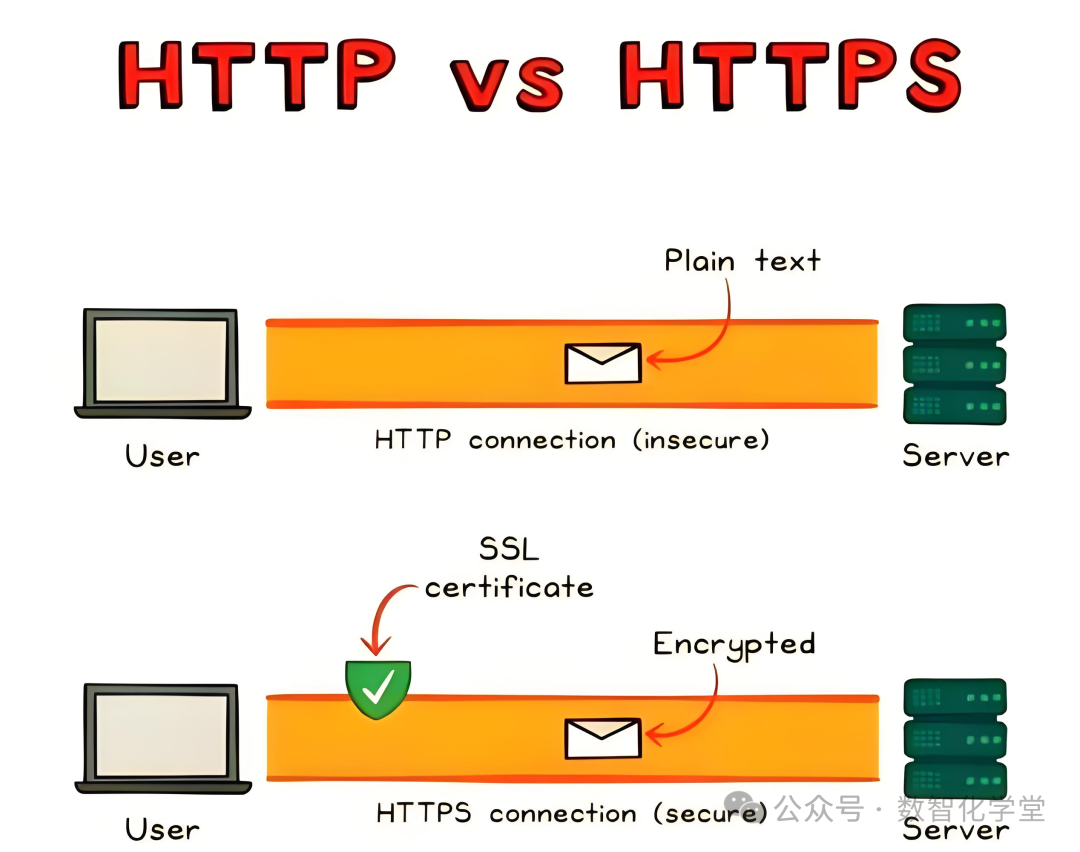
Differences between HTTP and HTTPS
1. HTTP: HyperText Transfer Protocol (HyperText Transfer Protocol)
HTTP is an application layer protocol established in the early days of the internet, primarily responsible for the transmission of “hypertext” (such as web pages, images, videos, etc.), and is the foundation of the World Wide Web (WWW).
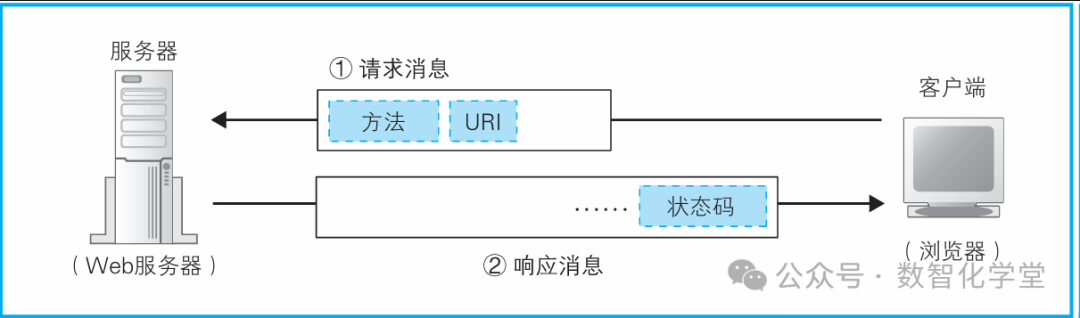 Basic Concept of HTTP
1. Core Characteristics
- Stateless: The protocol itself does not record the historical request information of the client (such as user login status, browsing history). Each request is “independent” and relies on technologies like Cookies and Sessions for state management.
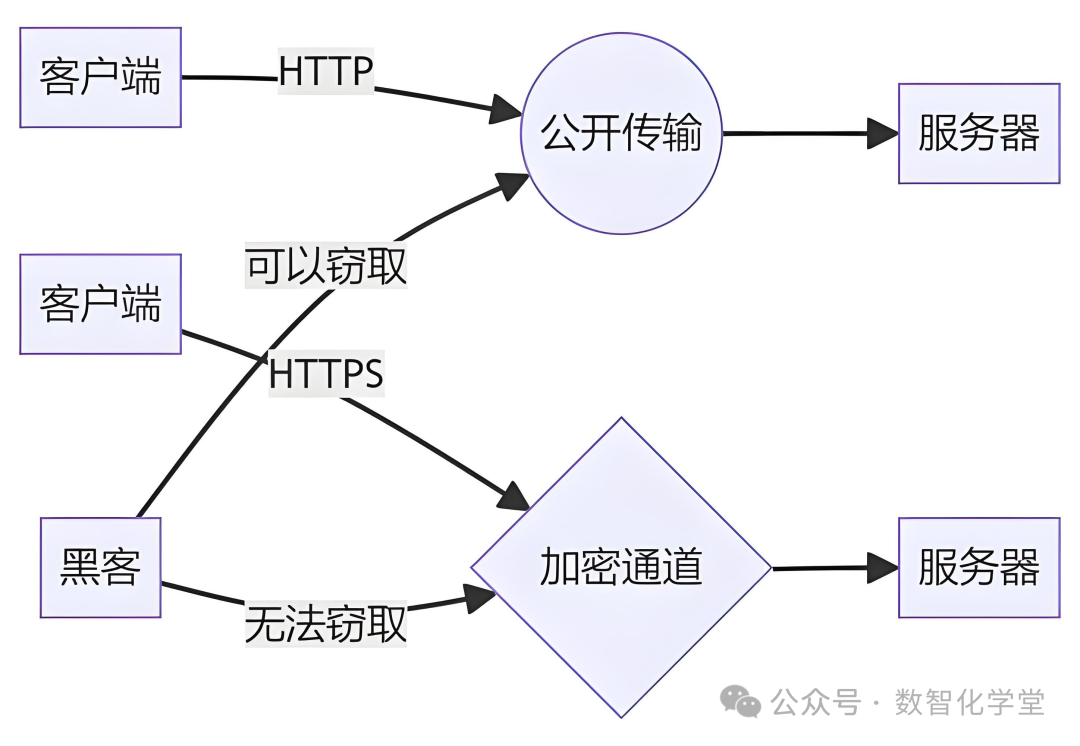
- Plaintext Transmission: All data transmitted between the client and server (such as account passwords, form content, web page code) is in unencrypted plaintext, making it easy to intercept and read during transmission..
- No Authentication: The protocol does not verify the true identity of the server, meaning the client cannot confirm whether the connected server is a “fake phishing server” and cannot verify if the data has been tampered with.
- Default Port: Communication defaults to port 80 (for example, http://www.example.com is essentially http://www.example.com:80).
2. Workflow (Simplified)
- The client (such as a browser) sends an HTTP request (such as requesting a web page) to the server;
- After receiving the request, the server processes it and generates an HTTP response (containing web page data);
- The server returns the response data to the client in plaintext;
- The client parses the response data and displays the web page content.
3. Limitations
Due to plaintext transmission and lack of authentication, HTTP has serious security vulnerabilities:
- Data can be easily intercepted by a “man-in-the-middle” (for example, in public WiFi environments, hackers can capture users’ login passwords);
- Data may be tampered with (for example, hackers can modify web content, inserting malicious ads or phishing links);
- The client may connect to a fake server (for example, phishing websites masquerading as bank official sites to steal user information).
2. HTTPS: Secure HyperText Transfer Protocol (HyperText Transfer Protocol Secure)
HTTPS is not an independent protocol but a combination ofHTTP + SSL/TLS encryption layer. SSL (Secure Sockets Layer) is an early encryption standard, which has now been replaced by the more secure TLS (Transport Layer Security) (but is still commonly referred to as “SSL”). Its core goal is to address the security vulnerabilities of HTTP and ensure the “confidentiality, integrity, and authenticity” of data transmission.
1. Core Dependency: SSL/TLS Certificates
The security of HTTPS relies onSSL/TLS certificates (issued by authoritative Certificate Authorities, CA), which include:
- The server’s public key (used for encrypting data);
- Certificate validity period, issuing authority, and other information (used to verify server identity).
 CA Certificates in Different Environments
2. Workflow (Simplified, Core is “Handshake + Encrypted Transmission”)
- TCP Three-Way Handshake: The client and server first establish a basic TCP connection (to ensure the communication channel is available);
- SSL/TLS Handshake (Core Security Step):
- The client sends a “list of supported encryption algorithms” and “random number A” to the server;
- The server returns the “selected encryption algorithm,” “random number B,” and “SSL/TLS certificate” (containing the public key);
- The client verifies the certificate’s legality (such as whether it is issued by a trusted CA, whether it is within the validity period). After verification, it generates “random number C,” encrypts “random number C” with the server’s public key, and sends it to the server;
- The server decrypts “random number C” with its private key. At this point, both the client and server have “random number A + B + C” and generatea symmetric encryption key (this key will be used to encrypt subsequent data transmissions);
3. Core Advantages
- Data Confidentiality: Data transmitted is encrypted with a symmetric key, only the client and server can decrypt it;
- Identity Authenticity: The server’s identity is verified through the SSL/TLS certificate, preventing connections to fake servers;
- Data Integrity: A “message digest” (similar to a fingerprint) is added to the data during transmission. If the data is tampered with, the client can detect it immediately.
3. Core Differences between HTTP and HTTPS
| Comparison Dimension | HTTP | HTTPS |
|---|---|---|
| Security | No encryption, plaintext transmission, no authentication, insecure | Encrypted based on SSL/TLS, with authentication, secure |
| Core Components | Only HTTP protocol | HTTP protocol + SSL/TLS encryption layer |
| Certificate Requirement | No certificate required | Requires SSL/TLS certificate issued by an authoritative CA (without a certificate, browsers will indicate a risk) |
| Default Port | Port 80 | Port 443 (for example, <span>https://www.example.com</span> is essentially <span>https://www.example.com:443</span>) |
| Transmission Speed | No encryption/decryption steps, slightly faster | Requires SSL/TLS handshake and encryption/decryption, slightly slower (but modern technology has greatly optimized this) |
| Browser Indication | No special indication (some browsers mark as “not secure”) | Displays a “lock” icon in the address bar, marked as “secure,” and some browsers show a green “HTTPS” indication |
| Data Integrity | No verification mechanism, data is easily tampered with | Based on message digest verification, tampered data can be detected |
| Applicable Scenarios | Static resources (such as public documents), scenarios with no security requirements | Scenarios involving sensitive data (such as login, payment, e-commerce, banking websites) |
4. Extension: Why HTTPS is Essential Now?
- Browser Enforcement: Major browsers like Chrome and Firefox explicitly mark HTTP sites as “not secure,” reducing user trust;
- Search Engine Optimization (SEO): Search engines like Google and Baidu prioritize indexing HTTPS sites, while HTTP sites may rank lower;
- Regulatory Compliance: Laws such as the “Cybersecurity Law” and “Personal Information Protection Law” require the encryption of sensitive user information (such as ID numbers, bank card numbers), with HTTPS being the core implementation method;
- Functionality Support: Some modern web features (such as WebSocket, PWA, geolocation) only support HTTPS environments.
In summary, HTTP is a basic “data transmission channel” but lacks security; HTTPS addresses this “security shortcoming” through the SSL/TLS encryption layer, making it the standard solution for secure communication on the internet.