A research team from the University of Sydney in Australia has developed a system called PROTEUS, a “Biological AI (AI)” system. This system mimics the natural evolution process, enabling the creation of molecules with new functions within weeks, leading to groundbreaking advancements in drug development and biotechnology. The results were published in the latest issue of the journal Nature Communications, showcasing not only the prospects of integrating biotechnology with AI but also potentially providing key tools for personalized medicine and precision therapy.
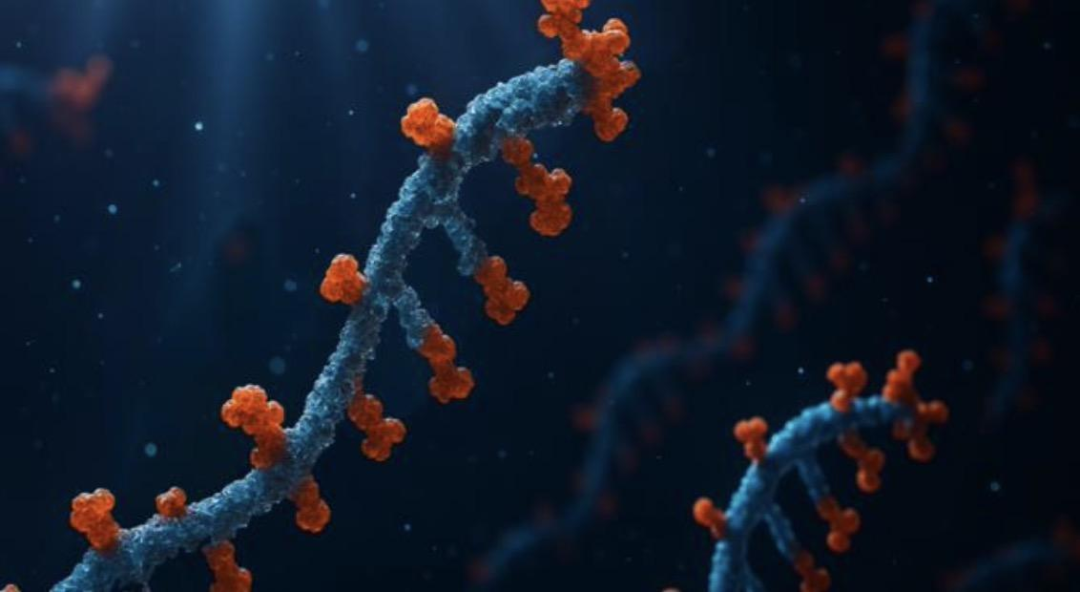
PROTEUS can optimize mRNA therapies in the future.
The PROTEUS system is based on directed evolution technology, a mature method that simulates the forces of natural evolution in the laboratory, in other words, “transforming evolutionary forces into programmable biological systems.” Unlike traditional directed evolution, which primarily operates in bacterial cells, PROTEUS achieves the evolution of molecules in mammalian cells for the first time, allowing for the design of proteins and other biomolecules that are better suited to the human physiological environment. This innovation enables scientists to rapidly screen millions of possible sequences to find optimal solutions to complex biological problems.
The team stated that PROTEUS is like a machine learning system in the biological realm. It can accomplish in a short time what natural evolution would take years or even decades to achieve, such as optimizing the efficiency of CRISPR gene editing tools or designing new molecules that can precisely shut down disease genes.
The team has successfully developed two new types of molecules using PROTEUS: drug-regulatable modified proteins and nanoantibodies that can detect DNA damage. The latter is significant for early intervention in cancer. However, the applications of PROTEUS extend far beyond this; its algorithmic framework can be scaled to enhance the functions of most proteins and molecules, providing universal solutions for drug development and mRNA therapy optimization.
The key to this technological breakthrough lies in the design of chimeric virus-like particles. The team combined the shells and genes of two different virus families to create a stable and “cheat-proof” system. This design allows cells to process multiple solutions simultaneously, eliminating ineffective mutations through natural selection, ultimately screening out the optimal molecules.PROTEUS has been validated by independent laboratories, demonstrating high stability and reliability, and is expected to drive the development of a new generation of enzymes, molecular tools, and therapies.
The advent of PROTEUS also marks a significant leap in directed evolution technology towards mammalian systems. This technology previously won the Nobel Prize in Chemistry in 2018 for its application in bacteria, and now PROTEUS expands its capabilities to more complex biological environments, opening new dimensions for unlocking molecular machine learning.
Original link:
https://opengovasia.com/australia-pioneering-biological-ai-for-precision-medicine/?c=de
Source: University of Sydney
Recommended Reading
-
Cutting-Edge | Optical Chips – Deep Neural Networks
-
Breakthrough | Japan Develops the World’s First Tunable Wavelength Blue Semiconductor Laser
-
Significant | Recent Procurement Intentions for Instruments and Equipment by the Chinese Academy of Sciences (Optoelectronic Related Parts)
-
Exploration | Printable Circularly Polarized Luminescent Materials Enable Flexible Stereoscopic Displays
-
Cutting-Edge | Researchers Create Quantum Harmonic Oscillators at Room Temperature
-
Breakthrough | 3D Laser Printing of Micron-Level Optical Devices at the End of Optical Fibers
-
Breakthrough | Advances in High-Speed Photoacoustic Imaging Technology at the Shenzhen Advanced Institute
-
Breakthrough | Major Breakthrough in the Development of Laser Radar Systems by Chinese Scientists
-
Breakthrough | Research Team at Jilin University Achieves Important Progress in Integrated Photonic Chips
-
Exploration | Anhui University Achieves Important Progress in Research on Optically Active Materials
-
Cutting-Edge | Southern University of Science and Technology’s Optoelectronic Intelligent Sensing Laboratory Achieves Research Progress in “Distributed Low-Frequency Vibration Quantitative Demodulation”
-
Significant | Xi’an University of Electronic Science and Technology’s Integrated Circuit Research Institute Officially Established
-
Insight | 13 Challenges Facing China’s Electronic Information Engineering Technology
-
Breakthrough | New Breakthroughs in Battery Technology May Become a Historic Step
-
The “2020 China Laser Industry Development Report” (Edited Version) is here! Don’t miss out!
-
Insight | Why Photolithography Machines are Harder to Make than Atomic Bombs
-
Strategy | Four Departments Including the National Development and Reform Commission: Accelerate Breakthroughs in Fields such as Photoresists and High-Purity Target Materials
-
Breakthrough | Black Silicon Photodetectors Achieve Record External Quantum Efficiency of 132%
-
New Product | Xiaomi Mass Produces the World’s First Transparent TV
-
Breakthrough | SMIC’s 14nm Chips Have Entered Mass Production, Yield is Steadily Climbing
-
Exploration | New Zealand to Test the World’s First Long-Distance Wireless Power Transmission System
-
Significant | The Initial Evaluation Results of the National Science and Technology Awards for 2020 Have Been Released! (Optoelectronic Related Parts)
-
Outlook | Rumors Suggest Huawei is Developing Its Own Photolithography Machine?
-
Significant | Han’s Laser: Developing Photolithography Machines
-
New Product | 12 Trillion Transistors, 400,000 Cores: Giant Chip Successfully Sold
-
Cutting-Edge | The First Purely Domestic dToF SPAD Laser Radar Sensor Chip
-
Breakthrough | Huawei Releases Breakthrough 5G Antenna Technology
-
Breakthrough | Domestic ArF Photoresist Achieves Major Breakthrough: Usable for 7nm Process
-
Exploration | Scholars Create Sodium Metal Films to Boost Plasmonic Device Development
-
Breaking | 33 Chinese Companies Listed on the US Entity List, Domestic Substitution is Urgent!
-
Strategy | Two Chinese Semiconductor Startups Receive Investment from Intel
-
Breakthrough | Anxin Semiconductor Ships Another Nearly Ten Million Photo Lithography Machines, Domestic Production is Not Far Off
-
New Product | European Research Group Develops a 1kW Point Matrix Ultrafast Laser
○
Follow us by scanning the code
○
Optoelectronic Consulting Cooperation: 027-87199007
Business Report Services: 027-87199372