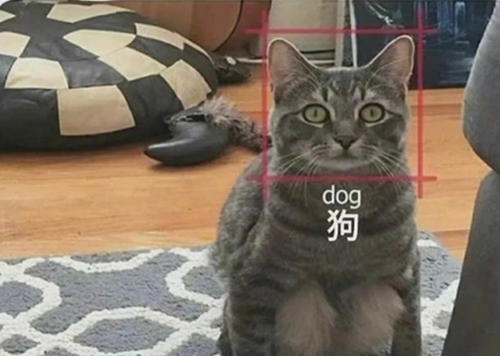
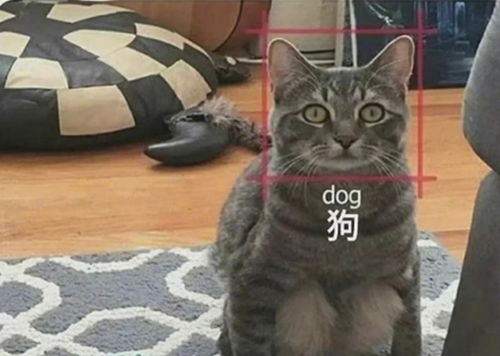
With the advancement of technology, especially in recent years with the development of artificial intelligence, the technological progress behind intelligent robots has also been rapid. A few years ago, I would have thought that inspection robots in chemical plants were a fantasy, as artificial intelligence was jokingly referred to as artificial intelligence disability. (I have saved this image for many years; I laugh every time I see it 
However, things are different now. ChatGPT, DeepSeek, and Yushu Technology indicate that the era of artificial intelligence may have already arrived. An inspection robot that cultivates internal skills like DeepSeek and external skills like Yushu may really be on the way.
1. Current Application Status
The current application of AI inspection robots in chemical plants mainly focuses on solving three major pain points of traditional manual inspections: low efficiency, high risk, and fragmented data.
1. Core Technology ImplementationPerception Layer: Integrates various sensors, including high-precision gas sensors (such as MQ series, Laser-Induced Breakdown Spectroscopy (LIBS)), infrared thermal imaging cameras, 3D vision cameras, temperature and humidity sensors, etc., to achieve comprehensive perception of equipment status, environmental parameters, and potential risks.
Decision and Control Layer: Relies on AI algorithms (such as machine learning, deep learning) for data analysis and anomaly detection. Achieves centimeter-level precision in autonomous navigation and obstacle avoidance through SLAM (Simultaneous Localization and Mapping) algorithms.
Communication and Collaboration: Utilizes technologies like 5G and Wi-Fi to achieve real-time data transmission, and processes key information locally through edge computing, reducing dependence on the cloud and improving response speed.
2. Typical Application Scenarios
High-risk Area Inspections: Replaces manual entry into high-temperature, high-pressure, flammable, and explosive areas (such as electrolysis device areas, gas purification workshops) for routine inspections.Equipment Status Monitoring: Automatically identifies equipment leaks, corrosion, abnormal high temperatures, etc., through AI vision algorithms, and can detect specific issues like pipeline flow interruptions, achieving “no missed inspections, no false inspections.” Environmental Safety Monitoring: Monitors the concentration of flammable and toxic gases in real-time, and immediately alarms in case of leaks, even triggering exhaust or inert gas injection through a linked system.Special Structure Inspections: Uses magnetic adsorption technology to climb the outer walls of large LNG storage tanks or pipe corridors for corrosion depth detection, eliminating the risks of high-altitude operations.
2. Future Development Trends
In the next five years, AI inspection robots will develop towards being more intelligent, collaborative, and forward-looking, aiming to achieve “zero accidents, zero downtime, and zero reliance on human labor” in industrial scenarios.
1. Breakthroughs in Technology
Embodied Intelligence: Robots will possess stronger autonomous decision-making capabilities, able to simulate accident scenarios through physical simulation engines and generate dynamic risk avoidance strategies.Collective Intelligence and Collaboration: Robot swarms will be able to perform cross-domain collaborative operations, such as magnetic adsorption robot swarms working together to complete comprehensive inspections of large storage tanks.Predictive Maintenance: Combining digital twin technology, robots will not only identify current issues but also predict equipment crack propagation rates and remaining lifetimes based on big data, achieving true predictive maintenance.Multi-modal Perception Fusion: More advanced sensors (such as terahertz wave imaging devices) will be integrated to detect micron-level defects through thick materials, enhancing the depth and accuracy of fault diagnosis.
2. Deepening Application Levels
Enhanced Human-Robot Collaboration: Robots will become intelligent assistants for on-site engineers. For example, through AR glasses (like HoloLens), the stress cloud maps analyzed by robots will be projected in real-time to engineers, assisting them in formulating maintenance plans, reducing human labor needs by 80%.Innovative Business Models: The RaaS (Robot as a Service) model may emerge, allowing companies to subscribe to inspection robot services, reducing initial investments.A company purchased an inspection robot, and while some colleagues were worried, others mocked it, prompting me to write this article. A robot that has countless historical data to assist it is like a seasoned worker with decades of experience right after graduating from college, making one feel despair in comparison. However, the biggest difference between humans and machines is that humans possess creativity. While machines may react faster to problems that have occurred in historical data, they can also be confused by unprecedented situations. It is still too early to give up now (though in the future, AI may surpass us). I worry about being replaced by robots, but I also hope that inspection robots can develop faster, as chemical plants inevitably deal with toxic and harmful substances or high temperatures and pressures, where a moment of inattention can lead to injury. Flesh and blood are still no match for steel and armor. With further development, it is also possible to evolve into maintenance robots and repair robots. However, this is unlikely to be realized in the short term, as it still requires time to develop. (I heard that one costs over a million, and the purchase and maintenance costs are enough to hire an employee for ten years  ).Perhaps one day, the work site will achieve automation, with central control and inspection personnel able to complete daily tasks from the control room, and even more radically, no personnel will be needed in the control room. What a steel jungle that will be; we await to see!