Introduction
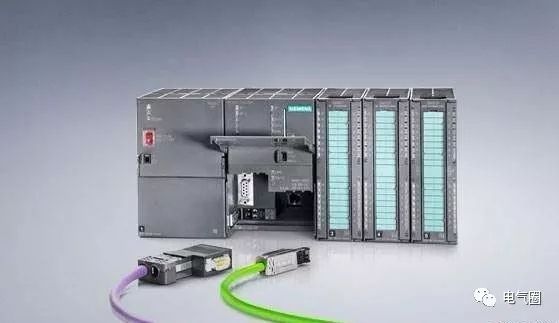
PLC comes in various sizes, so its control range can also vary. The smallest may control just one device, or even a single component at a site; the largest can control multiple devices, an entire production line, or even an entire factory. It can be said that PLCs are indispensable in both large and small industrial control scenarios.
Initially, PLCs were primarily used for logical control of switching quantities. With advancements in technology, the application areas of PLCs have continuously expanded. Nowadays, they are used not only for switching control but also for controlling analog and digital quantities, collecting and storing data, and monitoring control systems; they can also connect to networks and communicate, enabling extensive cross-regional control and management.
PLCs have increasingly become an important member of the family of industrial control devices.
▼
01
Used for Switching Control
PLCs have a strong capability for controlling switching quantities. The number of controlled input and output points can range from a few dozen to hundreds, thousands, or even tens of thousands. Since they can connect to networks, the number of points is virtually unlimited. Regardless of how many points there are, they can be controlled, and the logical problems they can handle can vary widely: combinations, sequences, immediate, delayed, non-counting, counting, fixed order, random operations, etc., can all be managed.
The hardware structure of PLCs is variable, and the software program is programmable, making it very flexible for control. If necessary, multiple sets or groups of programs can be written and called as needed. They are well-suited for the diverse working conditions and state changes found in industrial sites.
There are many examples of using PLCs for switching control across various industries such as metallurgy, machinery, light industry, chemicals, textiles, etc. Almost all industrial sectors require them. Currently, the primary advantage of PLCs, which other controllers cannot match, is their convenience and reliability in switching control.
02
Used for Analog Control
Analog quantities, such as current, voltage, temperature, pressure, etc., change continuously. In industrial production, especially in continuous production processes, it is often necessary to control these physical quantities.
As an industrial control electronic device, if a PLC cannot control these quantities, it is a significant shortcoming. Therefore, PLC manufacturers are heavily investing in this area. Currently, not only large and medium-sized machines can perform analog control, but even small machines can also achieve such control. To perform analog control, a PLC needs to be equipped with A/D and D/A units for converting between analog and digital signals. These are also I/O units, but special ones.
The A/D unit converts the analog signals from external circuits into digital signals to be sent to the PLC; the D/A unit converts the PLC’s digital signals back into analog signals for the external circuit. As a special I/O unit, it still features interference resistance, isolation between internal and external circuits, and the ability to exchange information with input/output relays (or internal relays, which are also a writable area of the PLC’s working memory).
In this context, the A in A/D often refers to current or voltage, and sometimes temperature. The A in D/A generally refers to voltage or current. The voltage and current change ranges are typically 0–5V, 0–10V, and 4–20mA, with some capable of handling both positive and negative values. The D for small machines is often 8-bit binary, while medium and large machines are typically 12-bit binary. A/D and D/A units can be single-channel or multi-channel, with multi-channel units occupying more input/output relays. With A/D and D/A units, the remaining processing is all digital, which is not difficult for PLCs with information processing capabilities. Medium and large PLCs have even stronger processing capabilities, allowing them to perform addition, subtraction, multiplication, and division, as well as square roots, interpolation, and floating-point operations. Some even have PID instructions to perform proportional, derivative, and integral calculations on deviations, resulting in corresponding outputs; they can calculate almost anything a computer can.
Thus, using PLCs to achieve analog control is entirely possible.
PLCs can also be configured with A/D and D/A units combined, and can use PID or fuzzy control algorithms to achieve high-quality control. The advantage of using PLCs for analog control is that while performing analog control, switching quantities can also be controlled simultaneously. This advantage is not available in other controllers, or their control implementation is not as convenient as that of PLCs. Of course, if the system is purely for analog control, using a PLC may not be as cost-effective as using a dedicated regulator.
03
Used for Motion Control
In addition to switching and analog quantities, motion control is another important physical quantity. For instance, the displacement of machine tool components is often represented as digital quantities. An effective method for motion control is NC, or numerical control technology. This technology, which originated in the United States in the 1950s, is now widely used and has become quite mature.
Currently, in advanced countries, the ratio of CNC (Computer Numerical Control) machines in metal cutting has exceeded 40%–80%, with some even higher. PLCs are also based on computer technology and are continuously improving. PLCs can receive counting pulses, with frequencies ranging from several kHz to tens of kHz, and can receive these pulses in various ways, including multi-channel reception. Some PLCs also have pulse output functions, with pulse frequencies also reaching tens of kHz. With these two functions, along with the data processing and calculation capabilities of PLCs, and when equipped with corresponding sensors (such as rotary encoders) or pulse servo devices, they can fully implement various controls based on NC principles. High- and mid-range PLCs have also developed NC units or motion units to achieve point control. Motion units can also achieve curve interpolation and control curved movements.
Therefore, if a PLC is equipped with such units, it can completely use NC methods for digital control. Newly developed motion units have even introduced programming languages based on NC technology, providing convenience for better digital control using PLCs.
04
Used for Data Acquisition
With the development of PLC technology, their data storage capacity has increased significantly. For example, PLCs from Devison can have a data storage area (DM area) of up to 9999 words. This large data storage area can store a substantial amount of data. Data acquisition can be done using counters, which can accumulate recorded pulse counts and periodically transfer them to the DM area. Data acquisition can also use A/D units, which convert analog quantities into digital ones and periodically transfer them to the DM area. PLCs can also be configured with small printers to periodically print the data from the DM area.
PLCs can also communicate with computers, allowing data from the DM area to be read by computers for further processing. In this case, the PLC acts as a data terminal for the computer.
Electric power users have used PLCs to record real-time electricity usage, enabling different billing methods based on varying electricity usage times, encouraging users to consume more electricity during off-peak times, thereby achieving reasonable and energy-saving electricity usage.
05
Used for Signal Monitoring
PLCs have many self-check signals and numerous internal components, yet most users do not fully utilize their capabilities. In fact, they can be used to monitor the PLC’s own operation or the monitored objects. For a complex control system, especially an automatic control system, monitoring and even self-diagnosis is very necessary. It can reduce system failures, make troubleshooting easier when faults occur, improve the average accumulated fault-free operating time, reduce fault repair time, and enhance system reliability.
06
Used for Networking and Communication
PLCs have strong networking and communication capabilities, and new networking structures are continually being introduced.
PLCs can connect to personal computers for communication, allowing computers to participate in programming and management of the PLC, making PLCs more user-friendly.
To fully leverage the capabilities of computers, one computer can control and manage multiple PLCs, with the number reaching up to 32. A single PLC can also communicate with two or more computers to exchange information, enabling more extensive monitoring of the PLC control system.
PLCs can also communicate with each other, allowing one-to-one PLC communication, multiple PLC communications, or even hundreds of PLCs.
PLCs can also network and communicate with smart instruments and intelligent actuators (such as frequency converters), exchanging data and operating in coordination. They can be connected to form remote control systems, with a range that can extend to 10 kilometers or more. They can form local networks where not only PLCs but also high-end computers and various intelligent devices can connect. They can use bus networks or ring networks, and networks can bridge with each other. Networking can organize thousands of PLCs, computers, and intelligent devices into a single network. Nodes in the network can communicate and exchange information directly or indirectly.
Networking and communication align with the current needs of computer-integrated manufacturing systems (CIMS) and intelligent factories. It allows industrial control to connect from points (Point) to lines (Line) and then to surfaces (Aero), integrating equipment-level control, production line control, and factory management control into a whole, thus creating higher efficiency. This infinitely promising prospect is becoming clearer for our generation.
The above points emphasize the qualitative aspects of PLC applications. Quantitatively, PLCs come in various sizes, so their control ranges can also vary. The smallest may control just one device, or even a single component at a site; the largest can control multiple devices, an entire production line, or even an entire factory. It can be said that PLCs are indispensable in both large and small industrial control scenarios.
– 【 END 】 传承电气技术 倡导技术创新
EA(Source:Electrical Applications)
『Copyright of this article belongs to the author and if there is any infringement, please contact for deletion.』Content is correct, please like and comment below!!
Welcome to join the electrical application WeChat communication group▼