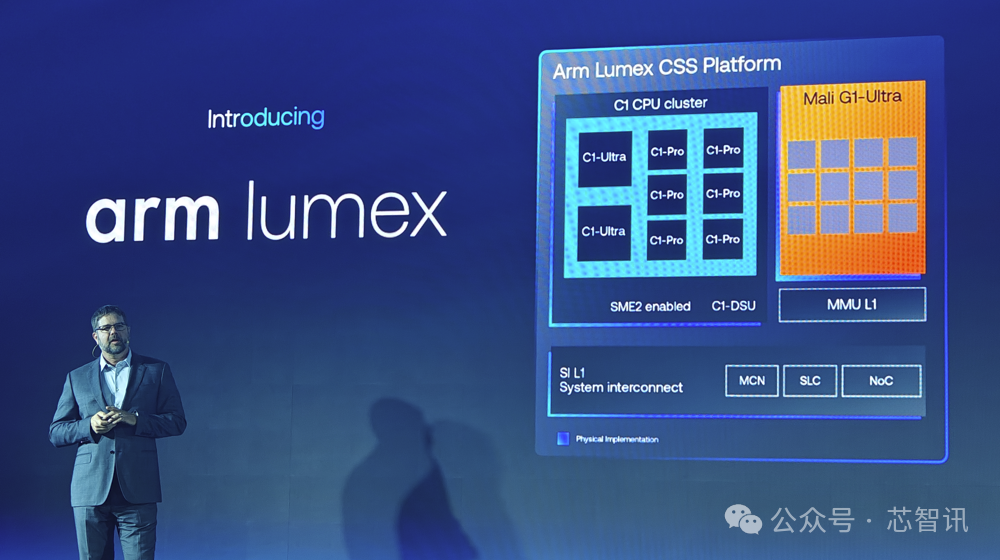
On September 10, the Arm UNLOCKED conference was held in Shanghai. At this conference, Arm officially released the Arm Lumex Compute Subsystem (CSS) for mobile devices, which includes the new C1 series CPU cluster based on the Armv9.3 instruction set, as well as the Mali G1 GPU series that supports the next generation of ray tracing technology. The C1 CPU clusters support the Scalable Matrix Extension (SME2), significantly enhancing CPU support for AI and ML workloads.
1. New Armv9.3, Adding Support for SME2
While many current AI workloads can achieve higher computational efficiency using GPUs, NPUs, and other computing units, CPU manufacturers are continuously enhancing CPU AI capabilities by integrating new instruction sets.
Over the past few years, Arm has been committed to improving CPU AI capabilities, such as introducing Advanced SIMD (also known as Arm Neon instructions) extensions in the Armv7 architecture to explore machine learning (ML) workloads; Armv8.4-A supports 8-bit integer dot product instructions; and Armv8.6-A supports vector integer and floating-point matrix multiplication instructions for various data types.
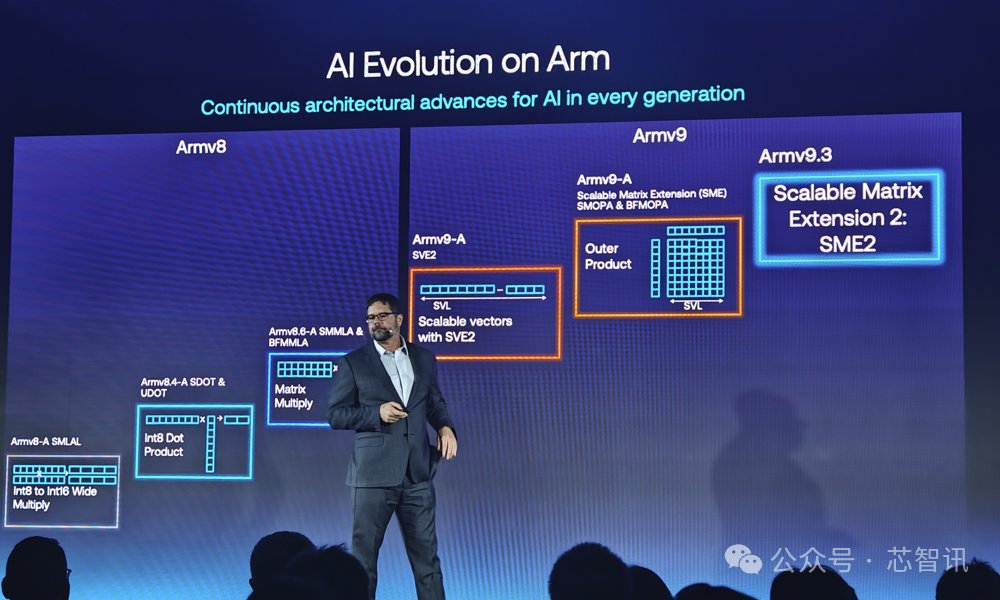
With the Armv9 architecture, Arm has integrated features into the CPU to accelerate and protect advanced generative AI workloads such as large language models (LLM). For example, Armv9-A introduced Scalable Vector Extension 2 (SVE2) for digital signal processing (DSP), media, and general vectorization; Armv9.2-A introduced Scalable Matrix Extension (SME) instructions for the first time, which accelerate AI and ML workloads and provide higher performance, energy efficiency, and flexibility for AI and ML applications running on Arm CPUs.
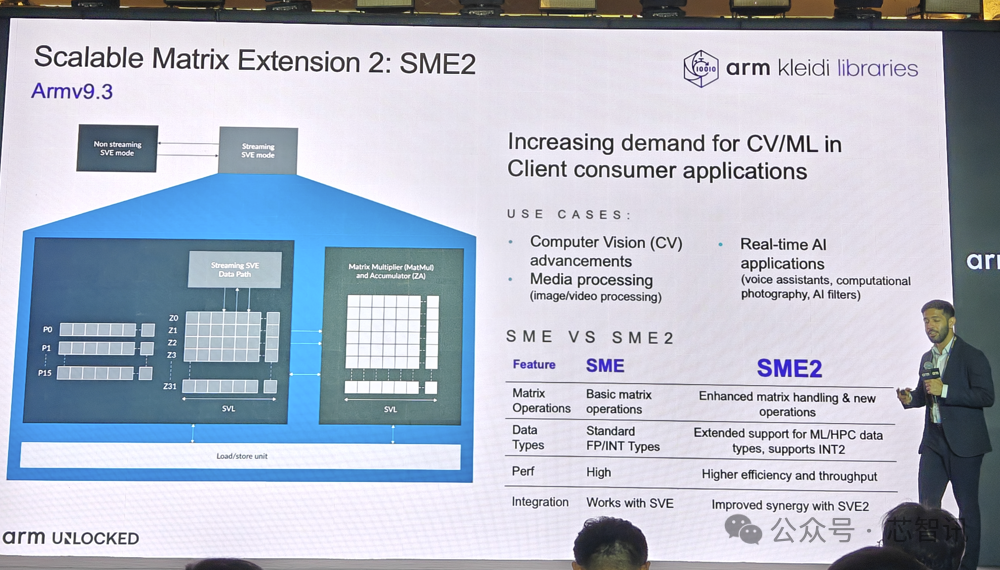
The new Armv9.3 adds support for SME2, which builds on SME by adding multiple vector instructions, allowing for the reuse of architectural states (ZA Array) in matrix and vector operations, and providing higher throughput for vector processing. This helps reduce memory bandwidth and save power by compressing AI formats, achieving a balance in vector and matrix acceleration. SME2 can also dynamically dequantize and decompress 2-bit and 4-bit weights to save memory bandwidth. In the context of increasingly complex generative AI workloads and rising power consumption, these features are crucial and demonstrate Arm’s commitment to addressing the endless energy demands of AI.
2. High-Performance Arm C1 CPU Cluster for AI
The new C1 CPU cluster is one of the components of the Arm Lumex CSS platform and is the first CPU series product based on the Armv9.3 architecture.
The highest performance Arm C1 CPU cluster integrates the new C1-Ultra CPU, along with the flexibly combinable C1-Premium, C1-Pro, and C1-Nano CPU cores, allowing for performance and energy efficiency improvements based on specific partner needs. Additionally, the C1 CPU directly integrates the second generation of Arm Scalable Matrix Extension (SME2) through the Armv9 architecture, bringing revolutionary breakthroughs to accelerate AI experiences.
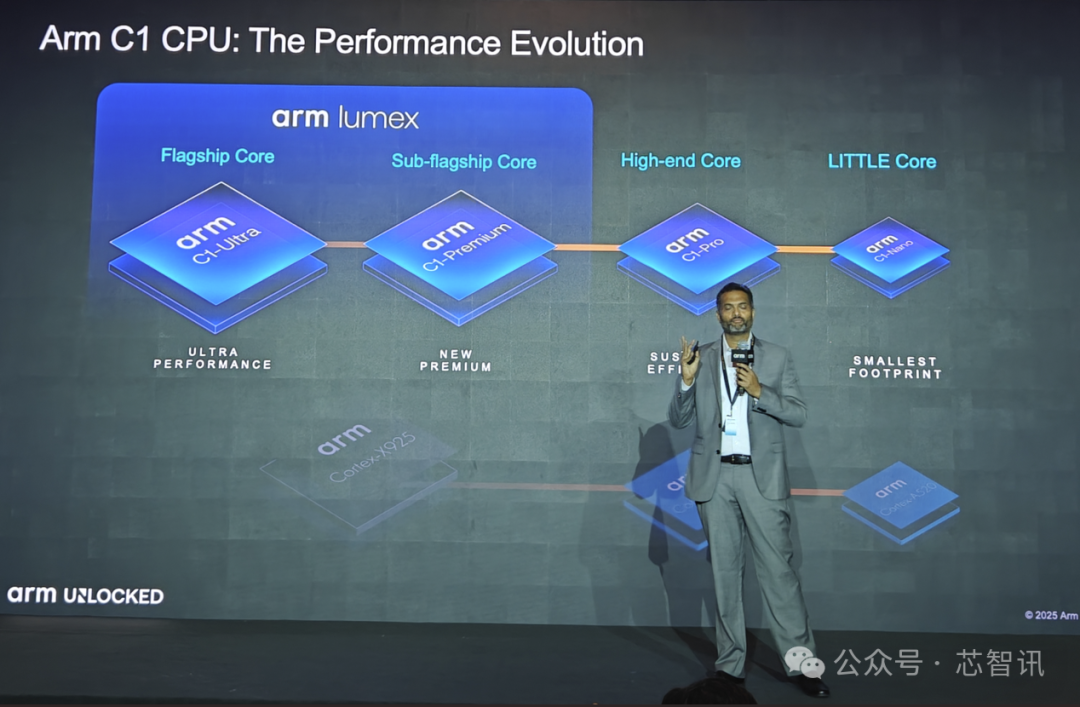
1. C1-Ultra: The Strongest Super Core
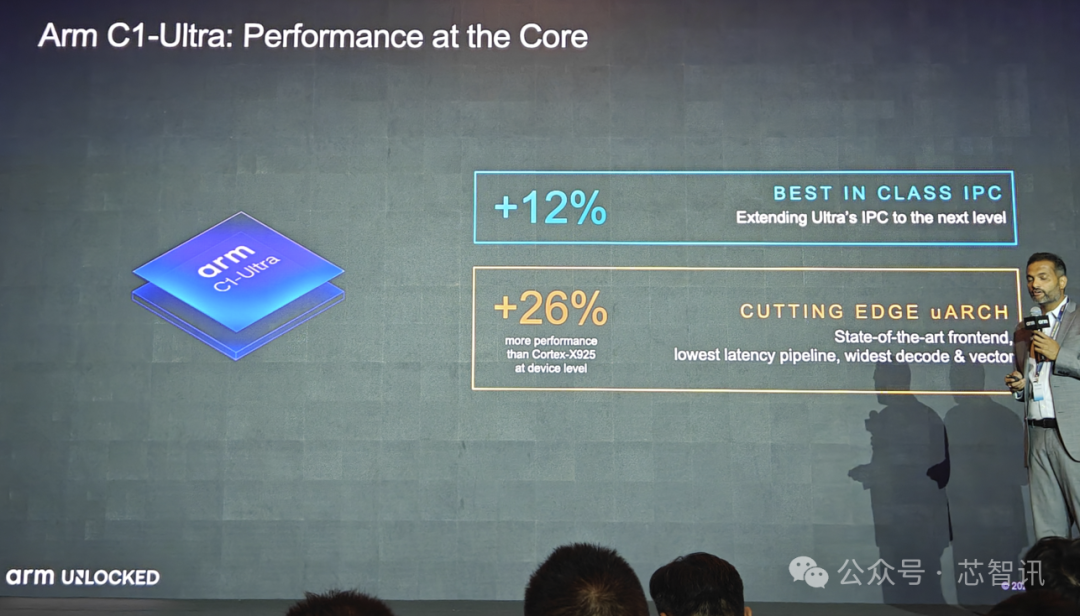
Specifically, C1-Ultra is the strongest super core in the C1 CPU series. It features industry-leading front-end design optimized for real workloads; it has the widest and highest throughput microarchitecture in the industry; and it boasts an excellent prefetcher that optimizes performance within area constraints.
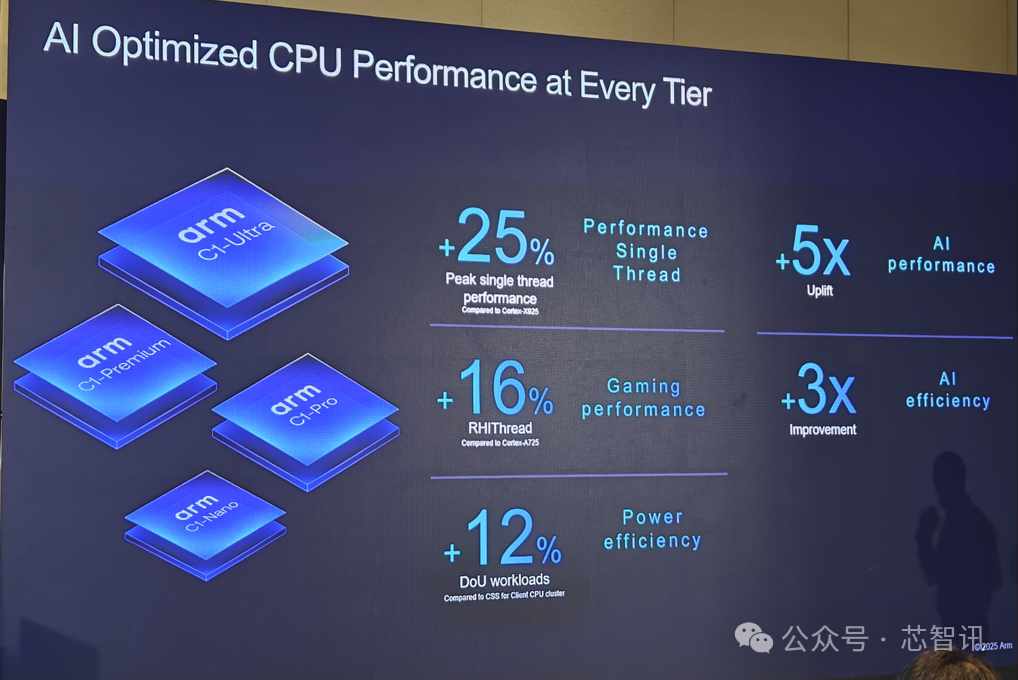
These features have further improved the IPC of C1-Ultra by 12%, with an IPC increase of over 75% compared to Cortex-X1, making the performance of the C1-Ultra core approximately 26% higher than that of Cortex-X925.
 According to Geekbench 6.3 test data, under the same performance level, C1-Ultra’s power consumption is 28% lower than that of Cortex-X925, and in terms of maximum single-thread performance, C1-Ultra is indeed about 25% higher than Cortex-X925.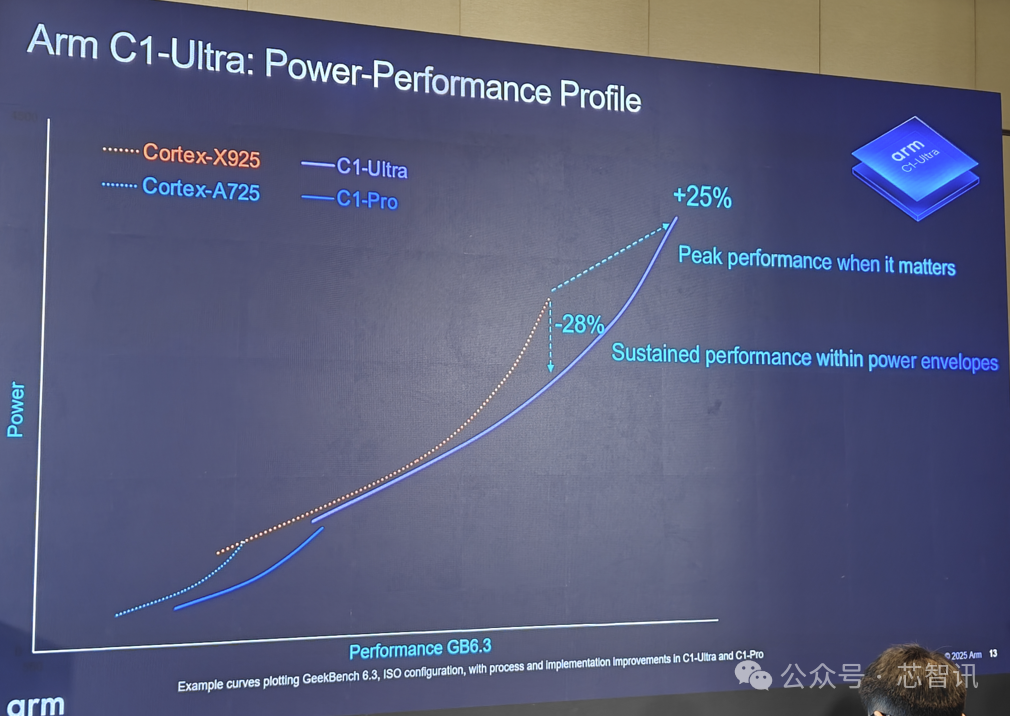
2. C1-Premium: Highest PPA
C1-Premium is Arm’s first sub-flagship processor CPU, pursuing the highest PAA (Performance, Power, Area).
According to Arm, the C1-Premium core area is 35% smaller than that of the C1-Ultra core, which includes a private L2 cache. This CPU maintains the same performance level with a smaller footprint in benchmark tests such as the SPEC suite, achieving excellent area efficiency.
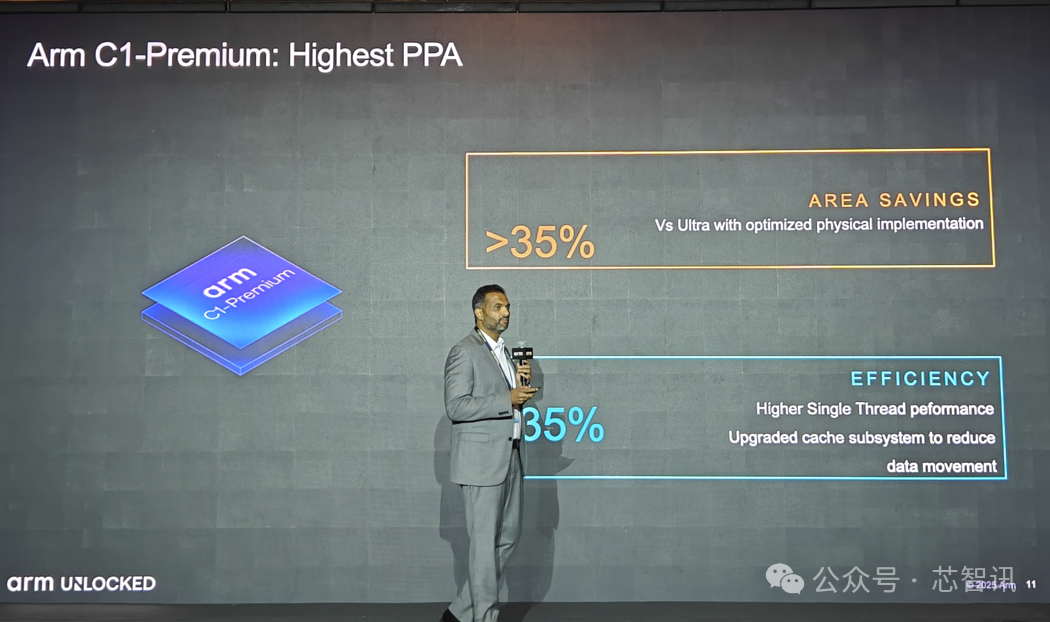
Thanks to its extremely high PPA, C1-Premium can be flexibly combined to provide excellent performance for new market segments.
For example, replacing 2 C1-Ultra with 2 C1-Premium in a CPU originally consisting of 2 C1-Ultra + 6 C1-Pro can reduce the overall area by 35%; similarly, upgrading from 4 C1-Pro + 4 C1-Nano to 2 C1-Premium + 6 C1-Pro can achieve a 35% performance increase without significantly increasing area.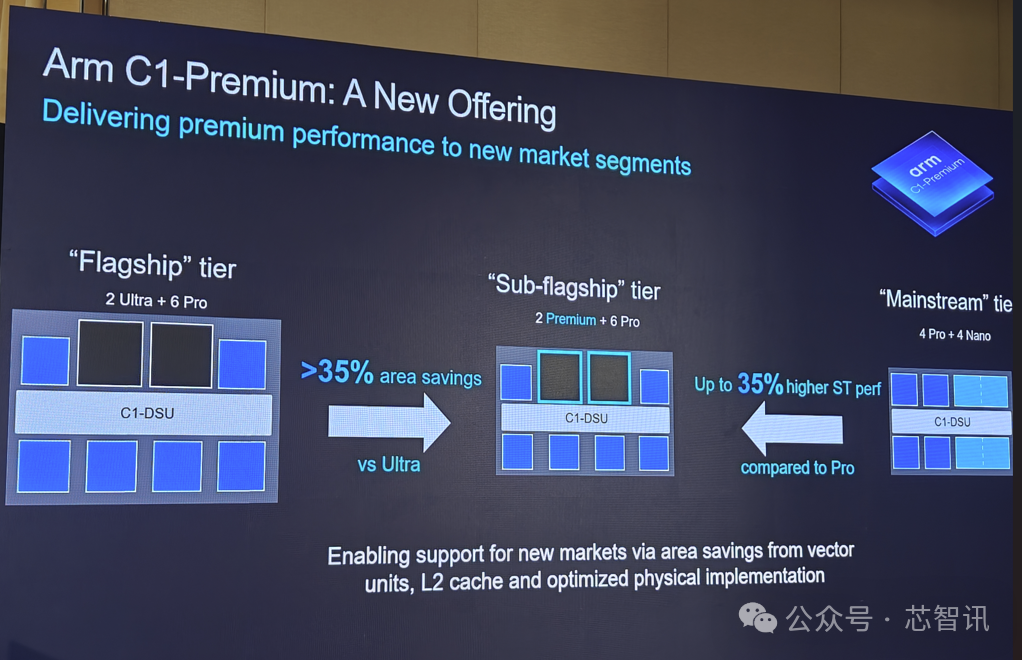
However, Arm has not provided more data regarding the performance of C1-Premium itself.
3. C1-Pro: Highest Efficiency Big Core
C1-Pro is positioned as the highest efficiency big core. At the microarchitecture level, Arm C1-Pro introduces enhanced branch prediction and memory system updates, especially suitable for multitasking in real-world use cases.
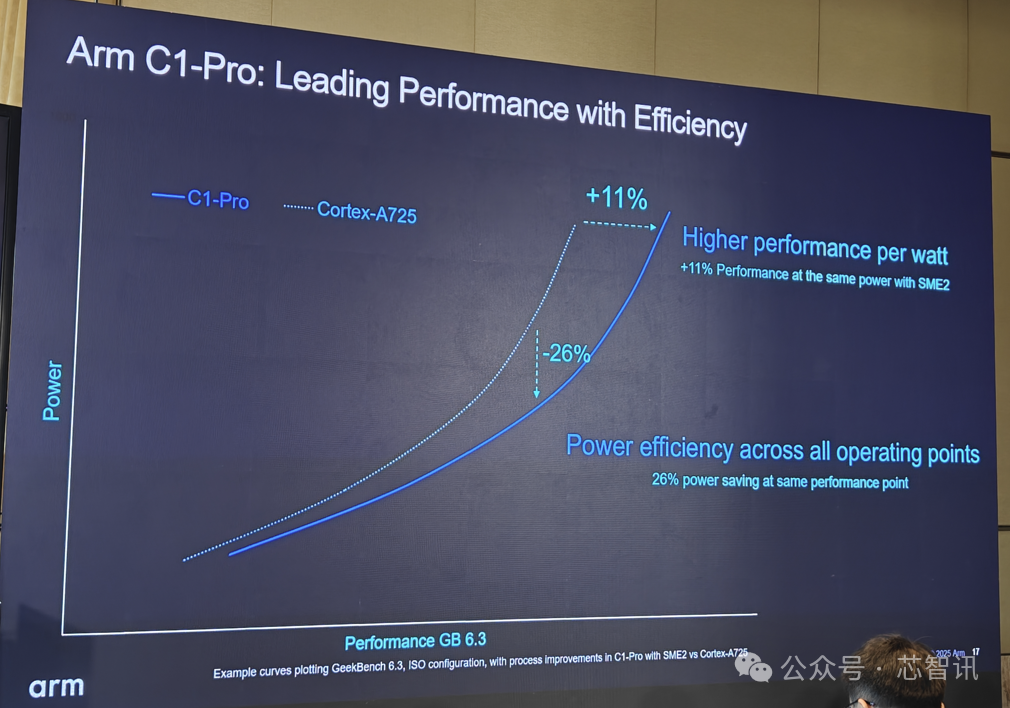
From Geekbench 6.3 test performance, under the same performance level, C1-Pro’s power consumption is 26% lower than that of Cortex-A725; at the same power consumption level, C1-Pro’s performance is 11% higher than that of Cortex-A725.
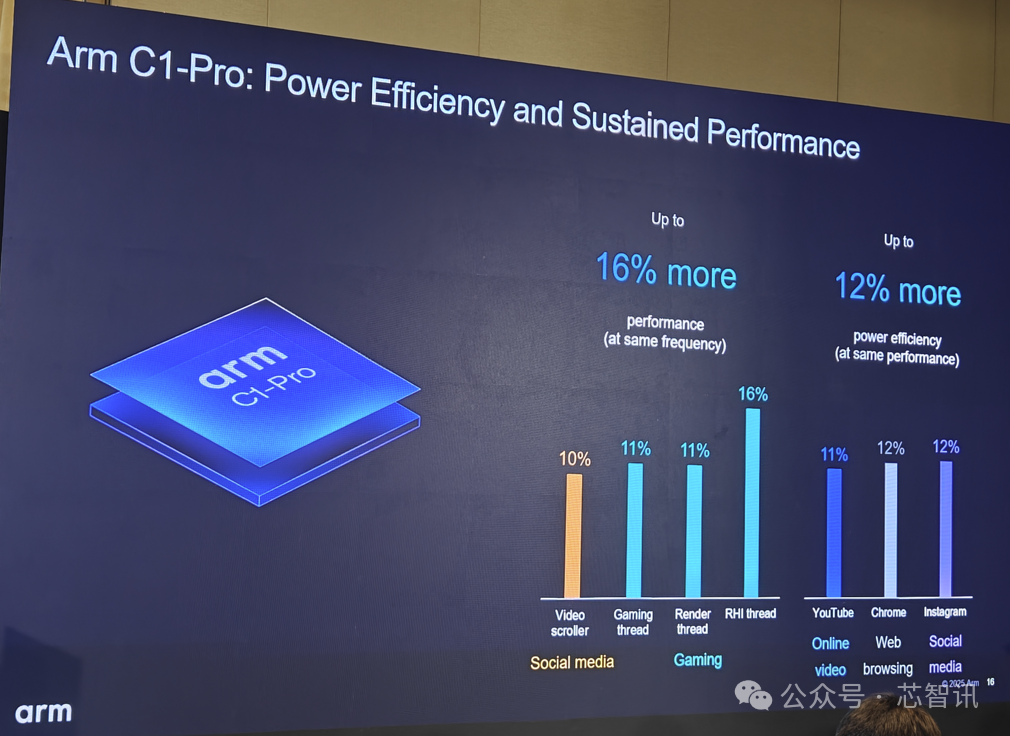
In related application tests, compared to Cortex-A725, the C1-Pro CPU achieved a maximum performance improvement of 16% at the same clock frequency; at the same performance level, power consumption was reduced by 12%.
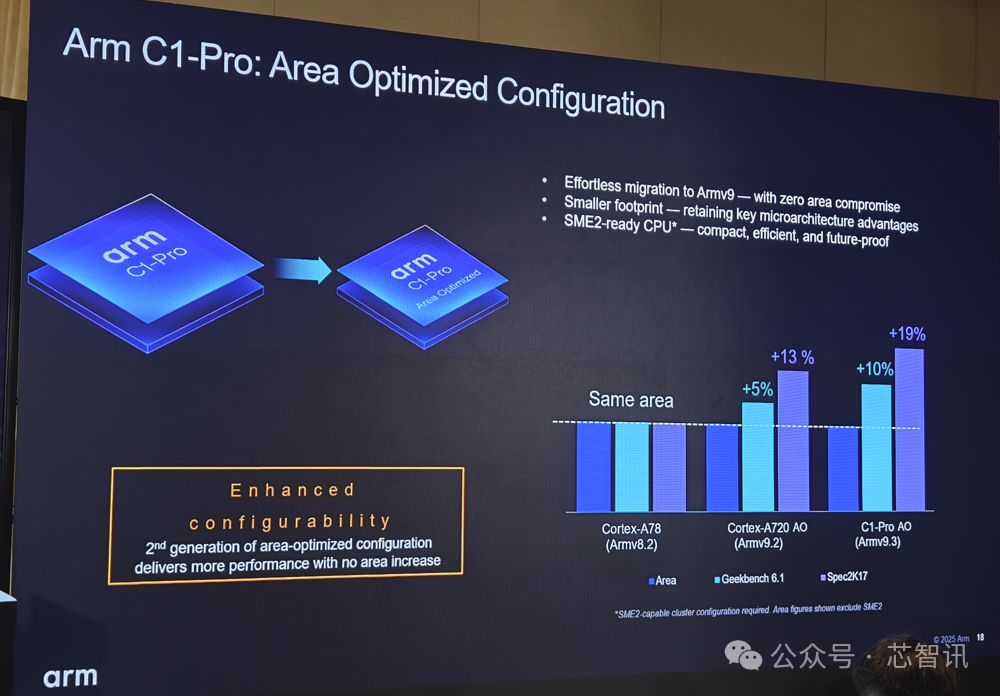
It is worth mentioning that C1-Pro also has area-optimized configuration options that can help customers easily migrate to the latest Armv9.3 without sacrificing any area while retaining key microarchitecture advantages and supporting SME2.
4. C1-Nano: Highest Efficiency Small Core
C1-Nano integrates the advantages of the Arm C1 series CPU while occupying the least area. Compared to the previous Cortex-A520 small core, C1-Nano significantly improves power efficiency, achieving a 26% increase in power efficiency compared to Cortex-A520 under the same process; it reduces L3/DRAM interactions, achieving minimal area and maximum area efficiency. Compared to Cortex-A520, SPECint2017 performance improved by 5.5%, with a core area increase of 2%; instruction fetching has been improved, decoupling the prediction/fetch pipeline, resulting in over 10% performance improvement in fetching workloads.
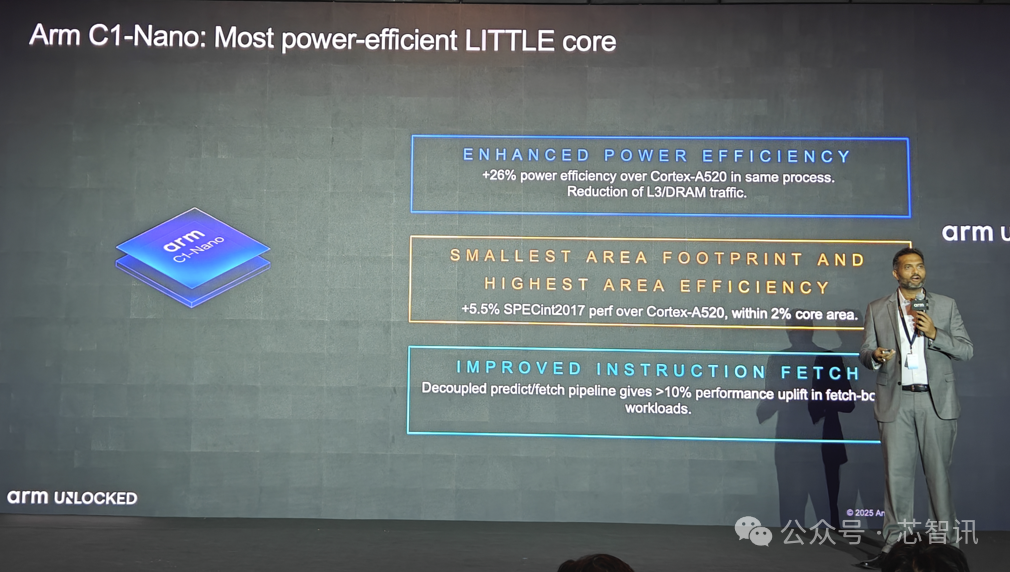
The excellent high energy efficiency and low power consumption of C1-Nano make it an ideal choice for wearable devices and compact consumer electronics.
5. C1-DSU
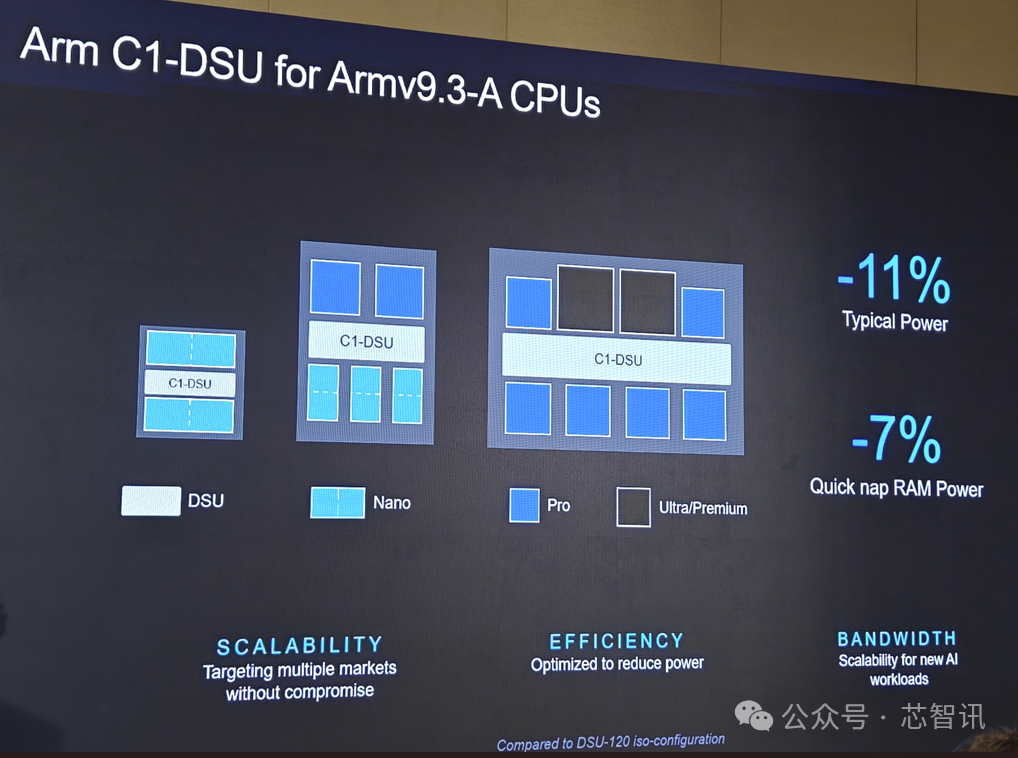
DSU (DynamIQ Shared Unit) is a key component in Arm’s CPU cluster architecture, used to manage the cores of multi-core processors, optimizing performance and energy efficiency. For the new C1 CPU cluster, Arm has also introduced the new C1-DSU, which adds support for SME2.
According to Arm, compared to DSU-120, the typical power consumption of C1-DSU is reduced by 11%, and the power consumption of fast wake-up RAM is reduced by 7%.
6. Arm C1 CPU Cluster Meets Various Edge Applications
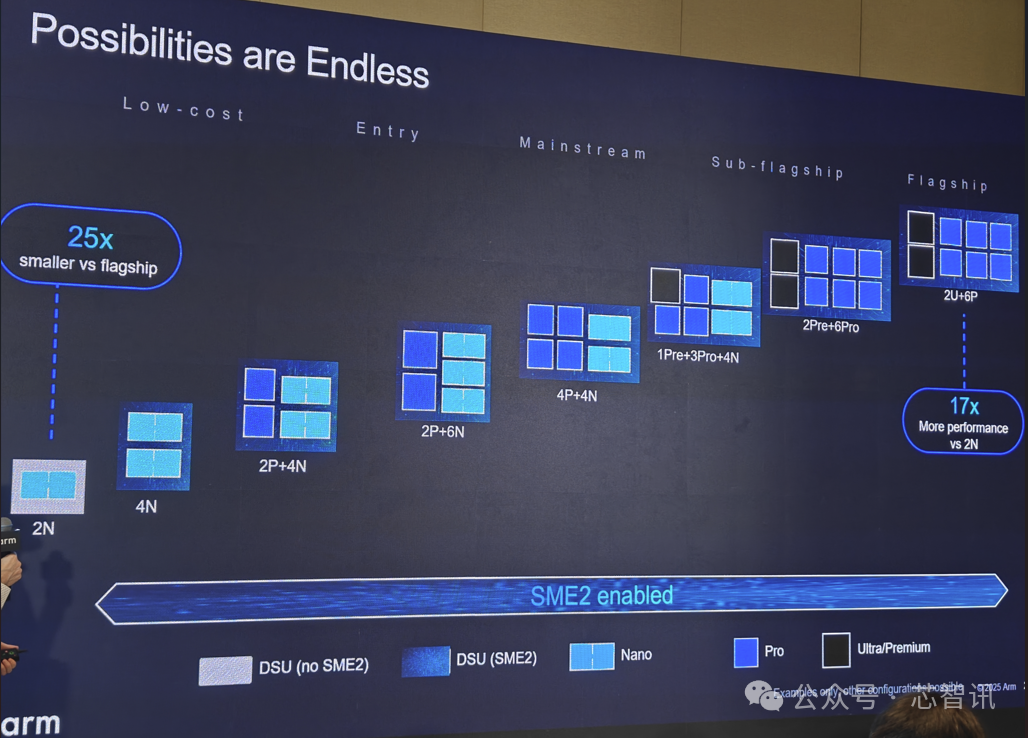
The four CPU cores of the C1 series also provide a wide range of combinations for the Arm C1 CPU cluster.
For instance, comparing the lowest-end configuration of 2 C1-Nano (based on a DSU that does not support SME2) with the highest-end configuration of 2 C1-Ultra + 6 C1-Pro (based on a DSU that supports SEM2), the latter achieves 17 times the performance of the former, but the area is also 25 times that of the former. This highlights the significant performance and area span, which can be extended to various levels of consumer electronics and mobile devices, providing different levels of performance, power consumption, and area efficiency for diverse edge workloads.
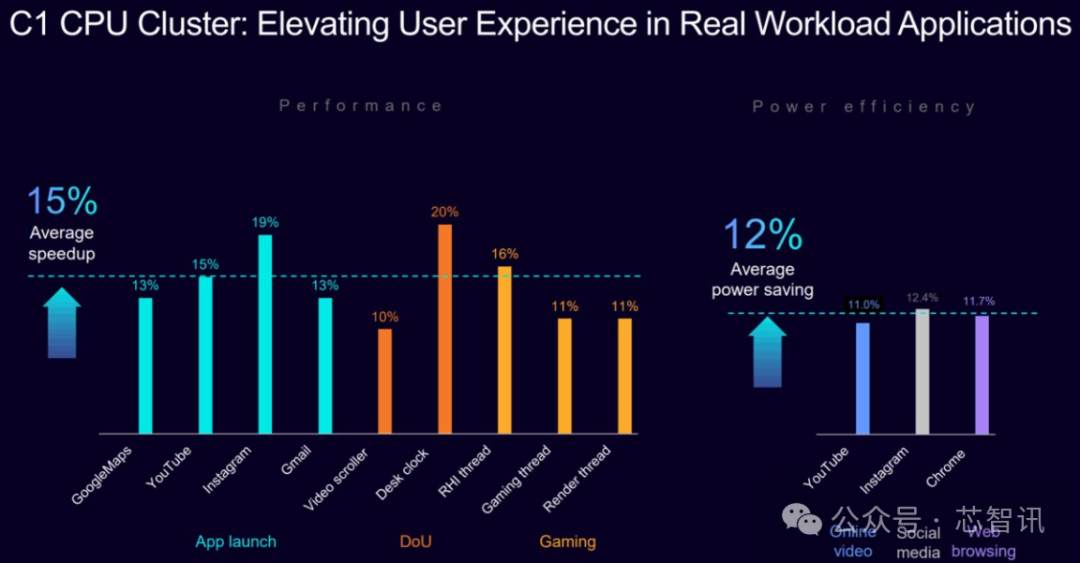
The Arm C1 CPU cluster performs outstandingly in practical use cases. In industry-leading performance benchmarks, this CPU cluster has an average performance improvement of 30% compared to the previous generation CPU cluster under the same conditions, with an average speedup of 15% in applications such as gaming and video streaming. Meanwhile, in everyday mobile workloads (such as video playback, social media, and web browsing), this CPU cluster has an average power consumption reduction of 12% compared to the previous generation CPU cluster under the same conditions.
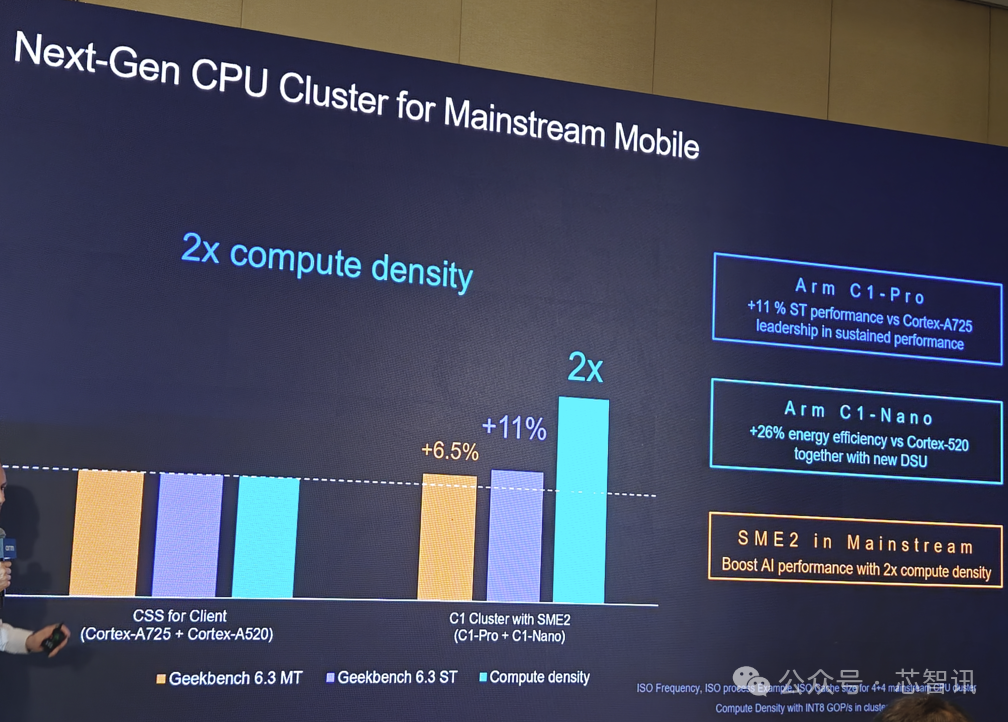
According to Arm, the next generation of mainstream smartphone CPU clusters may be the C1 cluster supporting SME2, such as a combination of C1-Pro + C1-Nano, which is expected to provide an 11% performance improvement and double the AI performance density compared to the current Cortex-A725 + Cortex-A520 combination.
7. AI Performance Improvement with SME2
Thanks to the matrix extensions built into SME2, the Arm C1 CPU can accelerate AI functions, including large language models (LLM) involving extensive matrix operations, media processing (images and videos), speech recognition, computer vision, real-time applications (AI assistants, computational photography, and AI filters), and multimodal applications. SME2 is a new intelligent upgrade based on SME, enhancing performance, reducing memory usage, and enabling smoother edge AI operations, especially in applications with high real-time requirements such as audio generation, camera inference, computer vision, and instant messaging.
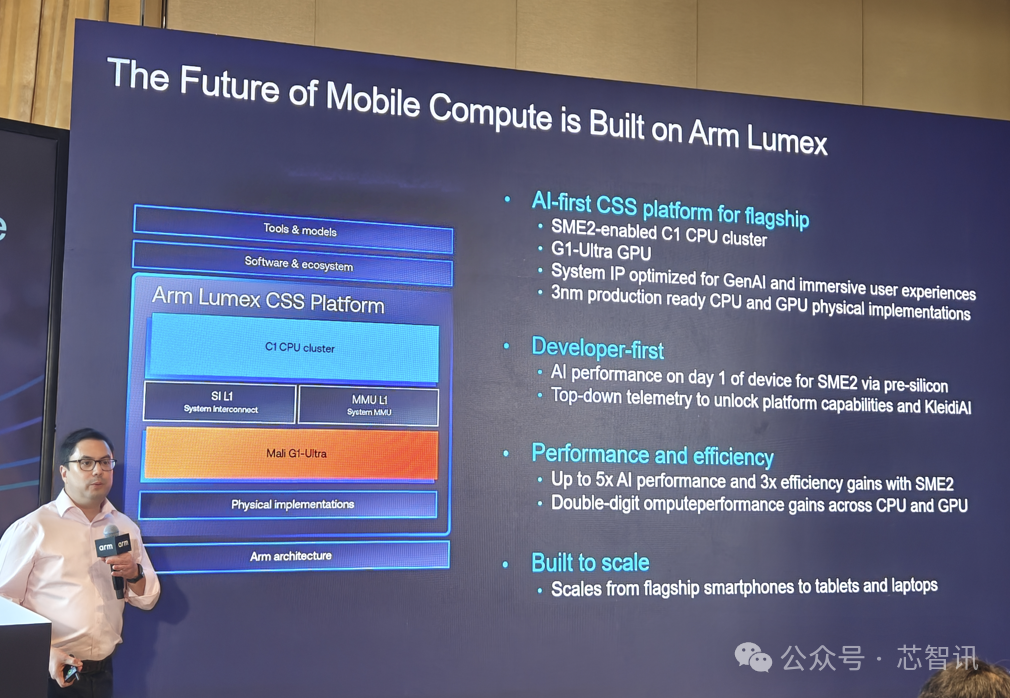
According to Arm, for workloads such as generative AI, speech recognition, typical machine learning (ML), and computer vision (CV), the Arm C1 CPU cluster with SME2 enabled can deliver a 5-fold AI performance improvement compared to the previous generation CPU cluster under the same conditions. Additionally, with SME2, this C1 CPU cluster can achieve up to 3 times energy efficiency optimization. These improvements in AI performance and energy efficiency can provide users with a smoother and more responsive edge experience.
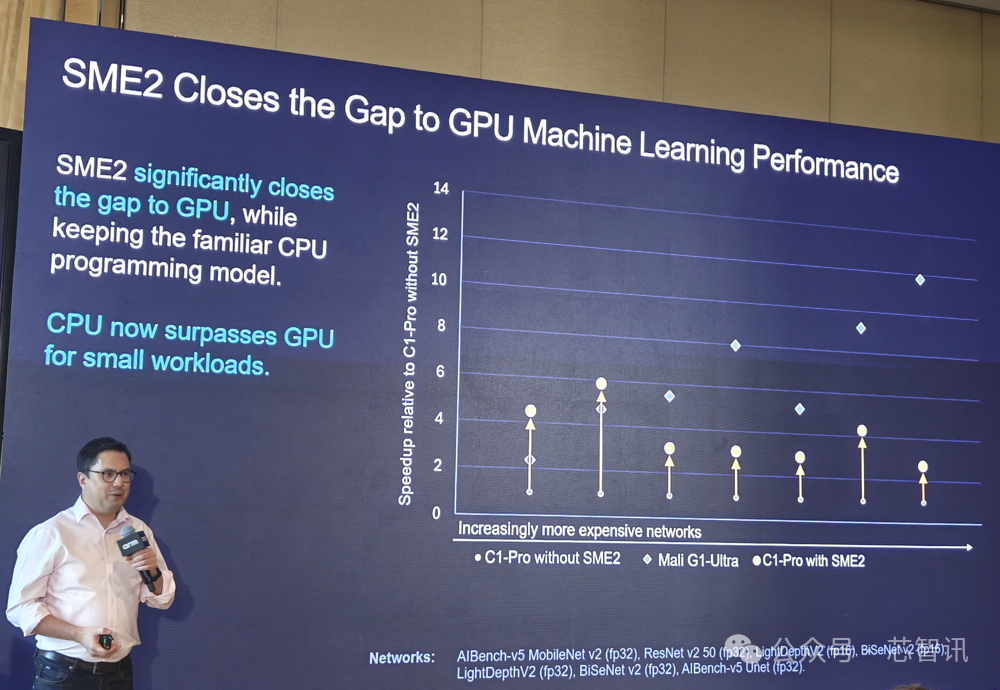
Arm states that SME2 significantly narrows the AI performance gap between the C1 CPU and GPU, especially for small AI workloads, where the CPU has now surpassed the GPU while retaining the flexibility of the CPU.
From the test data released by Arm, without SME2 support, the AI performance of the C1-Pro CPU is vastly inferior to that of Arm’s latest Mali G1 GPU. However, with the support of SME2, the AI performance of the C1-Pro CPU has significantly improved, especially when running smaller neural networks, where its performance even surpasses that of Arm’s latest Mali G1 GPU.
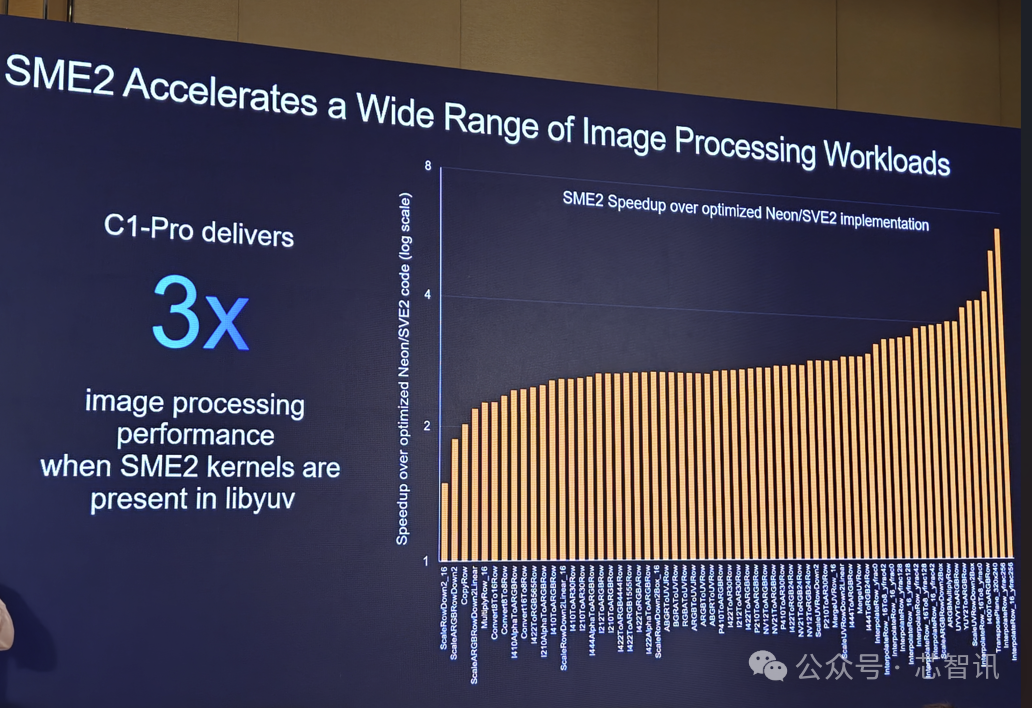
SME2 can also accelerate various image processing workloads; for example, in libyuv, the image processing performance of the C1-Pro with SME2 support has improved to three times the original.
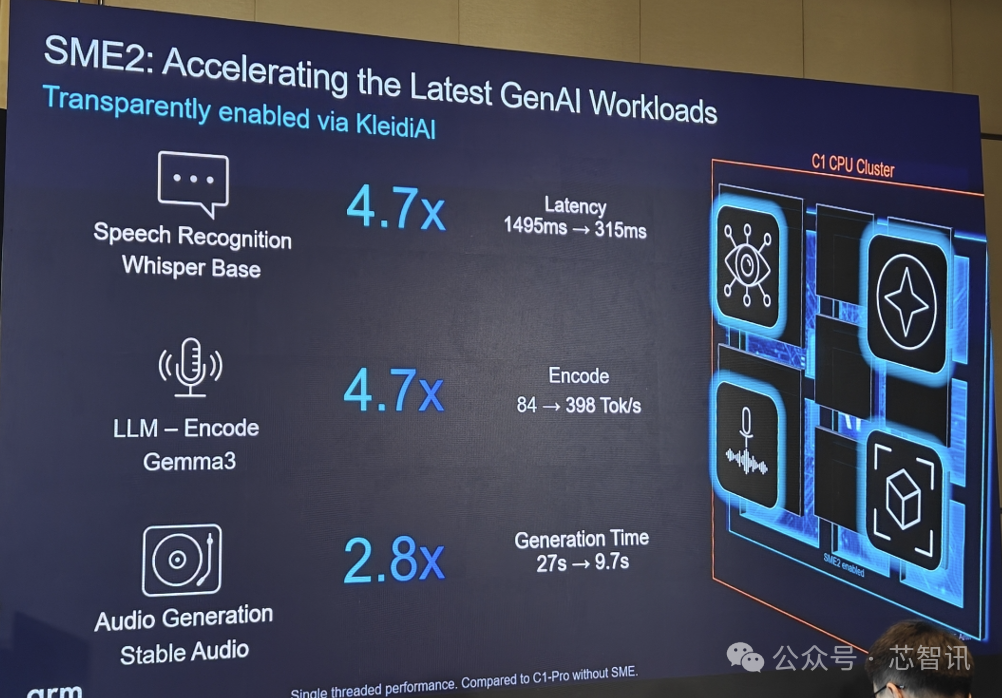
For Arm’s partners and developer ecosystem, these enhancements can significantly accelerate AI performance across different workloads and use cases compared to hardware without SME2 features, including:
Reducing latency by 4.7 times when processing speech workloads on Whisper Base; achieving a 4.7 times increase in AI performance during chat interactions on the Google Gemma 3 model; and speeding up audio generation by 2.8 times on the Stability AI Stable Audio model.
8. Mali G1-Ultra Redefines Gaming and AI Experience
The gaming performance of mobile phones has always been a key capability of concern for manufacturers and users. According to the latest Newzoo report, mobile game players account for up to 83% of the global gaming population, with a total mobile gaming time of 390 billion hours.
As a dominant player in mobile computing platforms, Arm has been dedicated to enhancing mobile gaming experiences using its GPUs. Data shows that as of now, over 12 billion chips equipped with Arm GPUs have been shipped.
This time, Arm’s newly launched Mali G1-Ultra is a GPU designed for the next generation of mobile games and AI experiences, based on Arm’s fifth-generation GPU architecture. It introduces several core-level improvements aimed at achieving high-end immersive gaming experiences on mobile devices.
Compared to the previous generation Immortalis-G925 GPU, Mali G1-Ultra also brings a new generation of Arm ray tracing unit RTUv2, doubling the ray tracing performance compared to the previous generation; with improvements in IRD, tiler, IDVS/computation scheduling, and 2x faster access to unified memory, Mali G1-Ultra’s performance in mainstream graphics benchmarks has improved by 20%; through optimized computation and new MMUL.FP16 instructions, AI performance has also increased by 20%; the power consumption per frame has been reduced by 9%.
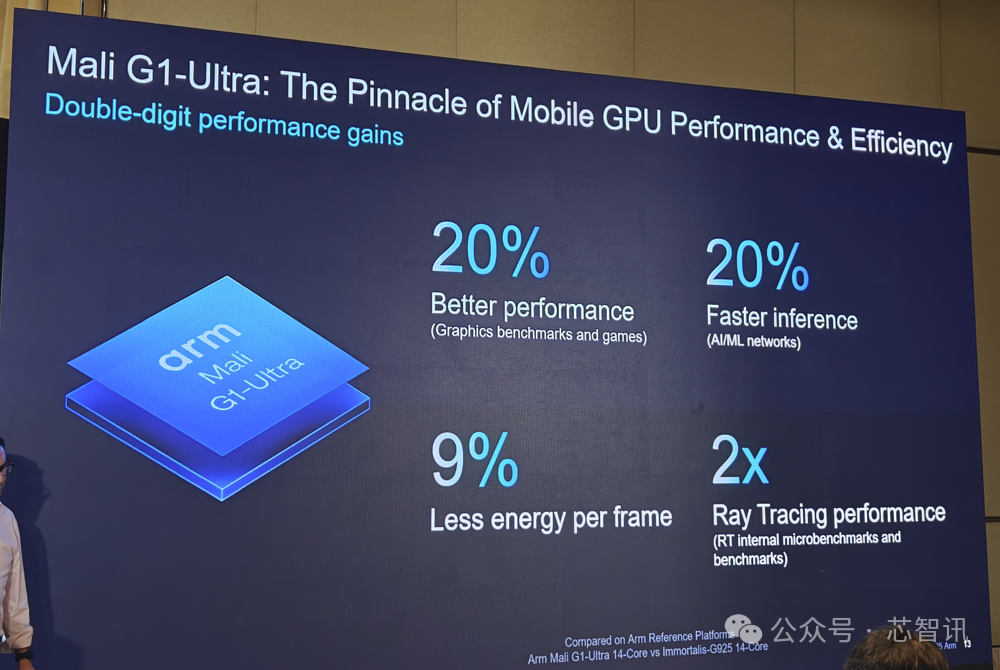
In addition to the Mali G1-Ultra aimed at flagship smartphones, Arm also launched the Arm Mali G1-Premium and Mali G1-Pro GPUs, designed to provide scalable performance and energy efficiency options to meet the needs of different mobile device markets and product tiers. The Mali G1 GPU series offers options ranging from 1 to 24 shader cores, allowing system-on-chip (SoC) designers to flexibly configure the GPU based on their target market and specific needs.
1. New Generation Ray Tracing Unit RTUv2
Thanks to the ray tracing unit RTUv2 in Mali G1-Ultra, ray tracing performance can be doubled in games that enable hardware ray tracing, with frame rates increasing by 40%. The new ray tracing unit is designed for real-time performance on mobile devices, achieving desktop-level lighting, reflections, and shadows.
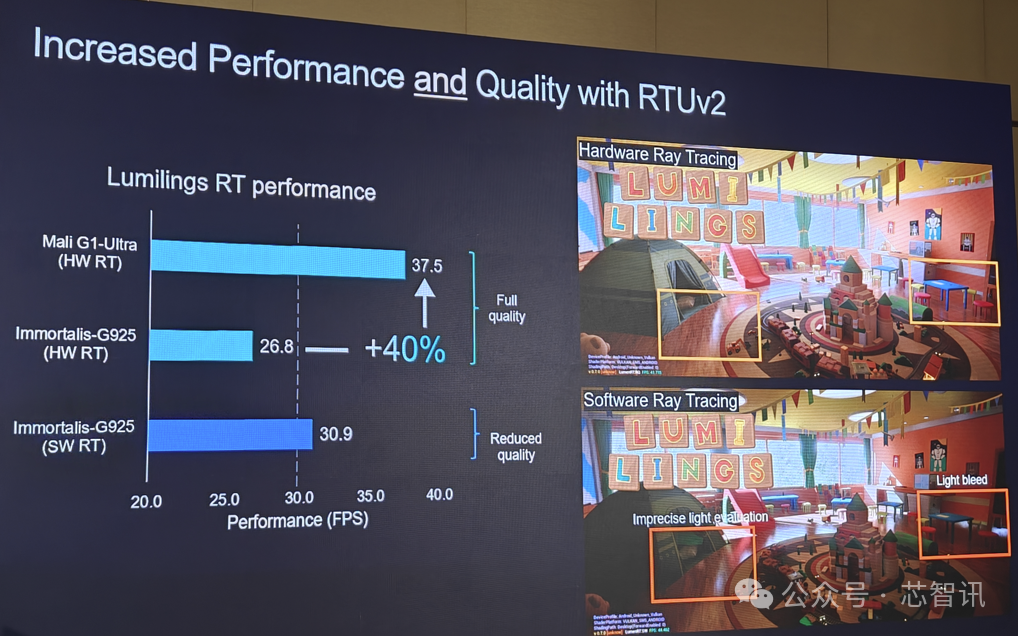
Compared to the previous generation RTUv1, RTUv2 is smarter and adopts a single ray model, significantly enhancing support for non-uniform rays and becoming a fully independent hardware unit. These design changes bring significant energy efficiency and performance advantages. For example, its modular architecture and independent power domain allow RTUv2 to power down when the device is idle, saving power for other tasks.
Given the performance and energy efficiency balance achieved through RTUv2, Mali G1-Ultra can provide long gaming experiences on flagship smartphones, making it an ideal configuration for flagship smartphones.
2. Edge Real-Time Intelligent Acceleration
AI is reshaping how mobile devices think, perceive, and respond, with GPUs playing a key role in this evolution. Mali G1-Ultra introduces new matrix multiplication unit (MMUL) FP16 instructions that can accelerate key edge AI workloads such as semantic segmentation, denoising, depth estimation, object detection, speech recognition, and image enhancement. In FP32 ML networks, Mali G1-Ultra’s performance has increased by up to 104% compared to the previous generation Immortalis-G925 (also 14 cores).
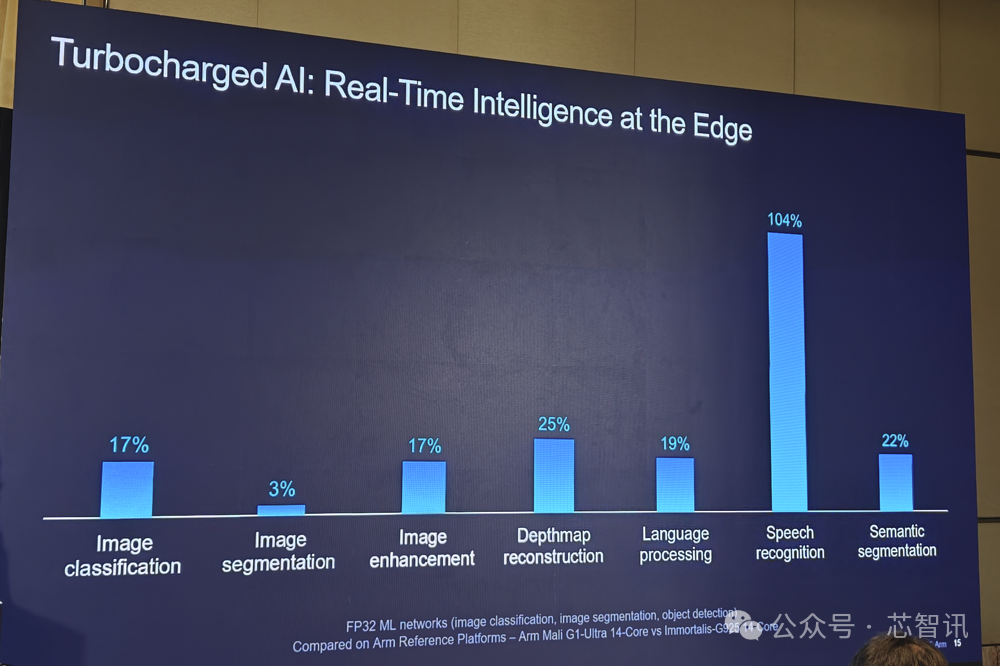
By expanding the L2 cache and optimizing interconnect design, Mali G1-Ultra is designed for parallel processing of AI and graphics workloads, significantly reducing memory bottlenecks and ensuring responsive and smooth real-time experiences. Whether enhancing photo quality or supporting smarter application interactions, Mali G1-Ultra achieves responsive real-time intelligence at the edge.
3. Scalable Performance with New Architectural Features
According to reports, Mali G1-Ultra introduces dual-stacked shader cores, doubling internal bandwidth and reducing congestion; it increases fast access to unified registers to significantly reduce memory fetch during shader execution. These updates collectively enhance responsiveness effects, including real-time lighting and physically-based rendering (these effects are typically compute-intensive workloads).
Additionally, Mali G1-Ultra introduces Arm Image Region Dependencies (IRD), a smarter scheduling feature that allows the GPU to process different parts of the screen simultaneously, improving performance and reducing idle time in complex scenes.
4. Tailored for Developers
To help developers achieve finer performance optimizations, the Mali G1 GPU provides stronger observability through block-based hardware counters. These counters can provide per-frame insights into GPU activity by region, allowing developers to more efficiently identify hotspots and balance workloads.
These counters can be accessed via Vulkan extensions and will support RenderDoc in future Android versions. This enables game engine companies, game studios, and device OEMs to more easily extract maximum performance from this architecture while maintaining visual quality and battery efficiency.
The Mali G1 GPU also supports Arm’s Accuracy Super Resolution technology, a temporal super-resolution technology that enhances image quality while reducing GPU workload. This technology is provided through Unreal Engine 5 and has been integrated into the mobile version of Fortnite. Arm ASR helps developers maintain high frame rates without sacrificing visual fidelity, achieving smoother gaming experiences and clearer detail effects across various mobile devices.
9. Arm Lumex CSS Platform
In May 2024, Arm launched the Compute Subsystem for Client (CSS for Client), integrating the latest Armv9.2 instruction set CPU clusters, including Cortex-X925 CPU, Cortex-A725 CPU, updated Cortex-A520 CPU, and Immortalis-G925 GPU, among other IPs.
The latest release of the Arm Lumex CSS platform is specifically designed for flagship smartphones and large-screen computing devices, integrating the previously introduced Arm C1 CPU cluster, Mali G1-Ultra GPU, C1-DSU, and also bringing Arm SI L1 system interconnect and Arm MMU L1 system memory management unit among other IPs.
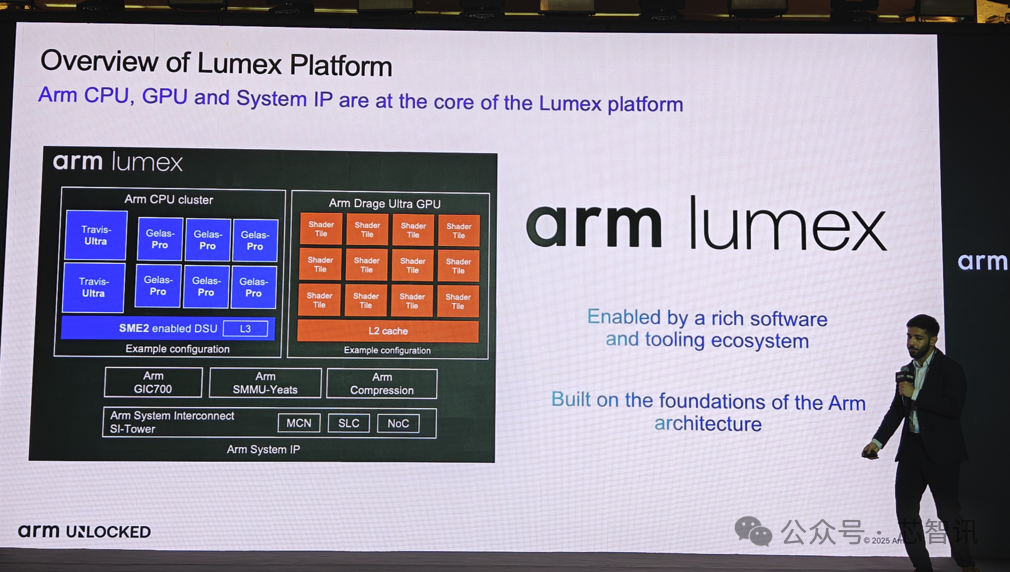
1. System IP for AI-First SoC Platforms
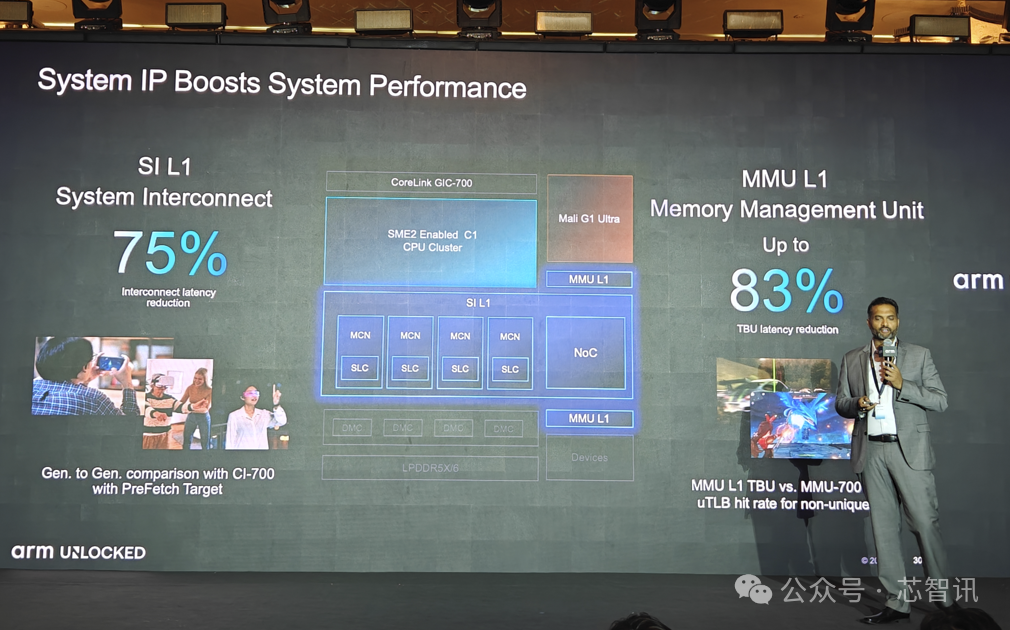
The Lumex CSS platform must support AI-first experiences, which cannot be limited to CPU, GPU, and the previously mentioned enhancements of multi-core scheduling DSU IP; it must also continuously evolve at the interconnect and memory architecture level. Therefore, Arm has brought new SI L1, MMU L1, and NoC S3 system IPs to the Lumex CSS platform, optimized to meet the bandwidth and latency requirements of high-demand AI and other compute-intensive workloads.
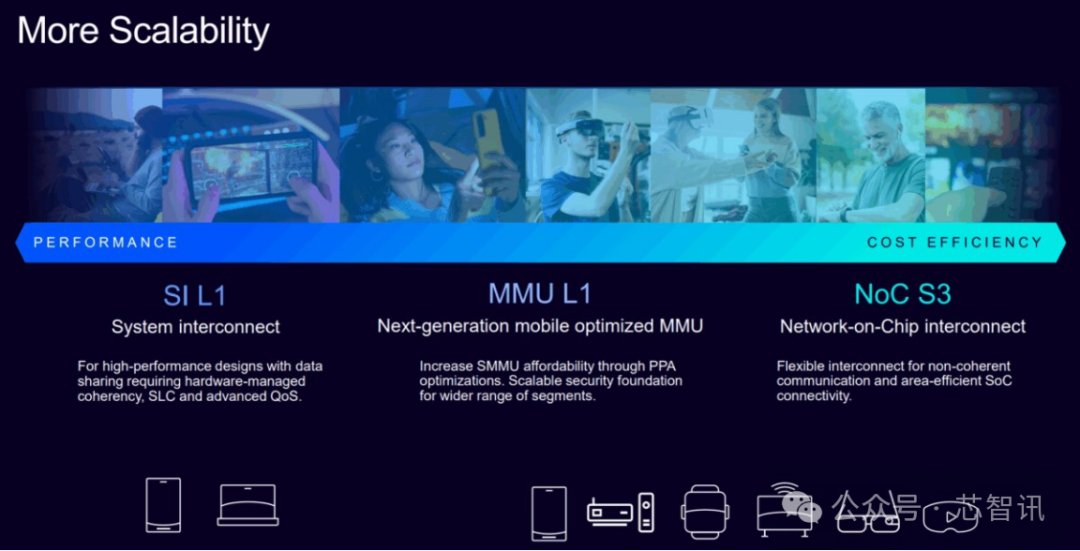
Specifically, the new SI L1 system interconnect is suitable for high-performance designs requiring hardware management of consistency, SLC, and advanced QoS data sharing. It is equipped with industry-leading, highly area-efficient system-level cache (SLC), which reduces leakage power by 71% compared to standard compiled RAM, significantly decreasing standby power consumption.
The SI L1 system interconnect is aimed at flagship mobile devices, featuring fully integrated optional SLC and supporting Arm Memory Tagging Extension (MTE) features, providing first-class security.
Meanwhile, MMU L1 is the next generation of mobile-optimized Memory Management Unit (MMU), improving the affordability and scalable security foundation of the system MMU through PPA optimization, enabling secure, economical, and efficient scalable virtualization based on memory translation for Android and Windows devices.
According to data disclosed by Arm, the SI L1 system interconnect reduces interconnect latency by 75% compared to the previous generation CI-7000; MMU L1 can reduce TBU latency by up to 83% compared to the previous generation MMU-700.
NoC S3 on-chip network interconnect is aimed at cost-sensitive and non-consistent mobile systems.
2. Unlocking 3nm Physical Implementation
According to Arm, Lumex CSS provides CPU and GPU implementations optimized for 3nm processes and ready for production, supported by multiple foundries.
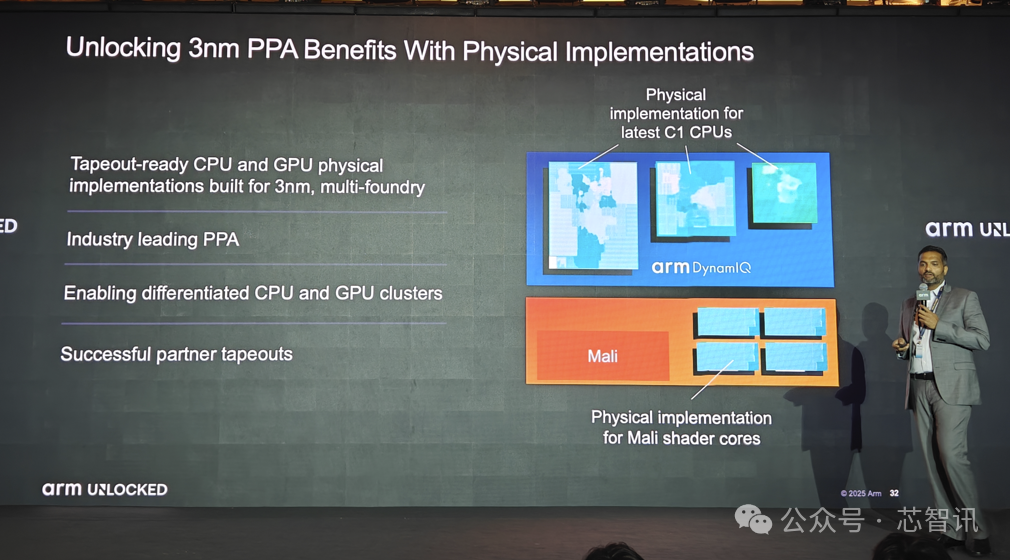
As a result, Arm’s chip partners and OEM manufacturers can use these implementations as flexible building blocks to focus on differentiated designs at the CPU and GPU cluster level; achieve excellent frequency and PPA; and ensure successful first silicon tape-out when transitioning to the latest 3nm process node.
3. Full-Stack Software Ready
To fully unleash the performance potential of Lumex CSS and help customers achieve top performance across all layers from firmware to applications before silicon shipment, Arm has launched a new series of software and tools to assist developers in prototyping, building AI workloads, and leveraging the complete AI capabilities of the Lumex CSS platform.
These software and tools include: a complete Android 16-ready software stack, covering trusted firmware to application layers; a complete and free KleidiAI software library enabling SME2; and a new top-down telemetry solution for analyzing application performance, identifying bottlenecks, and optimizing algorithms.
Arm KleidiAI will be launched in 2024, aimed at providing software performance optimization for AI inference workloads running on Arm CPUs, requiring no additional work from developers. This software library has already been applied in key areas such as mobile, cloud, and data centers, including integration into the latest versions of almost all mainstream AI frameworks such as ExecuTorch, Llama.cpp, MediaPipe, PyTorch, and LightRT, allowing developers to achieve significant performance improvements automatically when building applications on Arm architecture platforms.
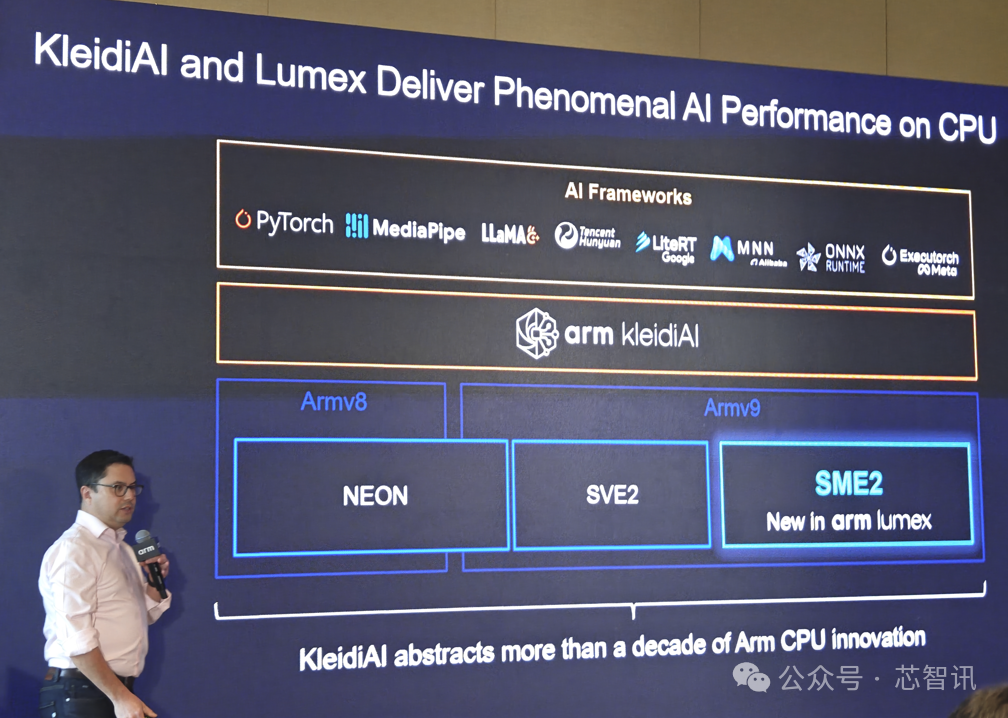
Therefore, when devices based on Lumex are launched in the coming months, applications will immediately benefit from performance and efficiency improvements in their AI workloads.
In terms of graphics processing, with future Android versions supporting RenderDoc, and providing Vulkan counters, Streamline, and Perfetto as unified observability tools through Lumex, developers will be able to analyze workloads in real-time, optimize latency, and precisely balance battery life with visual effects.
Conclusion:
The newly launched Arm C1 CPU cluster offers high-performance, high-energy efficiency, and highly scalable core IP options, and with support for SME2, it significantly enhances CPU AI performance, laying a solid foundation for the future development of edge AI.
The new Mali G1-Ultra redefines mobile GPU performance, achieving breakthroughs in ray tracing performance, architectural efficiency, and AI acceleration, promising a better experience for the gaming and AI applications of the next generation of mobile terminals.
Based on the new IP, the Arm Lumex CSS platform provides customers with a more complete CPU/GPU cluster solution and software stack, as well as a physical layout based on the 3nm node, which will help them significantly reduce investment in CPU/GPU cluster R&D amidst the current trend of many tech giants developing their own chips, allowing them to focus more on their core differentiated R&D needs, improving the success rate of first silicon tape-out and accelerating product launch cycles. Arm’s Senior Vice President and General Manager of the Client Division, Chris Bergey, explained: “They no longer need to hire hundreds of engineers to integrate our IP; they can focus on the parts that truly bring differentiation.”
Arm’s Vice President of Product Management for the Client Division, James McNiven, also pointed out in an interview that Arm’s CSS platform is only focused on its strengths in CPU, GPU IP, and cluster solutions, providing customers with reference designs and physical implementations, and does not mean that Arm will customize complete SoC solutions for customers using the Lumex CSS platform. Customers also cannot directly use the Lumex CSS platform to have foundries produce their own chips, as SoCs cannot run with just CPUs and GPUs; this is not a complete SoC solution. Customers still need to add a series of their own IP or third-party IP to create a complete SoC solution based on the Lumex CSS platform, such as interface IP, ISP, NPU IP, baseband IP, etc.
It is worth mentioning that in the past, Arm would reveal the approximate launch time of related products when releasing new CPU/GPU IPs, and relevant chip manufacturers would announce that they would be the first to adopt them. However, in this release, there was none, with only a senior executive from vivo taking the stage to speak. However, it is speculated that MediaTek’s upcoming Dimensity 9500 may adopt Arm’s new C1 CPU cluster and G1-Ultra GPU, but it may not use the Lumex CSS platform for design. After all, MediaTek previously publicly refuted claims that the Dimensity 9400 was based on Arm’s client-oriented CSS design.
Editor: Chip Intelligence – Wandering Sword
Previous Exciting ArticlesPerformance below expectations, Synopsys lays off 10%! Stock price plummets 35%Apple iPhone 17 series released: brings three self-developed chips!ASIC’s downturn was countered by Broadcom, Nvidia claims its GPU is more cost-effective!Dell China lays off a large number of employees, compensation N+3!Hu Yuhua appointed Senior Vice President of Sales and Marketing for NXP Greater ChinaAMD: Compared to x86, Arm architecture has no advantages!Rumors of Yang Shining joining Rongxin, Ningbo 12-inch wafer factory suspendedThousands of chip teams transferred to Singapore subsidiary? ByteDance respondsNew Kailai has over 10 billion orders, valuation close to 100 billion?Global semiconductor R&D investment Top 20: Intel first, TSMC seventh!H100/H200 supply tight? Nvidia: Supply is sufficient, unrelated to H20!6 Chinese companies capture 68.8% of the global power battery market!237.31 MTr/mm²! Rapidus’s 2nm transistor density is higher than TSMC?Domestic GPU newcomer Lishuan raises 500 million yuan in financing: revenue is zero, pre-investment valuation is 3.5 billion yuan!Huahong plans to acquire 97.4988% of Huali Micro’s shares!
For industry communication and cooperation, please add WeChat: icsmart01
Chip Intelligence official group: 221807116