Source: CNC_alarm_No CNC Alarm
When it comes to the four major robot brands in the world: Fanuc, ABB, KUKA, and Yaskawa, they are indeed competitors in a certain sense. However, once you truly understand their respective robot products, you will find that each has its own strengths and weaknesses, which also shapes their different market positioning and sales strategies. From another perspective, their common competitive fields are not too many.
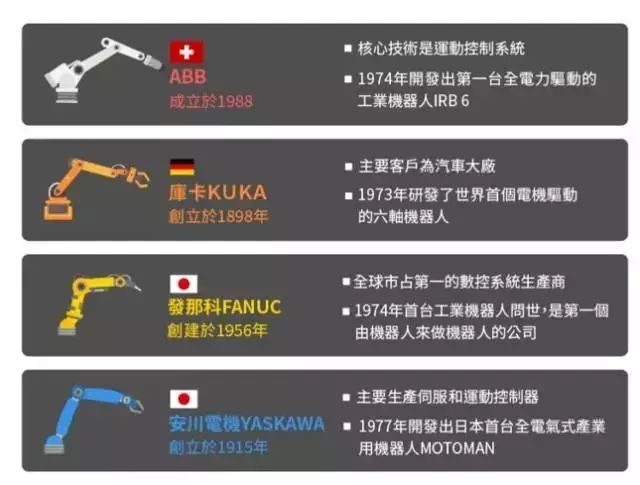
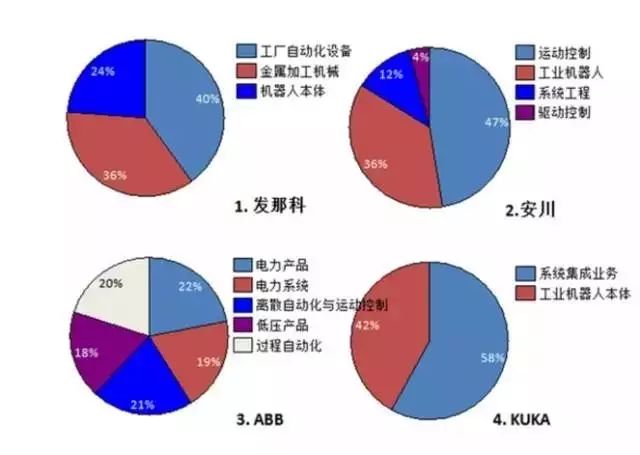
Regardless of historical reasons, cultural differences, or ideological influences, we can see a company’s chosen development path in response to market changes from the products of these four major robot companies. Who can go further is also determined by the market.
So, comparing the robots of Fanuc, ABB, Yaskawa, and KUKA, what are the characteristics of their robot products, and what are their respective advantages and disadvantages?
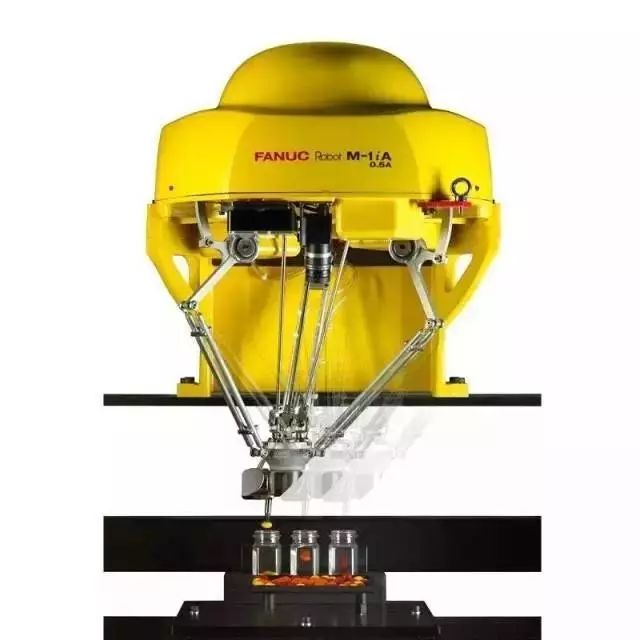
 1Fanuc: Extremely High Precision, But Poor Overload Capacity
Known as the most powerful company in the world in terms of CNC system research, design, manufacturing, and sales, Fanuc’s research on CNC systems can be traced back to 1956, when forward-thinking Japanese technical experts foresaw the arrival of the 3C era and formed a research team.
The historical accumulation has given Fanuc an advantage in precision because the precision of the parts processed during CNC machining directly affects product quality. Some mechanical components and precision devices have very high requirements for processing accuracy.
By applying the advantages of CNC systems to robots, Fanuc’s industrial robots also have high precision. It is reported that the repeat positioning accuracy of Fanuc’s multifunctional six-axis small robot can reach ±0.02mm. Additionally, Fanuc’s industrial robots are unique compared to others in that they offer more convenient process control, smaller base sizes for similar robots, and a unique arm design.
It is worth mentioning that Fanuc has also applied the blade compensation function from CNC machine tool precision machining to robots, embedding the compensation algorithm into the robot. This allows the robot to move inward in circles during precision cutting. In contrast, Yaskawa’s robots do not have this function inherently and can only achieve it through secondary development for functional compensation, which is a common complaint from customers regarding Yaskawa robots.
It is reported that during precision cutting along the edges of components, the cutting tool is generally cylindrical, similar to a milling cutter. After milling 10 parts, it may wear down slightly; the more parts milled, the greater the wear. If you continue to mill based on the original data, there will be deviations. At this time, a compensation value is needed. For example, after processing 100 parts, a compensation of 1mm is needed; after processing 200 parts, a compensation of 2mm is required, and the CNC system inherently has this blade compensation function.
However, Fanuc has not yet achieved the best stability in its robots. It is reported that during full-load operation, when the speed reaches 80%, Fanuc’s robots will trigger an alarm, indicating that their overload capacity is not very good. Therefore, Fanuc’s advantages lie in applications with light loads and high precision, which is also the reason why Fanuc’s small robots (under 24KG) are best-sellers.
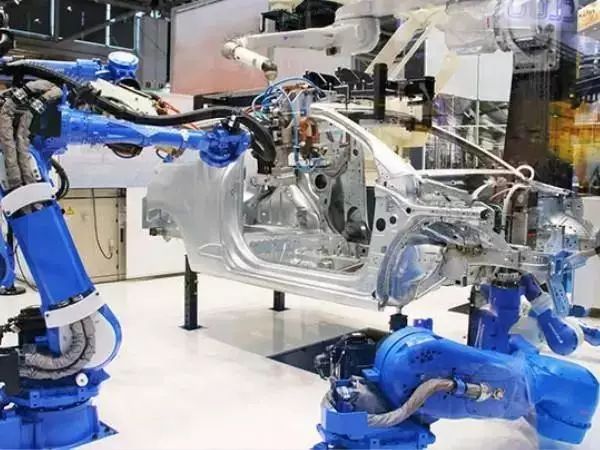
2Yaskawa: Good Stability, But Slightly Lower Precision
With nearly a century of electrical motor technology heritage, Yaskawa’s AC servos and frequency converters hold the world’s largest market share. In 1977, Yaskawa developed Japan’s first fully electric industrial robot, MOTOMAN.
Yaskawa started with motors, allowing it to maximize motor inertia, making its robots stand out with high load capacity and stability. They do not trigger alarms during full-load, full-speed operation and can even run under overload conditions. Therefore, Yaskawa has a relatively large market in heavy-load robotics applications, such as the automotive industry.
However, compared to Fanuc’s robots, Yaskawa robots do not have as high precision. On a comparable price basis, if customers require high precision, they often choose Fanuc’s robots.
Fortunately, Yaskawa robots have a clear price advantage, being the lowest among the four major brands, offering high cost-performance. Yaskawa’s welding robots, including welding packages, are priced at only 130,000 to 140,000, which is competitive compared to Panasonic’s welding robots, as Yaskawa follows a mass production approach.
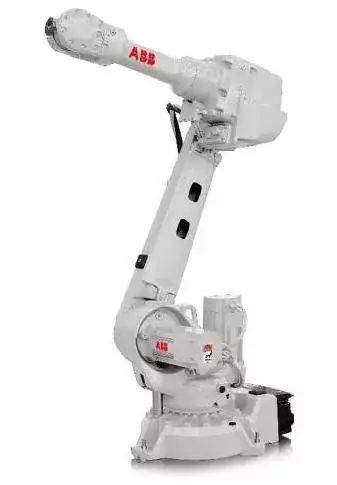
 3ABB: Best Algorithms, But Slightly Expensive
Known for its “professional rigor and practicality”, ABB started with frequency converters and embodies Swiss meticulous enterprise spirit. It occupies an important position globally, and in China, most power stations and frequency stations are built by ABB.
The greatest challenge for robots lies in the motion control system, and ABB’s core advantage is in motion control. ABB’s robot algorithms are the best among the four major brands, not only providing comprehensive motion control solutions but also offering highly professional and detailed technical documentation.
It is reported that ABB’s control cabinet comes with Robot Studio software for 3D simulation and online functionality (copying files, programming, system setting, observing I/O status, backing up and restoring the system, etc.). The connection with external devices supports various common industrial bus interfaces and can communicate with various brands of welding power supplies, cutting power supplies, PLCs, etc., through marked input and output interfaces. Furthermore, ABB’s control cabinet allows free setting of parameters such as current, voltage, speed, and swing for starting arcs, heating, welding, and retracting, enabling complex swing trajectories.
ABB also emphasizes the overall characteristics of robots, focusing on quality while also considering design. However, it is well known that ABB robots equipped with high-standard control systems are quite expensive. Additionally, many companies have reported that ABB has the longest delivery time among the four major brands.
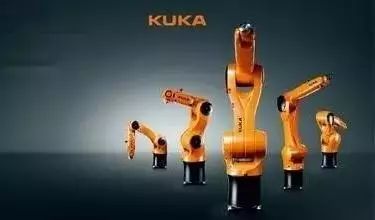
4KUKA: Easy to Operate, But Higher Failure Rate
Last year, Midea’s acquisition of KUKA made headlines. If ABB is the Mercedes of cars, then KUKA is the BMW. Although both are high-end brands, BMW has a higher return rate than Mercedes. It is reported that KUKA robots have a higher return rate compared to ABB and Fanuc robots. Insiders have reported that those who have used KUKA robots often experience daily malfunctions with at least one robot.
KUKA’s advantage in domestic sales lies in its excellent secondary development. Even a complete novice without technical background or only a primary school education can operate KUKA software within a day. The human-machine interface is designed to be simple to cater to Chinese habits, making it as easy to use as a game console. In contrast, Japanese brand robots often have more complex control systems with many keys.
It is worth mentioning that KUKA performs well in the heavy-load robot sector, holding a significant market share among robots over 120KG. In the heavy-duty 400KG and 600KG robot categories, KUKA has the highest sales.
WeChat Editor: Chang Da
Recommended Hot Articles
-
Overview of Major OEM Audit Requirements
-
What Can We Learn from Japan’s 17 Nobel Prizes in 17 Years?
-
73 Images + GIFs to Help You Understand Automotive Engines
-
Dissecting the World’s First Dual Injection Technology Turbocharged Engine: What Are the Black Technologies?
-
Fu Yu Wu: We Must Be Cautious About Banning Fuel Vehicles and Take Responsibility for History!