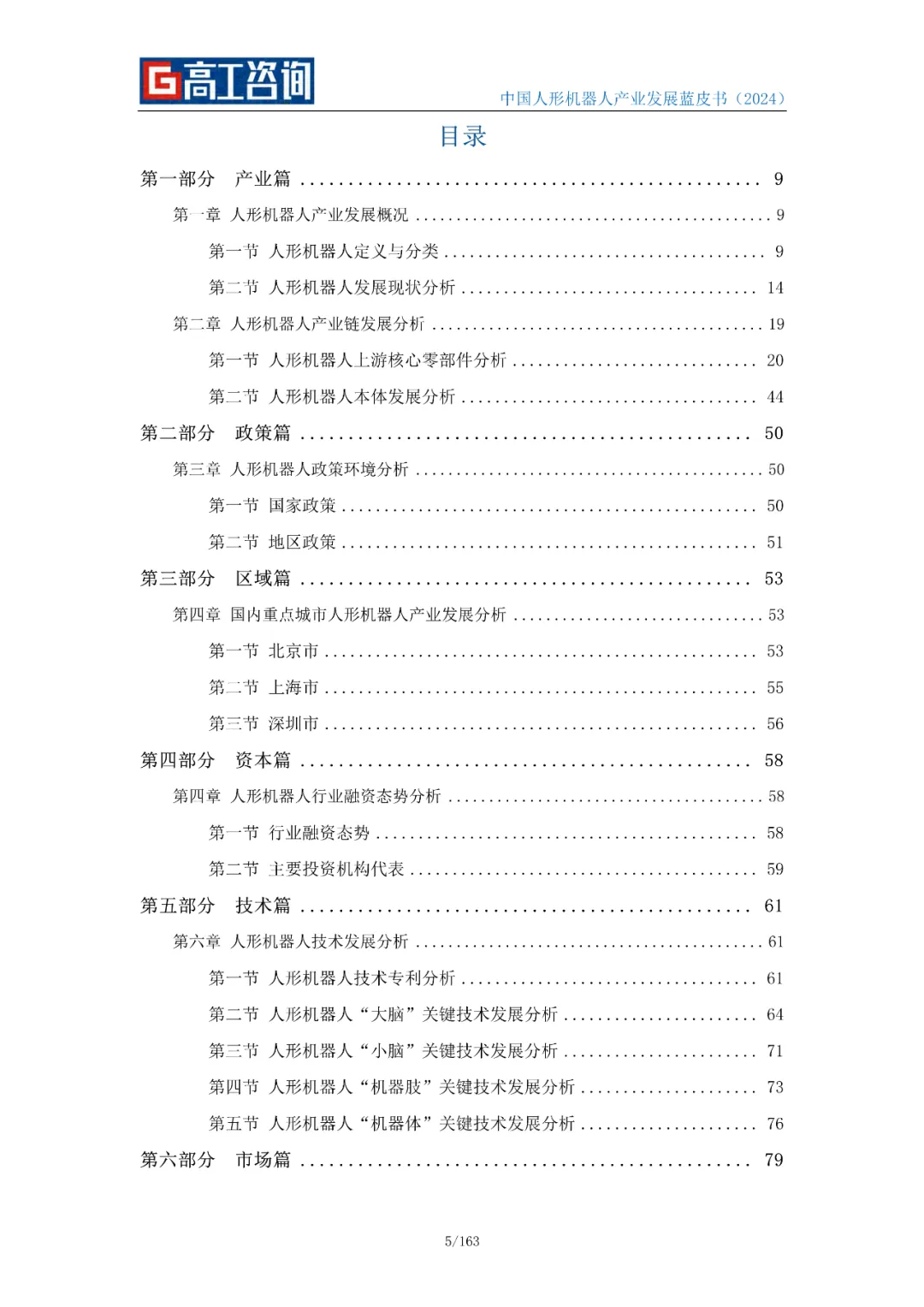
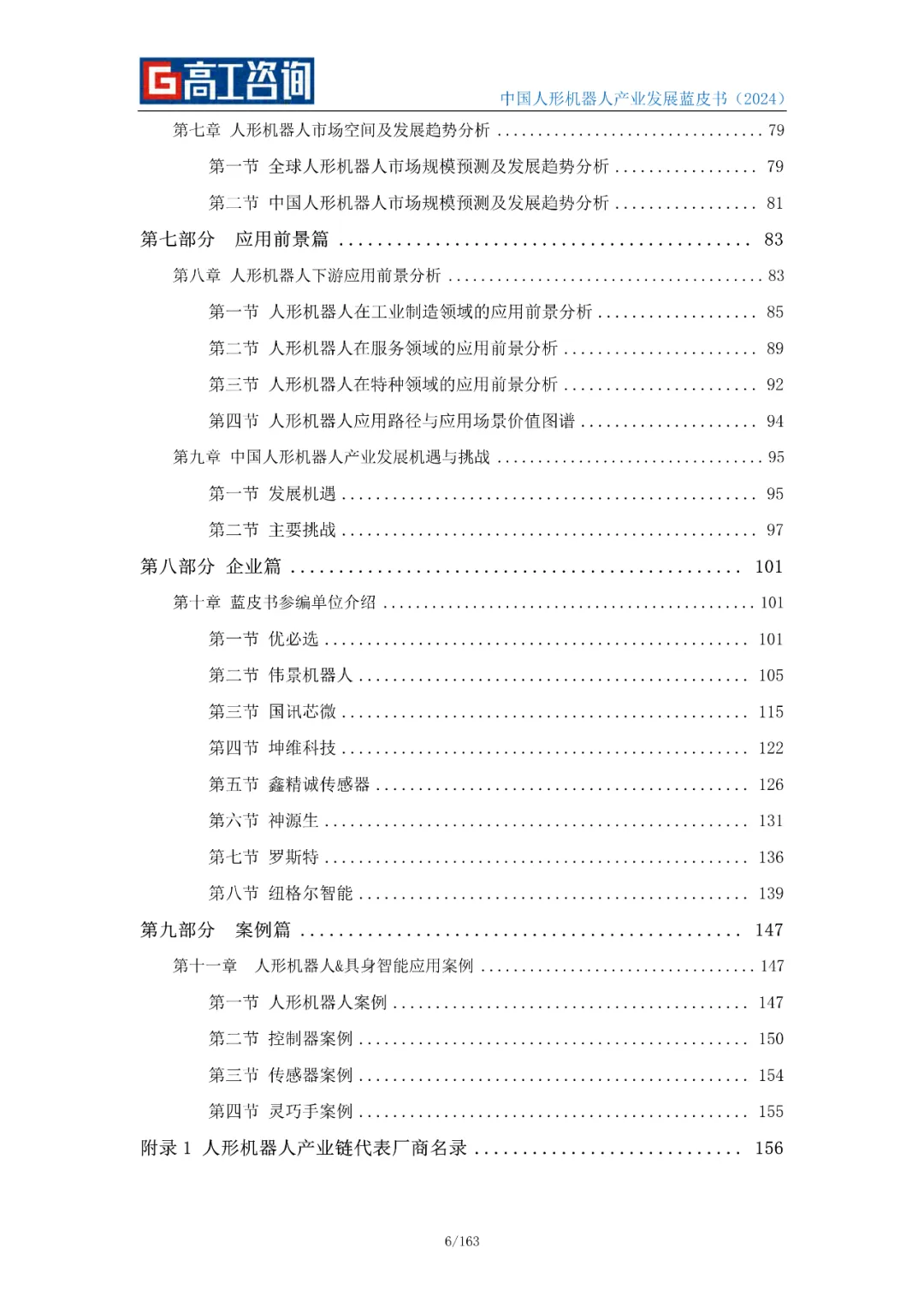
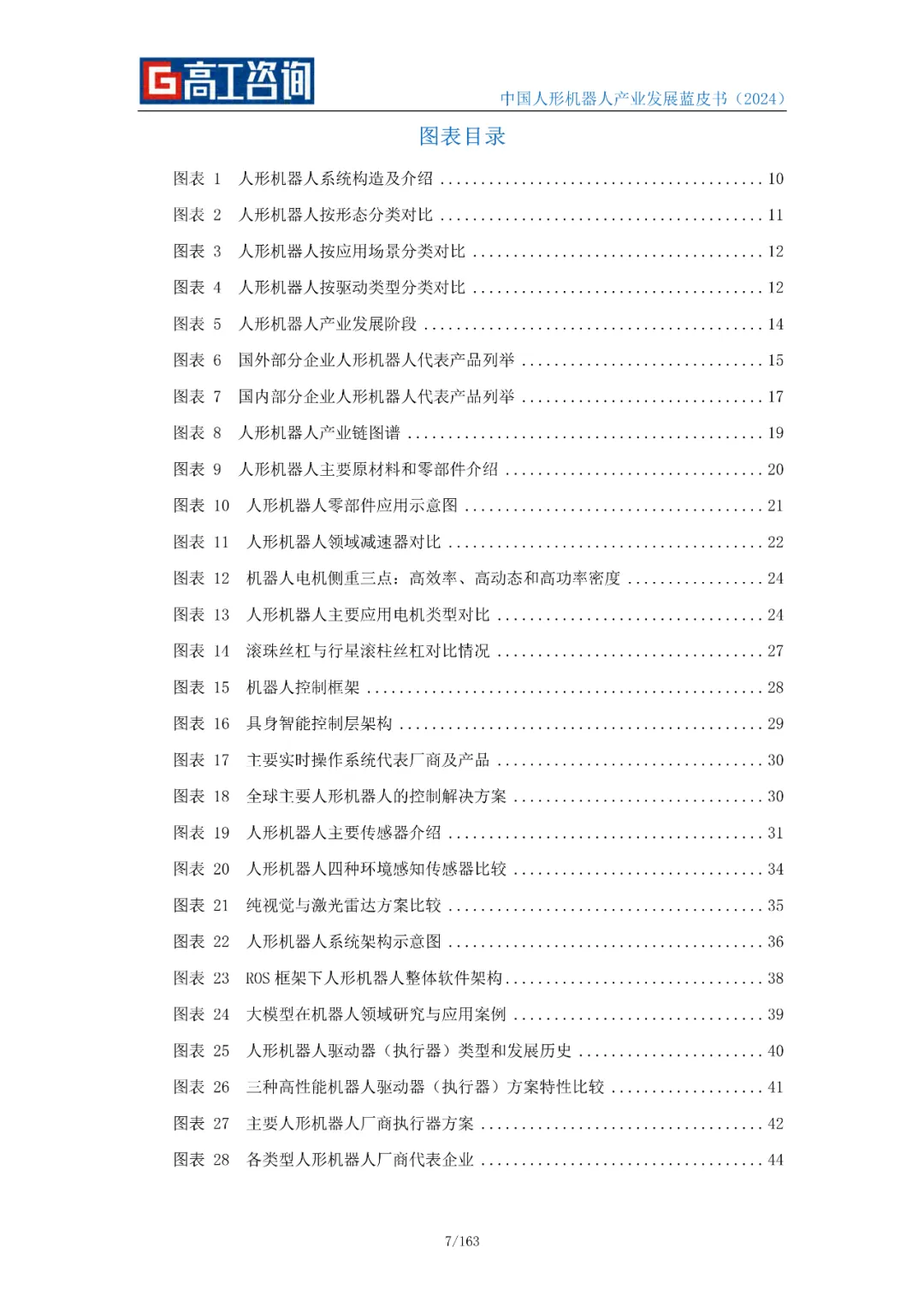
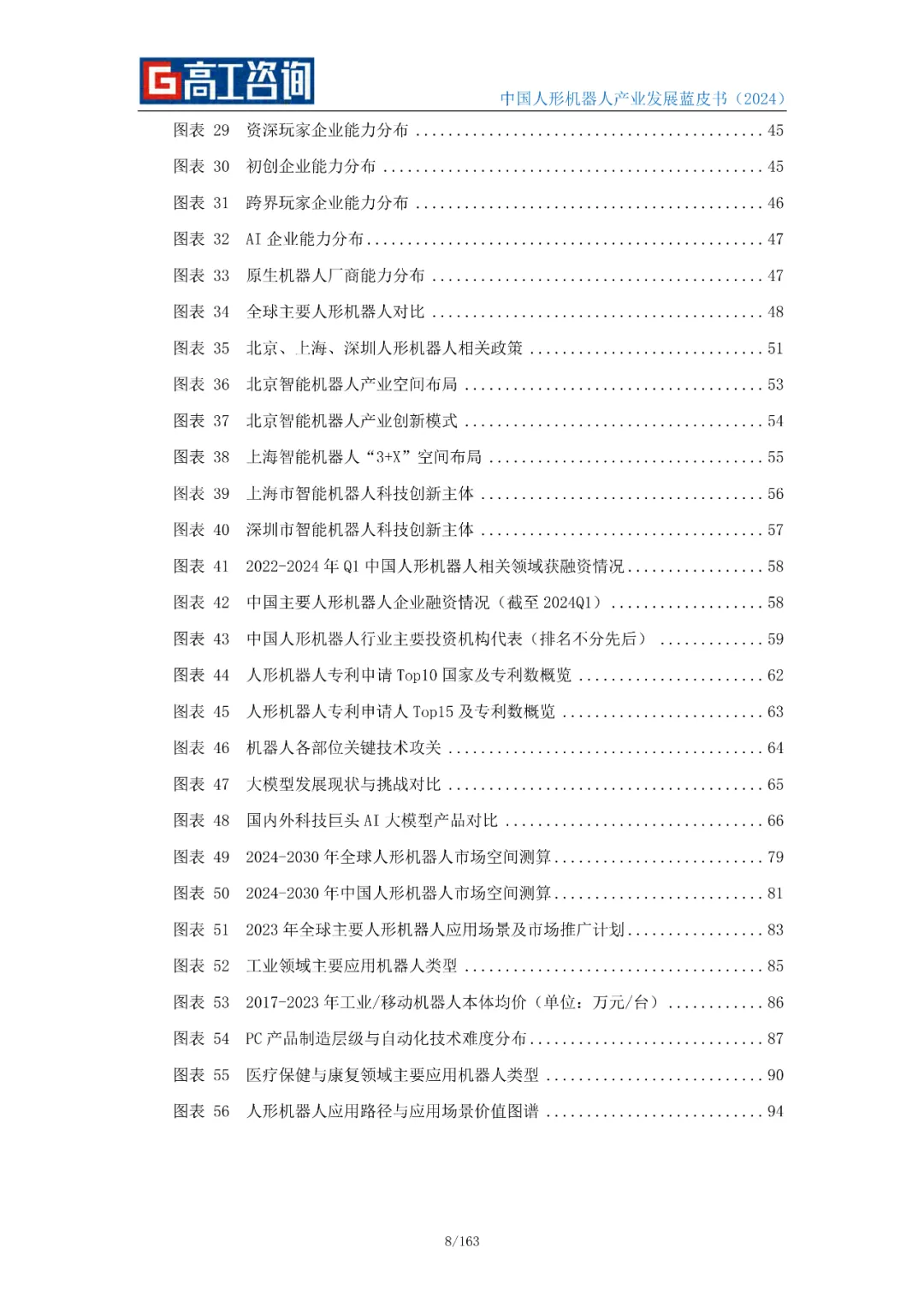
This article will outline the definition, structure, main categories, industrial chain, regional policies, key cities, industry financing, and development opportunities of humanoid robots for reference.

Definition of Humanoid Robots
Humanoid robots are a type of bionic robot that resembles the shape and size of the human body, capable of mimicking human movements, expressions, interactions, and actions, with a certain degree of cognitive and decision-making intelligence. Humanoid robots are built on a multidisciplinary foundation, integrating advanced technologies such as artificial intelligence, high-end manufacturing, and new materials to achieve anthropomorphic functions. They are more adaptable to environments, capable of more diverse task operations, and facilitate more friendly human-robot interactions. They are expected to become the next disruptive products following computers, smartphones, and new energy vehicles, profoundly transforming human production and lifestyle, and serving as an important indicator of a country’s high-tech strength and development level. Compared to other robots, humanoid robots have higher comprehensive requirements for intelligent perception, motion control, intelligent decision-making, and human-robot interaction.

 Structure of Humanoid RobotsHumanoid robots typically consist of multiple modules including environmental perception, decision control, motion control, and mechanical body modules, which work collaboratively to achieve intelligent operation of humanoid robots.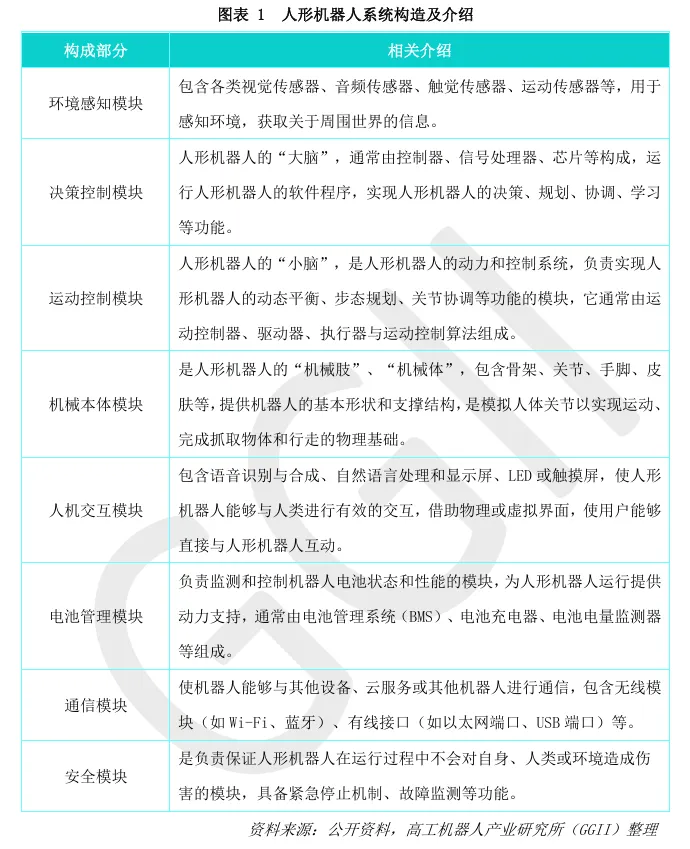

Main Categories of Humanoid RobotsHumanoid robots can be classified into wheeled humanoid robots, legged humanoid robots, and versatile humanoid robots based on their morphology. Each type of humanoid robot is introduced as follows: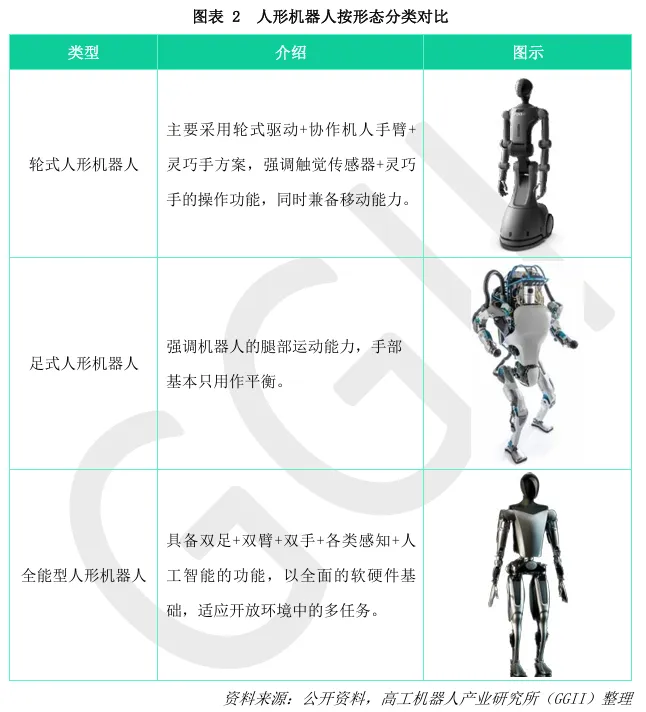 According to application scenarios, humanoid robots can be divided into medical humanoid robots, military humanoid robots, educational humanoid robots, entertainment humanoid robots, service humanoid robots, industrial humanoid robots, and general-purpose humanoid robots. Each type is introduced as follows: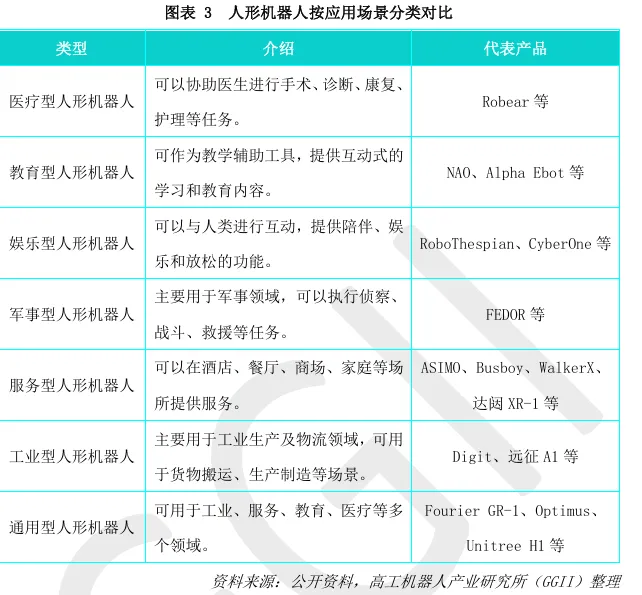

Analysis of the Humanoid Robot Industry Chain Development
The humanoid robot industry chain mainly consists of upstream components, midstream humanoid robot bodies, and downstream terminal applications. Currently, since humanoid robots have not yet achieved large-scale commercial deployment in downstream terminal application fields, and some core components have not been fully validated in the humanoid robot field, China’s humanoid robot supply chain is still in a continuous construction phase. With the gradual establishment of the humanoid robot innovation system and continuous breakthroughs in key technologies such as “brain, cerebellum, limbs,” China is expected to gradually form an efficient and reliable humanoid robot industry chain and supply chain system.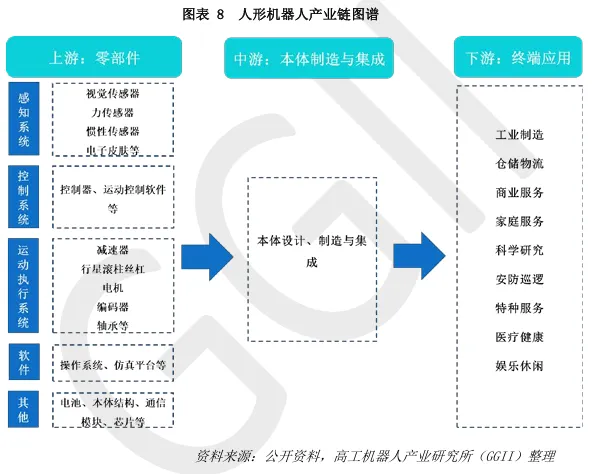
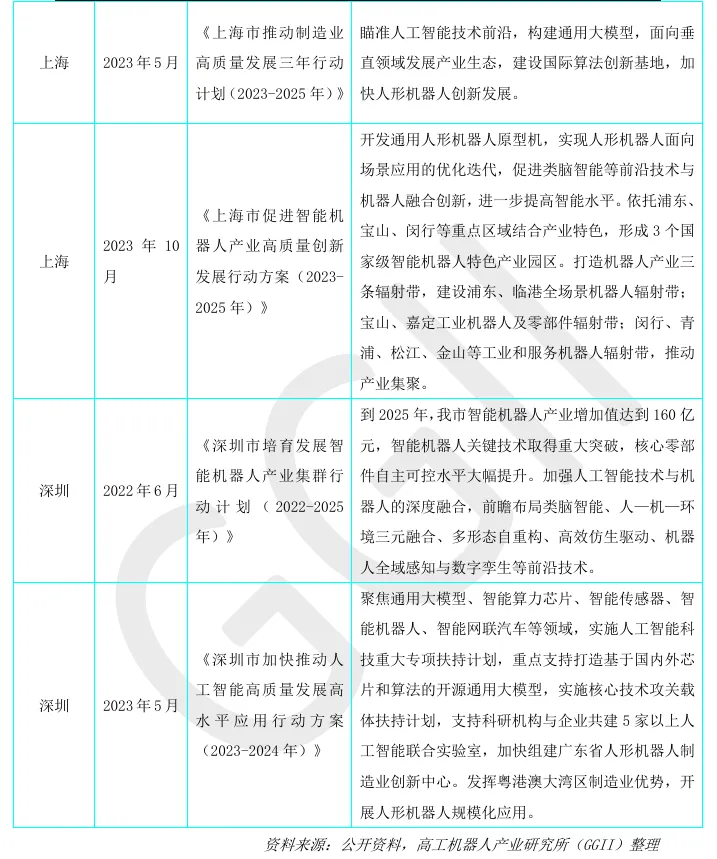
 Overview of Regional PoliciesSince 2023, the humanoid robot industry has been continuously heating up. Under the guidance of national policies, local governments in Beijing, Shanghai, Shenzhen, etc., have actively followed up and successively introduced related policies for the development of humanoid robots, formulated development paths and corresponding guarantee measures to promote innovation and development of the humanoid robot industry, achieve industrial clustering, and seize opportunities for humanoid robot industrialization.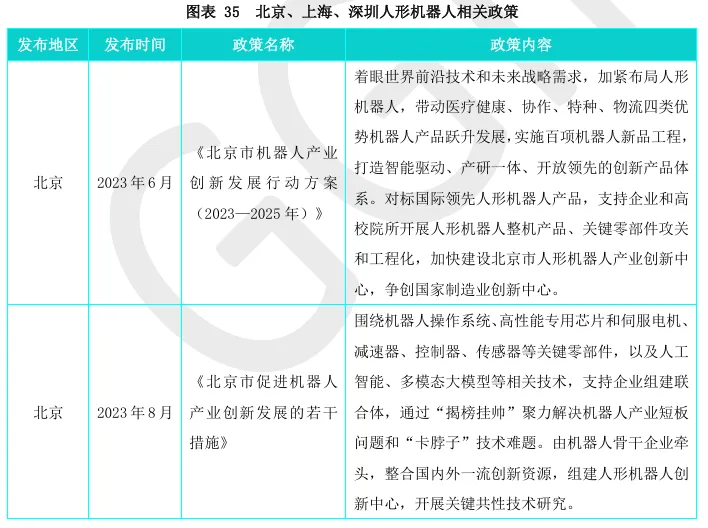
 Analysis of Key Cities’ Humanoid Robot Industry Development
- Beijing
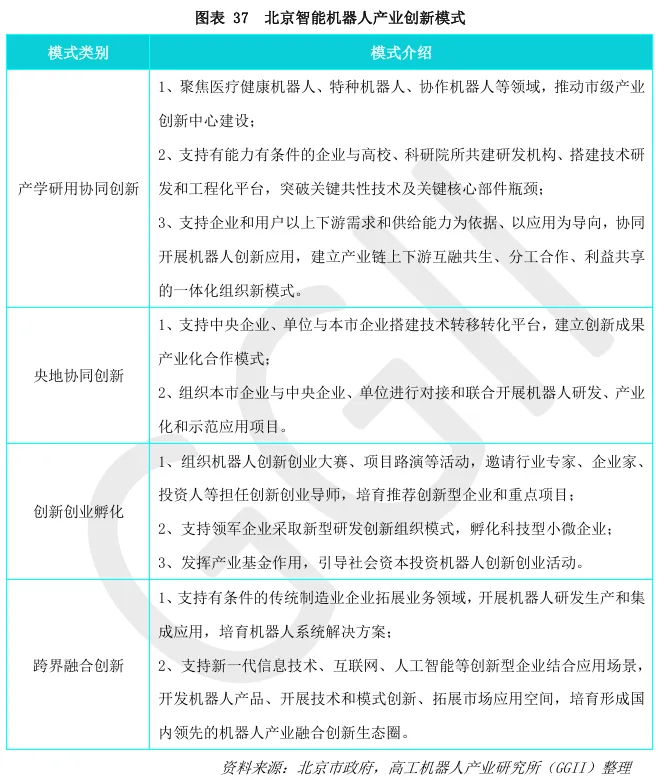
Beijing’s robot industry started early, with concentrated innovation resources, and has formed a market-leading advantage in applications such as medical, service, logistics, and special robots. It has established a spatial layout of the robot industry combining the northern industrial demonstration zone and the southern robot production and application aggregation area, led by the Zhongguancun Science City and focusing on the Beijing Economic and Technological Development Area, with districts such as Fangshan, Shunyi, Daxing, and Mentougou as characteristic clusters of the intelligent robot industry.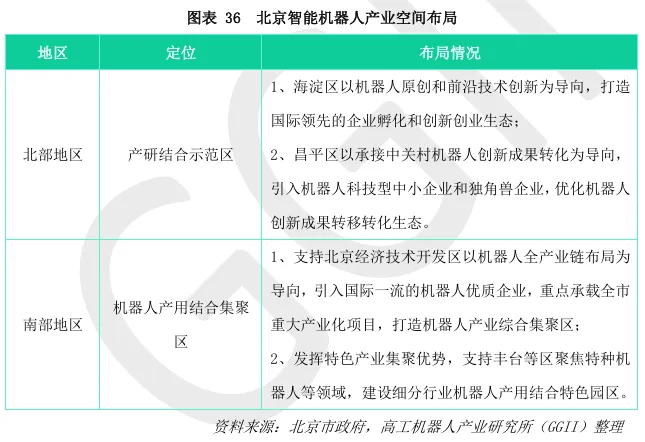 In terms of humanoid robots, Beijing has gathered core component enterprises such as Yanzhi Robotics and Zhihong Technology, as well as main body enterprises like Xiaomi, Galaxy Universal Robot, Star Motion Era, Accelerated Evolution, and Iron Man, and is actively exploring typical application demonstrations in 3C electronics manufacturing, new energy vehicle production, and emergency security. Through initiatives like “ranking and commanding,” it supports upstream and downstream enterprises in the industry chain to jointly tackle product development and production line construction, promoting the autonomy of the humanoid robot industry chain.Beijing is committed to building a global key hub for scientific innovation, ranking first in global scientific research cities for six consecutive years in terms of research output, gradually becoming an important source of cutting-edge international technology and a significant driver of global industrial transformation. In this context, Beijing actively promotes innovation in the field of intelligent robots, advocating for collaborative innovation among industry, academia, and research, as well as central-local collaborative innovation, innovation and entrepreneurship incubation, and cross-border integration.
 Relying on the solid innovation foundation of Beijing’s intelligent robot industry, the innovation level of Beijing’s humanoid robot industry also ranks among the top in the country, gathering key universities and research institutes in the field of robotics such as Tsinghua University, Beihang University, Beijing Institute of Technology, and the Institute of Automation of the Chinese Academy of Sciences. Among them, Tsinghua University and Beijing Institute of Technology have a significant advantage in the number of patents in the field of humanoid robots. At the same time, the first provincial-level humanoid robot innovation center in the country has settled in Beijing, which will carry out five key tasks such as the general humanoid robot body prototype and the general humanoid robot large model, and the joint laboratory established by Peking University and Zhiyuan Robotics further enhances the innovation level of Beijing’s humanoid robot industry.
- Shanghai
The development of the humanoid robot industry in Shanghai relies on the existing intelligent robot industry foundation. Shanghai has formed a relatively complete industrial chain system from upstream core components, midstream bodies, to downstream integration and terminal applications, gathering industrial robot companies such as ABB, KUKA, Fanuc, Yaskawa, Siasun, and Xinsong. In addition, numerous robot companies in logistics, healthcare, construction services, and public services are also accelerating their gathering. Currently, Shanghai’s intelligent robots have formed a “3+X” spatial layout, laying a good industrial foundation for the development of the humanoid robot industry in Shanghai.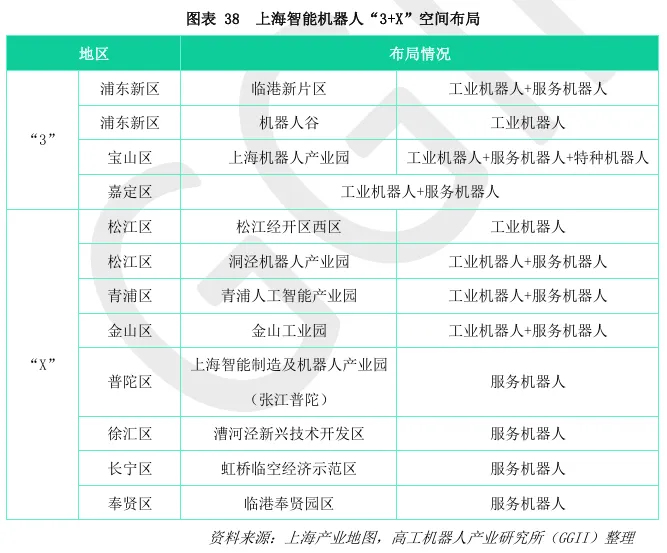 In the humanoid robot industry, Shanghai has gathered core component enterprises such as Baku Technology, Mingzhi Electric, and Hesai Technology, as well as body design and manufacturing companies like Fourier Intelligence, Zhiyuan Robotics, Shanghai Kepler, Datar Robot, and China Electronics Technology Group Robot. Additionally, many terminal enterprises like NIO and SAIC have emerged, establishing a good industrial foundation for humanoid robots.Shanghai aims to build a globally influential technological innovation center, continuously enhancing its ability to gather innovative resources, influence of scientific and technological achievements, leadership of emerging industries, attractiveness of the innovation environment, and regional radiation capabilities. The continuous emergence of scientific and technological achievements and the growing attractiveness of high-level talents have led to a comprehensive technological innovation level index of 87.14 in Shanghai in 2022, ranking first in the country. In terms of intelligent robot innovation, Shanghai has formed an innovation system that includes higher education institutions, research institutes, innovation platforms, and innovative enterprises, providing strong support for the development of the humanoid robot industry in Shanghai.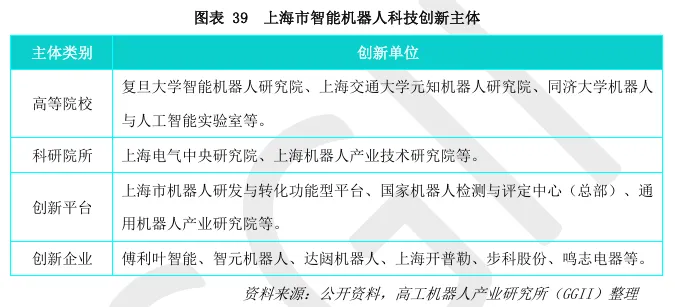
- Shenzhen
The development of the intelligent robot industry in Shenzhen is favorable, with a relatively complete industrial chain in industrial robots, covering areas such as reducers, servo systems, controllers, bodies, and integrated applications, with the servo system being at the domestic leading level. The intelligent robot industry in Shenzhen is actively expanding into fields such as electronic information, automotive, education, security, and logistics to achieve large-scale applications of intelligent robots in key industries. Currently, the intelligent robot industry in Shenzhen is mainly centered in Nanshan and Bao’an, with research and design stages laid out in Futian District, Nanshan District, and Qianhai, and research, design, and manufacturing stages established in Bao’an District and the Shenshan Special Cooperation Zone, with multiple robot industrial parks such as Nanshan Robot Industrial Park, Intelligent Robot Industrial Park, and Bao’an Robot Manufacturing Industrial Park already established.Based on the existing intelligent robot industry, Shenzhen has gathered companies such as Huichuan Technology, Rese Intelligent, Orbbec, Dazhu Transmission, Tongchuan Technology, and Goko Technology, covering core components like reducers, motors, controllers, and sensors, and has a number of main body enterprises like UBTECH, Zhuji Power, and Leju Robotics, forming a good first-mover advantage in the humanoid robot industry.Shenzhen insists on innovation as the leading strategy for urban development, proactively laying out high-tech industries, strategic emerging industries, and future industries. Currently, it has established 10 basic research institutions, 11 Nobel Prize laboratories, and 39 provincial-level new research and development institutions, with over 3,200 various innovation carriers including national key laboratories and national engineering laboratories built cumulatively, positioning its scientific and technological innovation foundation among the top in the country.In the field of intelligent robots, Shenzhen has established research institutions such as the Shenzhen Artificial Intelligence and Robotics Research Institute, Shenzhen Intelligent Robotics Research Institute, and the Intelligent Bionic Research Center of the Shenzhen Advanced Technology Research Institute of the Chinese Academy of Sciences, forming an innovation system centered around research institutions and innovative enterprises.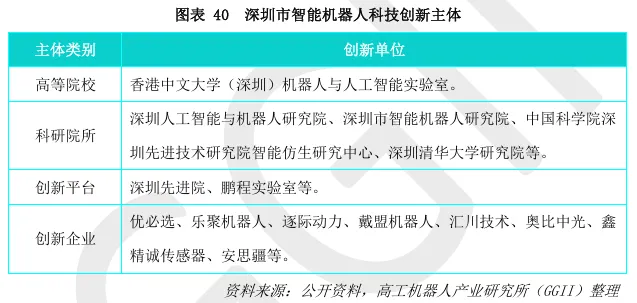 Relying on Shenzhen’s complete intelligent robot industrial chain and strong collaborative innovation capabilities among upstream and downstream enterprises, Shenzhen has achieved numerous technological innovation results in humanoid robots. The development and application exploration of humanoid robots such as UBTECH’s WalkerX, Leju’s Kuavo, and Zhuji Power’s CL-1 and Daimeng’s Sparky1 are continuously deepening, with UBTECH’s humanoid robot holding the highest number of effective patents globally. At the same time, the Shenzhen Municipal Government actively promotes innovation among enterprises related to the humanoid robot industry, implementing support plans for core technology breakthroughs, and supporting research institutions and enterprises to jointly establish more than five artificial intelligence joint laboratories, while accelerating the establishment of the Guangdong Provincial Humanoid Robot Manufacturing Innovation Center.
 Industry Financing TrendsAccording to incomplete statistics from GGII, since 2022, there have been 25 financing events in the field of humanoid robots in China, involving nearly 4.4 billion yuan. Most of the financing enterprises are in the early stages of development, and the continuous influx of capital will undoubtedly inject strong momentum into the development of humanoid robots. It is expected that in the coming years, the number of entrepreneurial enterprises related to humanoid robots and embodied intelligence will continue to increase, and as capital continues to pour in, the development of humanoid robots and embodied intelligence in China will enter a period of acceleration.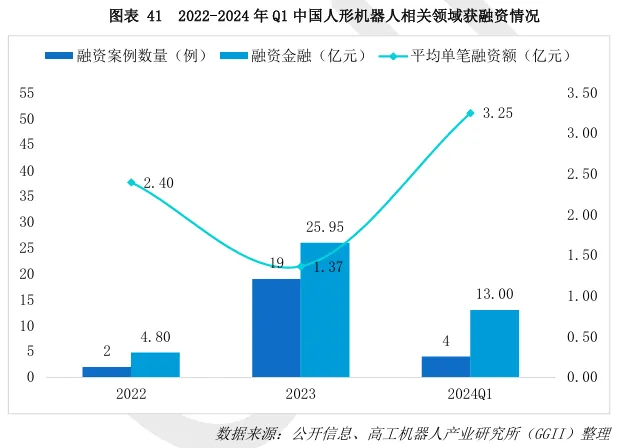
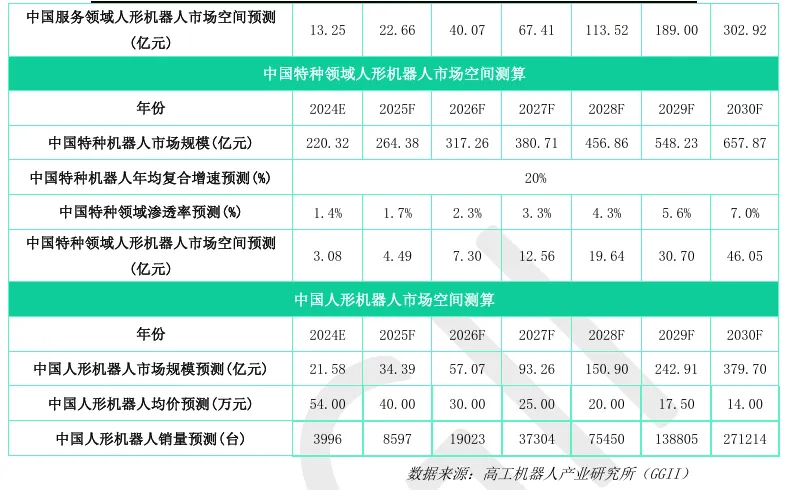
 Market Size ForecastChina has been the world’s largest consumer and producer of industrial robots for several consecutive years. Driven by industrial automation and intelligent manufacturing strategies, the demand in the Chinese market is strong, especially in numerous fields such as automotive manufacturing, electronic devices, metal products, and food processing, where the application of industrial robots has significantly increased. At the same time, the Chinese government has placed great importance on and provided policy support for the robot industry, which has promoted the rapid development of the domestic robot industry chain, including the improvement of core component research and manufacturing capabilities and the enhancement of integrated innovation capabilities of complete systems.In addition, aside from the industrial robot market, the development of service robots in China is also very rapid, covering multiple application scenarios such as household services, medical rehabilitation, educational entertainment, and public services. With technological advancements and changes in social demand, the Chinese robot market is characterized by diversification and intelligence, and continues to maintain a strong growth trend.At this stage, the development of China’s humanoid robot industry will rely on government strategic guidance and institutional guarantees, as well as a solid industrial chain foundation, a huge domestic demand market, and strong technological research and development capabilities, all of which create favorable conditions for the large-scale application of humanoid robots in China. However, to achieve large-scale commercial application, many technical and non-technical challenges still need to be overcome.GGII predicts that the average annual growth rate of China in the humanoid robot track will exceed the global average level, with the market size of humanoid robots in China reaching 2.158 billion yuan in 2024, and nearly 38 billion yuan by 2030, with a CAGR exceeding 61% from 2024 to 2030, and the sales volume of humanoid robots in China is expected to grow from about 4,000 units to 271,200 units.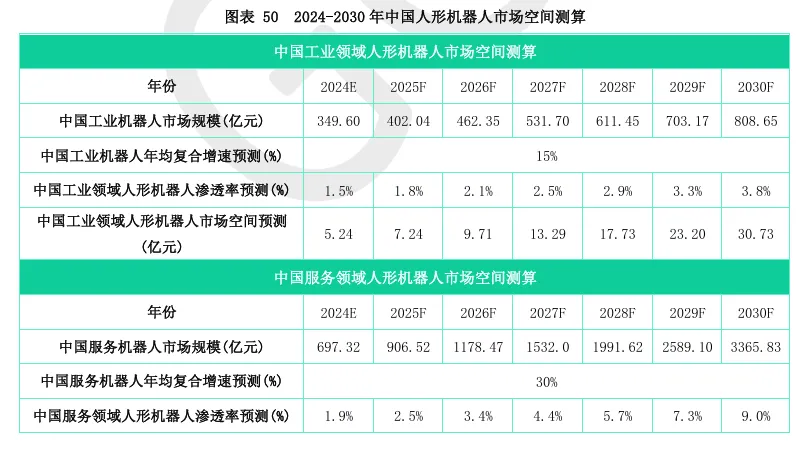
 Development OpportunitiesFuture industry new tracks, trillion-dollar blue oceans waiting to be explored. In 2023, the Ministry of Industry and Information Technology released the “Guiding Opinions on the Innovative Development of Humanoid Robots,” defining humanoid robots as potentially disruptive products following computers, smartphones, and new energy vehicles. Currently, against the backdrop of a slowing global population growth, deepening aging, and accelerating upgrades in manufacturing, humanoid robots have become a new high ground for technological competition, a new track for future industries, and a new engine for economic development.Multiple favorable factors catalyze and accelerate industry trends. In terms of patent accumulation, the number of domestic patent applications for humanoid robot technology has shown a significant upward trend over the past decade, with more and more enterprises, universities, and academic institutions continuously investing in humanoid robot research and development. The progress of various technologies has accelerated the research and development and commercialization of humanoid robot products. Although humanoid robots are still in the early stages of prototype development, the potential technological transformations they bring and their changes to certain production and living scenarios deserve high attention. From a technological development perspective, the accelerated iteration of AI large models has significantly propelled the industrialization process of humanoid robots. Policy support is also an important factor accelerating the trend of humanoid robot industrialization. In terms of industrial policy, in 2023, cities like Beijing, Shanghai, and Shenzhen are actively promoting the development of the humanoid robot industry, accelerating layout and construction of innovation centers.Upgrading from specialized to general-purpose, specific scenarios landing first. From the current development of humanoid robots, general-purpose humanoid robots capable of handling complex tasks in multiple scenarios are still relatively distant. Robots designed for specific tasks and environments can better focus on functional requirements, technical difficulties, and cost-benefit ratios, reducing reliance on data and computing power, and are expected to land first. From the supply side, in 2023, Chinese enterprises are actively entering the humanoid robot industry, with benchmark enterprises continuously promoting product iteration and commercial landing. In 2024, humanoid robots are expected to achieve breakthroughs in manufacturing applications, with small-scale applications in automotive, electronics, and warehousing logistics, potentially marking the commercial dawn for humanoid robots in the industrial manufacturing field in 2024.
For submissions, please click “Read Original”

Editor: Gao JieResponsible Editor: Duan Shaomin
Reviewer: Li Guoqing
Source: Gao Gong Robotics. If there are copyright issues, please contact us in a timely manner. The copyright interpretation belongs to the original author, and this article is recommended reading by Intelligent Manufacturing IMS!


Pleasefollowthe video accountfor more intelligent manufacturing news

 Click “See” to give me a little heart