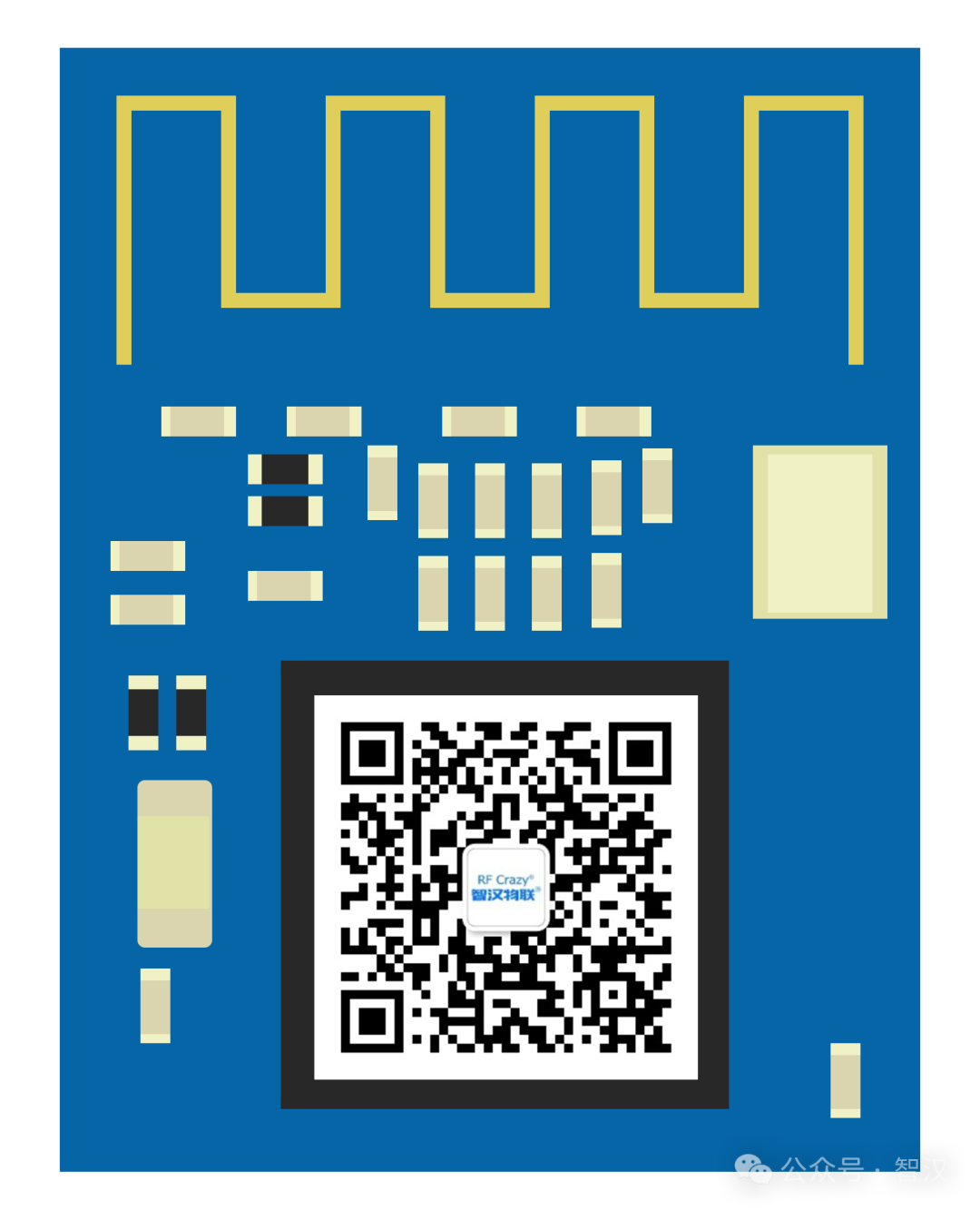
In the wave of upgrades for smart locks, Bluetooth (BLE) has become an indispensable connection method due to its low power consumption, high popularity, and ease of use. An excellent Bluetooth module can ensure stable operation, long battery life, and a smooth user experience for the lock. However, with a plethora of modules available in the market, how can developers make the best choice?
This article will take Shenzhen Zhihan IoT (RF Crazy)’s RC6626A Bluetooth 5.3 master-slave integrated transparent transmission module as an example to deeply analyze the five core factors in selecting Bluetooth modules for smart lock solutions, helping you make the wisest decision.
Factor 1: Power Consumption and Battery Life – The Lifeline of the Lock
Smart locks are typically powered by batteries, and power consumption directly determines the frequency of battery replacement, affecting user experience.
• Key Indicators: Sleep current, broadcast current, connection event current.
• Comparative Analysis:
• Poor Solution: Modules with sleep currents above 10μA and broadcast power consumption exceeding 100μA will severely deplete battery life.
• Good Solution: Choose ultra-low power modules. For example, the RC6626A has the lowest power consumption among domestic chip solutions, with a sleep power consumption as low as 2.3μA. In broadcast mode, with a cycle set to 1 second, the average current is only 13.29μA; even with a 50ms connection interval, the average current is only 101.08μA.
• Selection Recommendation: Be sure to consult the power consumption data sheet in the module manual. Choose modules like the RC6626A that have ultra-low sleep power consumption and offer configurable broadcast and connection intervals, allowing for flexible adjustments based on actual scenarios to maximize battery life.
Factor 2: Communication Reliability and Performance – The Foundation of Stability
The door lock’s opening command must be delivered instantly and stably; the reliability and throughput of communication are crucial.
• Key Indicators: Bluetooth version, connection interval, data throughput, transmission distance.
• Comparative Analysis:
• Poor Solution: Older Bluetooth (e.g., 4.2) modules have unstable connections, low data transmission rates, and weak anti-interference capabilities.
• Good Solution: Prefer modules with Bluetooth 5.0 or higher. The RC6626A uses the Bluetooth 5.3 protocol, which offers better anti-interference and lower latency. Its connection interval is configurable (8-4000ms), allowing for a balance between power consumption and response speed in lock scenarios (e.g., 50ms-100ms). It supports a maximum MTU of 244 bytes, sufficient for efficient data transmission.
• Selection Recommendation: Choose modules that are master-slave integrated and have flexible connection parameters. The master-slave feature of the RC6626A allows the lock to be connected to a smartphone for unlocking as a slave device, while also connecting to doorbells, gateways, and other devices as a master device, providing strong expandability.
Factor 3: Security – The First Line of Defense for Home Protection
Security is the core of smart locks, and Bluetooth communication security is paramount.
• Key Indicators: Encryption support, authentication features, secure boot.
• Comparative Analysis:
• Poor Solution: Modules with no security mechanisms or only support traditional pairing methods are vulnerable to attacks or eavesdropping.
• Good Solution: Modules should support strong encryption methods such as LE Secure Connections. The RC6626A provides the AT+AUTH command, which can enable connection authentication, requiring a pairing password, and automatically disconnecting if authentication is not completed within a specified time, effectively preventing hacking.
• Selection Recommendation: Ensure the module provides hardware or software-level encryption support and has interfaces for collaborating with the main MCU to implement advanced security protocols. The security instruction set of the module itself is a key evaluation point.
Factor 4: Development Usability and Integration – Accelerating Time to Market
Rapid development and debugging, along with simple peripheral circuits, can significantly reduce R&D costs and cycles.
• Key Indicators: Interface complexity, AT command set, supporting documentation, package size.
• Comparative Analysis:
• Poor Solution: Modules with complex interfaces require additional RF circuit debugging, incomplete AT command sets, and obscure documentation.
• Good Solution: The RC6626A has a built-in standard Bluetooth serial transparent transmission protocol software, requiring no Bluetooth development experience. The module provides an extremely rich AT command set, from basic parameter query settings (AT+NAME, AT+MAC) to advanced functions such as broadcast packet editing (AT+ADS_PACKET), master-slave connection control (AT+CONNECT, AT+SCAN), and one-click binding (AT+BIND), allowing almost all functions to be completed via serial commands, greatly simplifying embedded software development. The module has a built-in PCB antenna, requiring only simple VCC and GND to operate, with very high integration.
• Selection Recommendation: Choose module suppliers like RC6626A that provide detailed Chinese manuals, rich AT commands, and example codes. For hardware, select stamp hole or pin-type packages with onboard antennas to simplify PCB layout.
Factor 5: Special Features and Cost – Creating Product Differentiation
After meeting basic needs, special features can make your product stand out, while cost determines market competitiveness.
• Key Indicators: Special operating modes, additional integrations (e.g., IO control, PWM), price.
• Comparative Analysis:
• Poor Solution: Modules with single functions only provide basic transparent transmission, requiring additional peripheral components to achieve simple functions (e.g., device switching, motor driving).
• Good Solution: The RC6626A integrates multiple features valuable for locks, and at the same power consumption and functionality, its price is over 30% lower than competitors:
• HID Proximity Detection: After enabling with commands like AT+HID_EN, the phone can quickly discover and connect to the lock in the system Bluetooth interface without opening the app, achieving seamless unlocking. It can also set proximity (AT+NEAR_RSSI) and leave (AT+LEAVE_RSSI) signal thresholds to automatically trigger lock actions or indicator lights.
•Direct Drive IO and PWM Control: The module provides 3 PWM outputs (AT+PWM) and GPIO control (AT+IO_CONTROL), allowing direct driving of LED indicators or buzzers, and even controlling motor vibrations without intervention from the main MCU, providing new ideas for low-power design.
• One-Click Binding: Through commands like AT+BIND, a convenient pairing process between master and slave devices is achieved, greatly optimizing production debugging and user network configuration experience.
• Selection Recommendation: Evaluate whether the module’s “extra” features can save you BOM costs or create product selling points. Consider the cost savings from high integration that reduces the need for peripheral components, not just the unit price of the module itself.
Conclusion and Recommendations
In selecting Bluetooth modules for smart locks, one cannot only look at price and size; it is essential to systematically evaluate the five major factors of power consumption, performance, security, usability, and functionality.
The Zhihan IoT RC6626A module demonstrates strong comprehensive advantages in this comparison:
• Excellent power consumption control, meeting long battery life requirements.
• Bluetooth 5.3 master-slave integration, stable and flexible connections, powerful performance.
• Provides authentication commands, laying the foundation for secure development.
• Rich and complete AT command set, clear documentation, user-friendly development, and simple integration.
• Features like HID, PWM, and one-click binding effectively help achieve product differentiation and innovation.
I hope this detailed comparative analysis provides clear and valuable references for your next smart lock selection. If you are interested in the RC6626A module, you can visit the Zhihan IoT official website to view the complete data sheet and technical materials.
Feel free to share the challenges and experiences you encountered in selecting Bluetooth modules in the comments section!