In our daily lives, we often use devices related to Bluetooth functionality, such as mobile phones, but many users know very little about Bluetooth.
What are the differences between Bluetooth 4.0 and 4.1? Are there different types of Bluetooth functionalities? What is the Bluetooth protocol? What parameters should be considered when selecting Bluetooth devices? How is Bluetooth more powerful than WiFi? You will understand all these concepts after reading this article!
How powerful is Bluetooth?
Compared to WiFi wireless network technology, which operates in a similar frequency band to Bluetooth communication technology, Bluetooth has advantages in terms of power saving, stable transmission, compact size, and security when applied to various devices.
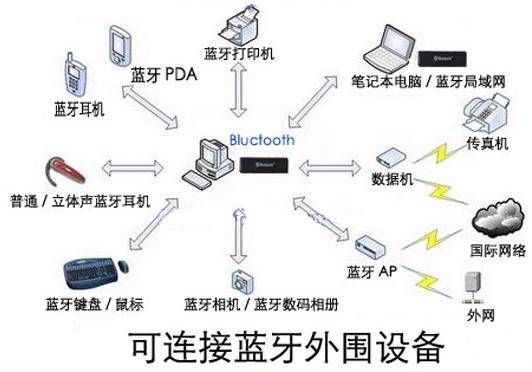
In smart home device systems, traditional electrical devices can connect to a local area network for convenient interaction and control, but most smart devices are not suitable for high bandwidth and high power-consuming WiFi communication methods. Smart LED lights, smart switches, smart sockets, air conditioners, kitchen appliances, purification/humidification devices, etc., are more suitable for Bluetooth transmission.
Moreover, a single Bluetooth device can control all smart home devices, allowing all appliances within the smart home system to abandon the more complex WiFi connections and instead use the lightweight, low-power Bluetooth communication protocol.
Bluetooth is a great thing, but you know very little about it. Today, I will educate you!
Differences Between Various Bluetooth Versions
Bluetooth 1.0: Transmission rate of about 1M/s.
Bluetooth 2.0+EDR: Transmission rate of about 2-3M/s, with 2.1+EDR being the most classic Bluetooth, characterized by secure and easy pairing.
Bluetooth 3.0+HS (High-Speed Bluetooth): High transmission rate of 24M/s, only devices marked with the “+HS” trademark truly support 802.11 high-speed data transmission.
Bluetooth 4.0 (Low Energy Bluetooth): It includes classic Bluetooth, high-speed Bluetooth, and Bluetooth low energy protocols, with even lower power consumption based on 3.0, mainly targeting applications that require extremely low power, powered by button batteries. Version 4.1 adds Internet of Things features, supporting coexistence of bulk data exchange rates, while 4.2’s main feature is that it allows multiple Bluetooth smart devices to connect to a local area network or the internet through one terminal.
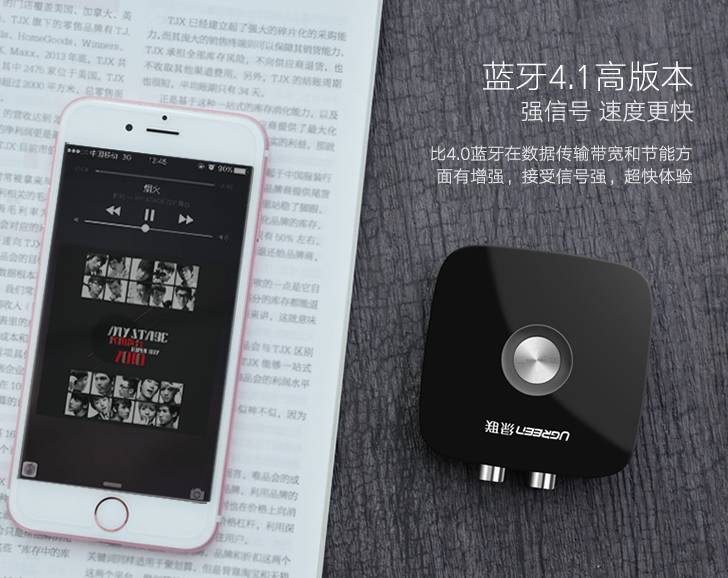
The most widely used version currently on the market is 4.1, and the introduction of this technology has brought significant progress to smart home applications, wearable devices, and smart healthcare in the Internet of Things.
Classification of Bluetooth Devices
Bluetooth devices can be classified into the following four types based on their main functions:
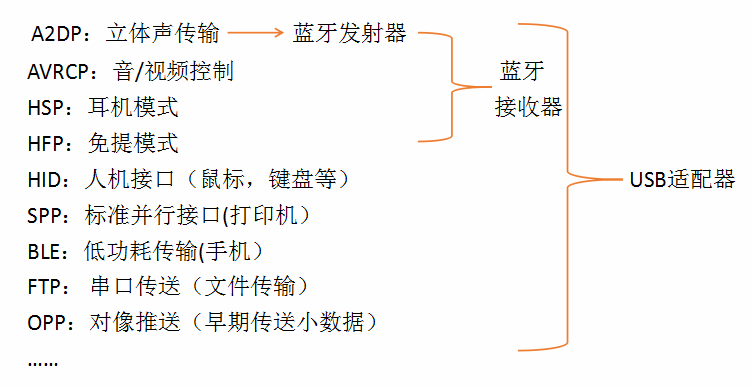
Bluetooth Receiver: Its function is to receive Bluetooth signals, simply put, it can turn wired headphones/speakers into Bluetooth headphones/speakers, allowing non-Bluetooth car audio systems to become Bluetooth audio systems.
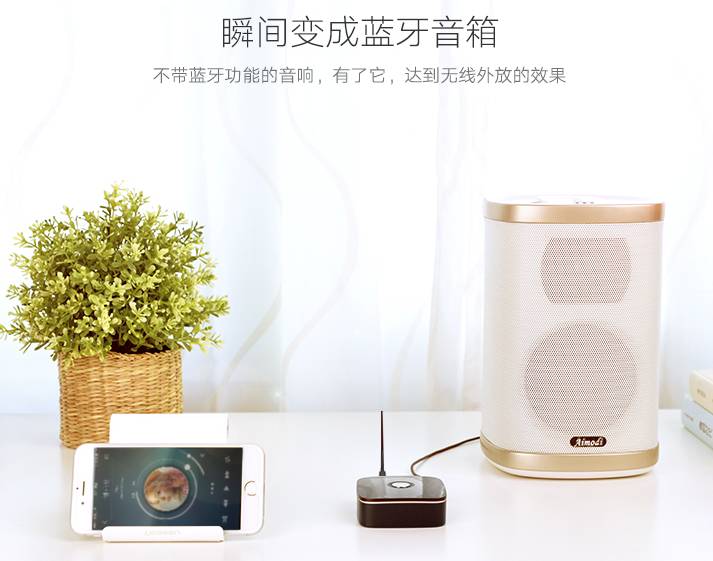
Bluetooth Transmitter: Its function is to transmit Bluetooth signals, commonly used in households; for example, when the transmitter is connected to a TV, it can send sound to Bluetooth headphones without affecting others.
Bluetooth Receiver + Transmitter: As the name suggests, this is a combination of a receiver and a transmitter, allowing devices to receive and transmit Bluetooth signals.
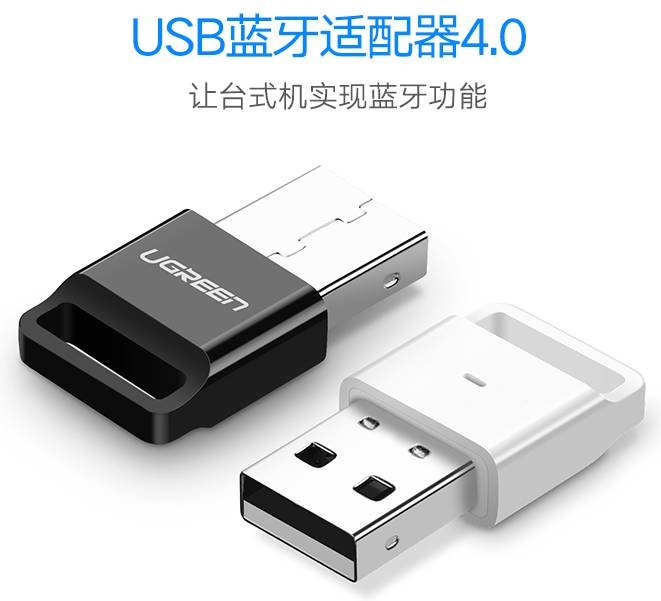
USB Bluetooth Adapter: It receives Bluetooth signals by plugging into a device’s USB port, such as connecting Bluetooth mice, keyboards, or headphones, and can also be used with desktop computers to install drivers, turning a regular computer into one with Bluetooth functionality.
What parameters should be considered when selecting Bluetooth devices?
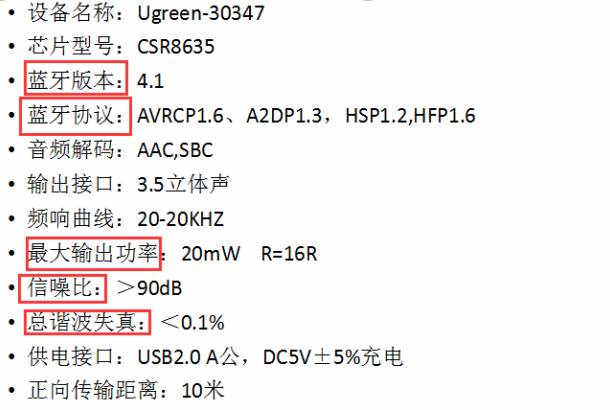
1. Bluetooth Version
2. Bluetooth Protocol
The different Bluetooth protocols determine what functions the device can have; the more protocols it supports, the more comprehensive its functionality.
3. Maximum output power; generally, the larger it is, the louder the sound.
4. Total harmonic distortion; the smaller, the better.
5. Signal-to-noise ratio; the larger, the better.
Why is the actual transmission distance different from what the device indicates?
Currently, many Bluetooth devices support a forward transmission distance of 10 meters, but this distance is the ideal distance without walls, glass, or other obstacles. However, it is often the case that even without obstacles, this distance cannot be reached. This is because it depends not only on the transmission distance of the Bluetooth device but also on the actual distance supported by the device connected to Bluetooth.
For example, if a phone supports a maximum of 8 meters in unobstructed conditions, while the Bluetooth device supports 10 meters, their connection will only support a maximum of 8 meters.
Through experiments, our research engineers found that the transmission distances of Meizu and Apple phones are the farthest among many mainstream brands, reaching up to 10 meters.

Do you remember when the internet was not well developed, classmates and friends often used Bluetooth to share files, sometimes even receiving indescribable photos and videos ……
……
Reprinted from Mobile Professor